

Dodge Durango 2014-2018 HVAC Heater Hose Guide
Understanding and addressing common heater hose issues in your Dodge Durango.
- A coolant leak, often from brittle plastic connectors, is the most common sign of a failing heater hose.
- Replacement is a difficult and time-consuming job due to the hose's location at the rear of the engine.
- There is a known issue (and a TSB) where a clamp can rub a hole in the rear heater return line.
- While aftermarket hoses are cheaper, OEM Mopar parts are often recommended for a perfect fit, which is critical for this complex job.
Symptoms of a Failing HVAC Heater Hose

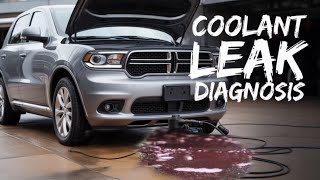
A failing HVAC heater hose on a 2014-2018 Dodge Durango can present several noticeable symptoms. One of the most common is a coolant leak, which you might notice as puddles of sweet-smelling, brightly colored fluid under your vehicle. These leaks often occur where the hoses connect to the engine or at the plastic T-connectors which can become brittle and crack over time. Another symptom is a lack of heat from your HVAC system, which happens when a leak prevents hot coolant from reaching the heater core. You might also smell coolant inside the vehicle, indicating a leak in the heater core or the connecting hoses. In some cases, a significant leak can lead to engine overheating, which is a serious issue that needs immediate attention.
Known Issues and TSBs
For some Dodge Durango models, particularly those with rear heating systems, there is a known issue where a hose clamp can rub against an aluminum return line, eventually causing a hole and a significant coolant leak. There is a Technical Service Bulletin (TSB #23-023-20) that addresses a repair procedure for the rear heater coolant return tube for 2018-2020 models. This TSB involves inspecting and potentially splicing the tube to prevent future leaks. Another TSB (#9003704) from July 2020 mentions potential leaks from the transmission oil pan, heater tube, or O-ring on vehicles with 8-speed transmissions. 🎬 Learn how to fix coolant leaks near the transmission. While no specific recalls exist for the heater hoses on all 2014-2018 models, a customer satisfaction notification (ZB0) was issued for some 2022 models with 6.4L engines due to an improperly installed coolant hose that could contact the serpentine belt.
Choosing an Aftermarket HVAC Heater Hose

When replacing the HVAC heater hose on your Durango, you'll find both OEM (Original Equipment Manufacturer) and aftermarket options. OEM hoses are sold by the dealership and are identical to the part your vehicle was built with. Aftermarket parts are made by other companies, like Dayco, and are often a more affordable choice.
For the 2014-2018 Dodge Durango, the heater hose is often sold as a complete assembly, which can be complex and include multiple hoses and connectors. Aftermarket brands like Dayco are generally considered a reliable alternative to OEM. However, some professional mechanics and vehicle owners have noted that the fitment of aftermarket hoses can sometimes be less precise than OEM parts, potentially requiring minor adjustments during installation. Given the difficulty of accessing these hoses, ensuring a perfect fit is crucial to avoid future leaks. The OEM part is often recommended for a guaranteed fit, though it comes at a higher price.
A Note on Installation
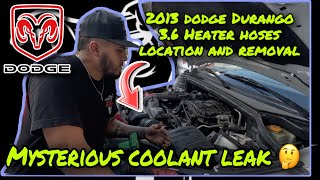
Replacing the heater hose assembly on these Durangos can be a challenging job. The hoses are located at the back of the engine against the firewall, a very tight space. 🎬 Watch this walkthrough of a difficult heater hose replacement. The process often requires removing the intake manifold, windshield wipers, and the wiper cowl to gain access. Due to the complexity and the time involved (some mechanics quote over 5 hours of labor), many owners choose to have this repair done by a professional. Some owners have found creative, though difficult, ways to replace only the failed section of the hose to save on cost and labor.
| Part Type | Price Range |
|---|---|
| New OEM (Mopar) | $63 - $223 |
| New Aftermarket (Dayco) | $19.11 - $19.11 |
| Shop Labor | $500 - $1100+ |
Frequently Asked Questions

Can I replace just the one leaking hose instead of the whole assembly?
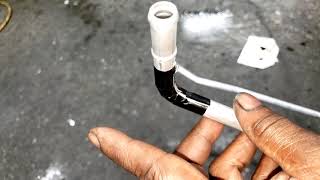
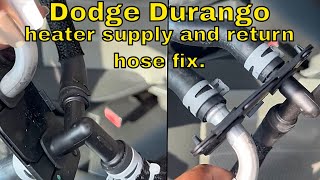
While the part is typically sold as a complete assembly, some owners have successfully fabricated a repair using universal heater hose and connectors. This can be a cost-effective solution but requires careful work to ensure the connections are secure and don't leak. 🎬 See how to fix heater supply and return hoses yourself. It is generally recommended to replace the entire assembly to ensure all components are new and less likely to fail in the near future.
Is this a repair I can do myself at home?
This is considered a difficult DIY repair. Accessing the heater hoses at the back of the engine is very challenging and requires removing several other components like the intake manifold. While possible for an experienced home mechanic with the right tools, many people prefer to have a professional shop handle this job due to its complexity and the potential for causing other issues if not done correctly.
Why is the labor cost so high for this repair?
The high labor cost is due to the location of the heater hose assembly. It is tucked away between the engine and the firewall, making it very difficult to reach. Mechanics must remove the upper intake manifold and other parts to get to it, which is a time-consuming process. Some repair quotes can be over $1,000 just for labor.
What type of coolant should I use for my 2014-2018 Dodge Durango?
It is critical to use the correct type of coolant specified for your vehicle. For this generation of Durango, Mopar recommends using OAT (Organic Additive Technology) coolant that meets the MS-12106 specification. Using the wrong coolant can lead to corrosion and damage to the cooling system components, including the new heater hoses.
Helpful Videos

Technical Specifications
OEM Part Numbers: 68251578AB 55038042AJ
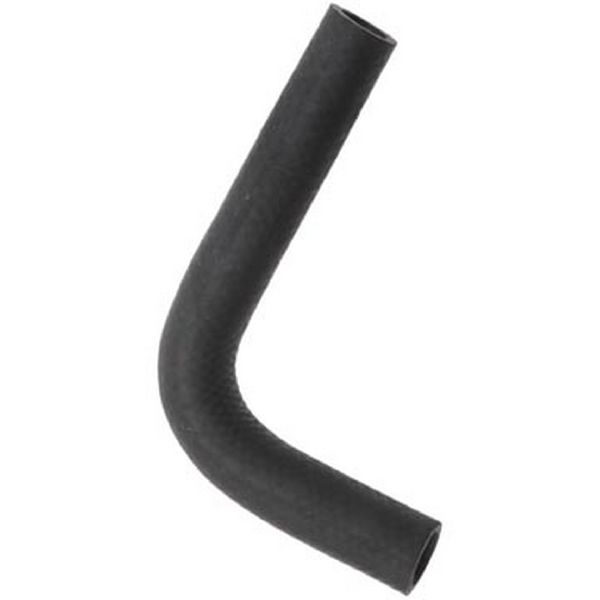
The HVAC heater hose is an assembly of rubber and plastic tubes that connects the engine's cooling system to the heater core. It is designed to withstand high temperatures and pressure. The assembly often includes specific bends, connectors, and sometimes T-fittings for different engine configurations (3.6L V6 or 5.7L V8).
We Have This Part in Stock

The information in this article is provided for general reference and educational purposes only. Vehicle specifications, procedures, and part compatibility can vary by production date, trim level, and region. Always consult your vehicle's factory service manual and verify part numbers before purchasing or performing repairs. Safety-critical components such as airbags, seat belts, and braking systems should be installed by a qualified professional.
- Dodge Durango: