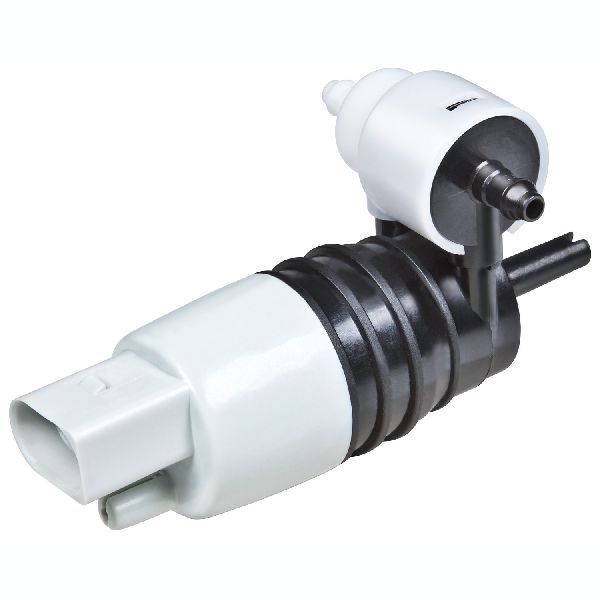
Honda Pilot Windshield Washer Pump Guide: 2014-2020 Models
If your washer fluid isn't spraying, here’s how to diagnose the problem and find the right replacement pump for your Pilot.
4 minutes to read
2014-2020 Honda Pilot
Difficulty
2/5
Est. Time
0.75 hrs
DIY Doable?
✅ Yes
Shop Labor
$80-$160
Used OEM Price
$20-$40
⚠️Drivable, but...— You can drive, but a non-functional washer system is a safety hazard in weather that can obscure your vision.
Key Takeaways
Confirm your Pilot's year; 2014-2015 and 2016-2020 models use different pump part numbers.
Symptoms are obvious: no spray, a humming sound with no fluid, or one-way failure on 2016+ models.
DIY replacement is feasible, but access is harder on 2016-2020 models, requiring fender liner removal.
There are no active recalls for the windshield washer pump; failure is due to normal wear or clogging.
The windshield washer pump is a small electric motor that pushes washer fluid from the reservoir tank up to the spray nozzles on your hood and rear liftgate. When you activate the washer switch, this pump creates the pressure needed to clean your windshield. On 2016 and newer Pilot models, a single, clever pump serves both the front and rear windshields by reversing its direction. A failure of this pump means you can't clear away dirt, pollen, or road grime, which is a safety hazard in many driving conditions.
A Critical Note for 2014-2020 Pilot Owners
The 2014-2020 range covers both the second-generation (left) and third-generation (right) Honda Pilot, which use different washer pump designs.
The 2014-2020 Honda Pilot spans two different vehicle generations, and they use different windshield washer pumps. It is essential to identify your model year before purchasing a part.
2014-2015 Honda Pilot (2nd Generation): Uses part number 76806-SZA-A12 (or the earlier 76806-SZA-A01).
2016-2020 Honda Pilot (3rd Generation): Uses part number 76806-TG7-A01.
Always confirm the part fitment for your specific year to avoid ordering the wrong component.
Symptoms of a Failing Washer Pump
A healthy pump (left) vs. a failed unit (right) where debris or internal motor failure prevents fluid from reaching the windshield.
Washer pump failure is common and the signs are usually straightforward. Before assuming the pump is bad, always check two things first: make sure the washer fluid reservoir is full and check that the spray nozzles on the hood aren't clogged 🎬 See how to diagnose weak spray and clogged washer lines. with wax or debris. If those are fine, you may have a failing pump if you notice these symptoms:
No Sound, No Spray: You push the washer button and hear nothing. This usually means the pump motor has failed or is not receiving power. Checking the fuse first is a good idea.
Pump Hums, But No Fluid Sprays: You can hear the motor whirring, but no fluid comes out. This can mean the pump's internal impeller is broken and spinning freely without moving any fluid.
Weak or Uneven Spray: If the fluid barely reaches the windshield, it could be a sign of a dying pump that can no longer generate enough pressure.
Front Works but Rear Doesn't (or Vice Versa): This is a very common symptom for 2016-2020 Pilots. Because the single pump reverses to change direction, it's common for it to fail in only one direction, requiring a full replacement.
Choosing an Aftermarket vs. OEM Pump
Quality aftermarket pumps like those from Trico offer a direct-fit alternative to OEM Honda parts at a competitive price point.
For the Honda Pilot, both Original Equipment (OEM) and aftermarket washer pumps are widely available. OEM pumps from Honda are surprisingly affordable and guarantee a perfect fit. Aftermarket brands like Trico produce direct-fit replacement pumps designed to match OEM specifications, making installation simple without any need for modification. The choice often comes down to price and availability. Given that OEM parts are competitively priced, many owners stick with the original, but a quality aftermarket part is a perfectly reliable alternative.
Cost of Replacing a Honda Pilot Washer Pump
Part Type
Price Range
New OEM
$25 - $40
New Aftermarket (Trico)
$57.11
Shop Labor
$80 - $160
Known Issues, Recalls, or TSBs
There are no official recalls or Technical Service Bulletins (TSBs) from Honda or the NHTSA specifically for windshield washer pump failure on the 2014-2020 Honda Pilot. However, owners on forums have noted that using certain types of washer fluid with additives (like some RainX products) can sometimes lead to gelling or clogging of the pump's filter screen and lines. Using a standard, quality washer fluid can help prevent this issue.
Yes, this is a very DIY-friendly job for most home mechanics. For 2014-2015 models, the pump is often easily accessible under the hood at the base of the reservoir. For 2016-2020 models, replacement is more involved and requires removing the passenger-side front wheel and fender liner to access the pump.
Why did my washer pump fail?
Failure is typically due to the natural wear and tear of the small electric motor over thousands of uses. Running the pump while the reservoir is empty can also cause it to overheat and fail prematurely. In some cases, debris or using incompatible washer fluids can clog the pump and cause it to burn out.
Why do only my front (or rear) washers work on my 2017 Pilot?
This is a classic sign of pump failure on the 2016-2020 models. These Pilots use a single pump that reverses polarity to spray either the front or back. When one direction fails, the entire pump assembly must be replaced.
Is a quiet pump always a broken pump?
If you hear no noise when activating the switch, the first step is to check the fuse for the washer system. If the fuse is good, the problem is most likely a dead pump motor or a wiring issue.
Helpful Videos
▶
2016-2022 Honda Pilot 3rd Gen Acura MDX Windshield washer fluid pump, tank, level sensor access
▶
How to Replace Windshield Washer Fluid Pumps 09-15 Honda Pilot
▶
Saving $150 repairing 2017 Honda Pilot wiper pump filter
▶
Windshield Wiper Fluid Not Spraying Or Spraying Weak: Pump, Lines, Nozzles - Diagnose and Fix
Technical Specifications
OEM Part Numbers:76806-SZA-A1276806-SZA-A0176806-TG7-A01
The 2014-2015 models use a standard pump (76806-SZA-A12). The 2016-2020 models use a single, reversible pump for both front and rear washers (76806-TG7-A01).
🎟️ 10% Off Coupon
Here's 10% Off Your Next Order
Drop your email and we'll send you a 10% off code. Save up to $25 on any order at Go-Parts.
You're in!
We just emailed this to you. Here's your 10% off code:
Go-Parts' AI research assistant. Every article is backed by live web research, verified OEM data, and real technician knowledge — so you get accurate, up-to-date information you can trust.
The information in this article is provided for general reference and educational purposes only. Vehicle specifications, procedures, and part compatibility can vary by production date, trim level, and region. Always consult your vehicle's factory service manual and verify part numbers before purchasing or performing repairs. Safety-critical components such as airbags, seat belts, and braking systems should be installed by a qualified professional.
Year Coverage
This article covers the Windshield Washer Pump for: