

A Guide to Replacing the Starter on Your 2014-2020 Hyundai Santa Fe
Is your Santa Fe failing to start? Here’s what you need to know before replacing your starter.
- Always test the battery and check connections before replacing the starter, as symptoms can be identical.
- Replacement difficulty and labor cost depend heavily on your engine: the 4-cylinder (2.4L/2.0T) is much more difficult than the V6 (3.3L).
- Mando is an original equipment supplier for Hyundai, making their aftermarket starters an excellent OEM-equivalent choice.
- Common failure symptoms include a single click with no crank, a slow crank, or intermittent starting problems.
Is Your Santa Fe's Starter Failing?

A dead starter is a common issue on any vehicle as it ages. If your 2014-2020 Hyundai Santa Fe won't start, the starter is a likely suspect, but it's not the only one. Before you spend money on a new part, it's important to rule out simpler problems. Always check your battery first. A weak or dead battery, or even corroded battery terminals, can produce symptoms that are identical to a bad starter.
Key Symptoms of a Bad Starter:
- Single, Loud Click: You turn the key, hear one click, but the engine doesn't crank. This often points to a failed starter solenoid.
- No Sound at All: If the dashboard lights up but there's no click and no crank, the starter motor may have completely failed or isn't receiving power.
- Slow Engine Crank: The engine turns over much slower than usual, sounding sluggish. This can indicate a weak starter motor struggling to turn the engine.
- Grinding or Whirring Noise: A grinding noise after the engine starts, or a whirring sound without the engine catching, can mean the starter gear is not engaging or disengaging properly.
- Intermittent Starting: The car starts fine sometimes and fails to start at other times. This is a classic sign of a starter on its way out.
Check the Battery First!
Many starter problems are actually battery problems. Make sure your battery is fully charged and the terminals are clean and tight before diagnosing the starter. A local auto parts store can usually test your battery for free.
🎬 Watch: How to diagnose starter problems and find simple fixes.Known Issues, Recalls, or TSBs
For the 2014-2020 model years, there are no widespread recalls or Technical Service Bulletins (TSBs) related to starter failure. While a recall was issued for 2024-2025 Santa Fe models concerning a starter motor cover, this issue does not apply to the 2014-2020 generation. Failure on these models is typically due to normal wear and tear over time.
Choosing the Right Aftermarket Starter

When buying a new aftermarket starter, you'll find several brands. Quality can vary, but for the Hyundai Santa Fe, these are solid choices.
- Tier 1 (OEM Equivalent): Mando
Mando is a well-known Original Equipment Manufacturer (OEM) for Hyundai. Choosing a new Mando starter is essentially like getting the same part the dealer would use, but without the dealership price tag. It's engineered to the exact factory specifications for fit and performance. - Tier 2 (Premium Aftermarket): Bosch
Bosch has a long-standing reputation for making high-quality electrical components, including starters. A new Bosch starter is a premium option known for reliability and durability, often meeting or exceeding OEM standards. - Tier 3 (Quality Aftermarket): Remy
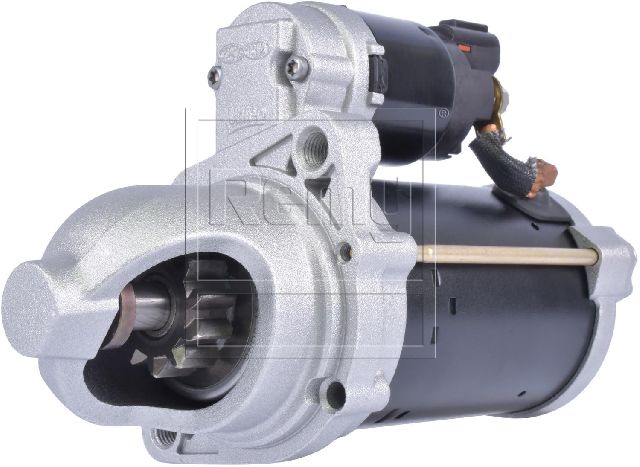
Remy is a reputable brand in the aftermarket world. While perhaps not as well-known as Bosch or an OEM like Mando, they produce reliable starters that are a good balance of quality and price.
Cost of Replacing a Hyundai Santa Fe Starter

The cost to replace your starter involves the price of the part and the cost of labor, which can vary significantly based on your engine.
| Cost Category | Estimated Price Range |
|---|---|
| New OEM Starter | $280 - $400 |
| New Aftermarket Starter (Bosch, Mando, Remy) | $230 - $296 |
| Shop Labor (V6 Engines) | $150 - $250 |
| Shop Labor (4-Cylinder Engines) | $300 - $500+ |
A Note on Labor Costs
The starter replacement job is very different depending on your engine. On the 3.3L V6 (found in the Santa Fe and Santa Fe XL), the starter is accessible from underneath the vehicle. On the 2.4L and 2.0T 4-cylinder engines (found in the Santa Fe Sport and 2019-2020 Santa Fe), the starter is located under the intake manifold, which must be removed for access. This makes the job significantly longer and more expensive.
Frequently Asked Questions (FAQ)
Can I drive my Santa Fe with a bad starter?
No. If the starter is completely dead, your vehicle will not start, making it impossible to drive. If it is failing intermittently, you risk being stranded the next time you try to start the car.
Can I replace the starter myself?
If you have the 3.3L V6 engine, a DIY replacement is feasible for someone with moderate mechanical skill and the right tools. The starter is typically accessed from below. 🎬 See this walkthrough for removing the starter on V6 models. For the 2.4L or 2.0T 4-cylinder engines, the job is much more complex as it requires removing the intake manifold. 🎬 Watch: Step-by-step starter replacement for the 2.4L engine. This is best left to an experienced mechanic unless you are a very confident DIYer.
Is a remanufactured starter a good option?
A remanufactured starter from a quality brand like Bosch or Remy can be a good, cost-effective option. These units are rebuilt to factory specifications, with worn components replaced, and are fully tested. However, for peace of mind and longevity, a new unit from a top-tier brand is often the best choice.
Will a bad starter drain my battery?
A bad starter itself doesn't typically drain the battery when the car is off. However, repeatedly trying to start the engine with a faulty starter will quickly drain a good battery. In some rare cases, a shorted starter solenoid could cause a parasitic drain.
Helpful Videos
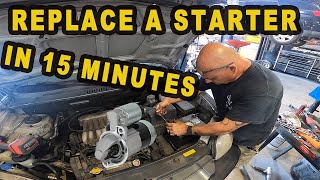
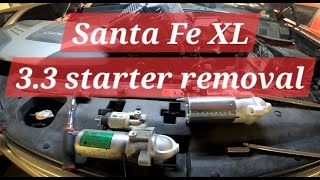
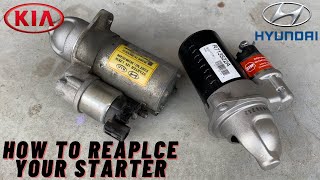
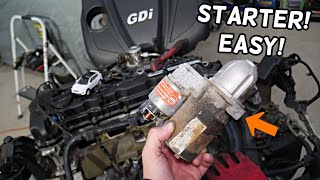
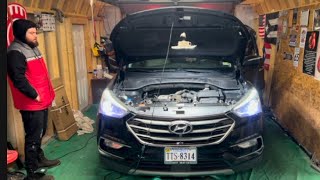
Technical Specifications
OEM Part Numbers: 36100-2GGA0 36100-3C151 36100-2G200 36100-2G100
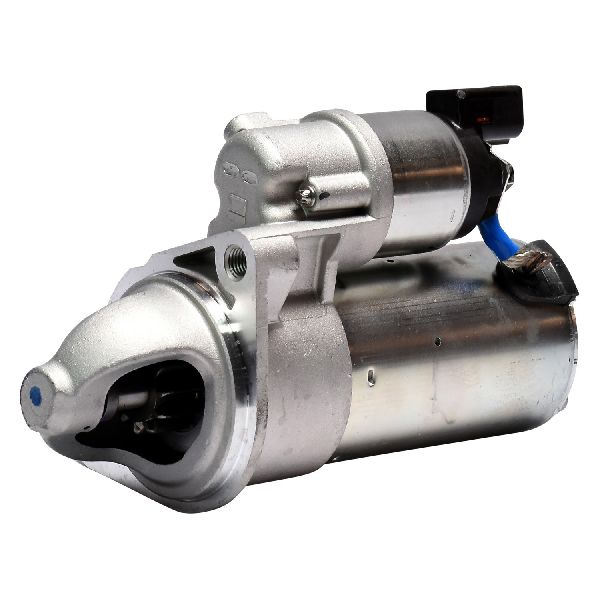
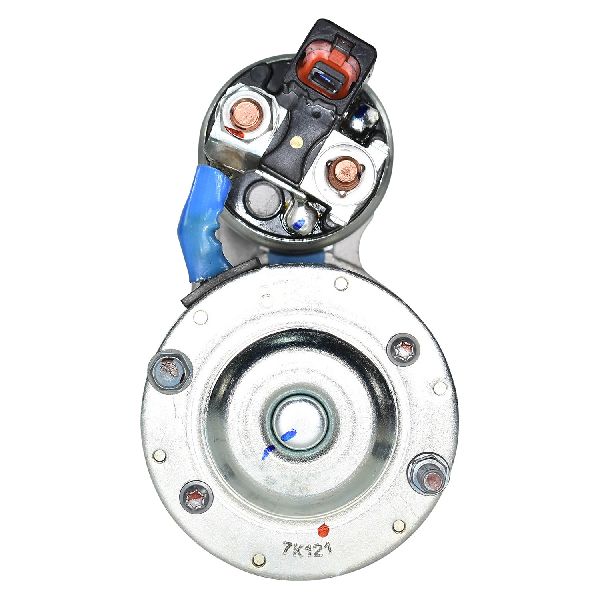
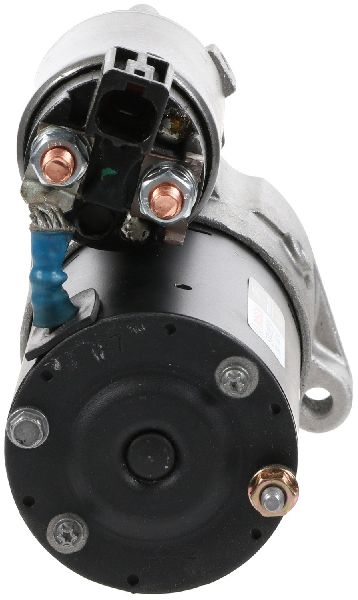
The 2014-2020 Hyundai Santa Fe uses a 12-volt starter motor. The specific design and mounting points differ between the 4-cylinder (2.0T/2.4L) and V6 (3.3L) engines. Ensure you purchase the correct part for your specific engine configuration.
We Have This Part in Stock

The information in this article is provided for general reference and educational purposes only. Vehicle specifications, procedures, and part compatibility can vary by production date, trim level, and region. Always consult your vehicle's factory service manual and verify part numbers before purchasing or performing repairs. Safety-critical components such as airbags, seat belts, and braking systems should be installed by a qualified professional.
- Hyundai Santa Fe:
- 🎬 Helpful Videos
- 🛍️ Shop This Part
- Is Your Santa Fe's Starter Failing?
- Key Symptoms of a Bad Starter:
- Check the Battery First!
- Known Issues, Recalls, or TSBs
- Choosing the Right Aftermarket Starter
- Cost of Replacing a Hyundai Santa Fe Starter
- A Note on Labor Costs
- Frequently Asked Questions (FAQ)
- 🎟️ Get 5% Off