

Dodge Charger (2014-2023) Engine Crankshaft Position Sensor: A Comprehensive Guide
Experiencing stalling, a no-start condition, or a check engine light on your Charger? A faulty crankshaft position sensor might be the reason.
- A failing crankshaft sensor on a 2014-2023 Charger can cause a no-start or sudden stalling, which is a serious safety risk.
- The most common trouble code is P0335, which points directly to a sensor circuit malfunction.
- Replacement on the 3.6L V6 is simple, but on HEMI V8s, the starter motor must be removed to access the sensor.
- For best results, choose a high-quality aftermarket brand like NGK, Delphi, or Standard Ignition, or an OEM Mopar part.
Is Your Charger Trying to Tell You Something?
A failing crankshaft position sensor can cause major headaches, from leaving you stranded to making your Charger run poorly. Because this sensor is so important for engine timing, its failure can mimic other problems. Understanding the specific symptoms for your 2014-2023 Dodge Charger is key to a correct diagnosis.
Symptoms of a Failing Crankshaft Position Sensor
When this sensor starts to go bad, your Charger will let you know. The signs can start small and get worse over time, or they can appear suddenly.
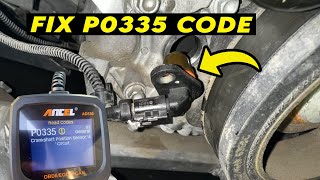
- Check Engine Light: This is often the first sign. A scanner will typically show code P0335, which points directly to a malfunction in the crankshaft position sensor circuit. 🎬 Watch: How to diagnose and fix a P0335 trouble code.
- Engine Stalling: The engine may stall unexpectedly while driving, especially when it's hot. After it cools down, it might start again, which is a classic sign of an intermittent sensor failure.
- No-Start or Hard Starting: Your Charger might crank but refuse to start. The engine's computer won't send spark or fuel if it doesn't get a signal from the crank sensor.
- Rough Idle and Misfires: An erratic signal can cause the engine to shake, run rough, or misfire because the ignition and fuel timing are off.
- Poor Acceleration and Reduced Fuel Economy: If the computer receives incorrect data, it can't optimize engine performance, leading to sluggish acceleration and more trips to the gas station.
Safety Warning: Do Not Ignore a Failing Sensor
An engine that stalls at any time, especially in traffic or at high speeds, is a serious safety risk. If you suspect your crankshaft sensor is failing, it's best to get it diagnosed and replaced promptly to avoid being stranded or causing an accident.
Choosing the Right Aftermarket Sensor
When it comes to a critical part like the crankshaft position sensor, quality matters. While an OEM Mopar part is always an option, high-quality aftermarket brands can offer similar performance and reliability, often at a better price. It's generally wise to avoid the cheapest, no-name options, as sensor quality can be inconsistent and lead to repeat failures.
Here’s a breakdown of aftermarket brand tiers to help you choose:
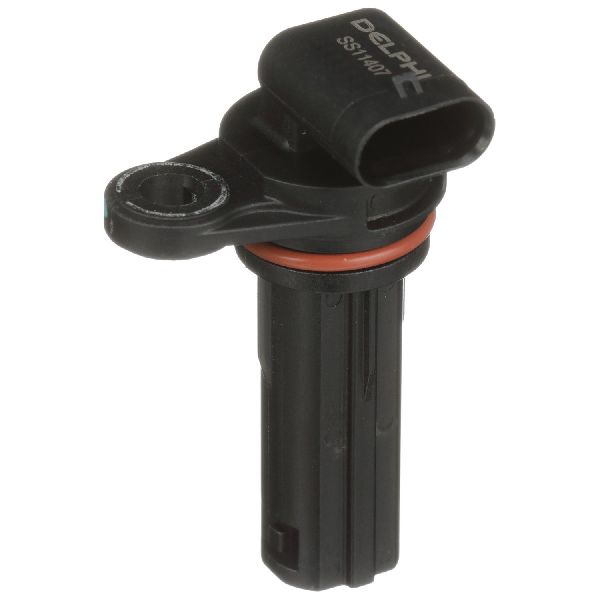
- Top Tier (OEM-Equivalent Quality): Brands like NGK (NTK) and Delphi are often original equipment suppliers for many automakers. They are known for their rigorous testing and adherence to OE specifications, making them a reliable choice. Hitachi is another brand with a strong reputation for quality electronics.
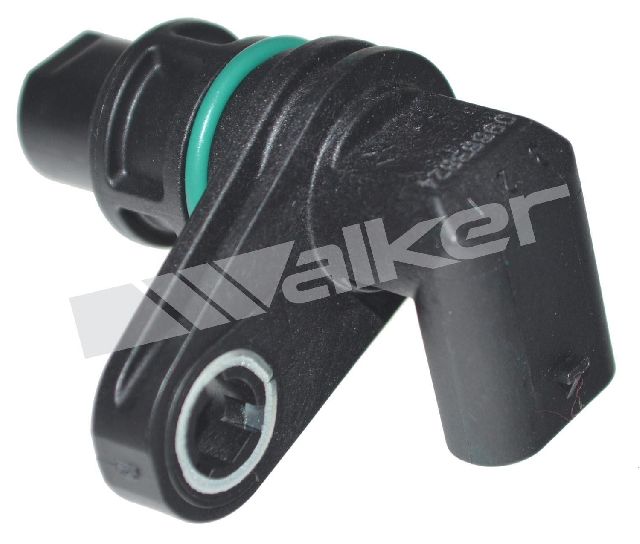
- Trusted Aftermarket Brands: Companies like Standard Ignition (SMP), Dorman, and Walker Products have a long history of producing reliable aftermarket parts. They offer a good balance of quality and value and are a popular choice for many repair shops and DIY mechanics.
- Value-Oriented Brands: Brands like Crown Automotive, Motorad, and others offer a more budget-friendly price point. While they can be a good option for a quick fix, for a sensor this critical, investing in a higher-tier brand is often recommended for long-term peace of mind.
Pro Tip: Check the Part Number
Always verify the part number fits your specific Charger's year and engine (3.6L V6, 5.7L HEMI, 6.4L HEMI, etc.). The sensor's location and design can vary. For example, a common Mopar part number for HEMI V8 engines is 68477925AB.
Known Issues, Recalls, and Service Bulletins
While there are no widespread recalls specifically for the crankshaft position sensor itself on 2014-2023 gas-engine Chargers, related issues have been noted. A recall (NHTSA 20V-475) was issued for some 2014-2020 Jeep Grand Cherokees and Ram 1500s with the 3.0L Diesel engine for a related tone wheel issue, but this does not apply to the gas-powered Charger. An older TSB (18-024-10) for 2008-2010 models mentioned adding a shim to the sensor to fix a P0339 code, but this is outside the 2014-2023 year range. Some older model year Chrysler vehicles had issues with the sensor's wiring harness connector, but this is less common on the specified model years.
Installation Overview
The difficulty of replacing the crankshaft sensor depends on your Charger's engine.
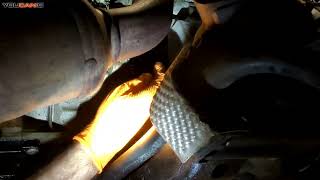
- For the 3.6L V6: The sensor is typically located on the passenger side of the engine block, near the transmission. It is often accessible from underneath the car, held in by a single 10mm bolt. 🎬 Watch: See the sensor location on a 3.6L V6 engine.
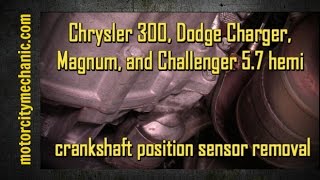
- For the 5.7L & 6.4L HEMI V8: The job is more involved. The sensor is located behind the starter motor on the passenger side. You must disconnect the battery and remove the starter (held by three bolts) to gain access to the sensor's single mounting bolt. 🎬 See this walkthrough for removing the sensor on HEMI V8 engines.
| Item | Estimated Cost |
|---|---|
| New Aftermarket Part | $23.84 - $83.72 |
| New OEM (Mopar) Part | $60 - $100 |
| Shop Labor | $100 - $250 |
| Total Professional Replacement | $125 - $350 |
*Costs are estimates and can vary based on your location, engine type, and the specific repair shop.
Frequently Asked Questions (FAQ)
Where is the crankshaft sensor located on my 2014-2023 Dodge Charger?
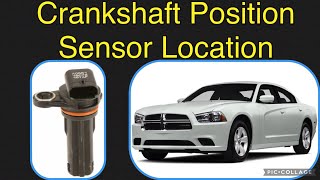
For 3.6L V6 engines, it's on the passenger side of the engine block near the transmission, accessible from underneath. For 5.7L and 6.4L HEMI V8 engines, it's hidden behind the starter motor, also on the passenger side.
Can I replace the crankshaft sensor myself?
Yes, it is a DIY-feasible job for someone with basic mechanical skills. On the V6, it's relatively straightforward. On the V8, it's more difficult due to needing to remove the starter. Always disconnect the battery's negative terminal before starting.
What happens if I don't replace a bad crankshaft sensor?
Ignoring the problem can lead to worsening symptoms like frequent stalling, which is a major safety hazard. It can also leave you stranded with a car that won't start. In some cases, continued misfires can damage your catalytic converter over time.
Should I buy an OEM Mopar sensor or an aftermarket one?
For a critical sensor like this, using a high-quality part is important. While Mopar is a guaranteed fit, top-tier aftermarket brands like NGK/NTK, Delphi, or Standard Ignition offer excellent reliability and can be more cost-effective. Some forum users and mechanics advise sticking to OEM or OEM-equivalent brands for critical electronics to avoid compatibility issues.
Do I need to perform a 'relearn' procedure after replacing the sensor?
In most cases for this vehicle generation, a specific relearn procedure is not required for the car to run. The ECU will adapt to the new sensor. However, some professional scan tools have a 'cam/crank relearn' function that can be performed to ensure perfect synchronization immediately. Clearing any stored fault codes with a scanner after installation is always recommended.
Helpful Videos
Technical Specifications
OEM Part Numbers: 68477925AB 68140678AC 68140678AB 5149230AA
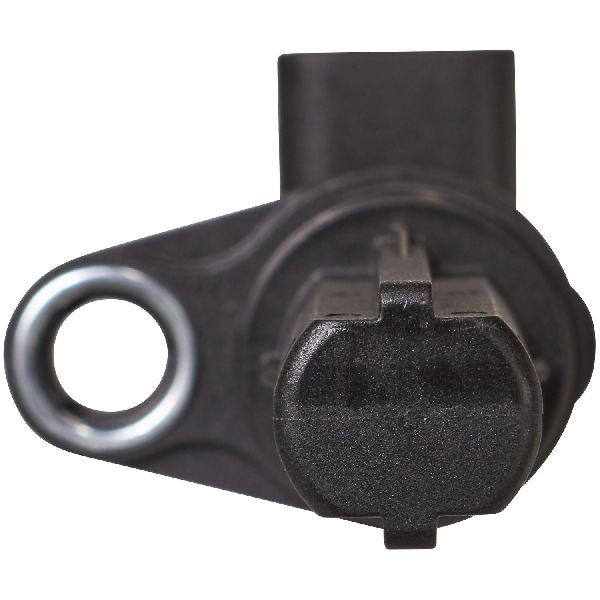
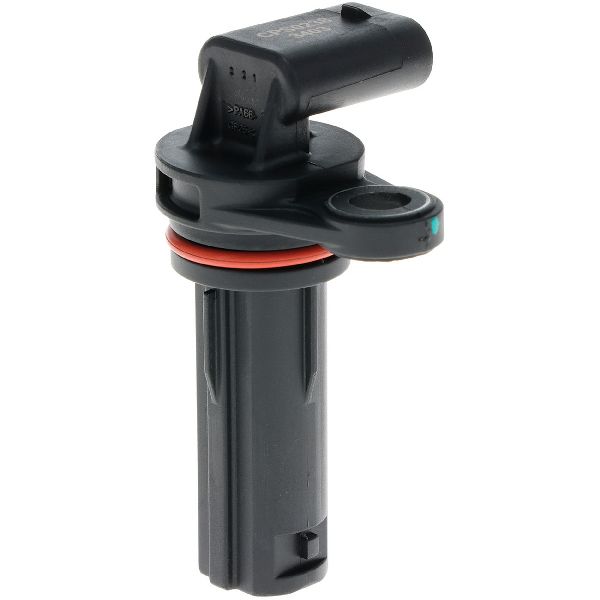
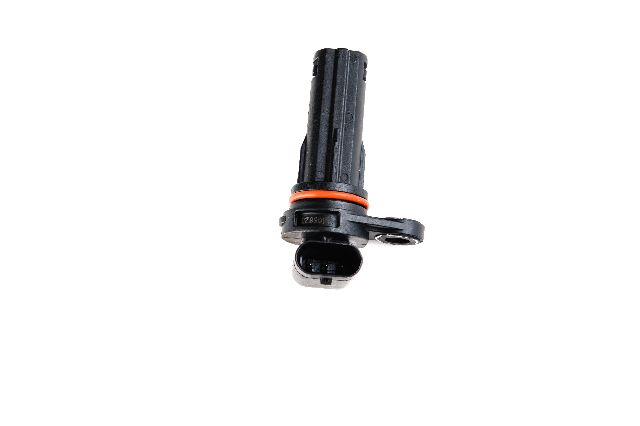
The sensor is a hall-effect or magnetic reluctance sensor that reads a toothed reluctor wheel on the crankshaft. It is typically secured by a single 10mm bolt and uses a 3-pin electrical connector.
We Have This Part in Stock


The information in this article is provided for general reference and educational purposes only. Vehicle specifications, procedures, and part compatibility can vary by production date, trim level, and region. Always consult your vehicle's factory service manual and verify part numbers before purchasing or performing repairs. Safety-critical components such as airbags, seat belts, and braking systems should be installed by a qualified professional.
- Dodge Charger:
- 🎬 Helpful Videos
- 🛍️ Shop This Part
- Is Your Charger Trying to Tell You Something?
- Symptoms of a Failing Crankshaft Position Sensor
- Safety Warning: Do Not Ignore a Failing Sensor
- Choosing the Right Aftermarket Sensor
- Pro Tip: Check the Part Number
- Known Issues, Recalls, and Service Bulletins
- Installation Overview
- Frequently Asked Questions (FAQ)
- 🎟️ Get 5% Off