

Ford F-150 (2015-2022) Intake Manifold Temperature Sensor: A Complete Guide
Diagnosing and replacing the intake air temperature sensor in your 2015-2022 Ford F-150 to restore performance and fuel economy.
- A bad intake temp sensor on your F-150 will cause a Check Engine Light, poor MPG, and rough running.
- Common fault codes include P0111, P0112, and P0113.
- On EcoBoost engines, the sensor is easy to access on the intake tube; on the 5.0L V8, it's part of the MAP sensor on the rear of the manifold.
- Replacement is a fast, easy DIY job for most owners, especially on EcoBoost models.
Understanding the Intake Temp Sensor on Your F-150

When your F-150 isn't running right, a tiny sensor could be the cause. The intake air temperature (IAT) sensor tells your truck's computer how hot or cold the air is that's going into your engine. This is critical for performance and fuel mileage. A bad sensor can feed the computer false information, leading to a host of driveability problems. On the 2015-2022 F-150, the exact sensor and its location depend on your engine.
- EcoBoost Engines (2.7L & 3.5L): These trucks often have multiple sensors measuring temperature and pressure. The sensor measuring the air temperature before the throttle body is typically a standalone IAT sensor located in the plastic intake tubing after the air filter box. This is the easiest to access and replace. There is often a second sensor, a Temperature/Manifold Absolute Pressure (TMAP) sensor, that reads the air temperature after the turbocharger and intercooler.
- 5.0L V8 Engines: On the V8, this function is usually integrated into the Manifold Absolute Pressure (MAP) sensor, making it a TMAP sensor. It is located on the back of the intake manifold, near the firewall, which makes it 🎬 See how to locate the sensor on 5.0L V8 models. more difficult to access than the sensor on the EcoBoost models.
Symptoms of a Failing Intake Temperature Sensor

A faulty IAT sensor will almost always trigger the Check Engine Light. The computer knows the signal it's receiving is out of range. Along with the light, you may experience one or more of the following issues:
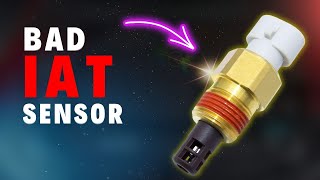
🎬 Watch: A breakdown of bad IAT sensor symptoms and causes.- Poor Fuel Economy: If the sensor incorrectly reads cold, the computer will inject more fuel than needed, wasting gas.
- Rough Idle: An unstable air-fuel mixture can cause the engine to idle erratically or even stall.
- Hesitation or Lack of Power: The engine may feel sluggish during acceleration because the fuel mixture and timing are not optimized for the actual air temperature.
- Hard Starting: Especially during cold weather, an incorrect temperature reading can make it difficult for the engine to start.
- Black Smoke from Exhaust: In severe cases, a rich fuel mixture caused by a faulty sensor can result in black smoke.
Choosing a New Aftermarket Sensor: Standard Ignition vs. OEM

When it's time to replace your F-150's intake temperature sensor, you have two main choices: Original Equipment Manufacturer (OEM) from Motorcraft or an aftermarket part from a brand like Standard Ignition (also known as Standard Motor Products or SMP). For a simple sensor like the IAT, a quality aftermarket part is often a smart choice.
Standard Ignition is a well-respected aftermarket brand that produces parts designed to be direct-fit OE replacements. Many professional mechanics use them, and they offer a good balance of quality and value. For a part like an IAT sensor, where the technology is straightforward, a Standard Ignition sensor can be expected to perform reliably.
Motorcraft (OEM) parts are what your truck was built with. They guarantee perfect fit and function. Some owners prefer to stick with OEM for all electronic components to ensure maximum compatibility and avoid any potential issues, even if it means paying a higher price. However, for a common and simple sensor, the performance difference is likely negligible for most drivers.
| Part Type | Estimated Cost |
|---|---|
| New OEM (Motorcraft) | $45 - $90 |
| New Aftermarket (Standard Ignition) | $15.85 - $35.38 |
| Shop Labor | $50 - $100 |
Note on Labor Costs: The labor cost assumes replacement of the easily accessible IAT sensor on EcoBoost models. Replacement of the integrated sensor on the 5.0L V8's intake manifold will be more time-consuming and therefore more expensive.
Frequently Asked Questions (FAQ)

Where is the intake temperature sensor on my 2015-2022 F-150?
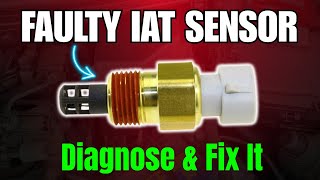
It depends on your engine. For 2.7L and 3.5L EcoBoost models, it's typically a small, two-wire sensor plugged into the plastic intake tube between the air filter housing and the throttle body. For 5.0L V8 models, the function is built into the MAP sensor located at the rear of the intake manifold against the firewall.
Can I just clean my IAT sensor?
Sometimes, if the sensor is just dirty with oil or debris, cleaning it with a dedicated Mass Airflow Sensor cleaner can restore its function. However, if the sensor has failed electronically and triggered a high/low circuit code (like P0113), cleaning will not fix it. Given the low cost of a new aftermarket part, replacement is often the most reliable solution.
What happens if I ignore a bad IAT sensor?
While your truck will likely still run, you will continue to experience poor fuel economy, reduced engine performance, and increased emissions. Over time, running a consistently rich fuel mixture can lead to other problems, like fouled spark plugs or damage to the catalytic converter. It's best to address the issue promptly.
Are there any recalls for the F-150 intake temperature sensor?
No, as of late 2024, there are no specific recalls or widespread Technical Service Bulletins (TSBs) from Ford for a faulty intake air temperature sensor on the 2015-2022 F-150 models.
Helpful Videos


Technical Specifications
OEM Part Numbers: DS7Z-12A697-A DY-1267
Typically a 2-pin thermistor sensor. Location and integration vary between EcoBoost and 5.0L V8 engines.
We Have This Part in Stock


The information in this article is provided for general reference and educational purposes only. Vehicle specifications, procedures, and part compatibility can vary by production date, trim level, and region. Always consult your vehicle's factory service manual and verify part numbers before purchasing or performing repairs. Safety-critical components such as airbags, seat belts, and braking systems should be installed by a qualified professional.
- Ford F-150: