

Coolant Temperature Sensor on Your 2015-2022 GMC Yukon XL: A Comprehensive Guide
If your Yukon XL's cooling fans won't shut off or the temp gauge is dead, the coolant temperature sensor is the likely cause.
- The most obvious sign of failure is the cooling fans running at full speed and not shutting off.
- This is a simple, low-cost, and quick DIY repair that requires minimal tools.
- If you have code P0128 or if a new sensor fails quickly, the root cause is likely a bad thermostat which should be replaced at the same time.
- A quality aftermarket sensor is a good value, but consider using an OEM AC Delco thermostat if you replace both parts.
Is Your Yukon XL's Coolant Temperature Sensor Failing?

When the coolant temperature sensor on a 2015-2022 GMC Yukon XL fails, it typically triggers a very specific and noticeable set of symptoms. Because the engine's computer can no longer read the actual engine temperature, it enters a fail-safe mode to protect the engine from potential overheating. This results in distinct and often confusing behavior.
Top Signs of a Bad Coolant Sensor
- Cooling Fans Run Constantly: This is the most common symptom. The cooling fans will run at full speed as soon as the vehicle is on, and may continue to run for several minutes after you shut the engine off. This is the computer's way of preventing an overheat condition it can no longer monitor.
- Temperature Gauge Reads Cold: The temperature gauge on your dashboard may stay at its lowest reading (often looking like it's stuck on 160°F) and never move, even when the engine is fully warmed up.
- Check Engine Light: A faulty sensor will almost always trigger a Check Engine Light. Common diagnostic trouble codes include P0117 (Sensor Circuit Low), P0118 (Sensor Circuit High), and P0128 (Coolant Thermostat Malfunction).
- Poor Fuel Economy & Rough Idle: With incorrect temperature data, the computer may command a rich fuel mixture, thinking the engine is still cold. This can lead to decreased MPG, a rough idle, and even the smell of unburnt fuel or black smoke from the exhaust.
Choosing a New Aftermarket Sensor

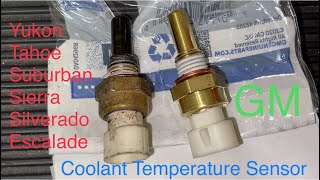
The original sensor on your Yukon XL is an AC Delco part. When shopping for a replacement, you will find both OEM AC Delco parts and various aftermarket options. For a simple electronic component like the ECT sensor, a quality aftermarket part from a reputable brand can be a very cost-effective choice, offering significant savings over the dealer price.
A Note on Aftermarket Parts and Repeat Failures
While a standard aftermarket sensor is often sufficient, some Yukon XL owners report that cheaper sensors can fail prematurely. If a sensor fails again shortly after replacement, the issue may not be the sensor itself. Forum discussions and mechanic recommendations frequently point to a failing thermostat as the root cause, especially when code P0128 is present. The thermostat can get stuck open, preventing the engine from reaching proper temperature, which can cause symptoms that mimic a bad sensor.
Pro Tip: For a lasting repair, many experienced owners and mechanics recommend replacing the thermostat at the same time as the coolant temperature sensor 🎬 See how to replace both the thermostat and sensor together., especially on higher-mileage vehicles. Using an OEM AC Delco thermostat is often suggested to avoid compatibility issues.
Replacement Cost
Replacing the coolant temperature sensor is a budget-friendly repair, especially if you do it yourself. Below are the estimated costs.
| Part/Service | Estimated Cost |
|---|---|
| New OEM (AC Delco) Sensor | $25 - $45 |
| New Aftermarket Sensor | $20 - $30 |
| Shop Labor | $60 - $120 |
| DIY Total (Aftermarket) | $20 - $30 |
| Shop Total (Aftermarket) | $80 - $150 |
Step-by-Step Installation Overview

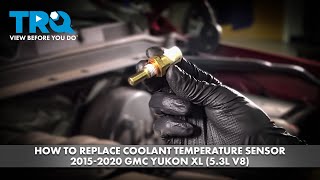
Replacing the sensor is a straightforward job that can be done in under 30 minutes 🎬 Watch this step-by-step sensor replacement guide for 5.3L engines. with basic tools. The sensor is located on the driver's side of the engine, right next to the thermostat housing.
- Access the Sensor: Remove the large plastic air intake tube that runs from the air filter box to the throttle body. This usually requires loosening two hose clamps with an 8mm socket or flathead screwdriver.
- Disconnect and Remove: Unplug the electrical connector from the sensor. Use a 19mm deep socket to unscrew the old sensor from the engine.
- Swap Quickly: Have the new sensor ready to install immediately. A small amount of coolant will leak out when the old sensor is removed. Quickly threading the new sensor in will minimize coolant loss.
- Reassemble: Tighten the new sensor until it is snug (do not overtighten), plug the electrical connector back in, and reinstall the air intake tube. Top off the coolant if needed.
Frequently Asked Questions (FAQ)
Where is the coolant temperature sensor located on the 2015-2022 GMC Yukon XL?
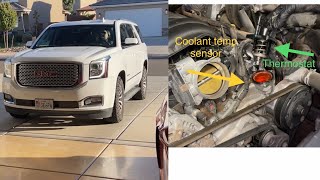
It is on the driver's side of the engine, threaded into the cylinder head right next to the thermostat housing. You will need to remove the air intake duct to see and access it easily.
Can I drive my Yukon XL with a bad coolant temperature sensor?
You can drive for short distances, but it is not recommended for long trips. The engine is in a protective fail-safe mode, which can cause very poor fuel economy and may not protect the engine if a real overheating issue occurs. It's best to get it repaired promptly.
Do I need to drain all the coolant to change the sensor?
No. You do not need to drain the entire cooling system. Some coolant will spill out when you remove the old sensor, so have a rag ready. If you are quick about swapping the new sensor in, you will only lose a few ounces of coolant, which can be topped off afterward.
My check engine light shows code P0128. Is it the sensor or the thermostat?
Code P0128 means the engine is not reaching operating temperature as quickly as the computer expects. While a bad sensor can cause this, the most common reason for this specific code 🎬 Follow this walkthrough to fix a P0128 trouble code. is a thermostat that is stuck open. For this reason, it is highly recommended to replace both the thermostat and the sensor at the same time to fully resolve the issue.
Helpful Videos
Technical Specifications
OEM Part Numbers: 213-4692 213-4514 19236568
2-wire, thread-in sensor with copper crush washer. Requires a 19mm deep socket for removal and installation.

The information in this article is provided for general reference and educational purposes only. Vehicle specifications, procedures, and part compatibility can vary by production date, trim level, and region. Always consult your vehicle's factory service manual and verify part numbers before purchasing or performing repairs. Safety-critical components such as airbags, seat belts, and braking systems should be installed by a qualified professional.
- GMC Yukon XL: