

Accessory Drive Belt Guide for 2015-2023 BMW X5
Understand the critical role of your X5's accessory drive belt and know the right time to replace it.
- Inspect the belt at every oil change for cracks or oil contamination; don't rely on mileage alone.
- A rattling noise often means the tensioner is failing, a known issue on B58 engines that must be addressed.
- Always replace the belt, tensioner, and idler pulleys together as a kit for a long-lasting repair.
- If the belt breaks, pull over and shut off the engine immediately to prevent catastrophic overheating damage.
Is Your X5 Making Strange Noises? It Could Be the Accessory Belt
The most common sign of a failing accessory drive belt is noise coming from the engine bay. A high-pitched squeal or chirp, especially when starting the engine or turning on the A/C, usually means the belt is worn and slipping. However, a rattling or grinding sound often points to a more specific problem: a failing belt tensioner or idler pulley. This is a known weak point, particularly on the 3.0L B58 engine found in many G05 generation X5 models (2019+).
Known Issues for the 2015-2023 BMW X5
While there are no direct recalls for the accessory drive belt, you should be aware of common failure points that affect it:
- Oil Leaks: A very common problem on both F15 and G05 generation X5s is an oil leak from the oil filter housing gasket or valve cover gasket. This leak drips oil directly onto the accessory belt, causing the rubber to swell, soften, and fail prematurely. A contaminated belt can shred and get pulled into the engine's front crankshaft seal, which can lead to catastrophic engine failure. Always fix oil leaks before or during a belt replacement.
- B58 Engine Belt Tensioner: The 3.0L inline-6 B58 engine has a widely documented issue with its belt tensioner, which can fail and become noisy even at low mileage. It is strongly recommended to replace the tensioner and idler pulleys at the same time as the belt.
- TSB B110521: A Technical Service Bulletin was issued for some 2022 models noting that the coolant pump pulley could fracture, causing the drive belt to come off.
Choosing the Right Aftermarket Belt: OEM vs. Bando
For a wear item like an accessory belt, a high-quality aftermarket part can offer the same performance as the Genuine BMW part for less money. Continental is often the original equipment manufacturer (OEM) for BMW, meaning they made the part that came on your X5 from the factory.
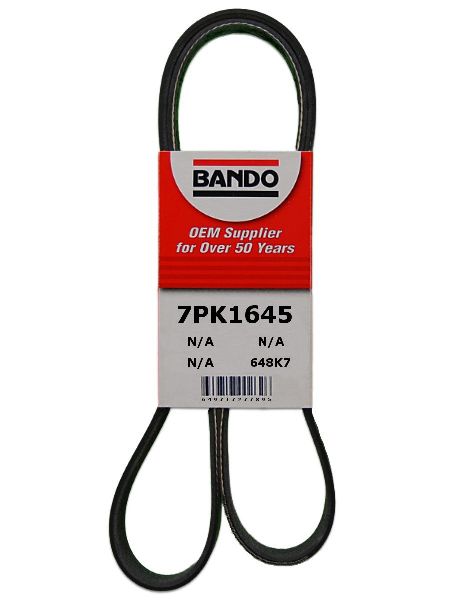
Bando is another excellent aftermarket brand. They are a major OEM supplier for many Japanese automakers and are known for producing reliable, long-lasting belts. Bando belts are made with durable EPDM rubber to resist heat and wear, and they are precision-ground to ensure a perfect fit and quiet operation. For your X5, a Bando belt is a dependable choice that meets or exceeds factory specifications.
Pro Tip: Replace Components as a Kit
Experienced mechanics always recommend replacing the accessory belt, the tensioner, and the idler pulleys all at the same time. These parts all wear at a similar rate. Installing a new belt with a worn tensioner or noisy pulley will cause the new belt to fail quickly, leaving you stranded. Buying a complete kit is the most reliable and cost-effective repair.
Accessory Drive Belt Replacement Cost for 2015-2023 BMW X5
| Part or Service | Estimated Cost |
|---|---|
| New OEM Belt | $60 - $80 |
| New Aftermarket Belt (Bando) | $13.74 - $42.12 |
| Shop Labor | $146 - $215 |
| Total Professional Replacement (Aftermarket) | $160 - $257 |
Cost estimates are for the belt only and do not include the highly recommended tensioner and idler pulleys. Prices can vary by location and vehicle engine type.
Frequently Asked Questions (FAQ)
How often should I replace my X5's accessory drive belt?
The general recommendation is every 60,000 to 100,000 miles. However, due to issues like oil leaks causing premature wear, it's more important to visually inspect the belt for cracks, fraying, or glazing at every oil change.
Can I drive my X5 if the accessory belt is broken?
No. You should pull over safely and shut off the engine immediately. A broken belt means the water pump has stopped working, and the engine will overheat in minutes, risking severe damage. You will also lose power steering and the ability for the battery to charge.
What is the difference between an accessory belt and a timing belt?
The accessory belt (or serpentine belt) runs components on the outside of the engine like the alternator and water pump. A timing belt or chain is located inside the engine and synchronizes the crankshaft and camshafts. All 2015-2023 BMW X5 models use a timing chain, not a timing belt, which is designed to last the life of the engine.
Is replacing the accessory belt a DIY job?
For an experienced DIYer, yes. The job is considered intermediate in difficulty and takes 1-2 hours. It requires removing parts like the engine fan and a cross-brace to get access, and you will need a special tool (like a T60 Torx bit) to release the belt tensioner.
Technical Specifications
OEM Part Numbers: 11289453611
The specific belt length and rib count (e.g., 6PK or 8PK) varies depending on your X5's engine (N55, B58, N63) and options. Always verify the correct part number for your specific vehicle before ordering.
We Have This Part in Stock

The information in this article is provided for general reference and educational purposes only. Vehicle specifications, procedures, and part compatibility can vary by production date, trim level, and region. Always consult your vehicle's factory service manual and verify part numbers before purchasing or performing repairs. Safety-critical components such as airbags, seat belts, and braking systems should be installed by a qualified professional.
- BMW X5:
- 🛍️ Shop This Part
- Is Your X5 Making Strange Noises? It Could Be the Accessory Belt
- Known Issues for the 2015-2023 BMW X5
- Choosing the Right Aftermarket Belt: OEM vs. Bando
- Pro Tip: Replace Components as a Kit
- Accessory Drive Belt Replacement Cost for 2015-2023 BMW X5
- Frequently Asked Questions (FAQ)
- 🎟️ Get 5% Off