

A Mechanic's Guide to the 2015-2023 Dodge Challenger Serpentine Belt
Keep your Challenger's powerhouse accessories running strong by knowing when and how to replace a worn serpentine belt.
- A broken serpentine belt will immediately disable your Challenger; do not drive it.
- Inspect your belt for cracks and wear starting at 60,000 miles; replace if any damage is found.
- For long-term reliability, replace the belt tensioner and idler pulleys at the same time as the belt.
- V6, 5.7L, 6.4L, and Hellcat engines all require different, specific belts. Ensure you purchase the correct part for your vehicle.
Symptoms of a Failing Serpentine Belt

A serpentine belt won't last forever. Heat, friction, and time cause the rubber to degrade. Before it fails completely, it will usually give you some warning signs. Ignoring them can lead to getting stranded.
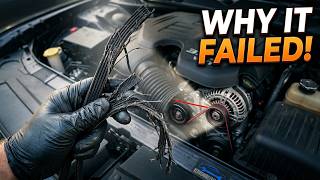
🎬 Watch: 3.6L Pentastar serpentine belt failure symptoms explained- Squealing or Chirping Noises: This is the most common symptom. A high-pitched squeal or chirp from the engine bay, especially on startup or when the A/C is turned on, often means the belt is slipping because it's worn, loose, or contaminated.
- Visible Wear and Tear: Pop the hood and inspect the belt. Look for cracks, fraying, missing chunks of the ribbed section, or a shiny, glazed appearance on the belt's surface. Any of these signs mean it's time for a replacement.
- Accessory and Electrical Issues: Since the belt drives the alternator, a slipping belt can cause the battery warning light to come on, your headlights to dim, or other electrical gremlins. You might also experience stiff steering or an A/C that doesn't blow cold air.
- Engine Overheating: The serpentine belt drives the water pump. If the belt slips or breaks, the pump stops circulating coolant, and the engine will overheat very quickly. If you see the temperature gauge spike, pull over immediately.
Known Issues: TSB for 2017 Models
Dodge issued Technical Service Bulletin (TSB) #0700517 for some 2017 Dodge Challenger models. The bulletin notes that an incorrect serpentine belt may have been installed at the factory, leading to belt squeal and a shorter-than-normal service life. If you own a 2017 model and experience persistent squealing, verify you have the correct part number installed.
Choosing the Right Aftermarket Serpentine Belt

The original Mopar belt on your Challenger is a quality part, but top-tier aftermarket brands often meet or exceed OEM specifications and can be a better value. Not all aftermarket parts are created equal, so it's important to choose a reputable brand.
Brand Quality Tiers
- Premium (OEM-Equivalent): Brands like Gates and Continental are major players in the belt industry and are often original equipment suppliers to automakers. They are widely trusted by professional mechanics for their durability and quiet operation. Choosing a belt from either of these brands is a safe bet for reliable, long-term performance.
- Quality Alternative: Dayco is another well-established brand that offers reliable serpentine belts. They are a solid choice and often provide a great balance of price and performance. While some forum users have reported occasional noise issues, they are generally considered a dependable option for daily use.
- Standard Replacement: Brands like Crown Automotive offer functional replacements that meet basic requirements. They can be a good budget-friendly choice for a vehicle that sees standard use.
Pro Tip: Replace the Tensioner and Idlers
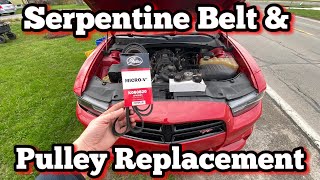
The serpentine belt's tension is maintained by a spring-loaded tensioner and guided by idler pulleys. These components have bearings that wear out over time. A failed tensioner or idler pulley can cause the new belt to fail or fly off. It is highly recommended to replace the belt tensioner and any idler pulleys at the same time you replace the belt, especially on higher-mileage vehicles. Many brands sell complete kits that include the belt, tensioner, and pulleys.
🎬 Watch: How to replace the belt and pulleys on a 5.7L HemiTypical Replacement Costs

The cost to replace a serpentine belt on a 2015-2023 Dodge Challenger can vary based on your engine and local labor rates. The job is relatively simple, so labor costs are typically low.
| Part/Service | Estimated Cost |
|---|---|
| New Aftermarket Belt | $28 - $96 |
| New OEM (Mopar) Belt | $50 - $110+ |
| Shop Labor | $50 - $150 |
| Total Estimated Cost | $95 - $250 |
Note: Costs are estimates and can vary. Replacing the tensioner and idler pulleys will add to the total cost.
Frequently Asked Questions (FAQ)

How often should I replace my Challenger's serpentine belt?
There is no strict replacement interval, but a general guideline is to inspect the belt starting around 60,000 miles and plan for replacement between 60,000 and 100,000 miles. If you live in a very hot climate, the rubber may degrade faster. Visual inspection is the best guide; if it's cracked or frayed, replace it regardless of mileage.
Does my Challenger's engine (V6, 5.7L, 6.4L, Hellcat) use a different belt?
Yes, absolutely. The different engines have different accessory layouts and require belts of specific lengths and sometimes different rib counts. It is critical to buy the exact belt specified for your Challenger's year and engine type. Using the wrong belt will either not fit or fail quickly.
What is a belt tensioner and should I replace it too?
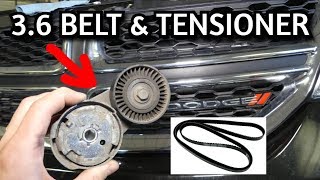
The belt tensioner is a spring-loaded arm with a pulley that automatically keeps the serpentine belt tight. The spring can weaken over time, or the pulley bearing can fail, causing noise or allowing the belt to slip. It is strongly recommended to replace the tensioner with the belt, especially if your car has over 75,000 miles or if you hear any rumbling or grinding noises from the pulleys.
Is it hard to replace the serpentine belt myself?
For a mechanically inclined person, this is a very feasible DIY job. The main step involves using a long-handled ratchet or breaker bar to rotate the tensioner, which loosens the belt so it can be removed. The most important part is to take a picture or find a diagram of the belt's routing path before you start. The job typically takes less than an hour.
🎬 See this 3.6L belt and tensioner replacement walkthroughHelpful Videos
Technical Specifications
OEM Part Numbers: 05038725AA
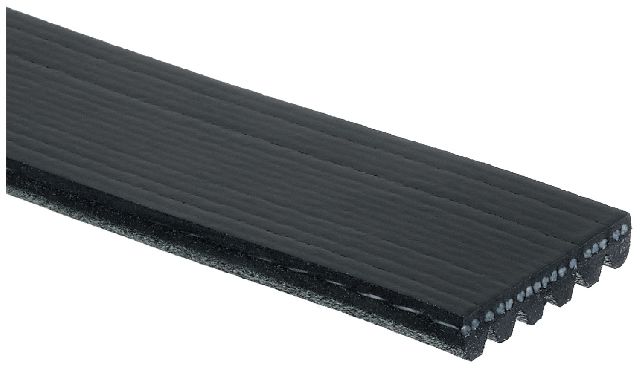
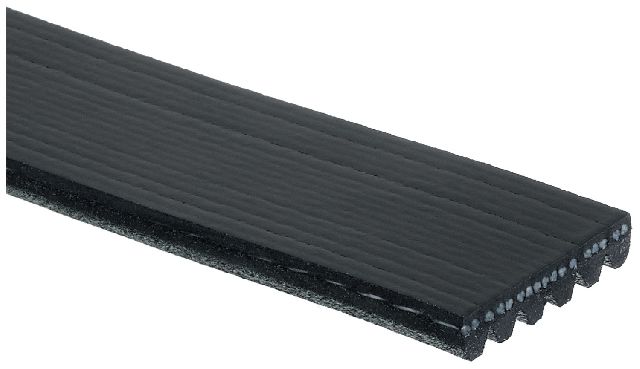
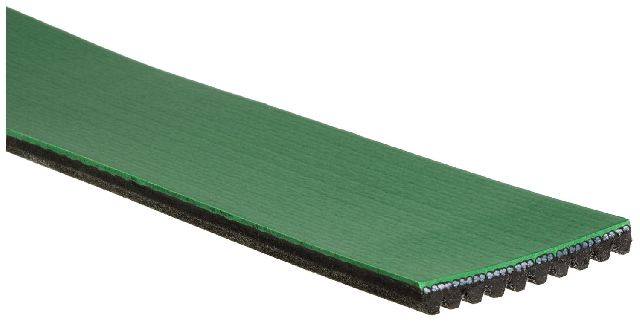
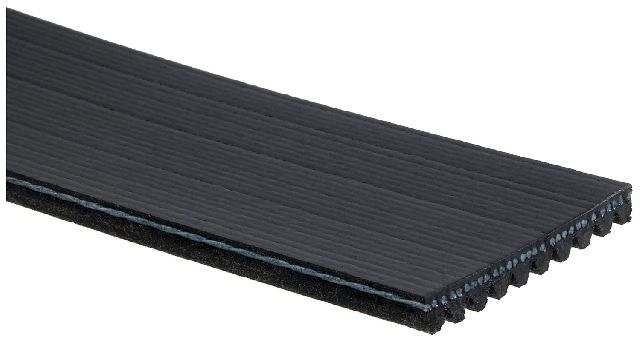
The correct serpentine belt is determined by your Challenger's specific year and engine (3.6L V6, 5.7L HEMI, 6.4L 392 HEMI, 6.2L Supercharged HEMI). Belts are not interchangeable between engine types due to differences in length and routing. Always verify fitment before purchasing.
We Have This Part in Stock

The information in this article is provided for general reference and educational purposes only. Vehicle specifications, procedures, and part compatibility can vary by production date, trim level, and region. Always consult your vehicle's factory service manual and verify part numbers before purchasing or performing repairs. Safety-critical components such as airbags, seat belts, and braking systems should be installed by a qualified professional.
- Dodge Challenger: