

Chevrolet Camaro Engine Coolant Temperature Sensor: 2016-2024 Guide
An essential guide for your 2016-2024 Camaro's engine coolant temperature sensor, from symptoms to replacement.
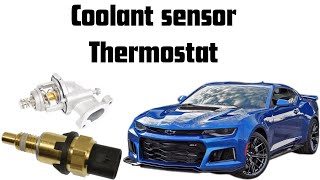
- For V6 models, a P0128 code is often caused by a bad thermostat, not the sensor. Replace both at the same time to save on labor.
- Replacement difficulty varies drastically by engine: it's easy on the V8/I4 but very difficult on the V6.
- Stick with OEM (ACDelco) or premium OEM-supplier (Delphi) brands for this sensor to ensure accurate readings and avoid repeat repairs.
- Driving with a bad sensor is not advised as you can't trust the temperature gauge, which risks engine overheating.
Symptoms of a Failing Coolant Temperature Sensor in a Camaro
When the ECT sensor in your Camaro starts to fail, it can cause a range of problems. Because the computer receives bad information, it makes poor decisions. You might notice one or more of these signs:
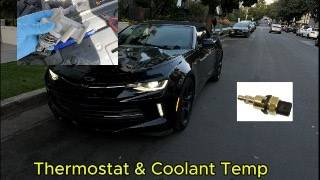
- Check Engine Light: This is often the first sign. You may see codes like P0117, P0118, or P0128. 🎬 Watch: A mechanic explains what these specific sensor codes mean.
- Cooling Fans Run Constantly: The fans may run at full speed, even when the engine is cold or turned off. This is a common fail-safe mode.
- Inaccurate Temperature Gauge: The gauge on your dash might stay on cold, even when the engine has warmed up, or it might not work at all.
- Poor Fuel Economy: If the sensor incorrectly tells the ECU the engine is cold, the computer will enrich the fuel mixture, wasting gas.
- Engine Overheating: If the sensor fails to report that the engine is hot, the cooling fans may not turn on when needed.
- Black Smoke from Exhaust: This is a sign of a rich fuel mixture, which can be caused by a faulty sensor sending a permanent "cold" signal.
- A/C Stops Working: As a fail-safe, the car's computer may disable the air conditioning system when it detects a critical engine sensor fault.
V6 Owners: Check the Thermostat First!
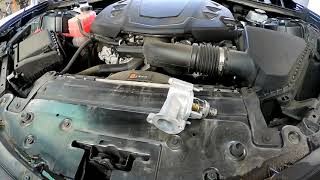
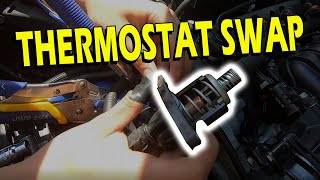
For 3.6L V6 Camaros, the diagnostic code P0128 (Engine Coolant Temperature Below Thermostat Regulating Temperature) is very common. In many cases, the actual problem is a thermostat stuck open, not a bad sensor. Since replacing the sensor on the V6 is a difficult job that requires removing the intake manifold, 🎬 See how to access and change the V6 engine thermostat. it is highly recommended to replace the thermostat at the same time.
Choosing the Right Aftermarket Sensor
While many aftermarket parts offer good value, an engine coolant temperature sensor is not a part where you want to cut corners. An inaccurate sensor can hurt performance and fuel economy. For this specific part on the Camaro, quality matters.
| Brand Tier | Brands | Honest Assessment |
|---|---|---|
| OEM / Premium Aftermarket | ACDelco, Delphi | ACDelco is the original GM parts brand and is the safest bet for perfect fit and accurate readings. Delphi is also a primary OEM supplier for GM, and their parts are considered to be of equal quality. For a critical sensor, sticking with these brands is strongly recommended by mechanics and enthusiasts. |
| Quality Aftermarket | NGK/NTK, Standard Motor Products (SMP), Holstein | These are reputable aftermarket brands that generally produce reliable parts. They are a viable alternative to OEM, but for a sensor this critical and difficult to access (on the V6), the small cost savings may not be worth the risk of slightly different temperature readings. |
| Economy Brands | Four Seasons, Walker Products, Global Parts, True Tech | While these brands offer the lowest price, they are best suited for less critical applications. There are reports of cheaper sensors failing quickly or providing inaccurate readings, which can lead to the same problems you were trying to fix. It is generally advised to avoid the cheapest options for this part. |
Known Issues, Recalls, or TSBs
As of early 2026, there are no specific recalls or Technical Service Bulletins (TSBs) from Chevrolet or the NHTSA directly concerning the engine coolant temperature sensor for the 2016-2024 Camaro. The most common related issue reported by owners is the failure of the thermostat, which can trigger sensor-related fault codes.
Frequently Asked Questions (FAQ)
How hard is it to replace the coolant sensor on a Camaro?
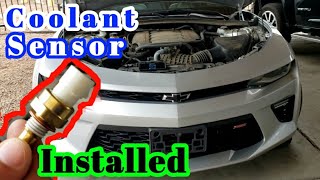
The difficulty depends entirely on your engine. For the V8 (6.2L) and 4-cylinder (2.0L) engines, it is a relatively easy job that takes less than an hour. 🎬 Watch: Step-by-step coolant sensor installation for the Camaro SS V8. However, for the V6 (3.6L) engine, the sensor is located under the intake manifold, making it a much more difficult and time-consuming job (around 2-3 hours) that requires more significant disassembly.
Can I drive my Camaro with a bad coolant temperature sensor?
It is not recommended for extended periods. The engine's computer is in a fail-safe mode, which can lead to poor fuel economy, rough running, and potential long-term damage from overheating or carbon buildup. If the temperature gauge is not working, you have no way of knowing if the engine is dangerously overheating.
Why is the replacement cost so high for the V6 model?
The high cost is due to labor. On the 3.6L V6, the sensor is buried under the intake manifold. A mechanic has to spend several hours removing parts just to access the sensor, which significantly increases the labor charge. The part itself is inexpensive.
Should I replace the thermostat at the same time?
Yes, it is highly recommended, especially on the V6 engine. A faulty thermostat is a common cause of coolant temperature codes, and since the labor to access these parts on the V6 is so intensive, replacing both at once saves you from potentially having to do the same job twice.
Helpful Videos

Technical Specifications
OEM Part Numbers: 12656444 12636534 12650595 12606670
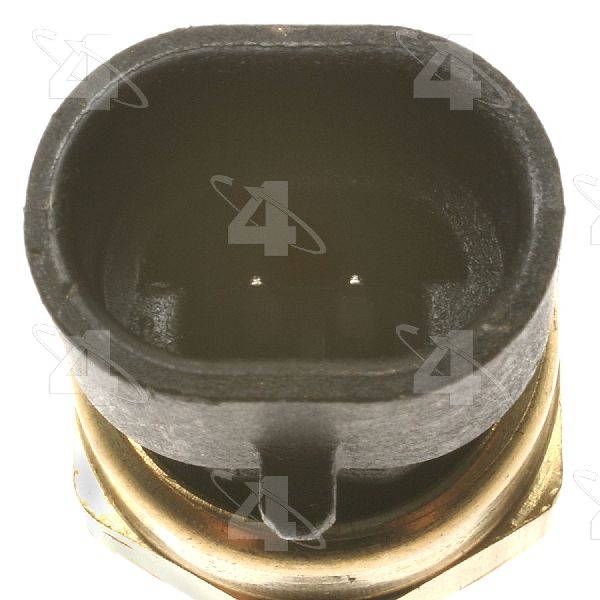
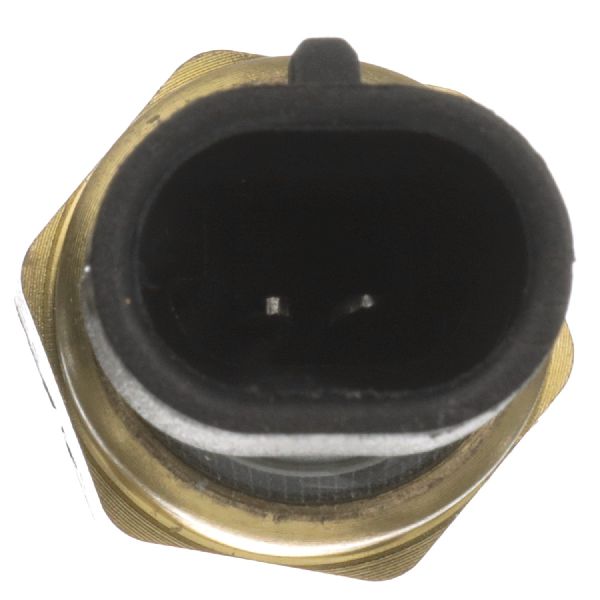
2-pin thermistor-type sensor. Resistance changes with coolant temperature to provide a voltage signal to the ECU.
We Have This Part in Stock


The information in this article is provided for general reference and educational purposes only. Vehicle specifications, procedures, and part compatibility can vary by production date, trim level, and region. Always consult your vehicle's factory service manual and verify part numbers before purchasing or performing repairs. Safety-critical components such as airbags, seat belts, and braking systems should be installed by a qualified professional.
- Chevrolet Camaro: