

A Guide to the Engine Oil Cooler for the 2017-2022 Volkswagen Passat
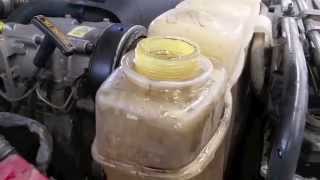
If you're seeing milky sludge in your coolant tank, your Passat's engine oil cooler has likely failed.
- The primary sign of failure is milky, brown sludge in the coolant tank, which requires you to stop driving immediately.
- This issue is often misdiagnosed as a blown head gasket, but a failed oil cooler is a more common and less expensive repair on these engines.
- When replacing the cooler, it is critical to also perform a complete cooling system flush and an engine oil change to remove all contamination.
- Consider replacing the entire oil filter housing assembly, not just the cooler, as the plastic housing itself is a known weak point.
Is Your Passat's Engine Oil Cooler Failing?
A failing oil cooler on the 2017-2022 Passat isn't just a minor leak; it can cause serious engine problems. The most common failure is an internal leak between the oil and coolant passages. Because oil pressure is higher than coolant pressure, oil gets forced into the cooling system. This creates a thick, sludgy mess and compromises both your engine's lubrication and its ability to stay cool.
Key Failure Symptoms
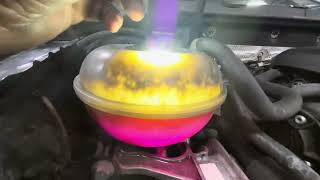
- Milky, Brown Sludge in Coolant: This is the most definite sign. If you open your coolant expansion tank (the plastic bottle for your antifreeze) and see a substance that looks like a chocolate milkshake or mayonnaise 🎬 Watch: Why oil contaminates the coolant on VW 2.0T engines, your oil and coolant are mixing.
- Engine Overheating: When oil contaminates the coolant, the mixture can't transfer heat effectively. This can clog passages in your radiator and cause the engine temperature to rise into the red zone.
- External Leaks: You might see puddles of pink coolant or dark engine oil on the ground under your car. The plastic housings used on these engines are known to become brittle and crack over time, causing external leaks.
- Dashboard Warning Lights: An overheating engine or a significant loss of oil pressure can trigger the engine temperature light, oil pressure light, or the check engine light.
Do Not Drive Your Vehicle
If you suspect your oil cooler has failed and fluids are mixing, do not continue to drive. Running the engine with poor lubrication and compromised cooling can lead to severe and catastrophic engine damage very quickly.
Choosing the Right Aftermarket Oil Cooler
When shopping for a replacement, you'll find options ranging from the basic cooler element to complete housing assemblies. The original factory parts often use plastic housings that are prone to cracking. Aftermarket brands offer a range of quality and price points.
Brand Quality Tiers
- Good (Value): URO Parts
URO Parts is a budget-friendly option that provides a direct-fit replacement. While the brand aims to meet or exceed OEM specifications and offers parts that are often unavailable elsewhere, some users in forums have reported fitment issues with other plastic components from the brand. For a Passat owner on a tight budget, it's a viable choice, but be aware of potential quality differences compared to premium brands. - Better (Standard Replacement): Standard Ignition (SMP)
Standard Ignition is a well-regarded manufacturer known for producing reliable, OE-quality replacement parts. They emphasize their testing and validation process to ensure proper fit and long-term performance. This brand represents a safe, high-quality choice for a standard repair without the high cost of a genuine dealer part. - Best (Performance/Heavy-Duty): Derale
Derale specializes in high-performance cooling products. Their coolers are often universal or designed as upgrades, featuring robust construction that can offer better cooling than stock. A Derale cooler might be a good choice if you are looking for a heavy-duty upgrade, but be aware that it may require modification for installation, as it might not be a direct bolt-on replacement for your Passat.
Pro Tip: Replace the Whole Assembly
The oil cooler is often part of a larger oil filter housing assembly. The plastic on these housings is a known failure point on VW engines. If you have an external leak or high mileage, it is wise to replace the entire housing assembly, not just the cooler element, to prevent future leaks from the housing itself.
Cost of Replacing a VW Passat Engine Oil Cooler
The cost can vary significantly based on whether you replace just the cooler or the entire housing assembly, and whether you do the work yourself or use a professional shop.
| Part/Service | Estimated Cost |
|---|---|
| New Aftermarket Part | $79.57 - $591.60 |
| New OEM Part | $448 - $499 |
| Shop Labor | $410 - $601 |
| Total Professional Repair | $858 - $1,101 |
Frequently Asked Questions (FAQ)
Is there a recall on the 2017-2022 Passat oil cooler?
No, there are no specific recalls for the engine oil cooler on the 2017-2022 Volkswagen Passat. However, the failure of the plastic water pump and thermostat housing, which is part of the same system, is a very common issue on these EA888 engines.
Can I replace the oil cooler myself?
This is a job for an experienced DIY mechanic. Accessing the oil cooler requires removing several other components, which may include the intake manifold or alternator. It requires a good set of tools, including Torx and triple-square bits, and takes several hours. If you are not comfortable with complex repairs, it is best to leave this to a professional.
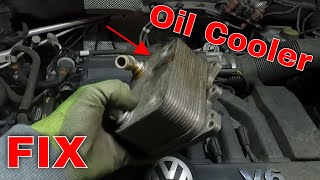
🎬 See this walkthrough on replacing the oil coolerIs a leaky oil cooler the same as a blown head gasket?
They have similar symptoms, specifically the mixing of oil and coolant. However, an oil cooler failure is much more common on these VW engines and is a less expensive repair. A mechanic can perform a "block test" to check for combustion gases in the coolant, which would confirm a blown head gasket. Always check the oil cooler first.
What else should I do when replacing the oil cooler?
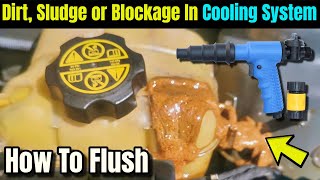
It is critical to thoroughly flush the cooling system multiple times to remove all of the oil contamination. Any sludge left behind can cause future overheating problems. 🎬 Watch: How to flush a cooling system contaminated with oil You must also change the engine oil and filter to remove any coolant that may have mixed in.
Helpful Videos
Technical Specifications
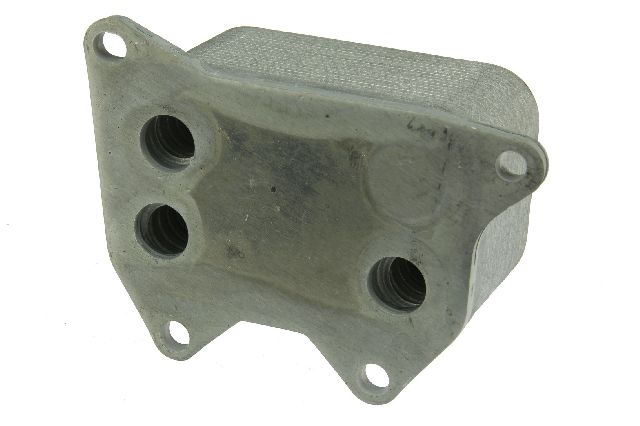
OEM Part Numbers: 06K117021B 06K117021K
Plate-style, oil-to-coolant heat exchanger, typically integrated with the oil filter housing assembly.
We Have This Part in Stock


The information in this article is provided for general reference and educational purposes only. Vehicle specifications, procedures, and part compatibility can vary by production date, trim level, and region. Always consult your vehicle's factory service manual and verify part numbers before purchasing or performing repairs. Safety-critical components such as airbags, seat belts, and braking systems should be installed by a qualified professional.
- Volkswagen Passat:
- 🎬 Helpful Videos
- 🛍️ Shop This Part
- Is Your Passat's Engine Oil Cooler Failing?
- Key Failure Symptoms
- Do Not Drive Your Vehicle
- Choosing the Right Aftermarket Oil Cooler
- Brand Quality Tiers
- Pro Tip: Replace the Whole Assembly
- Cost of Replacing a VW Passat Engine Oil Cooler
- Frequently Asked Questions (FAQ)
- 🎟️ Get 5% Off