

Audi Q7 (2017-2023) Engine Coolant Thermostat: A Complete Guide
Experiencing overheating or no heat in your Q7? Your thermostat might be the culprit.
- A failing thermostat can cause either overheating (stuck closed) or a slow warm-up with no heat (stuck open).
- The thermostat and water pump are common failure points and should be replaced together to save on future labor costs.
- Replacement is a high-labor job (4+ hours), making professional installation expensive.
- For reliability, choosing an OEM or high-quality OEM-equivalent part is strongly recommended over lower-cost or 'racing' alternatives.
Is your Audi Q7 thermostat failing?

A failing thermostat in the 2017-2023 Audi Q7 can cause a range of frustrating issues. It typically fails in one of two ways: stuck open or stuck closed. Both can cause problems, but a thermostat stuck closed is far more dangerous for your engine.
Key Symptoms of a Bad Thermostat
- Overheating: If the thermostat is stuck closed, coolant can't get to the radiator. Your temperature gauge will spike into the red, and you may get an engine overheating warning. This is a serious condition that can cause severe engine damage.
- Slow to Warm Up: If the thermostat is stuck open, coolant flows to the radiator constantly. This makes it take a very long time for your engine to reach its normal operating temperature, especially in cold weather.
- No Heat or Lukewarm Heat: When the engine can't get up to temperature because the thermostat is stuck open, the heater in your cabin won't blow hot air.
- Erratic Temperature Gauge: You might see the temperature gauge fluctuate wildly, going from normal to hot and back again.
- Coolant Leaks: The thermostat housing is often a source of coolant leaks. You might notice pink or purple fluid dripping under the front of your vehicle or see dried coolant residue around the thermostat housing itself.
A Note on the Water Pump
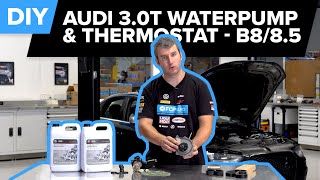
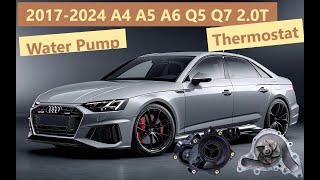
On the Audi Q7, especially those with the 3.0T engine, the thermostat is closely linked with the water pump. These parts are often replaced together as a single unit. There is a known history of premature water pump failures in these engines, which can also cause coolant leaks and overheating. If you are replacing the thermostat, it is highly recommended to replace the water pump at the same time to avoid a similar, labor-intensive repair in the near future.
Choosing the Right Aftermarket Thermostat

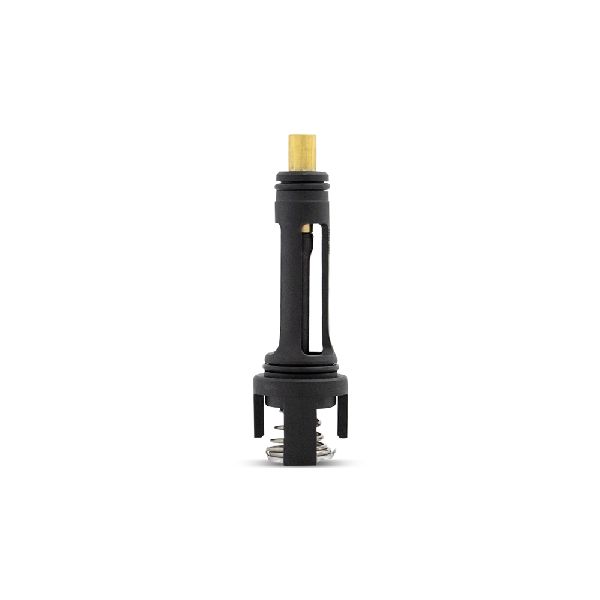
When your Q7's thermostat fails, you have a choice between an original equipment (OEM) part from Audi and several aftermarket options. For this specific vehicle, the thermostat is typically sold as a complete housing assembly.
OEM vs. Aftermarket
- OEM (Original Equipment Manufacturer): This is the exact part your vehicle was built with. It guarantees perfect fit and function. Given the electronic controls and precise temperature management in modern Audis, OEM is often the safest bet.
- Aftermarket: These parts are made by companies other than the original manufacturer. They can be a cost-effective alternative. For the Q7, you'll find brands like Mishimoto and Motorad.
Brand Tiers for Your Audi Q7
Mishimoto: Mishimoto often markets its thermostats as "racing" or performance parts that open at a lower temperature. While this might sound like an upgrade, it's generally not recommended for a daily-driven Q7. The engine is designed to run at a specific temperature for efficiency and emissions. A lower-temp thermostat can prevent the engine from reaching this optimal temperature, potentially leading to reduced fuel economy and check engine lights. Reviews for these products are mixed, with some users reporting no benefit or even worse performance.
Motorad: Motorad is a large manufacturer that produces a wide range of thermostats, including some that are supplied as original equipment to carmakers. Their products are widely available and priced competitively. However, user reviews are inconsistent; some owners report long-term success, while others have experienced premature failures. If choosing this option, ensure it is a standard temperature replacement, not a "fail-safe" or low-temp model.
Pro Tip: For a complex and sensitive vehicle like the Audi Q7, sticking with an OEM or a high-quality OEM-equivalent thermostat is the most reliable choice. The potential savings on a budget aftermarket part are often not worth the risk of premature failure, poor performance, or the high labor cost of doing the job twice.
Replacement Costs

Replacing the thermostat on a 2017-2023 Audi Q7 is a labor-intensive job, especially on the 3.0T engine where the supercharger must be removed for access. The 2.0T engine also requires significant disassembly.
| Part/Service | Estimated Cost |
|---|---|
| New OEM Thermostat Assembly | $100 - $220 (part only) |
| New Aftermarket Thermostat Assembly | $72 - $94 (part only) |
| Shop Labor | $800 - $1600+ |
| Total Professional Replacement | $900 - $1820+ |
Frequently Asked Questions

Can I drive my Audi Q7 with a bad thermostat?
It is not recommended. If the thermostat is stuck closed and the engine is overheating, you should stop driving immediately to prevent catastrophic engine damage. If it's stuck open, you can drive short distances, but the poor engine performance, bad fuel economy, and lack of heat will be significant issues.
Are there any recalls for the Audi Q7 thermostat?
No, there are no official NHTSA recalls for the engine coolant thermostat on the 2017-2023 Audi Q7. However, the high failure rate of the water pump and thermostat assembly on 3.0T engines has led to class-action investigations.
Should I replace the water pump with the thermostat?
Yes. The thermostat and water pump are located together and require the same significant labor to access. It is standard practice and highly recommended to replace both at the same time, even if only one has failed.
What coolant should I use for my Audi Q7?
Always use the correct Audi-specified coolant, which is typically a G12++, G13, or newer compatible formula. It is a pink or purple color. Using the wrong type of coolant can cause damage to the cooling system and engine. Check your owner's manual or the coolant reservoir cap for the exact specification.
Helpful Videos

Technical Specifications
OEM Part Numbers: 06L121111H 06L121111M 06L121111G 06L121111J 06L121111L 06E121111AT
Sold as a complete housing assembly, often kitted with the water pump. Electronically controlled. Standard temperature opening is approximately 90°C (194°F).
We Have This Part in Stock


The information in this article is provided for general reference and educational purposes only. Vehicle specifications, procedures, and part compatibility can vary by production date, trim level, and region. Always consult your vehicle's factory service manual and verify part numbers before purchasing or performing repairs. Safety-critical components such as airbags, seat belts, and braking systems should be installed by a qualified professional.
- Audi Q7: