

A Ford Explorer Owner's Guide to the 2017-2025 Serpentine Belt
Know the signs of a failing serpentine belt to keep your Explorer's engine accessories running properly.
- Visually inspect your serpentine belt for cracks and fraying at every oil change.
- A squealing noise is the first and most common warning sign that your belt needs attention.
- Confirm your Explorer's model year and engine (e.g., 3.5L vs 2.3L) before ordering, as belts for 2017-2019 and 2020-2025 models are different.
- For a complete and lasting repair, strongly consider replacing the belt tensioner and idler pulleys at the same time as the belt.
Understanding Your Explorer's Serpentine Belt

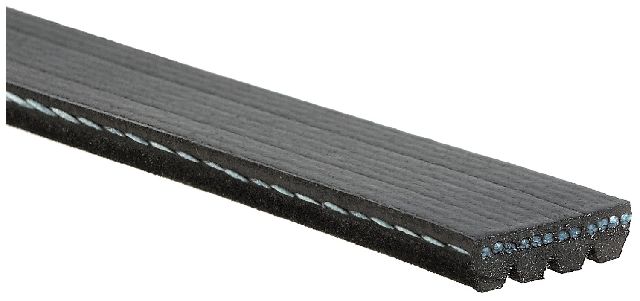
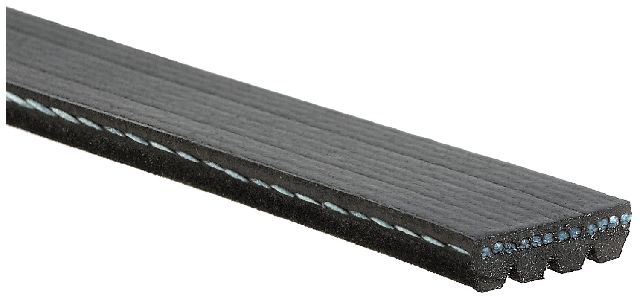
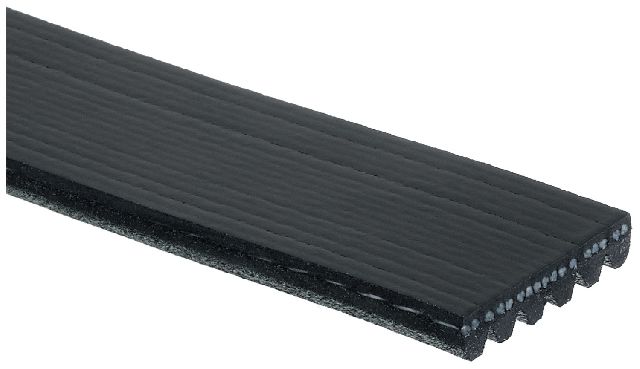
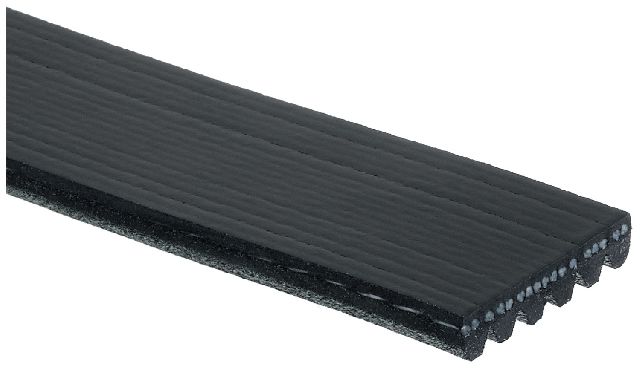
The serpentine belt is a critical wear-and-tear item in your Ford Explorer's engine bay. Its job is to transfer power from the engine's crankshaft to vital components like the alternator, water pump, power steering pump, and air conditioning compressor. Because it's made of a durable rubber composite, it will eventually wear out from heat and friction. Regular inspection is key to avoiding a sudden breakdown.
Generation and Engine Matters
The Ford Explorer was redesigned in 2020, creating a split in this year range. 2017-2019 models (5th Gen) and 2020-2025 models (6th Gen) use different engines and, therefore, different serpentine belts. Always confirm your Explorer's year and engine (e.g., 2.3L EcoBoost, 3.5L V6) before ordering a part. Using the wrong belt will lead to improper fit and potential damage.
Symptoms of a Failing Serpentine Belt

A worn serpentine belt will give you several warning signs before it fails completely. Ignoring them can leave you stranded.
- Squealing or Chirping Noises: This is the most common symptom. A high-pitched squeal, especially on cold starts or during sharp turns, often means the belt is slipping.
- Visible Wear and Tear: Pop the hood and look at the belt. Cracks, fraying, missing ribs, or a glazed, shiny appearance are all signs it's time for a replacement.
- Accessory Problems: If your headlights are dimming, your A/C isn't blowing cold, or steering becomes difficult, the belt may not be properly powering the alternator or power steering pump.
- Overheating: The serpentine belt often drives the water pump. If the belt slips or breaks, the engine can overheat quickly, leading to serious damage.
Known Issues, TSBs, and Recalls
While there are no direct recalls for the serpentine belt itself on these models, Ford has issued Technical Service Bulletins (TSBs) related to the accessory drive system. For example, TSB #SSM 48001 addresses a squeal noise from the accessory drive belt on some 2016-2019 Explorer models with the 2.3L EcoBoost engine, which could also involve the alternator pulley. Always check for TSBs related to your specific year and engine if you experience persistent belt noise.
Choosing the Right Aftermarket Serpentine Belt

When replacing your belt, you have a choice between the original equipment (OEM) Motorcraft part and several high-quality aftermarket brands.
Pro Tip: While replacing the belt, it's a good idea to also inspect the belt tensioner and idler pulleys. These components can also wear out and cause belt failure. Replacing them at the same time as the belt is a cost-effective preventative measure.
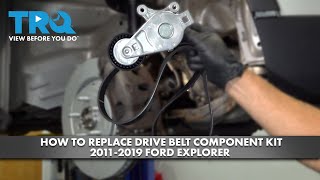
🎬 See how to replace the belt along with the tensioner.| Brand | Quality Tier | Notes |
|---|---|---|
| Motorcraft | OEM | This is the factory-installed brand, guaranteeing a perfect fit and function for your Explorer. While often the most expensive option, it's the benchmark for quality. |
| Gates | Top-Tier Aftermarket | Often considered an OEM-equivalent or even an upgrade. Gates is a highly respected brand in the automotive world, known for durability and reliability. |
| Continental | Top-Tier Aftermarket | Another major OEM supplier, Continental belts are known for their quiet operation and long life. They are a popular and trusted choice among professional mechanics. |
| Dayco | Quality Aftermarket | Dayco offers a solid balance of performance and value. Their belts are made with quality materials like EPDM rubber and are a reliable choice for most daily-driver applications. |
Estimated Replacement Costs

The cost to replace a serpentine belt can vary based on your vehicle's engine and whether you do the work yourself or hire a professional.
| Item | Estimated Cost |
|---|---|
| New Aftermarket Serpentine Belt | $21 - $74 |
| New OEM (Motorcraft) Serpentine Belt | $25 - $50 |
| Shop Labor | $100 - $200 |
Frequently Asked Questions (FAQ)
How often should I replace my Explorer's serpentine belt?
Ford recommends inspecting it at regular service intervals and replacing it if it hasn't been changed in the last 100,000 miles. However, many mechanics suggest a replacement between 60,000 and 90,000 miles as preventative maintenance, especially if you see any signs of wear.
Can I replace the serpentine belt myself?
For many owners with mechanical aptitude, yes. The difficulty is generally considered intermediate. It requires a specific tool to release the tensioner and careful routing of the new belt. Access can be tight, especially on certain engine models. If you are not comfortable, it's a relatively quick job for a qualified mechanic.
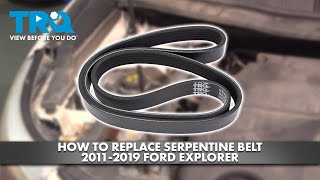
🎬 Watch this step-by-step guide to replacing your serpentine belt.What is a belt tensioner and should I replace it too?
The belt tensioner is a spring-loaded pulley that automatically keeps the serpentine belt tight. Over time, the spring can weaken or the pulley bearing can fail, causing noise or allowing the belt to slip. It is highly recommended to inspect the tensioner when changing the belt and replace it if it shows any signs of wear, wobble, or noise.
What's the difference between the main belt and a "stretch belt"?
Some Explorer models may use a smaller, secondary "stretch belt" for the A/C compressor. These belts do not have a tensioner and are designed for one-time use. They require a special tool to install and must be replaced if removed.
Helpful Videos
Technical Specifications
OEM Part Numbers: GB5Z-8620-A DA8Z-8620-A GB5Z-8620-B L1MZ-8620-F
Varies by engine. The 5th generation (2017-2019) primarily used the 3.5L V6 (naturally aspirated and EcoBoost) and 2.3L EcoBoost I4. The 6th generation (2020-2025) uses the 2.3L EcoBoost I4, 3.0L EcoBoost V6, and 3.3L Hybrid V6. Each engine has a specific belt length and rib count.
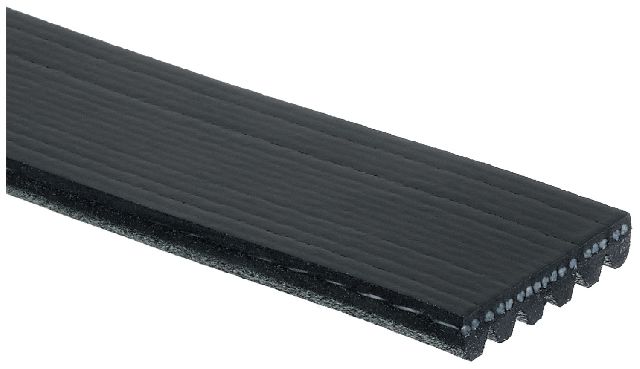
We Have This Part in Stock

The information in this article is provided for general reference and educational purposes only. Vehicle specifications, procedures, and part compatibility can vary by production date, trim level, and region. Always consult your vehicle's factory service manual and verify part numbers before purchasing or performing repairs. Safety-critical components such as airbags, seat belts, and braking systems should be installed by a qualified professional.
- Ford Explorer:
- 🎬 Helpful Videos
- 🛍️ Shop This Part
- Understanding Your Explorer's Serpentine Belt
- Generation and Engine Matters
- Symptoms of a Failing Serpentine Belt
- Known Issues, TSBs, and Recalls
- Choosing the Right Aftermarket Serpentine Belt
- Estimated Replacement Costs
- Frequently Asked Questions (FAQ)
- 🎟️ Get 5% Off