

A Guide to Replacing the Oxygen Sensors on Your 2020-2024 Audi A8 Quattro
If a check engine light has you worried about your A8's performance, a faulty oxygen sensor is a likely culprit.
- A bad oxygen sensor will almost always trigger the Check Engine Light and hurt your fuel economy.
- Your 2020-2024 A8 Quattro has four O2 sensors; a scan tool is needed to identify the specific one that has failed.
- For a high-performance engine like the A8's, use a top-tier aftermarket brand like NGK to ensure accurate performance and avoid future issues.
- Replacement can be very difficult due to tight access, especially for the upstream sensors, making professional installation the recommended choice for most owners.
Is a Bad Oxygen Sensor Affecting Your Audi A8?
A check engine light on the dashboard of your 2020-2024 Audi A8 Quattro can be unsettling. One of the most common causes for this light is a failing oxygen sensor, also known as an O2 sensor. While it's a common wear-and-tear item, ignoring it can lead to reduced fuel economy, poor engine performance, and eventually, very expensive damage to your catalytic converters. This guide will help you understand the symptoms, choose the right aftermarket replacement, and know what to expect for the repair.
Symptoms of a Failing Oxygen Sensor
When an oxygen sensor starts to fail, your Audi's computer receives incorrect data, leading to several noticeable problems:
🎬 Watch: 5 common symptoms of a failing oxygen sensor- Check Engine Light: This is the most common and immediate sign. A diagnostic scan will usually reveal fault codes related to the O2 sensor circuits (e.g., P0130-P0167).
- Reduced Fuel Economy: Your car's computer may enrich the fuel mixture to compensate for the faulty sensor reading, causing you to use more gas.
- Rough Idle and Engine Hesitation: The engine may run rough, vibrate, or hesitate during acceleration due to the imbalanced air-fuel ratio.
- Failed Emissions Test: A bad O2 sensor will prevent your vehicle from passing an emissions inspection.
A Note on TSBs and Warranty Extensions
While no recalls exist for this specific part on 2020-2024 models, Audi has issued Technical Service Bulletins (TSBs) and warranty extensions for oxygen sensors on prior model years with similar engines. For example, some 2016-2018 A8 models received an extended warranty for the rear oxygen sensors up to 10 years or 120,000 miles. This history highlights the importance of using high-quality replacement parts.
Choosing the Right Aftermarket Oxygen Sensor
For a precision-engineered vehicle like the Audi A8, the quality of electronic sensors is critical. While OEM sensors from an Audi dealer are a guaranteed fit, high-quality aftermarket options can offer identical performance for less money.
OEM vs. Aftermarket Quality
Many aftermarket brands, like NGK (and its sensor division, NTK), are often the original equipment manufacturers for car companies. This means you can buy a part with the same quality as the original, just in a different box. However, the market is also filled with low-quality sensors that can fail quickly or provide inaccurate readings, causing persistent performance issues. For your A8, it is strongly recommended to avoid generic, unbranded parts and stick with reputable manufacturers.
Brand Tiers for Your A8 Quattro
- Top Tier (Recommended): Brands like NGK and Bosch (often the OEM supplier) are trusted choices for European vehicles. They are known for their reliability and precise readings, which are essential for the A8's engine management system. An NGK sensor is an excellent choice for this vehicle.
- Value Tier: Brands like Walker Products offer a more budget-friendly alternative. While they are a known aftermarket name, for a complex and sensitive engine like the A8's 4.0L V8, investing in a top-tier sensor is the safer bet to ensure long-term performance and avoid repeat repairs.
Pro Tip: Always diagnose which of the four sensors has failed before ordering. A professional scan tool can identify the specific sensor (e.g., Bank 1, Sensor 1) that needs replacement, saving you time and money.
Expected Costs for Replacement
The cost can vary depending on which of the four sensors needs replacing and labor rates in your area.
| Part Type | Estimated Cost |
|---|---|
| New OEM Sensor | $500 - $700+ per sensor |
| New Aftermarket Sensor (NGK, Walker) | $96.39 - $159.54 |
| Shop Labor | $150 - $300+ per sensor |
Note: Labor costs can be higher for the upstream sensors, which are more difficult to access on the A8's V8 engine.
Frequently Asked Questions (FAQ)
How many oxygen sensors does my 2020-2024 A8 Quattro have?
Your Audi A8 Quattro with the V8 engine has four oxygen sensors: one upstream (before the catalytic converter) and one downstream (after the catalytic converter) on each of the two engine banks.
What is the difference between an upstream and downstream sensor?
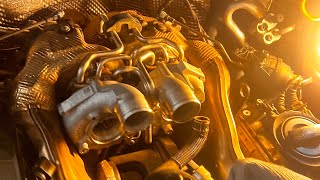
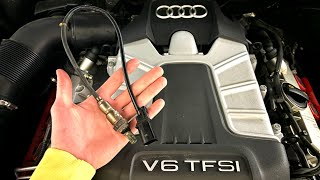
The upstream (Sensor 1) measures the air-fuel ratio coming directly from the engine and is critical for performance and fuel mixture adjustments. 🎬 Watch: How to replace an upstream sensor on your Audi The downstream (Sensor 2) monitors the efficiency of the catalytic converter.
Can I replace the sensor myself?
While technically possible for those with significant mechanical experience, replacing the oxygen sensors on an A8 Quattro is considered a difficult job. The sensors, particularly the upstream ones, are in very tight spaces. They are often seized in the exhaust pipe and require special tools and a lot of force to remove. For most owners, professional installation is recommended.
🎬 See this walkthrough for changing O2 sensors on the 4.0T engineIf one sensor fails, should I replace all of them?
It is not strictly necessary, but it can be a good preventative measure. Oxygen sensors tend to have a similar lifespan (typically 60,000 to 100,000 miles). If one has failed due to age and mileage, the others may not be far behind. If you are paying for labor to access a difficult-to-reach sensor, it may be cost-effective to replace its counterpart on the same bank at the same time.
Helpful Videos


Technical Specifications
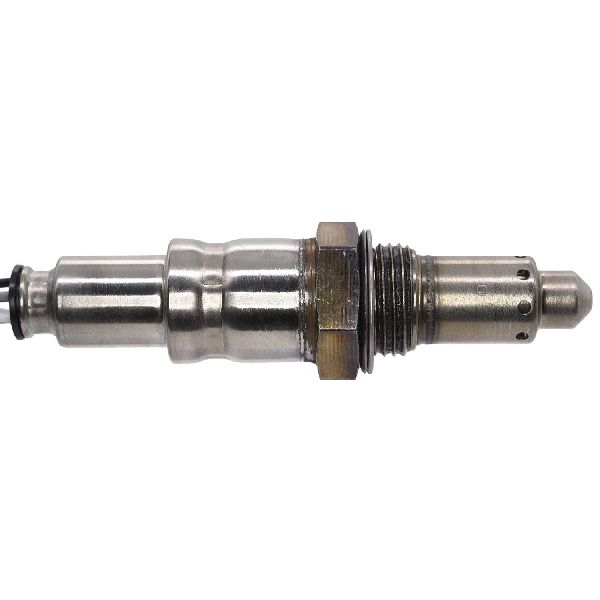
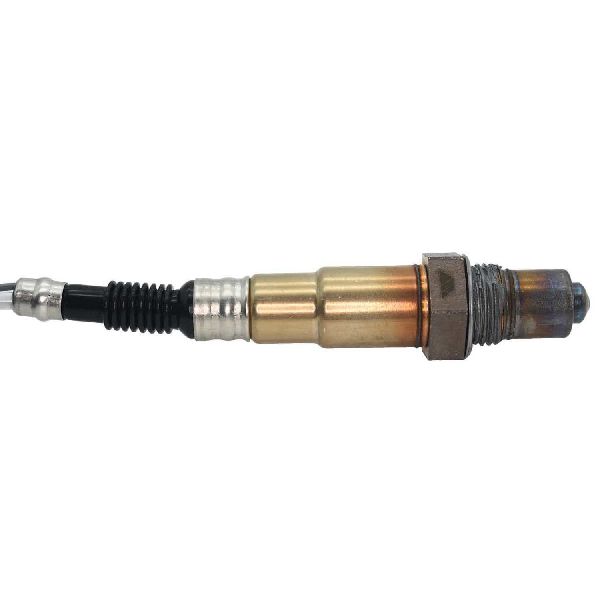
The 2020-2024 Audi A8 Quattro with the V8 engine uses four heated, specific-fit oxygen sensors. There are two upstream (pre-catalyst, often wide-band) and two downstream (post-catalyst, often narrow-band) sensors. Part numbers are specific to bank (left/right) and position (upstream/downstream), so it is critical to verify the correct part for your vehicle's VIN before ordering.
We Have This Part in Stock

The information in this article is provided for general reference and educational purposes only. Vehicle specifications, procedures, and part compatibility can vary by production date, trim level, and region. Always consult your vehicle's factory service manual and verify part numbers before purchasing or performing repairs. Safety-critical components such as airbags, seat belts, and braking systems should be installed by a qualified professional.
- Audi A8 Quattro:
- 🎬 Helpful Videos
- 🛍️ Shop This Part
- Is a Bad Oxygen Sensor Affecting Your Audi A8?
- Symptoms of a Failing Oxygen Sensor
- A Note on TSBs and Warranty Extensions
- Choosing the Right Aftermarket Oxygen Sensor
- OEM vs. Aftermarket Quality
- Brand Tiers for Your A8 Quattro
- Expected Costs for Replacement
- Frequently Asked Questions (FAQ)
- 🎟️ Get 5% Off