

Saab 9-3 & 9-3X Radiator (2003-2011): Leaks, Part Variants, and the T-Connector You Must Replace
This guide clarifies the critical differences between Saab 9-3 and 9-3X radiators and pinpoints the common plastic cooling parts that are the real source of leaks.
- Radiators are NOT interchangeable; part numbers vary by engine (2.0L vs 2.8L V6) and transmission type (Manual vs Automatic).
- The most common coolant leak sources are often NOT the radiator itself, but the plastic coolant expansion tank and the upper radiator hose T-connector (P/N 12787608) on 2.0T models.
- Upgrading the failure-prone plastic T-connector to an aftermarket aluminum version is a critical reliability improvement.
- Replacement is a complex, 3-5 hour job that involves removing the front bumper, but the A/C system does not need to be discharged.
Identifying the Correct Radiator for Your Saab 9-3 or 9-3X
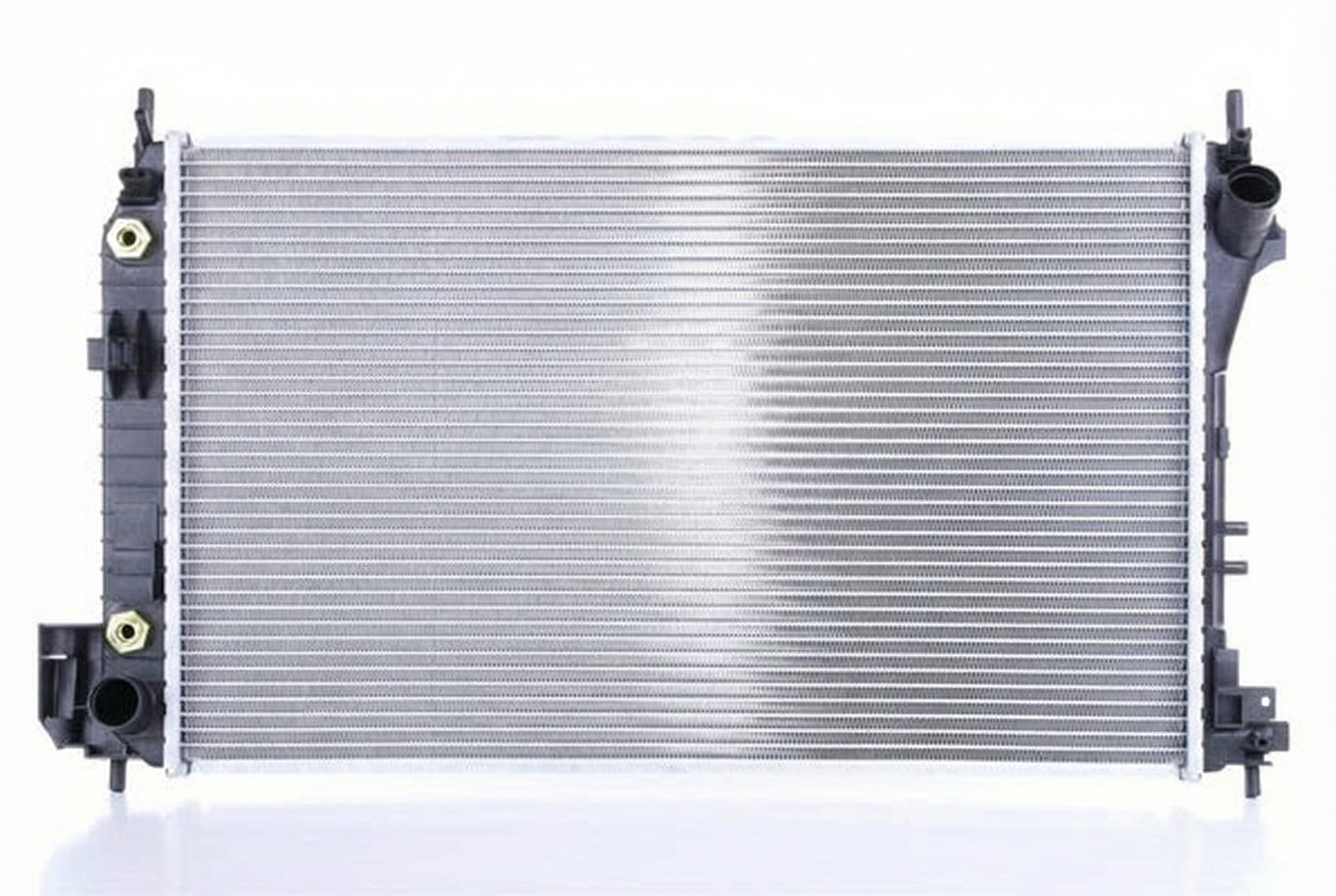
Before diagnosing issues, it's crucial to understand that not all 2003-2011 Saab 9-3 and 9-3X models use the same radiator. The correct part depends on the engine and transmission combination. The initial part numbers 24418341 and 24418342 are specific to certain 2.0L 4-cylinder models.
Compatibility Warning: A radiator for a 2.0L engine will not work for a 2.8L V6, and manual and automatic transmission radiators are different due to the automatic version having an integrated transmission fluid cooler.
| Vehicle / Engine | Transmission | Known OEM Part Numbers |
|---|---|---|
| 2003-2004 Saab 9-3 (2.0L 4-Cyl) | Manual | 24418341 (for models up to VIN --41040102) |
| 2004-2011 Saab 9-3 (2.0L 4-Cyl) | Manual | 24418338 (for models from VIN 41040103--) |
| 2003-2011 Saab 9-3 / 9-3X (2.0L 4-Cyl) | Automatic | 24418342 |
| 2006-2011 Saab 9-3 (2.8L V6) | Manual & Automatic | 12805055, 12805057 |
Symptoms of a Failing Radiator or Cooling System Component
Radiator issues in the Saab 9-3 often present as part of a larger group of cooling system symptoms. It's important to identify the exact source of the problem.
- Visible Coolant Leaks: Puddles of sweet-smelling green or orange fluid under the front of the car are a clear sign of a leak. Check the radiator's plastic end tanks for hairline cracks and the aluminum core for wet spots.
- Engine Overheating: The temperature gauge climbing into the red zone, especially in traffic or on hot days, indicates a cooling system failure. This can be caused by a leak, an internal clog in the radiator, or a faulty fan.
- Low Coolant Warning Light: The dashboard message "Fill coolant" means the system is low on fluid, almost always due to a leak.
- Steam from Engine Bay: If you see steam, pull over immediately. This means coolant is leaking onto hot engine components and boiling off.
- Gushing from Reservoir: Coolant violently bubbling or gushing from the expansion tank cap after a drive means the system is overheating and boiling over.
Known Issues & Common Failure Points
While the radiator itself can fail, it's more common for other plastic components in the Saab 9-3 cooling system to be the culprit. These are notorious weak points.
The Upper Radiator Hose T-Connector (2.0T Engine)
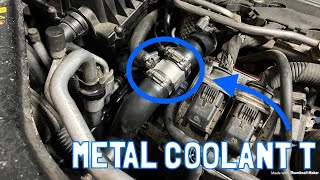
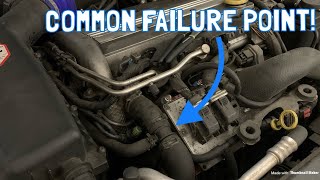
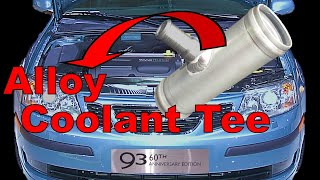
This is one of the most common failure points on the 2.0L B207 engine. The original part (OEM #12787608) is made of plastic that becomes brittle with heat and time, eventually cracking or completely breaking. This will cause a massive and sudden coolant leak.
Pro Tip: Do not replace a broken plastic T-connector with another plastic one. Numerous aftermarket aluminum versions are available. This is a permanent upgrade that prevents future failure and should be considered mandatory preventative maintenance.
🎬 See how to install the aluminum T-connector upgrade.The Coolant Expansion Tank
Like the T-connector, the coolant expansion tank (also called the reservoir) is prone to developing hairline cracks from countless heat cycles. You may notice dried coolant residue around the tank or a slow, hard-to-trace leak. If you are replacing the radiator, it is wise to replace the expansion tank at the same time.
Buying a Used Radiator
A used OEM radiator can be a cost-effective and reliable choice, often superior to a cheap, new aftermarket part in terms of fit and quality. Here's what to inspect:
- Check the Plastic End Tanks: This is the most common failure point. Look for any signs of chalky residue, discoloration, or fine hairline cracks, especially where the plastic meets the aluminum core.
- Inspect the Fins: A few bent fins are normal and can be carefully straightened with a fin comb. However, large areas of crushed or corroded fins will reduce cooling efficiency.
- Examine Hose Connections: Ensure the inlet and outlet necks are not cracked or broken. Check that the mounting points and clips for the fan shroud are intact.
- Look for Leaks: Look for any signs of dried coolant (a crusty, colored residue), which indicates a past leak.
- Mileage vs. Condition: For a radiator, physical condition is more important than mileage. A radiator from a 50,000-mile front-end collision car may be in perfect shape, while one from a 150,000-mile car with poor coolant maintenance could be clogged internally.
Replacement Procedure Overview
Replacing the radiator on a 2003-2011 Saab 9-3 is considered a difficult and time-consuming job for a DIY mechanic. Professionals often quote several hours of labor.
Difficulty Rating: 4/5
Estimated Time: 3-5 hours
The general process involves:
- Draining the cooling system via the radiator's plastic drain plug (petcock).
- Removing the front bumper cover and grille for access.
- Disconnecting hoses, the fan assembly, and any sensors.
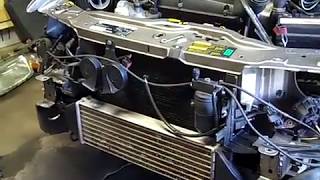
- Carefully unbolting the A/C condenser and intercooler from the front of the radiator and securing them out of the way. The A/C system does not need to be discharged.
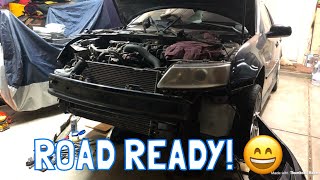
- Unbolting the radiator mounts and lowering the radiator out from under the vehicle. 🎬 Watch this full walkthrough of the radiator and shroud replacement.
Pro Tip: This is the perfect time to replace other cooling system components. At a minimum, install new upper and lower radiator hoses, a new thermostat, and upgrade the plastic T-connector to an aluminum one. Replacing the expansion tank is also highly recommended.
Key Torque Specifications
Use a torque wrench to avoid damaging the plastic components.
| Component | Torque Value | Source |
|---|---|---|
| Fan Cowl to Radiator | 5 Nm (44 lbf-in) | |
| A/C Condenser to Radiator | 5 Nm (44 lbf-in) | |
| Lower Radiator Bracket to Subframe | 15 Nm (11 lbf-ft) | |
| Automatic Transmission Oil Lines to Radiator | 25 Nm (18 lbf-ft) | |
| Thermostat Housing Bolts | 10 Nm (7 lbf-ft) | |
| Radiator Drain Plug | Hand-tight only |
Warning: The radiator drain plug is a plastic, quarter-turn valve. Do NOT overtighten it or use tools, as it will break. It is designed to be opened and closed by hand or with a special socket.
Cost of Replacing a Saab 9-3 Radiator
Prices can vary significantly based on the part source and labor rates.
| Item | Estimated Cost | Notes |
|---|---|---|
| New OEM | $475 - $800 | Highest quality and perfect fit, but most expensive. |
| New Aftermarket | $110 - $300 | Wide range of quality. Brands like Nissens are reputable. |
| Used OEM | $50 - $95 | Excellent value if inspected carefully for damage. |
| Shop Labor | $350 - $520 | Reflects the 3-5 hour complexity of the job. |
| Total Professional Replacement | $1,145 - $1,310 | Using new OEM parts at a repair shop. |
Frequently Asked Questions (FAQ)
Is the radiator the same for all 2003-2011 Saab 9-3s?
No. There are different radiators for the 2.0L 4-cylinder and 2.8L V6 engines. There are also separate versions for manual and automatic transmissions, as the automatic version includes a cooler for transmission fluid. Always verify the part number for your specific vehicle configuration.
My Saab is leaking coolant. Is it definitely the radiator?
Not necessarily. The most common sources of coolant leaks on these cars are the plastic coolant expansion tank and the plastic T-connector in the upper radiator hose on 2.0T models. Carefully inspect these components before assuming the radiator has failed.
Can I use a 'stop-leak' product for my radiator leak?
It is strongly discouraged. Radiator stop-leak products can clog the narrow passages in the radiator, heater core, and engine, leading to more severe overheating problems down the road. The only proper solution is to find and replace the leaking component.
Can I replace the radiator myself?
This is a challenging DIY job. It requires removing the front bumper and carefully handling the attached A/C condenser and intercooler. It is possible for an experienced home mechanic, but for most people, this job is best left to a professional.
Helpful Videos
Technical Specifications
OEM Part Numbers: 24418341 24418342 24418338 12805055 12805057 12787608
Core Material: Aluminum; Tank Material: Plastic; Flow Type: Crossflow. Dimensions vary by specific part number.
We Have This Part in Stock

The information in this article is provided for general reference and educational purposes only. Vehicle specifications, procedures, and part compatibility can vary by production date, trim level, and region. Always consult your vehicle's factory service manual and verify part numbers before purchasing or performing repairs. Safety-critical components such as airbags, seat belts, and braking systems should be installed by a qualified professional.
- Saab 9-3:
- Saab 9-3X:
- 🎬 Helpful Videos
- 🛍️ Shop This Part
- Identifying the Correct Radiator for Your Saab 9-3 or 9-3X
- Symptoms of a Failing Radiator or Cooling System Component
- Known Issues & Common Failure Points
- The Upper Radiator Hose T-Connector (2.0T Engine)
- The Coolant Expansion Tank
- Buying a Used Radiator
- Replacement Procedure Overview
- Key Torque Specifications
- Cost of Replacing a Saab 9-3 Radiator
- Frequently Asked Questions (FAQ)
- 🎟️ Get 5% Off