

1986-1990 Dodge Truck & Ramcharger Radiator Support: Rust, Replacement, and Gas vs. Diesel Guide
This guide covers the common failure points, especially rust, and the critical differences between gasoline and diesel radiator supports for 1986-1990 Dodge D/W series trucks and Ramchargers.
- The radiator support for gasoline engines is DIFFERENT from the one for diesel engines; they are not interchangeable without major modification.
- Rust is the number one killer of these supports. Thoroughly inspect the lower channel and the area under the battery tray before buying a used part.
- Replacement is a complex, weld-in job requiring auto body skills and is not a simple bolt-on task for a typical DIY mechanic.
- A bad support can cause more than just cosmetic issues; it can lead to poor panel alignment, front-end noises, and even cooling system problems.
Critical Compatibility Warning: Gasoline vs. Diesel Engines
Warning: The radiator support for gasoline engine models is NOT the same as the one for trucks with a Cummins diesel engine. This is the single most important factor to verify before purchasing.
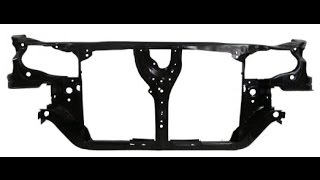
- Gasoline Engine Support (Part #4741865): This support is designed for the smaller radiator used with the V6, 318 V8, and 360 V8 engines. It has specific mounting brackets, sometimes called 'wings,' that position the radiator closer to the engine.
- Diesel Engine Support: This support is built to accommodate the much larger radiator required for the Cummins diesel engine. It lacks the 'wings' of the gas support and has different mounting tabs and a larger opening.
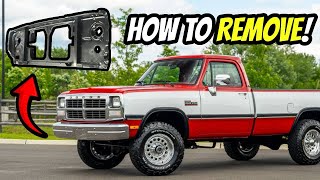
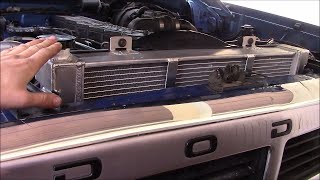
Attempting to use a gas support on a diesel truck (or vice-versa) will require significant cutting, welding, and fabrication to make the radiator and other components fit. 🎬 Watch this walkthrough on removing a 1st Gen core support. Always confirm the part is from a vehicle with the same engine type as yours.
Symptoms of a Failing Radiator Support
Because this part is structural, the symptoms of failure are often visible or audible.
1. Visible Rust and Corrosion
This is the most common failure mode for these 1980s and 90s Dodge trucks. The lower channel of the support traps moisture and debris, causing it to rust from the inside out. The area directly beneath the battery tray is also highly susceptible to corrosion from battery acid leaks. You may see flaking metal, pinholes, or entire sections missing.
2. Poorly Aligned Body Panels
A bent or rusted support can no longer hold the front-end sheet metal in the correct position. Look for:
- Uneven Gaps: Check the spacing between the hood and the fenders, or between the fenders and the grille. If the gaps are wide, narrow, or inconsistent from side to side, the support may be sagging or bent.
- Hood Latch Problems: Difficulty closing or latching the hood can happen if the support has shifted, moving the latch mechanism out of alignment with the striker on the hood.
- Misaligned Headlights: Headlight buckets mount to the radiator support. If one light points higher or lower than the other, or seems recessed, it can be a sign of a tweaked support.
3. Front-End Noises
A loose or broken radiator support will cause clunking, rattling, or squeaking noises from the front of the truck. These sounds are often most noticeable when driving over bumps or uneven roads as the frame flexes and loose parts move around.
Buying a Used Radiator Support: What to Inspect
Given the scarcity of new parts, a used OEM support is often the only option. A solid, rust-free used part is far superior to a cheap, flimsy aftermarket replacement. Here’s what to check:
- The Lower Channel: This is the most critical area. Inspect the entire bottom horizontal section of the support. Use a screwdriver or pick to poke at any suspect areas. What looks like surface rust on the outside can be a sign of deep rot. Pay special attention to the corners where it meets the vertical sides.
- Under the Battery Tray: Check the passenger side of the support where the battery sits. This area is frequently destroyed by rust. If the seller has already removed the battery tray, look for thinned metal, holes, or previous patch jobs.
- Radiator and Condenser Mounts: For gasoline models, confirm the specific mounting tabs and brackets for the radiator are present and solid. Check for any cracks in the metal around the mounting holes, which could indicate stress from vibration.
- Frame Mounts: Look at the bottom mounting points where the support bolts to the truck's frame. These areas need to be solid and free of cracks or severe rust.
- Signs of Collision: Look for wrinkled or bent metal, especially around the headlight buckets and hood latch area. Check for sloppy welds or evidence of being pulled back into shape. A poorly repaired support will cause endless alignment headaches.
Pro Tip: If buying online, ask the seller for high-resolution photos of the lower channel (inside and out) and the area under the battery tray. If they can't provide them, it's best to pass on the part.
Replacement Overview and Difficulty
Replacing the radiator support on these trucks is a major job that requires welding and cutting skills. It is not a simple bolt-off, bolt-on procedure.
- Difficulty: 5 out of 5 (Professional level)
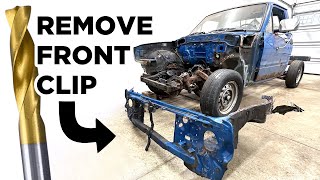
- Process: The old support is held to the inner fender structures by numerous factory spot welds. These must be carefully drilled out or cut with a specialized spot weld cutter. 🎬 Learn the proper way to drill out factory spot welds. After removing all attached components (grille, lights, radiator, condenser, etc.), the old support can be removed. The new support must be positioned correctly, clamped securely to ensure panel alignment, and then welded into place.
- DIY Feasibility: This is not recommended for a DIY mechanic unless you have significant auto body and welding experience. Improper installation will result in poor panel fitment and potential structural issues.
Cost to Replace Radiator Support
Costs can vary significantly based on part condition and local labor rates.
| Part/Service | Estimated Cost |
|---|---|
| New OEM | Discontinued / Not Generally Available |
| New Aftermarket | $150 - $300 |
| Used OEM (Recycled) | $100 - $400 (Varies by condition and source) |
| Shop Labor (Installation) | $600 - $1,500+ |
Note: Labor costs are high due to the need to remove many front-end components and perform cutting and welding.
Frequently Asked Questions (FAQ)
Is the radiator support for a gas engine the same as for a diesel?
No. They are completely different. The gas version is for a smaller radiator and has different mounting points than the diesel version, which is built for a much larger radiator. You must buy the correct support for your engine type.
Can I just repair the rust on my old support?
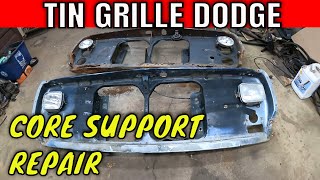
Yes, if the rust is not too extensive. Many owners and shops cut out the rotted sections, particularly on the bottom, and weld in new patch panels 🎬 See how to repair rust on your existing core support. or sections of square tubing to restore strength. This can be a cost-effective solution if the rest of the support is in good condition.
Will a bad radiator support cause my truck to overheat?
It can. If the support is broken or sagging, it can allow the radiator to shift, which might damage the cooling fins, block airflow, or cause the fan to hit the shroud. This can reduce cooling efficiency and lead to overheating.
Are there any recalls for the radiator support on these trucks?
No. Searches of the National Highway Traffic Safety Administration (NHTSA) database show no recalls specifically for the radiator support structure on these models. Recalls for this era typically involve fuel systems or other mechanical components.
Helpful Videos
Technical Specifications
OEM Part Numbers: 04741865 4741865
Material: Steel. Compatibility: For gasoline engine models only.
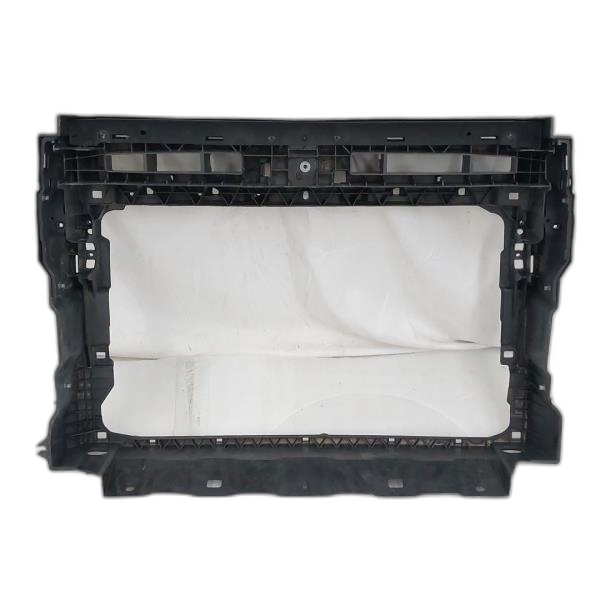
We Have This Part in Stock

The information in this article is provided for general reference and educational purposes only. Vehicle specifications, procedures, and part compatibility can vary by production date, trim level, and region. Always consult your vehicle's factory service manual and verify part numbers before purchasing or performing repairs. Safety-critical components such as airbags, seat belts, and braking systems should be installed by a qualified professional.
- Dodge D100:
- Dodge D150:
- Dodge D250:
- Dodge D350:
- Dodge Ramcharger:
- Dodge W100:
- Dodge W150:
- Dodge W250:
- Dodge W350:
- 🎬 Helpful Videos
- 🛍️ Shop This Part
- Critical Compatibility Warning: Gasoline vs. Diesel Engines
- Symptoms of a Failing Radiator Support
- 1. Visible Rust and Corrosion
- 2. Poorly Aligned Body Panels
- 3. Front-End Noises
- Buying a Used Radiator Support: What to Inspect
- Replacement Overview and Difficulty
- Cost to Replace Radiator Support
- Frequently Asked Questions (FAQ)
- 🎟️ Get 5% Off