

2011-2025 Durango & Grand Cherokee Radiator Support: Cracks, Alignment, and Replacement
This guide details common damage points, how to inspect a used radiator support, and critical compatibility warnings for your Durango or Grand Cherokee.
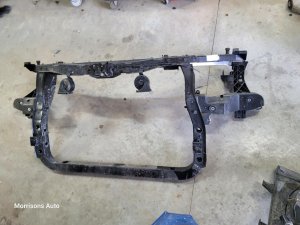
- This part is a critical structural component that aligns the hood, fenders, bumper, and headlights; damage is almost always from impact.
- It fits the 2011-2025 Durango and the 2011-2022 Jeep Grand Cherokee WK2, but crucially NOT the redesigned 2022+ Grand Cherokee WL models.
- When buying used, inspect for hairline cracks and warping, and verify every single mounting tab for headlights and other components is intact.
- Replacement is a complex job that requires professional evacuation and recharging of the A/C system, making it difficult for most DIYers.
Symptoms of a Damaged Radiator Support
Unlike many mechanical parts, a radiator support doesn't typically 'fail' from wear and tear. Damage is almost always the result of a front-end impact, even a minor one like hitting a tall curb, parking block, or from a low-speed collision. Because it's a key structural piece, the symptoms are often visible.
- Poor Panel Alignment: Look for uneven gaps between the hood and fenders, or between the bumper cover and the headlights. A bent or cracked support can cause these components to sit crooked.
- Hood Latch and Headlight Issues: Difficulty latching or unlatching the hood is a common sign, as the support holds the latch mechanism. Headlights that are aimed incorrectly or appear sunken or crooked may also point to a damaged support.
- Visible Cracks or Bending: A visual inspection may reveal cracks in the plastic sections or bent steel components. Check all corners and mounting points, especially on the lower section which is most vulnerable to impact.
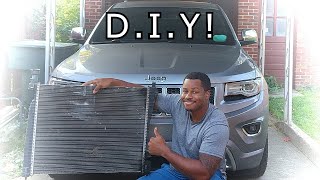
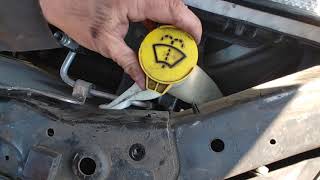
- Cooling System Problems: In severe cases, a broken support can allow the radiator and fan assembly to move, potentially leading to damaged hoses, coolant leaks 🎬 Watch: How to replace the radiator and thermostat on a Durango., or a fan hitting the shroud. This can cause engine overheating.
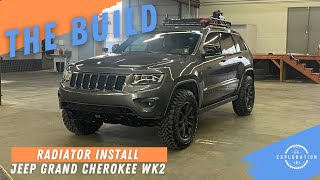
Critical Compatibility Warning: This radiator support fits the 2011-2025 Dodge Durango and the 2011-2022 Jeep Grand Cherokee (WK2 platform). However, in 2022, Jeep also sold the all-new Grand Cherokee (WL platform) and Grand Cherokee L. This part does NOT fit the new WL models. If you are buying for a 2022 Jeep, you must confirm you have the "Grand Cherokee WK" model 🎬 See a professional radiator replacement on a WK2 Grand Cherokee., which is a continuation of the older body style.
Buying a Used Radiator Support: What to Check
A used OEM radiator support is often a better choice than a cheap aftermarket one because it guarantees perfect fitment for all the bolt-on parts. However, careful inspection is crucial to avoid buying a part that will cause more problems.
- Inspect for Hairline Cracks: Go over the entire part, especially the plastic and composite areas, in good light. Pay close attention to all corners, mounting tabs for the headlights, and the lower cross-member. A small crack can compromise the structural integrity.
- Check for Warping: Place the support on a large, flat surface. It should sit flush without rocking. Any twisting or warping indicates it was removed from a vehicle with frame damage and will make aligning your front end impossible.
- Verify All Mounting Points: Meticulously check every single tab, clip receiver, and bolt hole. This includes mounts for the radiator, A/C condenser, fan shroud, headlights, and wiring harnesses. A broken headlight tab can make the entire part useless.
- Look for Collision Repairs: Check for signs of non-factory repairs, such as plastic welding or excessive glue. These repairs may not hold up, and it's better to find a part with no prior damage.
Known Issues, Recalls, and TSBs
There are no specific recalls or common Technical Service Bulletins (TSBs) issued by the NHTSA for spontaneous failure of the radiator support on the 2011-2025 Dodge Durango. Failures are overwhelmingly linked to physical damage from external forces like accidents or road debris.
Cost Comparison
| Part Type | Estimated Price Range |
|---|---|
| New OEM (Mopar) | $350 - $600 |
| New Aftermarket | $100 - $250 |
| Used OEM | $150 - $350 |
| Shop Labor | $500 - $1100+ |
Replacement Overview and Difficulty
Replacing the radiator support is a complex and labor-intensive job. It is not recommended for most DIY mechanics unless they have significant experience with major body and cooling system work.
- Difficulty Rating: 4 out of 5
- Estimated Time: 4-7 hours
- DIY Feasible: Not for beginners.
Pro Tip: The most significant hurdle in this replacement is the A/C system. The A/C condenser is mounted to the radiator support. To replace the support, the A/C system must be professionally evacuated of refrigerant before disconnecting the lines, and then recharged and tested after reassembly. This requires specialized equipment.
The general steps include:
- Disconnecting the battery.
- Removing the front bumper cover and grille assembly.
- Evacuating the A/C system and disconnecting condenser lines.
- Draining the engine coolant.
- Removing the air intake, upper radiator hose, and fan shroud.
- Unbolting and removing the headlights.
- Supporting the radiator and condenser, then unbolting the entire radiator support from the vehicle's frame rails.
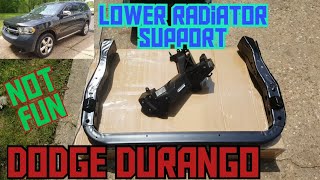
- Installation is the reverse of removal, followed by A/C system recharge and coolant refill/bleeding. 🎬 Watch this step-by-step guide for replacing the lower radiator support.
Frequently Asked Questions
Can I drive with a cracked radiator support?
It is not recommended. While the vehicle may be drivable, a damaged support can allow components like the radiator to shift, potentially causing coolant leaks and overheating. It also compromises the structural integrity of the front of your vehicle and can affect headlight aim, which is a safety issue.
Does the new radiator support need to be painted?
No. The radiator support is a structural component that is hidden behind the bumper cover and grille. Both OEM and aftermarket supports typically come in a black, unpainted finish.
Will a bad radiator support cause my engine to overheat?
Indirectly, yes. If the support is broken to the point that it can no longer hold the radiator securely, the radiator could be damaged by vibration or impact with other components. This can lead to coolant leaks and subsequent engine overheating.
Do I have to get my A/C recharged after this job?
Yes, in almost all cases. The A/C condenser is attached to the radiator support and its lines must be disconnected to remove the support. This requires a professional to evacuate the system beforehand and recharge it afterward.
Is the radiator support different for V6, V8, or SRT models?
While the main structure is the same across many models, there can be minor differences in brackets or attached components for different engine cooling packages (standard vs. heavy-duty cooling). It is always best to match the part number from your original support or verify fitment using your vehicle's VIN.
Helpful Videos
Technical Specifications
OEM Part Numbers: 5156109AA 5156109AB 5156113AA 5156116AA 5156117AB 68100236AA 68100237AA 68223547AB 68227826AA 68227827AA
Material: Composite plastic and steel construction.
We Have This Part in Stock

The information in this article is provided for general reference and educational purposes only. Vehicle specifications, procedures, and part compatibility can vary by production date, trim level, and region. Always consult your vehicle's factory service manual and verify part numbers before purchasing or performing repairs. Safety-critical components such as airbags, seat belts, and braking systems should be installed by a qualified professional.
- Dodge Durango: