

2011-2018 Jeep Grand Cherokee Radiator Support: Navigating the 2014 Facelift and Engine-Specific Parts
This guide details the critical differences in radiator supports due to the 2014 model year update and various engine options, ensuring you get the right part for your repair.
- Compatibility is critical: Parts are split between 2011-2013 (pre-facelift) and 2014-2018 (post-facelift) models and are not interchangeable.
- Engine-specific parts exist: The 3.0L Diesel engine requires a different radiator support than the 3.6L and 5.7L gasoline engines.
- SRT models are excluded: The high-performance Grand Cherokee SRT uses a unique radiator support that is not compatible with other trims.
- When buying used, you must verify the donor vehicle's year and engine, and inspect for cracks and broken mounting tabs.
Symptoms of a Damaged Radiator Support

Since a radiator support is a structural component, failure is almost always the result of a front-end collision. Damage is often obvious, but even minor impacts can cause issues. Here’s what to look for:
- Misaligned Front-End Panels: The most common symptom is poor alignment of surrounding parts. You may notice uneven gaps between the fenders, headlights, and bumper. The hood may also be difficult to open or close, or it may not sit flush when closed.
- Visible Damage: Inspect the support itself for cracks, bends, or breaks. On modern vehicles, these are often made of a mix of steel and plastic, so check for damage in both materials. Even small cracks, especially around mounting points for the radiator or headlights, can cause problems.
- Engine Overheating: If the support is bent, it can push the radiator out of position, restricting airflow or damaging the radiator itself. This can lead to the engine running hot or overheating.
- Poor A/C Performance: The A/C condenser is typically mounted in front of the radiator. Damage to the support can cause the condenser to shift or become damaged, leading to a loss of air conditioning function.
- Abnormal Noises: A loose, cracked, or broken radiator support can cause rattling, creaking, or clunking sounds from the front of the vehicle, especially when driving over bumps.
Key Compatibility Warnings: 2014 Facelift and Engine Differences

Finding the correct radiator support for a 2011-2018 Grand Cherokee is more complicated than for many other vehicles. There are two major variations you must be aware of.
1. The 2014 Mid-Generation Facelift
For the 2014 model year, Jeep gave the Grand Cherokee (WK2) a significant facelift. This included new headlights, a revised grille, and a different front bumper. As a result, the radiator support was changed to accommodate these new components.
- 2011-2013 models use a specific radiator support design.
- 2014-2018 models use a different, incompatible design.
Warning: A radiator support from a 2011-2013 Grand Cherokee will NOT fit a 2014-2018 model, and vice-versa. The mounting points for the headlights and grille are completely different.
2. Engine-Specific Supports
In addition to the year split, the radiator support can also vary based on the engine in the vehicle. The cooling requirements and component packaging are different for each powertrain.
- Gasoline Engines (3.6L V6 & 5.7L V8): These models typically share the same radiator support.
- 3.0L V6 EcoDiesel Engine: Diesel models require a specific radiator support to accommodate their unique cooling package. A part from a gasoline engine model will not fit correctly.
- 6.4L V8 (SRT Models): The high-performance SRT models have a unique front fascia and cooling system. The radiator supports listed here DO NOT fit SRT models.
Buying a Used Radiator Support: What to Check

A used OEM radiator support is an excellent choice, offering the same fit and quality as a new part at a lower cost. However, careful inspection is essential.
- Confirm Donor Vehicle Specs: This is the most important step. You MUST know the year and engine of the vehicle the part came from. Use the compatibility rules above to ensure it matches your Grand Cherokee.
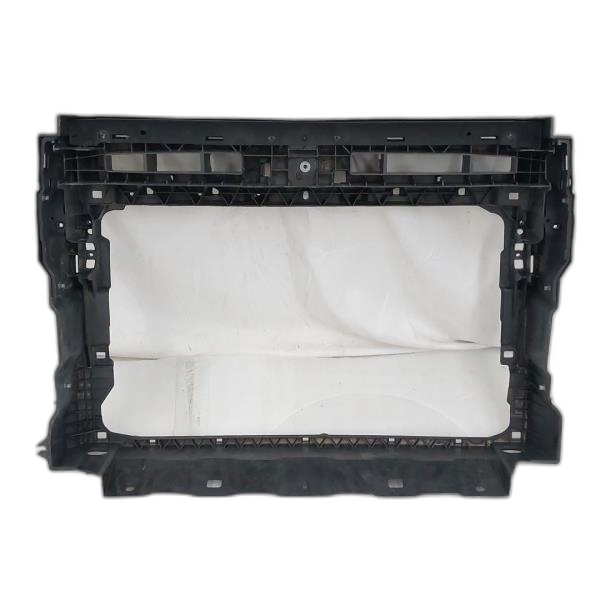
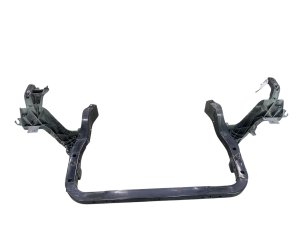
- Inspect for Cracks and Bends: Carefully examine the entire part. Look for hairline cracks, especially around the mounting points for the radiator, headlights, and frame rails. Check all the main cross-members to ensure they are straight and not bent from a previous impact.
- Check All Mounting Tabs: The radiator, condenser, fan shroud, and headlights all attach to the support with various plastic tabs and clips. Make sure every single one is present and intact. A broken tab can prevent a component from being secured properly.
- Look for Previous Repairs: Avoid parts that show signs of being repaired. Look for non-factory welds, body filler (Bondo), or excessive paint that could be hiding underlying damage. A recycled OEM part should be an original, unrepaired component.
Pro Tip: When buying online, ask the seller for high-resolution photos of all sides of the support and to explicitly confirm the year and engine of the donor vehicle. Do not rely on a listing title alone.
Replacement Overview and Difficulty
Replacing the radiator support is a labor-intensive job that requires disassembling the entire front of the vehicle. While it does not require specialized tools beyond a good metric socket set and trim removal tools, it is a complex procedure.
- Difficulty: 4 out of 5 (Advanced DIY)
- Estimated Time: 4-6 hours
Major steps include:
- Disconnecting the battery.
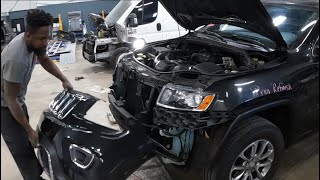
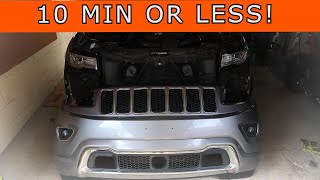
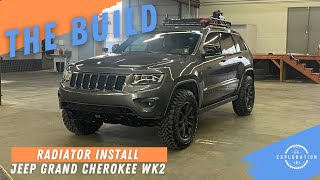
- Removing the front bumper cover. 🎬 Watch: Step-by-step guide to removing the front bumper cover.
- Removing the headlights. 🎬 Watch: How to remove the bumper and headlights on 2014+ models.
- Removing the upper radiator support cover and hood latch.
- Draining the engine coolant.
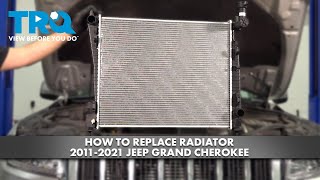
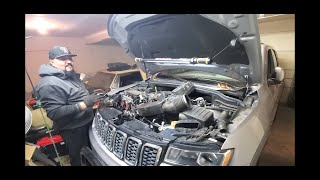
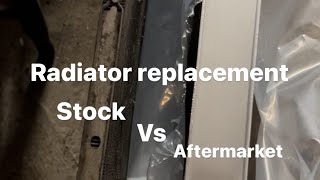
- Disconnecting radiator hoses. 🎬 See how to access the radiator without full disassembly.
- Disconnecting and moving the A/C condenser (without disconnecting lines, if possible, to avoid discharging the system).
- Unbolting the support from the frame rails and removing it from the vehicle.
Installation is the reverse of removal. This is a challenging job for a novice, but manageable for an experienced DIY mechanic.
Cost Comparison
Prices for a radiator support can vary significantly based on the source and specific part number required for your vehicle.
| Part Source | Estimated Cost |
|---|---|
| New OEM (Mopar) | $250 - $750+ |
| New Aftermarket | $50 - $260 |
| Used OEM | $150 - $400 |
| Shop Labor | $450 - $700 |
Frequently Asked Questions (FAQ)
Can I use a radiator support from a 2015 Grand Cherokee on my 2012 model?
No, you cannot. The parts are different due to the 2014 facelift. You must use a part from a 2011, 2012, or 2013 model for your 2012 Grand Cherokee.
I have a 3.0L Diesel Grand Cherokee. Can I use a support from a 3.6L gas model?
No. The radiator support for the 3.0L EcoDiesel is different from the ones used on the gasoline engine models. You must source a part specifically for the diesel engine.
Are there any recalls on the 2011-2018 Grand Cherokee radiator support?
No. As of late 2023, there are no specific recalls or technical service bulletins (TSBs) issued by Jeep or the NHTSA for failures of the radiator support structure itself. Failures are typically caused by collision damage.
Is replacing the radiator support a good DIY project?
This is an advanced DIY project. It involves removing many components and can take several hours. While it doesn't require highly specialized tools, it demands patience and mechanical experience. If you are not comfortable removing a bumper cover and draining the cooling system, it is best left to a professional body shop.
Helpful Videos
Technical Specifications
OEM Part Numbers: 05156114AA 5156109AB 5156110AA 5156110AB 5156110AC 5156113AA 5156116AA 5156117AA 5156134AA 5156135AA 68223399AA 68223547AA 68223547AB
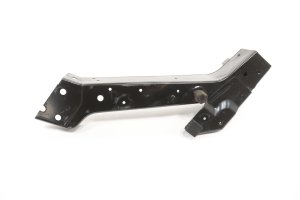
Material composition is typically a combination of high-strength steel for the main structure and reinforced plastic for upper tie bars and mounting brackets.
We Have This Part in Stock

The information in this article is provided for general reference and educational purposes only. Vehicle specifications, procedures, and part compatibility can vary by production date, trim level, and region. Always consult your vehicle's factory service manual and verify part numbers before purchasing or performing repairs. Safety-critical components such as airbags, seat belts, and braking systems should be installed by a qualified professional.
- Jeep Grand Cherokee:
- 🎬 Helpful Videos
- 🛍️ Shop This Part
- Symptoms of a Damaged Radiator Support
- Key Compatibility Warnings: 2014 Facelift and Engine Differences
- 1. The 2014 Mid-Generation Facelift
- 2. Engine-Specific Supports
- Buying a Used Radiator Support: What to Check
- Replacement Overview and Difficulty
- Cost Comparison
- Frequently Asked Questions (FAQ)
- 🎟️ Get 5% Off