

Tesla Model S & X Radiator (2016-2025): Leaks, Warnings, and the Pre/Post-Refresh Split
This guide clarifies the critical differences between the cooling systems in pre-2021 Model X and the 2021+ 'Palladium' Model S and Model X, helping you diagnose failures and buy the correct part.
- The most critical factor is compatibility: the cooling system was completely redesigned in 2021. Parts for 2016-2020 Model X are not interchangeable with 2021+ Model S & X.
- Failure symptoms include on-screen warnings, reduced power, and slow or disabled Supercharging, not just traditional 'overheating'.
- Replacement is a complex job that requires removing the front bumper and frunk, and most importantly, a special vacuum-fill and software-based air purge procedure.
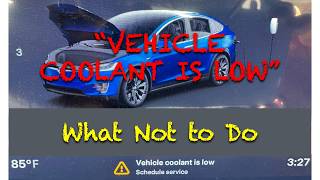
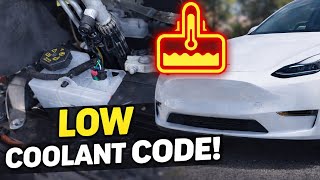
- A 'Vehicle Coolant Is Low' warning indicates a leak that must be found. Simply topping it off risks severe damage if the leak is internal to the battery or drive unit.
Compatibility Warning: A major design change occurred in 2021. This is the most important factor when buying this part.
- 2016-2020 Model X (Pre-Refresh): These vehicles use a simpler, more traditional radiator and cooling system design.
- 2021-2025 Model S & Model X (Refresh / 'Palladium'): These vehicles feature a completely redesigned thermal system that includes a heat pump and a complex central manifold (often called the 'Octovalve' or 'Supermanifold') 🎬 Watch: How the Octovalve and heat pump system works in detail. The front heat exchanger (radiator) is different and not interchangeable with earlier models.
Always verify your vehicle's production date and match part numbers carefully before purchasing.
Compatibility Warning: A major design change occurred in 2021. This is the most important factor when buying this part.
- 2016-2020 Model X (Pre-Refresh): These vehicles use a simpler, more traditional radiator and cooling system design.
- 2021-2025 Model S & Model X (Refresh / 'Palladium'): These vehicles feature a completely redesigned thermal system that includes a heat pump and a complex central manifold (often called the 'Octovalve' or 'Supermanifold') 🎬 Watch: How the Octovalve and heat pump system works in detail. The front heat exchanger (radiator) is different and not interchangeable with earlier models.
Always verify your vehicle's production date and match part numbers carefully before purchasing.


Symptoms of Radiator & Cooling System Failure

Unlike a gas car, a failing radiator in a Tesla won't cause the 'engine' to overheat. Instead, you'll see a variety of electronic warnings and performance limitations as the car tries to protect its sensitive battery and drive components.
- On-Screen Warning Messages: This is the most common sign. You may see alerts like "Vehicle Coolant Is Low. OK to drive. Schedule service," "Battery Cooling System Fault," "Drive Unit Reduced Power," or "Battery Charge Reduced." These messages should never be ignored.
- Reduced Performance & Slower Charging: To prevent overheating, the vehicle's software will limit motor power and significantly slow down or disable DC fast charging (Supercharging). This is especially noticeable during hard acceleration or in warm weather.
- Visible Coolant Leaks: You may find a puddle of brightly colored fluid under the front of the vehicle. Tesla coolant is typically blue (G-48) but can also be pink or orange depending on the specific type and age. The fluid often has a sweet smell.
- Unusual Noises: Failing coolant pumps, which are part of the system, can produce audible clicking, whirring, or grinding sounds from the front of the vehicle.
- Loss of Cabin Heat (2021+ Models): On 'Palladium' refresh models with the heat pump system, a fault in the thermal system can result in a total loss of cabin heat, which can also affect windshield defrosting.
Known Issues, TSBs, and Recalls

While there are no direct recalls for the radiator itself, several related issues are important to know.
NHTSA Investigation (Pre-Refresh Models)
In 2020, the NHTSA began investigating reports of coolant leaks in the battery packs of earlier Model S vehicles (2012-2016). The issue stemmed from allegedly defective end fittings on the cooling lines, which could lead to leaks inside the battery pack. While this investigation focused on an earlier Model S, the technology is similar to the pre-refresh Model X, and leaks from hoses, valves, and fittings remain a common failure point.
NHTSA Recall 22V-050 (Refresh Models)
This recall affects certain 2021-2022 Model S and Model X vehicles. A software error could cause a valve in the heat pump to open unintentionally, trapping refrigerant and resulting in poor defrosting performance. This is a software issue related to the complex thermal system in refresh models, not a physical radiator failure, and is corrected with a firmware update.
Buying a Used Radiator or Cooling Module
A used OEM radiator assembly is a cost-effective option, but careful inspection is crucial.
- Verify Compatibility: This is the #1 priority. Use your vehicle's VIN and the part number from your original radiator to find an exact match. The split between pre-2021 and post-2021 models is absolute; the parts are not cross-compatible.
- Physical Inspection:
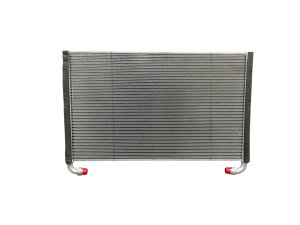
- Check the Fins: Look for excessive damage to the cooling fins. A few bent fins are normal, but large areas of crushed or flattened fins will reduce cooling efficiency.
- Look for Corrosion: Inspect the aluminum core and end tanks for white, chalky residue, which indicates corrosion or past leaks. Pay close attention to where the aluminum core meets the plastic or aluminum end tanks.
- Inspect Ports and Fittings: Ensure the inlet and outlet ports are not cracked, bent, or damaged. Check that any threaded fittings are clean and not cross-threaded.
- Check for Leaks: Look for any signs of dried coolant residue (often appearing as a colored crust). This indicates a past leak that will likely return under pressure.
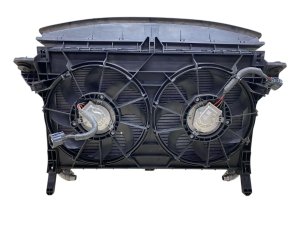
- Mileage: For the radiator/heat exchanger itself, mileage is less of a concern than physical condition. However, if you are buying a complete cooling module with fans and pumps, lower mileage is always better as these are moving parts that can wear out.
- Why Used OEM?: A used original Tesla part is often preferable to a new, cheap aftermarket part. OEM parts are designed to fit correctly and meet specific performance standards. Many aftermarket options for these vehicles are of questionable quality and may not integrate properly with the vehicle's complex systems.
Replacement Overview
Warning: This is not a simple DIY job for most home mechanics. The procedure is complex and requires a critical final step that is difficult to perform without the right tools.
Replacing the radiator on a Model S or X is an involved process. The general steps include:
- Disconnecting high-voltage and 12V power in the proper sequence.
- Removing the front underhood storage unit (frunk tub), and various aprons and aero shields.
- Removing the front fascia (bumper cover).
- Draining the cooling system. The total system capacity can be over 21 liters (5.5 gallons).
- Disconnecting hoses, sensors, and the fan assembly to remove the radiator itself.
Pro Tip: The most critical part of the job is refilling and bleeding the system. Teslas require a vacuum-fill procedure to eliminate all air pockets from the complex network 🎬 See how to perform a proper vacuum-fill on the cooling system of hoses, pumps, and heat exchangers. Trapped air can cause the pumps to run dry, trigger overheating warnings, and prevent the system from working correctly. This procedure typically requires putting the car into 'Service Mode' and running a specific air purge routine with Tesla's Toolbox software.
Cost to Replace a Tesla Radiator
Costs can vary significantly based on which generation of vehicle you have and what parts have failed. The radiator is often part of a larger, more expensive assembly.
| Item | Estimated Cost | Notes |
|---|---|---|
| New OEM Radiator/Module | $400 - $1,200+ | Price varies widely. Refresh model components are generally more expensive. |
| New Aftermarket Radiator (Pre-Refresh) | $80 - $250 | Available for 2016-2020 Model X. Quality can be inconsistent. |
| Used OEM Radiator/Module | $150 - $600 | A good value, but requires careful inspection. Price depends on condition and included components (fans, etc.). |
| Shop Labor | $450 - $900+ | Labor can be 4-6+ hours due to complexity. Tesla-specialist shops may be more efficient. |
Frequently Asked Questions (FAQ)
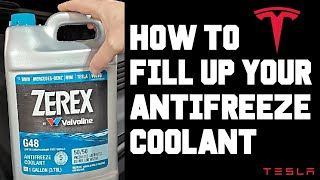
What kind of coolant do I use for a Tesla 🎬 Watch: How to identify and top up your Tesla's coolant Model S or Model X?
Tesla specifies G-48 ethylene glycol-based coolant, which is typically blue. It is sold as a pre-mixed 50/50 solution. Do not add water or use other types of coolant, as this can lead to corrosion or reduced performance.
Can I just top off the coolant if I get a low coolant warning?
While you can temporarily top off the coolant to clear the warning, you should not ignore it. The system is sealed, so low coolant means there is a leak somewhere. That leak could be external (onto the ground) or, more dangerously, internal (into the battery or drive unit), which can lead to very expensive repairs. Always have a low coolant warning properly diagnosed.
What is the difference between the radiator and the A/C condenser?
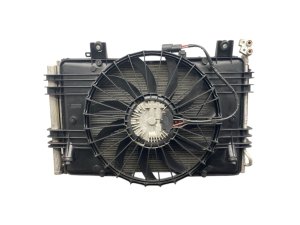
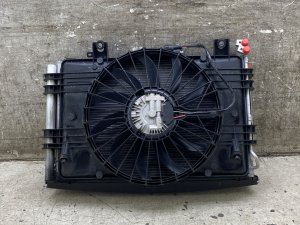
They are separate heat exchangers, but they are usually mounted together in a stack at the front of the vehicle. The A/C condenser is for the cabin air conditioning system, while the radiator is for the battery/powertrain thermal management system. Damage to one often means damage to the other.
Is a failing radiator covered under Tesla's warranty?
If the vehicle is still within its Basic Vehicle Limited Warranty period (typically 4 years or 50,000 miles), a failing radiator or other cooling system component should be covered. Failures outside of this period would be the owner's responsibility. The battery and drive unit have longer warranties, but that warranty may not cover a separate cooling system component like the radiator unless its failure damages the battery or drive unit.
Helpful Videos



Technical Specifications
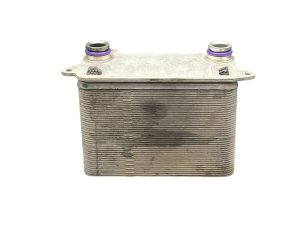
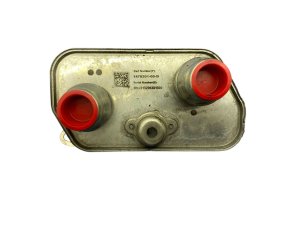
OEM Part Numbers: 1048498-00-C 104849800C 10031401-00-G 1034850-00-F 1048500-00-F 1115613-00-A 1478201-00-B 1589350-00-B 1619166-00-A 179011600A
Coolant Type: Tesla G-48 (Ethylene Glycol based, Phosphate and Nitrate free, typically blue). System Capacity (2021+ Model X): Approx. 21 Liters.
We Have This Part in Stock

The information in this article is provided for general reference and educational purposes only. Vehicle specifications, procedures, and part compatibility can vary by production date, trim level, and region. Always consult your vehicle's factory service manual and verify part numbers before purchasing or performing repairs. Safety-critical components such as airbags, seat belts, and braking systems should be installed by a qualified professional.
- Tesla Model X:
- Tesla Model S:
- 🎬 Helpful Videos
- 🛍️ Shop This Part
- Compatibility Warning: A major design change occurred in 2021. This is the most important factor when buying this part.2016-2020 Model X (Pre-Refresh): These vehicles use a simpler, more traditional radiator and cooling system design.2021-2025 Model S & Model X (Refresh / 'Palladium'): These vehicles feature a completely redesigned thermal system that includes a heat pump and a complex central manifold (often called the 'Octovalve' or 'Supermanifold'). The front heat exchanger (radiator) is different and not interchangeable with earlier models.Always verify your vehicle's production date and match part numbers carefully before purchasing.
- Symptoms of Radiator & Cooling System Failure
- Known Issues, TSBs, and Recalls
- NHTSA Investigation (Pre-Refresh Models)
- NHTSA Recall 22V-050 (Refresh Models)
- Buying a Used Radiator or Cooling Module
- Replacement Overview
- Cost to Replace a Tesla Radiator
- Frequently Asked Questions (FAQ)
- 🎟️ Get 5% Off