

2022-2025 Taos & 2022-2024 Jetta Radiator: Coolant Loss Problems and Part Variations
This guide covers common coolant leaks, overheating symptoms, and how to identify the correct 'Type 1' or 'Type 2' radiator for your Volkswagen Taos or Jetta.
- These vehicles use two different radiator designs ('Type 1' and 'Type 2'); you must verify the correct part number for your car before buying.
- Mysterious coolant loss is a known issue on the VW Taos, potentially caused by anything from a bad cap to a faulty head gasket. Do not ignore low coolant warnings.
- Only use VW-approved G13 or G12 EVO coolant. Using the wrong type can cause serious damage to the cooling system.
- A used OEM radiator is often a better choice than a new aftermarket part due to guaranteed fitment and performance, at a fraction of the new OEM cost.
Known Issues: Coolant Loss in the VW Taos
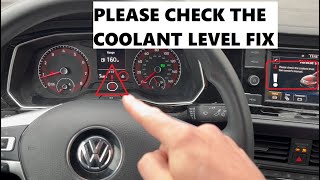
Owners of the 2022-2025 Volkswagen Taos have reported a notable number of issues related to mysterious coolant loss. Many drivers have experienced the "Coolant System Malfunction" warning light appearing on the dashboard, sometimes at very low mileage. Upon inspection, the coolant expansion tank is found to be low or empty. 🎬 Watch: How to address the red coolant warning light While some dealer service departments have allegedly told customers that the engine "consumes" coolant, this is not normal for a sealed cooling system and often indicates an underlying problem.
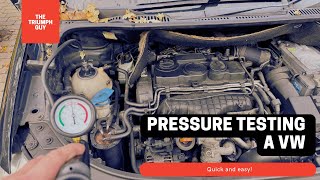
In some cases, the coolant loss has been traced to relatively simple issues like a faulty radiator cap or a small crack in a radiator hose. However, other owners have faced more significant repairs, including head gasket replacements, to resolve the issue. If you own a Taos and are experiencing recurring low coolant warnings, it is critical to have the system properly diagnosed. 🎬 See how to pressure test your system for leaks A technician will typically perform a cooling system pressure test to find the source of the leak, which could be the radiator, hoses, water pump, or an internal engine gasket.
Warning: While no specific radiator recalls have been issued for the Taos or Jetta as of early 2026, a broader VW recall (NHTSA 22V-753) was issued for other 2022-2023 models due to engine connecting rod bearing failures. This highlights the importance of addressing any engine-related warning light immediately.
Variant Warning: Type 1 vs. Type 2 Radiators
Volkswagen used two different primary radiator designs on the 2022-2025 Taos and 2022-2024 Jetta. These are often referred to as "Type 1" and "Type 2". It is absolutely essential to order the correct type for your specific vehicle, as they are not interchangeable. The differences can be in mounting points, core dimensions, or hose connection locations.
One key difference appears to be related to the transmission. For example, part number 5QM121251AB (a common Type 2 radiator) is specified for vehicles with an automatic transmission and will not fit models with a manual transmission.
How to Identify Your Radiator Type
- Check the Part Number: The most reliable method is to find the OEM part number printed on a sticker or stamped into the plastic end tank of your original radiator. Match this number exactly.
- Use Your VIN: A Volkswagen dealer parts department or a knowledgeable seller can use your vehicle's Vehicle Identification Number (VIN) to determine the exact radiator that was installed at the factory.
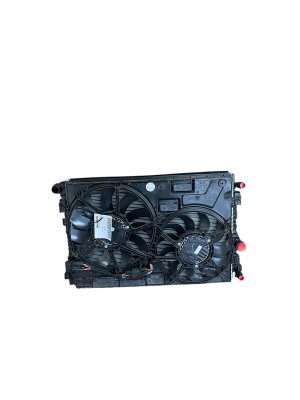
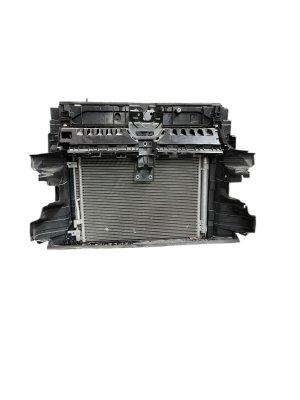
- Visually Compare: When buying a used part, carefully compare photos of the replacement with your existing radiator. Pay close attention to the location and angle of the upper and lower hose connections and any mounting tabs.
Symptoms of a Failing Radiator
A bad radiator will quickly lead to engine overheating, which can cause severe and expensive damage. Watch for these warning signs:
- Engine Overheating: The most obvious sign. The temperature gauge on your dashboard will climb into the red zone, and you may see a warning light. In severe cases, you might see steam coming from under the hood.
- Coolant Leaks: Finding puddles of brightly colored fluid (pink, purple, or green) under the front of your car is a sure sign of a leak. The fluid often has a distinct sweet smell.
- Constantly Low Coolant: If you have to add coolant to the reservoir frequently, it's leaking from somewhere.
- Discolored Coolant (Sludge): The coolant should be a clean pink or violet color. If it looks rusty, brown, or oily, it could be contaminated from internal corrosion in the radiator, which can lead to clogging and poor performance.
- Visible Damage: Look for physical damage like bent or crushed cooling fins, heavy corrosion, or cracks in the black plastic end tanks where they meet the aluminum core.
Buying a Used Radiator: What to Look For
A high-quality, low-mileage used OEM radiator can be a smart and cost-effective alternative to expensive new parts. Because it was made by the original manufacturer, fitment and performance will be identical to the original. Cheap aftermarket radiators may not cool as efficiently or last as long.
Inspection Checklist:
- Verify the Part Number: This is the most important step. Ensure the part number matches your original radiator to avoid compatibility issues with Type 1 vs. Type 2 designs.
- Check the End Tanks: Carefully inspect the plastic tanks on the sides or top/bottom of the radiator. Look for any hairline cracks, especially around the hose connections and the seams where the plastic meets the aluminum core.
- Examine the Fins: A few bent fins from handling are normal and won't affect performance. However, avoid radiators with large areas of crushed or corroded fins, as this will restrict airflow and reduce cooling ability.
- Look for Leaks: Check for any white, crusty, or discolored residue, which indicates a past leak. Pay special attention to the seams and corners.
- Mileage and Condition: While radiators don't have a set lifespan, one from a lower-mileage vehicle is always preferable. Condition is more important than mileage alone; a clean, undamaged radiator from a 60,000-mile car is better than a damaged one from a 30,000-mile car.
Replacement & Related Parts
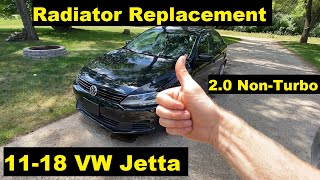
Replacing the radiator is a moderately difficult job that a skilled DIY mechanic can perform in 2-4 hours. The basic process involves draining the cooling system, removing the cooling fans, disconnecting the upper and lower radiator hoses, unbolting the radiator and any attached coolers (like the A/C condenser), and then installing the new unit in reverse order.
Pro Tip: When replacing the radiator, it is highly recommended to also replace the upper and lower radiator hoses. They are inexpensive and can become brittle over time. It's also a good time to inspect the thermostat and water pump if the vehicle has higher mileage.
Coolant Requirements
You MUST use the correct coolant. Using generic green or orange antifreeze can damage your engine and cooling system. These vehicles require a specific type of coolant, typically:
- G13 Coolant (Violet/Purple color)
- G12 EVO Coolant (Pink/Violet color) - This is a newer formulation that is backward-compatible and often recommended as a replacement for G13.
Always mix concentrated coolant with distilled water, typically at a 50/50 ratio, unless you are using a pre-mixed solution.
🎬 Watch this guide on how to flush your VW coolantCost Comparison
Radiator replacement costs can vary significantly. Estimates from some national repair chains can be very high, potentially including the entire fan assembly and other components. Buying a used OEM part can offer substantial savings.
| Part Type | Estimated Cost | Notes |
|---|---|---|
| New OEM | $250 - $450 | Price from online dealer parts stores. Buying from a dealership service center will be much higher. |
| New Aftermarket | $150 - $200 | Prices from online retailers like RockAuto or PartsGeek. Quality can vary. |
| Used OEM | $100 - $225 | Offers the best balance of quality and value. Price depends on condition and mileage. |
| Shop Labor | $320 - $600 | Typically 2-4 hours of labor. |
Frequently Asked Questions (FAQ)
Can I drive my Taos or Jetta if it's leaking coolant?
No. Driving with a significant coolant leak or an overheating engine is extremely risky. It can lead to a complete engine breakdown and catastrophic damage like a warped cylinder head. If the temperature gauge enters the red or you see steam, pull over immediately and shut off the engine.
What's the difference between a radiator and a condenser?
They look similar and are usually mounted together, but they serve different systems. The radiator is for the engine cooling system. The A/C condenser is for the air conditioning system. The condenser is typically mounted in front of the radiator.
Why are repair shop quotes for a radiator replacement so high?
Quotes from some shops can exceed $1,500. This often happens because they are quoting a complete assembly including the radiator, cooling fans, and possibly other components, all at full OEM list price, plus labor. Sourcing the parts yourself can dramatically lower the cost.
Is a radiator from a Taos the same as one from a Jetta?
Yes, for the specified model years (2022-2025 Taos and 2022-2024 Jetta) equipped with the same engine and transmission, they often share the same radiator part numbers. However, you must still verify the specific "Type 1" or "Type 2" compatibility for your vehicle.
Helpful Videos

Technical Specifications
OEM Part Numbers: 5QM121251AB 5QM121251F 5WA121251L 5WA121251E
Core materials are typically an aluminum core with plastic end tanks. Core dimensions for some variants are approximately 650mm x 440mm x 26mm.
We Have This Part in Stock

The information in this article is provided for general reference and educational purposes only. Vehicle specifications, procedures, and part compatibility can vary by production date, trim level, and region. Always consult your vehicle's factory service manual and verify part numbers before purchasing or performing repairs. Safety-critical components such as airbags, seat belts, and braking systems should be installed by a qualified professional.
- VOLKSWAGEN TAOS:
- VOLKSWAGEN JETTA:
- 🎬 Helpful Videos
- 🛍️ Shop This Part
- Known Issues: Coolant Loss in the VW Taos
- Variant Warning: Type 1 vs. Type 2 Radiators
- How to Identify Your Radiator Type
- Symptoms of a Failing Radiator
- Buying a Used Radiator: What to Look For
- Inspection Checklist:
- Replacement & Related Parts
- Coolant Requirements
- Cost Comparison
- Frequently Asked Questions (FAQ)
- 🎟️ Get 5% Off