

1991-1994 Ford Explorer Seat Belt: Recalls, Failures, and Replacement Guide
An in-depth look at common seat belt problems, recall information, and crucial safety advice for owners of the first-generation Ford Explorer.
- The seat belt system on a 1991-1994 Explorer is purely mechanical; a fault will NOT trigger the SRS/airbag light.
- A safety recall was issued for some 1991 models for a defective latch; verify your VIN with NHTSA.
- Driver (LH) and Passenger (RH) side assemblies are different parts and are not interchangeable.
- When buying used, you must physically inspect the webbing for damage and test that the retractor locks with a sharp tug.
Symptoms of a Failing Seat Belt Assembly
A seat belt's failure is a critical safety issue. If you notice any of these symptoms, the assembly should be inspected and replaced immediately. Driving with a faulty seat belt is illegal and extremely dangerous.
- Slow or No Retraction: This is one of the most common failures. Over time, the retractor spring weakens, or the belt webbing becomes dirty and stiff, preventing it from retracting smoothly into the B-pillar. This can lead to the belt getting caught in the door.
- Failure to Latch or Unlatch: The buckle mechanism can wear out, preventing the metal tongue from clicking securely into place or causing it to get stuck. You might hear a weak click or no click at all, or the release button may become difficult to press. 🎬 Watch: How to replace a broken seatbelt receiver on 90s Explorers
- Webbing Damage: Visually inspect the entire length of the belt for fraying, cuts, sun damage (fading), or fuzzy spots. Damaged webbing is significantly weaker and will not provide adequate protection in a crash.
- Retractor Fails to Lock: The most important safety feature is the retractor's ability to lock when jerked suddenly. If you can pull the belt out quickly without it catching and locking, the internal mechanism has failed.
Known Issues, Recalls, and TSBs
While many recalls focus on newer models, there is important historical information for the first-generation Explorer.
Safety Recall for 1991 Models
Ford issued a safety recall for some 1991 Ford Explorer models due to a potential defect in the seat belt latch. The issue could cause the belt to be insufficiently latched or to unlatch unexpectedly during use. It is crucial for owners of 1991 models to check if their vehicle was part of this recall and if the necessary repairs were performed. You can use your Vehicle Identification Number (VIN) on the National Highway Traffic Safety Administration (NHTSA) website to check for open recalls.
Warning: The seat belt systems on the 1991-1994 Ford Explorer are purely mechanical. A failing seat belt will NOT illuminate the SRS or airbag warning light on the dashboard. Do not rely on the airbag light to diagnose a seat belt issue on these vehicles.
Buying a Used Seat Belt Assembly
Given the age of these vehicles, a used OEM seat belt assembly is often the only practical option. However, extreme care must be taken when purchasing a used safety component.
Inspection Checklist:
- Verify Compatibility: The driver (LH) and passenger (RH) side assemblies are different and are NOT interchangeable. Ensure you are buying the correct side for your needs. The provided OEM part numbers are F2TZ-78611A72-B and F3TZ-98611B08-D.
- Inspect the Webbing: Pull the belt out to its full length. Look for any signs of cuts, fraying, discoloration from sun exposure, or melted spots. Bend the webbing; it should be flexible, not stiff or brittle. Do not buy a belt with any visible damage.
- Test the Retractor: Hold the assembly in its normal orientation. The belt should retract smoothly, if a bit slowly due to age. Most importantly, give the belt a sharp, quick tug. It MUST lock immediately. If it doesn't, the retractor is bad. 🎬 See this quick fix for common Ford seat belt retractor issues
- Check the Buckle: Ensure the buckle latches and releases cleanly. Listen for a solid 'click'.
- Look for Accident Indicators: Never buy a seat belt from a vehicle that has been in a major collision. The webbing is designed to stretch once during an impact and may look fine but will be significantly weakened. Signs of this can be subtle, so it's best to buy from reputable recyclers who know the vehicle's history.
Professional Installation and Legal Liability
Warning: Professional installation of any safety component, including a seat belt assembly, is strongly recommended. While the mechanical replacement on this generation of Explorer is straightforward for a technician, there are significant safety and legal considerations.
Unlike modern vehicles, the seat belt assemblies on 1991-1994 Explorers do not contain the explosive pretensioners found in later SRS systems. This makes the physical replacement less complex. However, ensuring the bolts are torqued correctly and the system functions as designed is critical for safety. There are no federal laws that require a lifetime warranty on seat belts or prevent the use of replacement parts. However, installing a used or non-certified safety component yourself could potentially create liability issues in the event of an accident where the part fails. For this reason, having a certified shop perform the installation is the wisest course of action.
Cost Comparison
Prices can vary based on condition, location, and availability.
| Part Type | Estimated Cost |
|---|---|
| New OEM | $100 - $500+ (if available) |
| New Aftermarket | $50 - $200 |
| Used OEM | $20 - $85 |
| Shop Labor | $100 - $150 |
Frequently Asked Questions (FAQ)
Will a bad seat belt on my 1991-1994 Explorer turn on the airbag light?
No. On this specific generation of Ford Explorer, the seat belt system is purely mechanical and is not connected to the SRS (airbag) computer. An airbag light indicates a problem with the airbag modules, crash sensors, or clock spring, not the seat belt assembly itself.
Is the driver's side belt the same as the passenger's side?
No, they are not interchangeable. The retractor mechanisms, mounting points, and buckle positions are mirrored and specific to the left-hand (driver) and right-hand (passenger) sides of the vehicle. You must purchase the correct side for your repair.
My seat belt is just slow to retract. Can I fix it?
Sometimes, a slow retraction is caused by dirt and grime accumulated on the belt webbing over decades of use. You can try pulling the belt out completely, clamping it at the top, and thoroughly cleaning the webbing with a mild soap and water solution. Let it dry completely before allowing it to retract. 🎬 Watch: A step-by-step guide to cleaning and fixing slow retraction While this can sometimes improve function, if the retractor spring itself is weak, the only solution is replacement.
Is it legal to install a used seat belt myself?
While there are no specific federal laws preventing you from installing a used part on your own vehicle, it is generally discouraged for safety components. State laws govern seat belt usage. The primary concern is safety and liability. If the part is installed incorrectly or fails in an accident, there could be serious consequences. Professional installation by a qualified mechanic is the safest option.
Helpful Videos
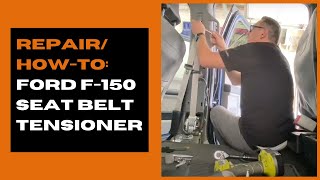
Technical Specifications
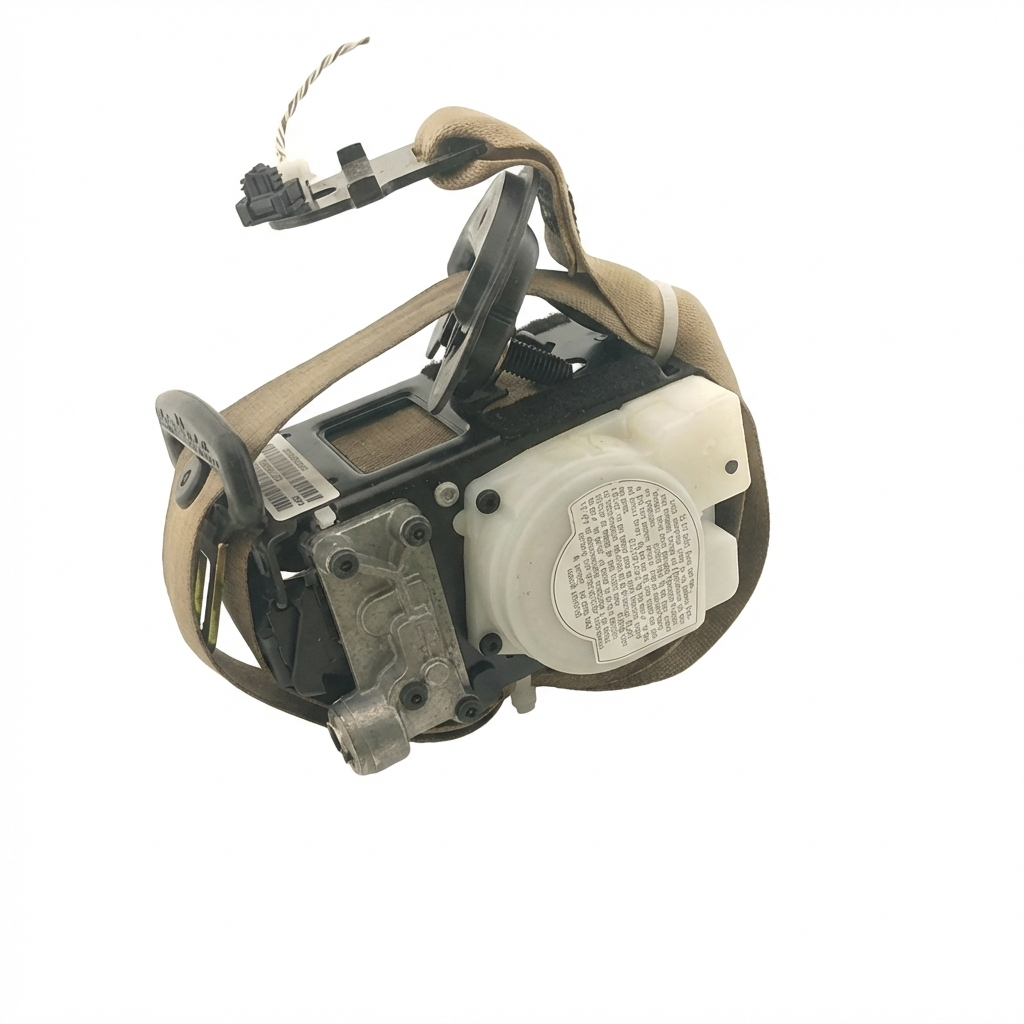
OEM Part Numbers: F2TZ-78611A72-B F3TZ-98611B08-D F2TZ-78611A72-D F3TZ-98611B08-B F3TZ-98611B08-C
This is a 3-point mechanical seat belt assembly. It does not contain pyrotechnic pretensioners or electronic sensors tied to the SRS system.
We Have This Part in Stock

The information in this article is provided for general reference and educational purposes only. Vehicle specifications, procedures, and part compatibility can vary by production date, trim level, and region. Always consult your vehicle's factory service manual and verify part numbers before purchasing or performing repairs. Safety-critical components such as airbags, seat belts, and braking systems should be installed by a qualified professional.
- Ford Explorer:
- 🎬 Helpful Videos
- 🛍️ Shop This Part
- Symptoms of a Failing Seat Belt Assembly
- Known Issues, Recalls, and TSBs
- Safety Recall for 1991 Models
- Buying a Used Seat Belt Assembly
- Inspection Checklist:
- Professional Installation and Legal Liability
- Cost Comparison
- Frequently Asked Questions (FAQ)
- 🎟️ Get 5% Off