

Ford & Lincoln Multi-Contour Seat Failure (2013-2021): Why It's Probably Not the Module
This guide explains the real cause of massaging seat problems in the F-150, Expedition, Explorer, Navigator, and more, and how to fix it for good.
- The most common cause of failure is the electrical connector, not the expensive module itself, due to 'terminal fretting'.
- Ford's official fix is TSB 19-2390, which involves replacing the connector with a pigtail (part KU2Z-14S411-FA) that must be soldered.
- This issue is not a safety recall, though separate recalls for seat belts and seat structures do exist for these vehicles.
- Before buying any parts, check the fuses and wiggle the connector under the seat to help diagnose the problem.
The Real Reason Your Massaging Seat Stopped Working
If the multi-contour massaging seat in your Ford or Lincoln has stopped working, you might assume the expensive control module under the seat has failed. However, the most common cause is actually a poor electrical connection. Ford identified this issue and released Technical Service Bulletin (TSB) 19-2390 (which superseded TSB 19-2293) for a wide range of vehicles.
The TSB explains that the problem is 'terminal fretting' at the electrical connector for the seat module. This means tiny vibrations and oxidation over time cause the metal pins in the connector to lose their solid connection, leading to a loss of communication and power. The module itself is often perfectly fine, but it can't function without proper signals and electricity.
Common Symptoms of Failure
When the seat module connector begins to fail, you will likely experience one or more of the following symptoms:
- The massage and lumbar adjustment features are completely inoperative or work only intermittently.
- The seat massage and adjustment options are 'greyed out' and cannot be selected on the SYNC infotainment screen.
- The physical adjustment switch on the side of the seat does not respond.
- The check engine light or a specific warning message may appear on the dashboard.
- Scanning the vehicle's computer may reveal Diagnostic Trouble Codes (DTCs) such as U024B (Lost Communication With Seat Control Module G), U024C (Lost Communication With Seat Control Module H), or B1471 (Seat Back Motor Stalled).
Pro Tip: Some owners report that they can temporarily restore function by reaching under the seat and wiggling the main electrical connector to the module. This is a strong indicator that you are dealing with the connector fretting issue described in the TSB.
Is This a Safety Recall?
No, the failure of the multi-contour massage function is not a safety recall. It is a functional issue addressed by a Technical Service Bulletin. However, it's important not to confuse this with several other seat-related recalls that do affect these vehicles:
- NHTSA Recall 16S05: On certain 2016 Ford F-150 trucks, activating the passenger seat massage function could confuse the Occupant Classification System, causing it to misclassify an adult as a child and disable the airbag in a crash. The fix was a software update.
- NHTSA Recall 18S37: Some 2018 Ford Expedition and Lincoln Navigator SUVs were recalled for missing reinforcement brackets in the second-row seat assembly, which could compromise occupant safety in a crash.
- NHTSA Recall 25S31: A recall was issued for 2018-2020 Ford Expedition and Lincoln Navigator models due to a faulty seat belt pretensioner that could lock the belt or fail to restrain an occupant properly.
These recalls are separate from the massage function failure. Your massage seat not working is a comfort and convenience issue, not a direct safety defect addressed by a recall.
How to Diagnose the Problem
Before spending money on parts, follow these steps to confirm the cause of the failure.
- Check the Fuses: The first and easiest step is to check the fuse for the seat module. On a 2015-2017 F-150, for example, the relevant fuse is often in the under-hood fuse box. Consult your owner's manual for the specific fuse location for your vehicle.
- Scan for Codes: Use a capable OBD-II scanner to check for the specific DTCs mentioned earlier (U024B, U024C, B1471). These codes point directly to a communication or module problem.
- Inspect the Connector: Raise the passenger seat to its highest position to get a better view underneath. Locate the main electrical connector going into the seat module. Check for any obvious signs of damage, melting, or corrosion.
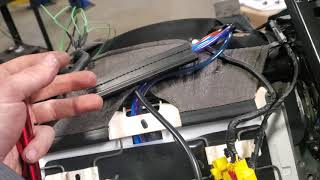
- Inspect for Chafed Wires: In some cases, wires inside the seat backrest can rub against the metal seat frame, wearing through the insulation and causing a short. This may require unzipping the seat back cover 🎬 See how to access and repair internal seat wiring issues. to inspect the wiring harness that runs to the air pump.
- Check Air Hoses: A less common issue is a disconnected air hose. If you can hear the pump motor running inside the seat but feel no massage or lumbar movement, an air tube may have simply popped off its connector. 🎬 Watch this guide to fixing air hoses and deflation problems.
The Permanent Fix: TSB 19-2390 Repair
🎬 Watch this detailed walkthrough of the TSB 19-2390 repair process.The official and most reliable repair is to replace the faulty connector with an updated pigtail kit, part number KU2Z-14S411-FA. This is a job that requires some skill but can be done by an experienced DIYer.
Warning: The TSB explicitly states that the new pigtail wires must be connected using solder and heat shrink tubing, not with simple butt connectors. A poor connection here will only lead to the problem returning. The TSB also calls for re-routing the harness with a service loop and securing it with a zip tie to relieve strain on the connector.
If you are not comfortable with soldering multiple wires in a confined space, it is best to have a trusted mechanic or the dealership perform this TSB.
Buying a Used Seat Motor Module
If you have performed the TSB wiring repair and confirmed the module itself is faulty, a used OEM module is a cost-effective alternative to a new one, especially since aftermarket versions for this specific multi-contour function are not readily available. Here’s what to look for:
- Verify Part Numbers: Match the part number from your original module to the used one. There are many variations; common ones include FU5Z-14F549-H and DU5T-14F549-BJ. Ensure you are buying the correct module for the passenger (Right) side.
- Inspect the Pins: Ask the seller for a clear photo of the electrical connector pins on the module. Look for any signs of discoloration, corrosion, or heat damage. Avoid any module that shows signs of the same terminal fretting issue you are trying to fix.
- Get the Pigtail: If possible, ask the recycler to include the vehicle-side connector pigtail, cut with a few inches of wire. This can be invaluable if your original connector is damaged beyond repair.
- Consider Mileage: While these modules are not high-wear items, one from a lower-mileage vehicle is always preferable. The internal air pump does have a finite life.
Cost of Replacement
The cost can vary dramatically depending on whether you need the full module or just the wiring repair.
| Part / Service | Estimated Cost | Notes |
|---|---|---|
| New OEM Module | $550 - $900 | Part only. Prices from dealer sites can be high. |
| Used OEM Module | $100 - $300 | A good value, but inspect pins carefully before purchase. |
| New Aftermarket Module | Not Available | Aftermarket options typically only exist for heated seat modules, not the multi-contour massage function. |
| OEM Pigtail Repair Kit (KU2Z-14S411-FA) | $40 - $60 | This is the most common required part. |
| Shop Labor (TSB Pigtail Repair) | $250 - $500 | Covers diagnosis and soldering the new connector for one or both seats. Labor time is typically 2.5-3.5 hours. |
Replacement Overview & Programming
- Difficulty: 3 out of 5 (for pigtail repair); 2 out of 5 (for module swap).
- Time: 1.5-2.0 hours per seat for the pigtail repair.
- Tools: Socket set, trim removal tools, wire strippers, soldering iron, heat gun.
- Programming: If you are only repairing the wiring to your original module, no programming is needed. You will simply need to clear any stored DTCs. If you are replacing the module with a new or used unit, programming may be required using a dealer-level scan tool or a tool like FORScan to ensure all functions communicate correctly with the vehicle.
Frequently Asked Questions (FAQ)
Can I just clean the connector instead of replacing it?
You can try cleaning the pins with a quality electronic contact cleaner as a temporary measure. Some owners have had short-term success with this. However, because the issue is fretting corrosion that has damaged the pin surface, the problem will likely return. The pigtail replacement is the only permanent solution.
Do I have to solder the new pigtail connector?
Yes. Ford's official TSB procedure specifically warns against using crimp-style butt connectors for this repair. The low-voltage signals require a solid, corrosion-proof connection that only soldering and heat-shrinking can provide reliably long-term.
Will a used seat module need to be programmed?
It is possible. These modules communicate on the vehicle's network. While it may work as a plug-and-play replacement, it is possible that it will need to be configured to the vehicle's specific options using a tool like FORScan or by a dealer to ensure full functionality with the SYNC system.
My massage motor runs, but nothing happens. Is it the module?
Probably not. If you can hear the air pump motor running when you press the button, the module is likely getting power and trying to work. The problem is more likely a disconnected or broken air line between the pump and the inflatable bladders in the seat. You will need to access the back of the seat to inspect the tubing.
Helpful Videos
Technical Specifications
OEM Part Numbers: DU5A-96603A99 DU5T-14F549-BJ FU5T-14F549-BA FU5T-14F549-BD FU5Z-14F549-B FU5Z-14F549-H FU5Z14F549D FU5Z14F549E FU5Z14F549H FU5Z14F549L GU5A-96600D42 GU5T-14F549-BA
Controls pneumatic air bladders for lumbar and massage functions. Designated as SCMH (Seat Control Module - H) for the passenger side. The primary repair part is often the wiring pigtail, Ford part number KU2Z-14S411-FA.
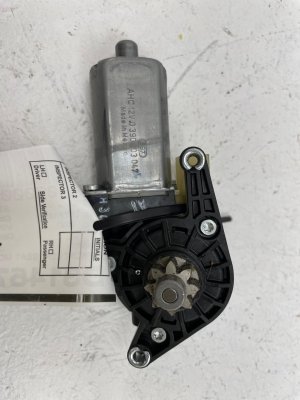
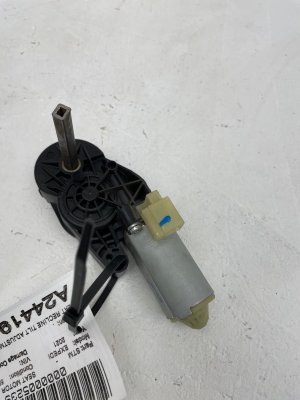
We Have This Part in Stock
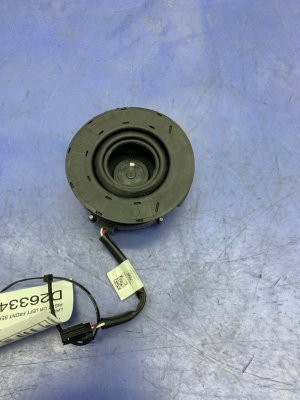
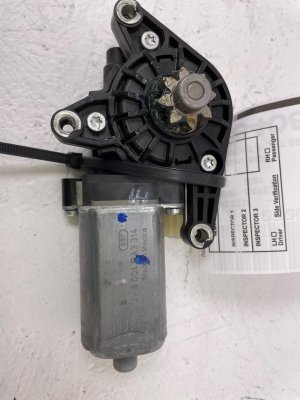
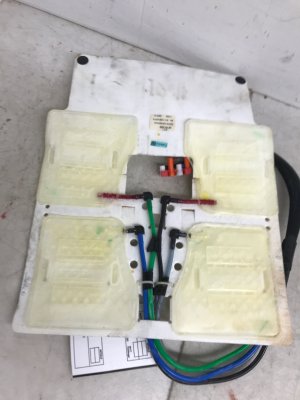
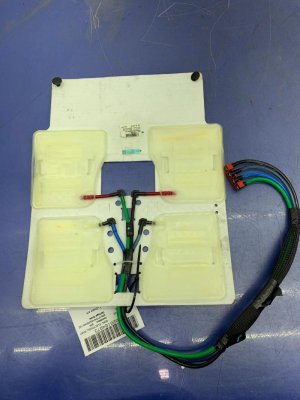

The information in this article is provided for general reference and educational purposes only. Vehicle specifications, procedures, and part compatibility can vary by production date, trim level, and region. Always consult your vehicle's factory service manual and verify part numbers before purchasing or performing repairs. Safety-critical components such as airbags, seat belts, and braking systems should be installed by a qualified professional.
- Ford Expedition:
- Ford F-150:
- Ford Explorer:
- Lincoln Navigator:
- Ford F-250 Super Duty:
- Ford F-350 Super Duty:
- Lincoln MKZ:
- Lincoln Nautilus:
- Lincoln MKX:
- Lincoln Continental:
- 🎬 Helpful Videos
- 🛍️ Shop This Part
- The Real Reason Your Massaging Seat Stopped Working
- Common Symptoms of Failure
- Is This a Safety Recall?
- How to Diagnose the Problem
- The Permanent Fix: TSB 19-2390 Repair
- Buying a Used Seat Motor Module
- Cost of Replacement
- Replacement Overview & Programming
- Frequently Asked Questions (FAQ)
- 🎟️ Get 5% Off