

2016-2025 Toyota & Lexus Power Seat Motor & Track Guide
Diagnose and understand failures of power seat adjustment motors, memory functions, and ventilated seat blowers for late-model Toyota Prius, Lexus ES, RX, and more.
- A seat that only moves in one direction is the most common sign of a single failed adjustment motor.
- Before replacing parts for a memory seat issue, try re-initializing the system by moving the seat to all its mechanical limits.
- There are two types of motors: adjustment motors that move the seat, and blower motors for ventilation. They are separate parts.
- When buying a used motor, you must match it to the function (slide, lift, recline) and verify it's compatible with your car's memory seat option.
Understanding Seat Motor Types
When diagnosing a seat-related issue in these vehicles, it's important to know which motor does what. There are two main types of motors in the seats of the Toyota Prius, Prius Prime, Lexus ES, RX, and UX models:
- Power Seat Adjustment Motors: These are small but strong electric motors responsible for moving the entire seat. There is a separate motor for each function: slide (forward/backward), front lift (up/down), rear lift (up/down), and recline (backrest angle). A failure usually affects only one of these directions.
- Seat Ventilation Blower Motors: On higher trim levels with ventilated or 'climate-controlled' seats, a small fan motor is located inside the seat cushion and/or seatback. Its only job is to blow air through the perforated leather for cooling. Failure of this motor does not affect the seat's ability to move.
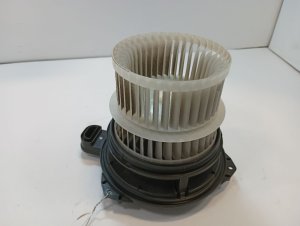
Compatibility Warning: The initial information provided for this guide incorrectly included part numbers for the main cabin HVAC blower motor (e.g., 87103-xxxx). The HVAC blower motor is located under the dashboard and is completely unrelated to any seat function. This guide focuses only on motors located within the seat assembly itself.
Symptoms of Failure
Diagnosing a failing seat motor is usually straightforward. The symptoms will point you toward the specific motor or system that has a problem.
Power Seat Adjustment Motor Failure
- Seat won't move in one direction: This is the most common symptom. For example, the seat will slide forward but not backward. This almost always means the single motor responsible for that movement has failed or its internal gears are stripped.
- Clicking or grinding noise with no movement: If you press the switch and hear a click, it means the switch is sending power, but the motor is seized internally. A grinding sound suggests the motor's gears are stripped or there's an obstruction in the seat track.
- Slow or intermittent operation: A motor that is wearing out may move the seat very slowly or work only sometimes. This can point to worn internal components (carbon brushes) or a poor electrical connection.
- No movement and no sound: If nothing happens when you press the switch, the problem is likely electrical. It could be a blown fuse, a bad switch, a disconnected wire under the seat, or a dead motor.
Seat Ventilation Blower Failure
- Fan noise, but no airflow: You can hear the blower running, but feel little to no air coming through the seat perforations. This is a known issue on some Lexus ES models where an internal air duct can collapse, blocking airflow.
- Loud fan noise: The small ventilation fans can become noisy over time, which is a common complaint among owners. While annoying, it doesn't mean failure is imminent unless the noise is a grinding or scraping sound.
- Ventilation function is completely dead: If the indicator light turns on but you hear no fan sound, the blower motor itself has likely failed.
Known Issues, TSBs, and Recalls
While there are no major recalls for seat motors on these vehicles, some Technical Service Bulletins (TSBs) and common problems have been noted.
- Lexus ES Ventilated Seat Airflow: For 2013-2014 Lexus ES300h and ES350 models, a TSB was issued to address a concern where an internal air duct collapses, reducing or stopping airflow for the ventilated seats. The fix involves replacing the ducts inside the seat.
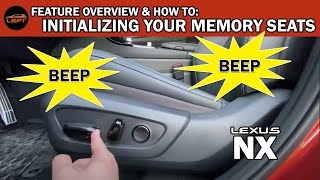
- Lexus Memory Seat Initialization: On many newer Lexus models, if the memory seat function stops working or acts erratically (especially after the battery has been disconnected), it may need to be re-initialized. Owners report that running the seat through its full range of motion—all the way forward, back, up, down, and recline—can reset the control module and restore normal function. 🎬 Watch: Why your Lexus is not remembering you - initializing memory seats
- Disconnected Memory Seat Switch: On some Lexus RX models, owners have reported the memory seat function stopped working after a repair was performed on the driver's door. This was found to be caused by a technician forgetting to reconnect the memory switch wiring harness inside the door panel.
Diagnosing the Problem: A Step-by-Step Guide
- Check for Obstructions: Before assuming a part has failed, look under the seat and in the tracks for anything that could be jamming the mechanism, like a lost phone, pen, or floor mat.
- Check the Fuse: If no power seat functions work at all, the first step is to check the fuse. If only one seat is affected, it's less likely to be a fuse, as both front seats often share one.
- Listen for the Motor: Press the switch for the function that isn't working. Do you hear a click, a hum, or nothing? A click means the switch is working and sending power, but the motor is stuck. No sound at all points to an electrical issue before the motor (fuse, switch, or wiring).
- Test the Switch and Motor: The most definitive test involves using a 12V test light or multimeter. 🎬 Watch: How to diagnose power seat motors, switches, and wires Unplug the connector at the motor that isn't working. Have a helper press the switch; the test light should illuminate. If it lights up, the switch and wiring are good, and the motor is bad. If it doesn't light up, the problem is likely the switch or wiring. You can also test the motor directly by supplying 12V power from a battery to its two terminals; reversing the polarity should make the motor spin in the opposite direction.
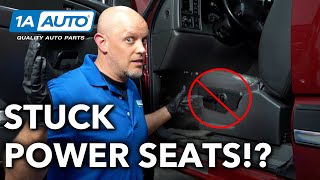
Pro Tip: If a seat is stuck in a position where you can't access the mounting bolts to remove it, you may be able to move it manually. The end of the motor's drive shaft often has a slot for a tool. By removing a small plastic cap, you can sometimes use a power drill with a bit to slowly turn the drive shaft and move the seat.
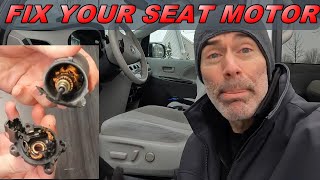
🎬 See this guide on how to fix your power seat for freeBuying a Used Seat Motor
Purchasing a used OEM seat motor is a cost-effective way to fix a single failed function without replacing the entire seat track assembly. Here’s what to look for:
- Match the Function: A motor for the slide function is different from the recline or lift motor. Ensure you are buying the correct motor for the specific movement that has failed. They are not interchangeable.
- Verify Compatibility: The biggest pitfall is buying a motor that doesn't work with your vehicle's options. Seats with memory functions have motors with position sensors, while non-memory seats do not. Likewise, ensure the part numbers match. Part numbers like 85801-33060 and 85801-47070 are common for these models.
- Inspect the Gear: Check the plastic or metal gear on the end of the motor. Look for stripped, cracked, or excessively worn teeth. This is a common failure point.
- Consider the Whole Assembly: For many DIYers, it's often easier to replace the entire seat track with used motors already attached than to replace a single motor on the track. Prices for complete used seat tracks can be very reasonable.
- Ventilation Blowers: For ventilated seats, the blower is a separate part (e.g., 85860-42010). When buying used, ask the seller to confirm it was tested and runs quietly.
Cost of Replacement
| Part / Service | Estimated Cost |
|---|---|
| New OEM Seat Adjustment Motor | $350 - $570 |
| New OEM Seat Ventilation Blower | $170 - $385 |
| New Aftermarket Seat Motor | $50 - $340 |
| Used OEM Seat Motor / Track Assembly | $75 - $200 |
| Shop Labor (Motor Replacement) | $150 - $300 |
| Shop Labor (Switch Replacement) | $85 - $125 |
Replacement Difficulty
- Difficulty: 3 out of 5
- Estimated Time: 1.5 - 2.5 hours
Replacing a seat motor requires removing the seat from the vehicle, which is held in by four main bolts. You must disconnect the battery before unplugging the main electrical connector under the seat to avoid deploying the side airbag. Once the seat is out, it's typically turned upside down to access the motors and track assembly. While not overly complex, it can be physically awkward due to the seat's weight and size. The biggest challenge is often accessing the specific motor, which may require some disassembly of the seat track.
Can I just replace the broken motor instead of the whole seat track?
Yes, individual motors can be unbolted from the seat track assembly. This is the most cost-effective repair if you can find the correct used motor. However, swapping the entire track assembly is often faster and easier for a DIY mechanic.
My memory seat isn't working after the battery died. Is the motor bad?
Probably not. The memory seat system often needs to be re-initialized after a power loss. Try moving the seat to its absolute limits in every direction (full forward, full back, full up, full down, full recline forward and back). This helps the control module relearn the end points. After doing this, try saving a new memory position.
Why does my seat only move in one direction?
This is the classic symptom of a failed motor or stripped internal gear. The seat switch uses reverse polarity to run the motor in two directions. It's very rare for the switch to fail in only one direction, so the problem is almost always the motor itself.
Are the driver and passenger side motors the same?
Not always. While some motors might be physically identical, the driver's side on vehicles with memory functions will have motors with position sensors that the passenger side lacks. Always verify part numbers for the specific location and function you need. For example, part number 85801-33060 is often listed for the driver side lifter.
Helpful Videos
Technical Specifications
OEM Part Numbers: 85801-33060 85801-33070 85801-47070 85801-47060 85801-47040 85801-47030 85860-42010
Power seat adjustment motors operate on a 12V DC reverse-polarity system. Seat ventilation blower motors are also 12V DC.
We Have This Part in Stock
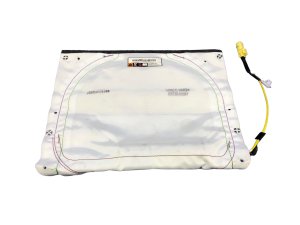
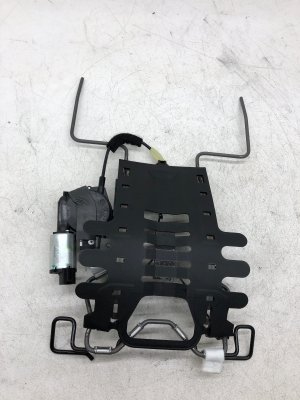
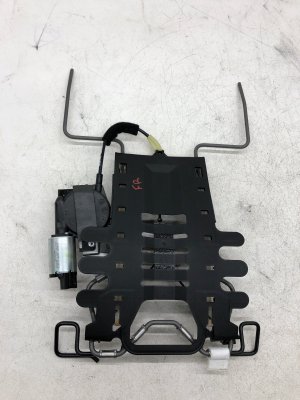
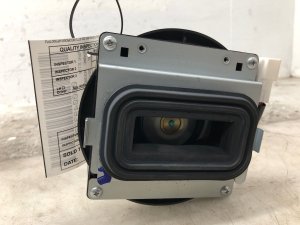

The information in this article is provided for general reference and educational purposes only. Vehicle specifications, procedures, and part compatibility can vary by production date, trim level, and region. Always consult your vehicle's factory service manual and verify part numbers before purchasing or performing repairs. Safety-critical components such as airbags, seat belts, and braking systems should be installed by a qualified professional.
- Toyota Prius:
- Toyota Prius Prime:
- Lexus ES250:
- Lexus ES300h:
- Lexus ES350:
- Lexus RX350:
- Lexus RX350L:
- Lexus RX450h:
- Lexus RX450hL:
- Lexus UX200:
- Lexus UX250h:
- Toyota Avalon:
- Toyota bZ4X:
- Toyota Camry:
- Toyota Corolla:
- Toyota Corolla Cross:
- Toyota Crown:
- Toyota Crown Signia:
- Toyota Grand Highlander:
- Toyota Highlander:
- Toyota RAV4:
- Toyota Sienna:
- Toyota Venza:
- 🎬 Helpful Videos
- 🛍️ Shop This Part
- Understanding Seat Motor Types
- Symptoms of Failure
- Power Seat Adjustment Motor Failure
- Seat Ventilation Blower Failure
- Known Issues, TSBs, and Recalls
- Diagnosing the Problem: A Step-by-Step Guide
- Buying a Used Seat Motor
- Cost of Replacement
- Replacement Difficulty
- 🎟️ Get 5% Off