

2003-2008 Toyota Matrix & Pontiac Vibe Seat Guide: Airbags, Trims, and Swaps
This guide covers the critical compatibility checks, common failure points, and replacement tips for the first-generation Toyota Matrix and Pontiac Vibe seats.
- Airbag compatibility is the #1 priority. You must match an airbag seat with an airbag car, and a non-airbag seat with a non-airbag car, or the SRS system will be disabled.
- Seats from the 2003-2008 Pontiac Vibe are a direct bolt-in swap, greatly increasing your options for used parts.
- Matrix XRS and Vibe GT models have sportier seats with larger bolsters that are physically interchangeable but will not match the style of Base or XR seats.
- Always disconnect the battery for at least 10 minutes before unplugging the yellow SRS connector under the seat to prevent fault codes or accidental deployment.
- Check for a broken or cracked seat frame, a known issue that causes rocking and clunking and is a major safety hazard.
Symptoms of a Failing or Worn Seat
Seat failures in the 2003-2008 Toyota Matrix and Vibe range from common wear and tear to more serious structural or safety-related issues.
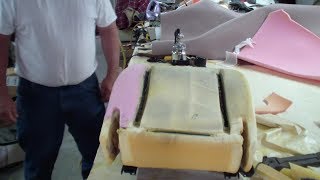
- Collapsed or Worn Foam Cushion: The most common issue, especially on the driver's side, is the breakdown of the foam cushion. You'll notice the seat feels less supportive, you sit lower, and the metal frame may be more noticeable. The outer bolster on the left side of the driver's seat is particularly prone to wear from getting in 🎬 Watch: How to repair worn-out car seat foam and out of the vehicle.
- Torn or Ripped Upholstery: The cloth fabric can tear or fray over time, particularly on high-wear areas like the side bolsters and seat bottom.
- Broken or Loose Seat Frame: Some owners have reported the internal seat frame cracking or breaking. This can cause the seat to rock, twist, or make a clunking noise during acceleration, braking, or cornering. A broken frame is a serious safety concern as the seat may not perform as designed in a collision.
- Squeaking or Clicking Noises: Noises that occur when you shift your weight can indicate loose mounting bolts or a problem with the height adjustment mechanism or seat tracks.
- SRS Airbag Light is On: An illuminated SRS warning light on your dashboard can be caused by a fault in the seat's wiring, the passenger occupancy sensor, or the side airbag module itself. If this light is on, the entire airbag system is disabled and will not deploy in a crash.
- Malfunctioning Adjustment Levers: The plastic handles for reclining the seat or adjusting its height can become brittle and break, making it impossible to adjust the seat position.
Buying a Used 2003-2008 Matrix or Vibe Seat
Purchasing a used OEM seat is often the most cost-effective solution, but careful inspection is required to ensure safety and compatibility. A new OEM seat assembly can cost over $800, making a quality used seat an excellent value.
Step 1: Verify Compatibility (The Most Important Step)
Not all first-generation Matrix and Vibe seats are interchangeable. Mismatches can lead to a non-functional airbag system or a seat that won't physically bolt in.
Warning: The side-impact airbag (SRS) system is the most critical compatibility point. You MUST replace an airbag-equipped seat with another airbag-equipped seat. Likewise, if your vehicle did not come with side airbags in the seats, you must use a non-airbag replacement seat. Installing the wrong type will result in a permanent SRS warning light and a disabled airbag system.
- Side Airbags: Check your original seat for a tag on the outboard side (near the seatbelt) that says "SRS" or "AIRBAG". If this tag is present, you need a replacement seat that also has it. When inspecting a used seat, look for this tag and ensure the yellow airbag connector and wiring are intact underneath the seat.
- Trim Level (Base/XR vs. XRS/GT): The Base and XR models of the Matrix, and the base Vibe, use a standard bucket seat. The sport-oriented Matrix XRS and Pontiac Vibe GT trims feature seats with more aggressive side bolsters and different cloth patterns for a snugger fit. While they are physically interchangeable, the look and feel will not match the remaining original seat.
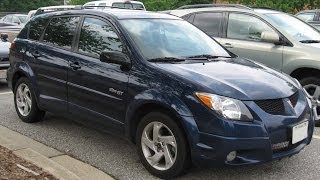
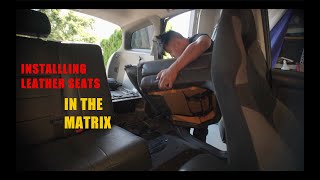
- Pontiac Vibe Compatibility: Seats from the 2003-2008 Pontiac Vibe are a direct bolt-in replacement for the Toyota Matrix, and vice-versa. This significantly widens the pool of available used parts. The floor pans are identical. 🎬 See this DIY leather seat replacement walkthrough Be aware that the cloth patterns and colors may be slightly different between the two brands.
- Toyota Corolla Compatibility: While the Matrix is based on the Corolla platform, and seats may physically bolt in, there can be differences in seat height and electrical connectors. A Matrix seat may sit lower in a Corolla. This swap should only be attempted by those comfortable with potential modifications.
- Fold-Flat Passenger Seat: A desirable and practical feature on some models was a front passenger seat that could fold completely flat, allowing for the transport of long items. If your vehicle has this feature, you'll want to find a replacement with the same functionality.
Step 2: Physical Inspection Checklist
Before purchasing, perform this inspection:
- Check the Frame: Place the seat on a level floor. Push and pull on the seatback. It should feel solid with no excessive wobble or clunking. A loose frame indicates internal damage.
- Inspect the Foam: Press down firmly on the seat bottom and side bolsters. The foam should feel firm and supportive. If it collapses easily or feels lumpy, it is worn out.
- Test the Adjustments: Operate all manual levers. The recline mechanism should work smoothly, and if equipped, the height adjustment should raise and lower the seat without binding.
- Examine the Tracks: Look at the metal seat tracks on the bottom. They should be straight and free of rust or damage.
- Inspect Electrical Connectors: Check the wiring harnesses and connectors under the seat. Ensure no wires are cut and the plastic connectors (especially the yellow SRS airbag connector) are not cracked or damaged.
Known Issues, Recalls, and Technical Service Bulletins (TSBs)
The 2003-2008 Matrix and Vibe were subject to several important recalls concerning the airbag system.
- NHTSA Campaign 13V029000 / 15V043000: Affecting 2003-2004 models, this recall addresses a faulty airbag control module that could cause front airbags and/or seat belt pretensioners to deploy inadvertently while driving.
- Takata Airbag Recalls: Like millions of other vehicles, the entire 2003-2008 model run was included in the massive Takata recalls for front airbag inflators that could rupture during deployment.
- NHTSA Campaign 19V604000: A follow-up recall for some 2005-2008 Matrix vehicles where the passenger airbag, previously replaced under the Takata recall, might not inflate properly.
- TSB T-SB-0122-11: Toyota issued a bulletin warning against the use of aftermarket seat covers on seats equipped with side airbags, as they can interfere with proper deployment.
Pro Tip: Before purchasing a used vehicle, always check its VIN on the NHTSA website to see if any recalls are open and outstanding.
Replacement Overview
Replacing a front seat is a relatively simple process that can be done with basic hand tools.
- Difficulty: 2 out of 5
- Estimated Time: 0.5 - 1.0 hours
- Tools Needed: Ratchet, 14mm socket, trim removal tool.
General Steps
- Disconnect the Battery:
Warning: This is the most important step. Disconnect the negative terminal of your car's battery and wait at least 10-15 minutes before proceeding. This de-energizes the SRS system and prevents accidental airbag deployment.
- Remove Bolt Covers: Use a small flathead screwdriver or trim tool to pop off the plastic covers at the end of the seat rails, exposing the four mounting bolts.
- Unbolt the Seat: Using a 14mm socket, remove the four bolts holding the seat to the floor pan.
- Disconnect Wiring: Carefully tilt the seat backward to access the electrical connectors underneath. Depress the tabs and unplug the connectors. The airbag connector is always bright yellow—be gentle with it.
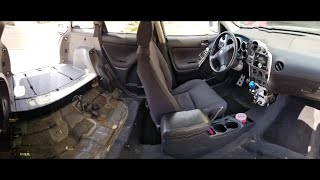
- Remove the Seat: The seat can now be carefully maneuvered out of the vehicle. Be mindful of the weight and be careful not to scratch interior trim panels. 🎬 Watch: Step-by-step seat removal and interior cleaning guide
- Installation: Installation is the reverse of removal. Place the new seat, connect the wiring, and hand-tighten all four mounting bolts before torquing them down. The recommended torque for the seat mounting bolts is 37 Nm (27 ft-lbs). Reconnect the battery once everything is secure.
Cost Comparison: New vs. Used Matrix Seats
| Part Type | Estimated Cost |
|---|---|
| New OEM Seat Assembly | $600 - $900+ |
| New Aftermarket (Racing/Universal) | $400 - $800 (for a pair, requires custom brackets) |
| Used OEM Seat Assembly | $125 - $350 |
| Shop Labor for Installation | $100 - $225 |
Frequently Asked Questions (FAQ)
Will a seat from a Pontiac Vibe fit my Toyota Matrix?
Yes, front and rear seats from a 2003-2008 Pontiac Vibe are a direct, bolt-in fit for a 2003-2008 Toyota Matrix. You must still match airbag and non-airbag versions, but the mounting points and electrical connectors are the same.
How do I know for sure if my seat has a side airbag?
Look for a small tag sewn into the seam on the outboard side of the seatback (the side closest to the door). It will typically say "SRS" or "SIDE AIRBAG". You can also look under the seat for a bright yellow electrical connector, which is standard for all SRS components.
My airbag light is on after I replaced the seat. What did I do wrong?
The most common reasons are: 1) You installed a seat without an airbag into a car that requires one (or vice-versa). 2) You forgot to plug in the yellow airbag connector, or it isn't fully seated. 3) You turned the key or reconnected the battery before all SRS components were plugged in, which logs a fault code. You may need a professional scan tool to clear the code after ensuring everything is connected properly.
Can I install a power seat in a car that originally had a manual seat?
This is not a simple plug-and-play swap. While the seat would likely bolt to the floor, the vehicle's wiring harness will not have the necessary power and ground circuits to operate the seat motors. This type of conversion requires custom wiring and is best left to experienced automotive electricians.
Part Numbers and Specifications
Below are some known OEM part numbers for the 2003-2008 Toyota Matrix. Note that part numbers are highly specific to year, trim, color, and options. Always verify a part number with the seller using your vehicle's VIN.
| Part Number | Description |
|---|---|
| 71200-02L70-B6 | Front Left (Driver) Seat Assembly, Base model, Medium Gray (2005-2006) |
| 71200-0Z600-B1 | Front Left (Driver) Seat Assembly, Base model, Medium Gray (2007-2008) |
| 71200-0Z620-B1 | Front Left (Driver) Seat Assembly, XR & XRS, with Side Airbag, Dark Gray (2005-2008) |
| 72020-02110 | Front Left (Driver) Manual Seat Track Assembly (2005-2008) |
| 73240-01030-B0 | Front Left (Driver) Seat Belt Buckle/Receptacle |
Technical Specifications
- Seat Mounting Bolt Torque: 37 Nm (27 ft-lbs)
- Seat Mounting Bolt Size: 14mm Hex Head
Helpful Videos
Technical Specifications
OEM Part Numbers: 71200-02L70-B6 71200-0Z600-B1 71200-0Z620-B1 72020-02110 73240-01030-B0 88973539
Seat Mounting Bolt Torque: 37 Nm (27 ft-lbs)

The information in this article is provided for general reference and educational purposes only. Vehicle specifications, procedures, and part compatibility can vary by production date, trim level, and region. Always consult your vehicle's factory service manual and verify part numbers before purchasing or performing repairs. Safety-critical components such as airbags, seat belts, and braking systems should be installed by a qualified professional.
- Toyota Matrix:
- 🎬 Helpful Videos
- Symptoms of a Failing or Worn Seat
- Buying a Used 2003-2008 Matrix or Vibe Seat
- Step 1: Verify Compatibility (The Most Important Step)
- Step 2: Physical Inspection Checklist
- Known Issues, Recalls, and Technical Service Bulletins (TSBs)
- Replacement Overview
- General Steps
- Cost Comparison: New vs. Used Matrix Seats
- Frequently Asked Questions (FAQ)
- Part Numbers and Specifications
- Technical Specifications
- 🎟️ Get 5% Off