

2017-2024 Tesla Model 3 & Model Y Front Seat Track Cover: Why It Breaks and How to Fix It
This guide covers the common failure of the plastic front seat track trim cover, explaining why it breaks and detailing both the official replacement and popular DIY fixes.
- This guide is for the cosmetic plastic seat track COVER, not the mechanical seat track itself. Failure is a cosmetic issue, not a safety one.
- The official Tesla replacement procedure is very difficult, requiring the entire front seat to be unbolted from the car's floor.
- A common, effective, and much easier DIY fix is to secure the broken cover with a black zip tie or a small screw, which many owners find more durable than the original clips.
- When buying a used cover, the only thing that matters is the integrity of the mounting clips on the back; a used part with intact clips is as good as new.
Is This a Seat Track or a Seat Track Cover?
Before diving in, it's important to clarify what this part is. This guide is for the cosmetic plastic trim cover that fits over the metal seat rails. It is NOT the mechanical seat track assembly that the seat moves on. If your seat is failing to move, making grinding noises, or feels loose on its base, you may have an issue with the seat track mechanism or seat frame itself. This article specifically addresses the common problem of the plastic cover becoming loose, falling off, or breaking.
Symptoms of a Failing Seat Track Cover
Failure of this part is purely cosmetic and does not affect the operation or safety of the seat. Symptoms are easy to spot:
- Loose or Protruding Trim: The most common symptom is the cover sticking out from the side of the seat base. It may feel loose to the touch or catch on your leg as you enter or exit the vehicle.
- Visible Broken Clips: If you inspect the loose cover, you will likely find that one or more of the small plastic clips or mounting tabs on the back have snapped off.
- Cover Falls Off Completely: In advanced cases of failure, the trim piece may fall off entirely, exposing the metal seat track and wiring underneath.
- Rattling Noises: A loose cover may rattle or vibrate against the seat frame as you drive, especially over rough surfaces.
Known Issues and Common Causes
This is a very common failure point on both the Tesla Model 3 and Model Y. The design uses relatively brittle plastic clips in a high-traffic area.
- Stress from Entry/Exit: The primary cause of failure is repeated pressure from the driver's or passenger's leg brushing against the cover when getting in and out of the car. Over time, this stress fatigues and breaks the plastic mounting points.
- Easy Entry Setting: Some owners report that having the 'Easy Entry' profile set to move the seat very low and far back can increase the likelihood of putting pressure on this trim piece.
- Accidental Kicks: The cover can also be broken by accidental kicks from the driver or passengers.
Pro Tip: Many owners don't bother with a full replacement and instead opt for a simple, more durable DIY repair. A common and effective method is to drill a small, inconspicuous hole and use a black zip tie to securely fasten the trim to the seat frame. This often provides a more robust and permanent solution than the original plastic clips.
Buying a Used Seat Track Cover
Since this is a cosmetic part, buying a used OEM cover is a great way to save money. Unlike mechanical or electronic parts, a used trim piece in good condition is functionally identical to a new one. Here’s what to check:
- Inspect All Mounting Clips: This is the most critical check. Turn the cover over and carefully inspect every single mounting tab and clip. Ensure none are cracked, stressed (showing white lines in the plastic), or broken. A used cover with even one broken clip will not install securely.
- Check for Scuffs and Scratches: Examine the exterior surface for deep scratches or gouges. Minor scuffs may be acceptable, but deep damage will be visible once installed.
- Verify the Part Number: The primary OEM part number for the front right (passenger) inner cover on the Model 3 is 1098347-00-C. While parts are similar between the Model 3 and Y, always try to match the part to your specific vehicle to ensure a perfect fit.
Replacement Difficulty: 4/5 (Official Method) or 2/5 (DIY Fix)
The replacement process for this simple plastic part has a surprisingly wide range of difficulty depending on the method you choose.
Official Tesla Replacement Procedure (Difficult)
Tesla's official service manual procedure for both the Model 3 and Model Y requires unbolting the front seat from the floor of the vehicle.
- Move the seat fully forward to access the two rear mounting bolts.
- Remove the two rear bolts using a Torx Plus T45 socket. These bolts should be discarded and replaced with new ones upon reinstallation.
- Move the seat fully rearward to access the two front mounting bolts.
- Remove the two front bolts.
- Carefully lift the entire seat assembly just enough to slide the old track covers off and the new ones on.
- Reinstall the seat using new bolts, torquing them to 33.5 Nm (24.7 lb-ft).
Warning: This procedure involves a critical safety component (the seat mounting). If you are not comfortable with this process or do not have a torque wrench, it is best to have it done professionally or use the DIY fix method described below.
Common DIY Zip-Tie or Screw Fix (Easy)
Because the official method is so involved, many owners opt for a simpler and more durable repair.
- Position the broken trim piece back in its place.
- Identify the location of the broken clip, usually near the front of the trim piece.
- Drill a small hole through the trim and find a corresponding secure point on the metal seat frame underneath.
- Thread a small black zip tie through the holes and tighten it until the trim is held securely against the seat base. Cut the excess zip tie.
- Alternatively, some owners use a small, self-tapping black screw instead of a zip tie.
Important Note on Seat-Related Recalls
While there are no recalls for this cosmetic trim cover, Tesla has issued several safety recalls for seat-related fasteners and seat belts on the Model 3 and Model Y. These include:
- Loose Seat Fasteners: Recalls have been issued for front and second-row seat bolts that may not have been properly torqued at the factory, which could affect the seat's integrity in a crash.
- Seat Belt Issues: Recalls have also addressed fasteners for the front seat belt shoulder anchor and second-row seat belt retractors that could be loose.
It is crucial to distinguish these safety-critical recalls from the cosmetic issue with the seat track cover.
Cost Comparison
| Part or Service | Estimated Cost |
|---|---|
| New OEM Cover | $30 - $60 |
| Used OEM Cover | $25 - $50 |
| Aftermarket Cover/Protector Kit | $20 - $80 (These are often overlays, not direct replacements) |
| Shop Labor (Official Method) | $150 - $250 (due to seat removal) |
Frequently Asked Questions (FAQ)
Does this part fit both the driver and passenger side?
No, the covers are side-specific. The part number 1098347-00-C is for the inner cover on the front right (passenger) side. You will need a different part number for the driver's side or for the outer covers.
Is it safe to drive with the seat track cover broken or missing?
Yes, it is safe. The cover is a cosmetic piece and has no impact on the structural integrity or function of the seat or its safety systems. However, a loose piece could be a nuisance or, if it falls off, could potentially get lodged under the seat rails, though this is unlikely.
Why does Tesla's repair procedure require removing the seat?
The covers are designed to slide onto the seat track assembly from the end. This design likely simplifies assembly at the factory but makes replacement in the vehicle very difficult. Lifting the seat provides the necessary clearance to slide the covers on and off as intended.
Will using a zip tie to fix the cover void my warranty?
Modifying a part by drilling a hole and adding a zip tie could technically give Tesla a reason to deny a warranty claim on that specific trim piece in the future. However, it is extremely unlikely to affect the warranty on any other part of the vehicle, especially unrelated systems. Since the part is inexpensive, many owners find the DIY fix worth the minor risk.
Technical Specifications
OEM Part Numbers: 1098347-00-C 109834700C
Material: Molded Plastic Official Torque Spec for Seat Bolts: 33.5 Nm (24.7 lb-ft)
We Have This Part in Stock
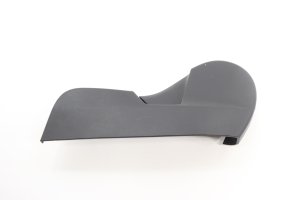

The information in this article is provided for general reference and educational purposes only. Vehicle specifications, procedures, and part compatibility can vary by production date, trim level, and region. Always consult your vehicle's factory service manual and verify part numbers before purchasing or performing repairs. Safety-critical components such as airbags, seat belts, and braking systems should be installed by a qualified professional.
- Tesla Model 3:
- Tesla Model Y:
- 🛍️ Shop This Part
- Is This a Seat Track or a Seat Track Cover?
- Symptoms of a Failing Seat Track Cover
- Known Issues and Common Causes
- Buying a Used Seat Track Cover
- Replacement Difficulty: 4/5 (Official Method) or 2/5 (DIY Fix)
- Official Tesla Replacement Procedure (Difficult)
- Common DIY Zip-Tie or Screw Fix (Easy)
- Important Note on Seat-Related Recalls
- Cost Comparison
- Frequently Asked Questions (FAQ)
- 🎟️ Get 5% Off