

2015-2020 Honda Fit Starter Motor: Why They Fail Early and How to Replace Them
A complete guide to diagnosing, replacing, and sourcing a starter for the third-generation Honda Fit, focusing on its common premature failure.
- The starter motor on the 2015-2020 Honda Fit is a common failure item, often failing prematurely between 45,000 and 70,000 miles.
- The most common symptom is a single loud click with no crank, especially after confirming the battery is good.
- For models with push-button start, a faulty start/stop switch (covered by a warranty extension) can mimic a bad starter and should be ruled out first.
- A used OEM starter offers the best value, providing a genuine Mitsuba part for significantly less than a new one from the dealer.
Known Issues, TSBs, and Recalls

The starter motor on the 2015-2020 Honda Fit is a known weak point, with numerous owner complaints about premature failure. Many drivers report issues at mileages as low as 45,000 to 70,000 miles, which is earlier than expected for such a component. This issue seems particularly prevalent in the 2015 model year, the first year of the GK5 generation. While there are no official recalls for the starter motor itself, its frequent failure is a common topic in owner forums.
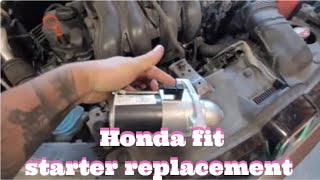
🎬 See a mechanic explain why these starters fail so early.Related Issue: For models with push-button start, Honda issued a warranty extension for the Engine Start/Stop switch (TSB 20-098). A faulty switch can mimic starter problems, causing the vehicle not to start when the button is pressed. If you have a push-button start model, it's crucial to diagnose whether the issue is the switch or the starter motor itself.
Symptoms of a Failing Starter Motor

Diagnosing a bad starter can be tricky because its symptoms often overlap with a weak battery or poor electrical connections. Always start by ensuring your battery is fully charged and the terminals are clean and tight before condemning the starter.
1. A Single, Loud Click with No Crank
This is the most classic symptom of a failed starter. When you turn the key or press the start button, you hear one distinct 'CLICK' from the engine bay, but the engine doesn't turn over. This sound is the starter solenoid engaging, but the motor itself is failing to spin. This can be due to worn internal components or dead spots in the motor's windings.
2. Intermittent Starting
The car may start perfectly one day but refuse to crank the next. You might have to try turning the key or pressing the button multiple times before the engine finally turns over. This often happens as the starter begins to fail, becoming progressively worse over time until it fails completely.
3. Grinding Noise During or After Startup
A brief, harsh grinding sound when you first start the engine can indicate a problem with the starter's pinion gear. This might mean the gear is not meshing properly with the flywheel or, more commonly, it is slow to retract after the engine has started. This is a sign of impending failure.
4. No Sound at All
If you turn the key and get nothing—no click, no crank, but the dashboard lights work—the problem could be in the circuit leading to the starter. This could be a failed starter relay, a bad ignition switch, or a break in the wiring. However, a completely dead starter motor can also cause this symptom.
5. Slow, Labored Cranking
If the engine turns over much slower than usual, it's often a sign of a weak battery. However, a failing starter motor can also draw excessive current from the battery, leading to the same symptom. If your battery tests good but the engine still cranks slowly, the starter is a likely suspect.
Buying a Used 2015-2020 Fit Starter

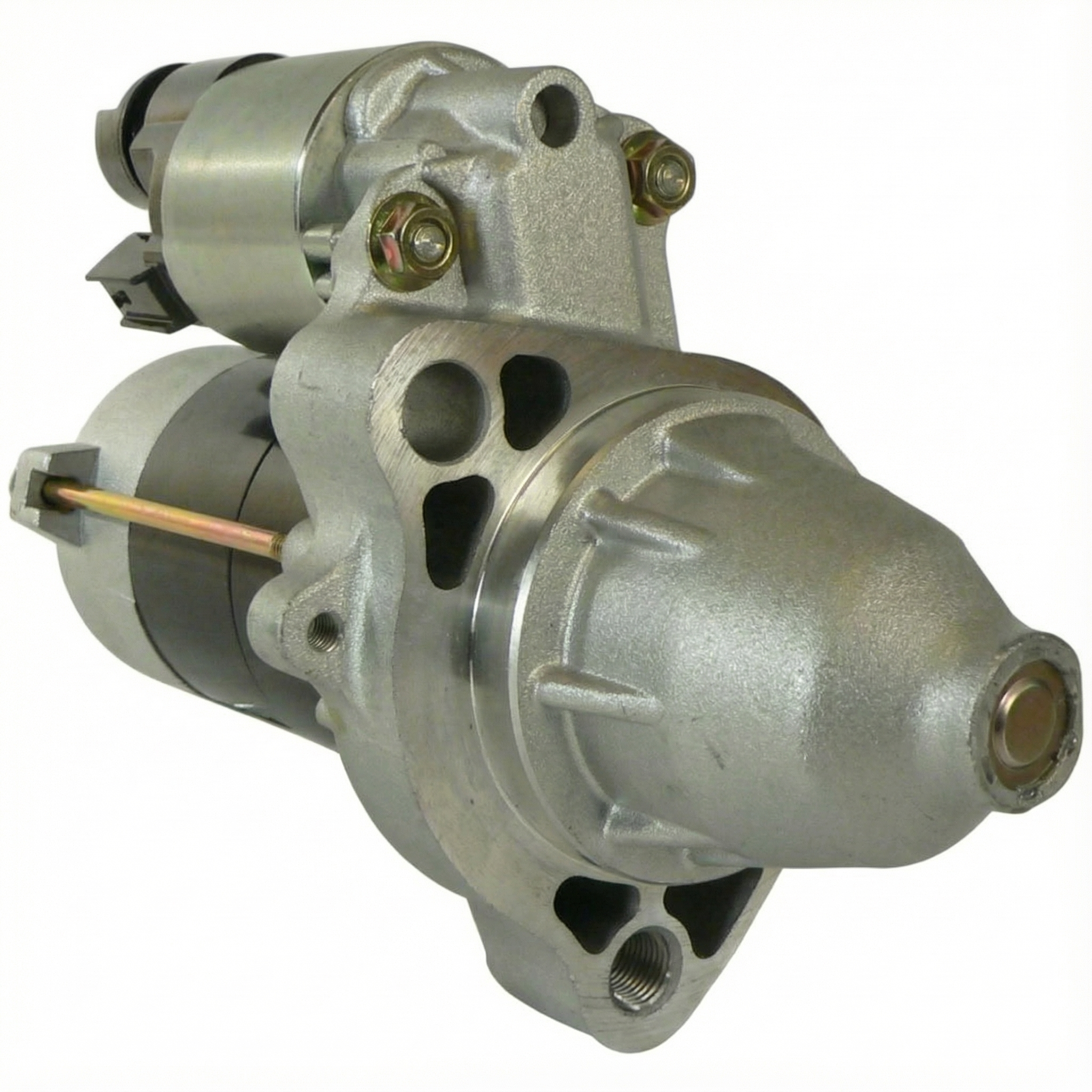
Given the high cost of a new OEM starter, a used, low-mileage OEM part is an excellent value. The original starter is a Mitsuba unit, part number SM74015. When buying used, you are getting the exact same part that the car was built with, often for a fraction of the price.
What to Look For:
- Verify Part Numbers: The most common Honda part numbers are 31200-5R7-A01 and 31200-5R7-A02. Part number 31200-5R7-A02 is a later version that replaces the A01. Ensure the part you are buying matches one of these numbers.
- Inspect Electrical Connections: Check the main electrical post (B+ terminal) and the solenoid connector plug. The post should be straight and clean, with no signs of corrosion or stripped threads. The plastic connector should be intact, not cracked or brittle.
- Check the Gear: Look at the small pinion gear at the end of the starter. The teeth should be clean and sharp, with no signs of chipping, excessive wear, or damage from grinding.
- Mileage and Source: Since these starters are known to fail prematurely, opt for a part from a lower-mileage vehicle if possible. Buying from a reputable recycler that provides the VIN and mileage of the donor vehicle gives you more confidence in the part's history.
- Why Used OEM is a Good Choice: A used OEM Mitsuba starter is often a better choice than a cheap, new aftermarket part. New aftermarket starters can have lower quality internal components and may not last as long. A low-mileage OEM unit provides proven Honda/Mitsuba engineering at a significant discount.
Cost Comparison
Prices can vary by location and supplier, but this provides a general cost expectation for the part and labor.
| Item | Estimated Cost |
|---|---|
| New OEM Starter | $525 - $560 (Part Only) |
| New Aftermarket Starter | $80 - $220 (Part Only) |
| Used OEM Starter | $50 - $110 (Part Only) |
| Remanufactured OEM Starter | $300 - $350 (Part Only) |
| Shop Labor | $144 - $211 |
| Total Dealer Replacement Cost | $630 - $900+ |
Replacement Overview

Replacing the starter on a 2015-2020 Honda Fit is a moderately difficult job that is feasible for a DIY mechanic with the right tools. It is located on the front of the engine, below the intake manifold. Access is tight, and the job is typically done from both the top and bottom of the vehicle.
Safety First: Always disconnect the negative battery terminal before beginning any work on the starter. The main starter cable is connected directly to the battery and will cause a dangerous short circuit if it touches any metal part of the car.
Key Steps & Torque Specs:
- Disconnect the negative battery terminal (10mm nut).
- Remove the air intake box assembly to create working room from the top.
- From underneath the vehicle, remove the plastic splash shield.
- Unplug the small solenoid connector and remove the nut (typically 12mm) holding the main power cable to the starter.
- Remove the two main mounting bolts that hold the starter to the transmission bellhousing. These are often different sizes (e.g., 14mm and 17mm).
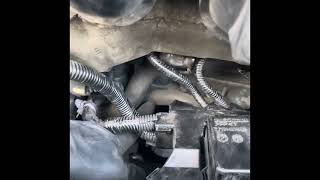
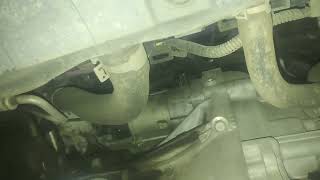
- Maneuver the old starter out, which may require rotating it to find the right angle to clear surrounding components. 🎬 Watch this detailed walkthrough of the starter removal process.
- Installation is the reverse of removal. 🎬 Watch this step-by-step video for a clear view of the job.
Important Torque Specs:
- Starter Mounting Bolts: One video suggests 48 ft-lbs and 33 ft-lbs for the two different bolts, but this can vary. Another source for a similar Honda suggests 33 ft-lbs for both. Always tighten securely; it's difficult to get a torque wrench in the tight space.
- Main Power Cable Nut: Approximately 6-7 ft-lbs. Be careful not to overtighten this nut, as it can break the plastic housing of the solenoid.
Pro Tip: The electrical connectors can be difficult to reach and unplug, especially when dirty. It can be helpful to use a small pick or flathead screwdriver to release the locking tab on the solenoid connector. When installing the new starter, loosely thread the mounting bolts first to ensure it is aligned correctly before tightening them down.
Frequently Asked Questions (FAQ)
Is there a recall on the 2015-2020 Honda Fit starter?
No, there is no official safety recall for the starter motor itself. However, Honda did issue a warranty extension for the push-button start switch on some models, which can cause similar no-start symptoms.
How long should a starter last on a Honda Fit?
While a starter can theoretically last the life of the vehicle (150,000+ miles), the 2015-2020 Fit is known for premature starter failure. Many owners report needing a replacement between 45,000 and 100,000 miles.
Can I drive my car with a failing starter?
You can drive it as long as it starts. The risk is not in the driving itself, but in the fact that an intermittent starter will eventually fail completely, leaving you stranded. It is highly recommended to replace the starter as soon as symptoms appear.
My battery is new but the car just clicks. Is it the starter?
Most likely, yes. If the battery is known to be good and fully charged, a single, loud click when trying to start the engine is the classic sign of a failed starter motor or solenoid.
Helpful Videos
Technical Specifications
OEM Part Numbers: 31200-5R7-A01 31200-5R7-A02 SM74015
Voltage: 12V. Original Manufacturer: Mitsuba. The starter has two mounting bolts of different sizes and one main power terminal with a 12mm nut.
We Have This Part in Stock

The information in this article is provided for general reference and educational purposes only. Vehicle specifications, procedures, and part compatibility can vary by production date, trim level, and region. Always consult your vehicle's factory service manual and verify part numbers before purchasing or performing repairs. Safety-critical components such as airbags, seat belts, and braking systems should be installed by a qualified professional.
- Honda Fit:
- 🎬 Helpful Videos
- 🛍️ Shop This Part
- Known Issues, TSBs, and Recalls
- Symptoms of a Failing Starter Motor
- 1. A Single, Loud Click with No Crank
- 2. Intermittent Starting
- 3. Grinding Noise During or After Startup
- 4. No Sound at All
- 5. Slow, Labored Cranking
- Buying a Used 2015-2020 Fit Starter
- What to Look For:
- Cost Comparison
- Replacement Overview
- Key Steps & Torque Specs:
- Important Torque Specs:
- Frequently Asked Questions (FAQ)
- 🎟️ Get 5% Off