

2004-2010 Mazda 3, 5, 6 & CX-7 Starter Motor: Clicking, No-Start Diagnosis, and Replacement Costs
A complete guide to diagnosing and replacing the starter motor on the Mazda 3, 5, 6, and CX-7 equipped with the 2.3L engine, covering symptoms, costs, and what to look for in a used part.
- The most common symptom of failure is a clicking sound without the engine cranking; always check the battery and its connections first.
- A Technical Service Bulletin (TSB 01-037/08) exists for 2004-2008 Mazda 3 models for an intermittent no-start condition caused by a poor starter signal wire connection.
- Replacement labor costs are significantly higher for the Mazda CX-7 ($183-$269) compared to the Mazda 3 ($104-$152) due to tighter access.
- When buying a used starter, visually inspect for corrosion and gear damage, and perform a bench test with a 12V battery if possible to ensure it works.
Symptoms of a Failing Starter Motor
A failing starter motor rarely dies without warning. Recognizing the early signs can save you from being stranded. The most common symptoms are directly related to starting the engine and are often auditory.
1. Clicking Noise When Turning the Key
This is the most classic symptom. You turn the key, and instead of the engine cranking, you hear a single, sharp "click" or a series of rapid clicks. This sound is the starter's solenoid—an electromagnetic switch on top of the starter—trying to engage but failing. The click means the solenoid is receiving power from the battery, but either the solenoid itself is faulty or there isn't enough power to turn the main starter motor.
2. Engine Won't Crank or Cranks Slowly
If you turn the key and nothing happens at all (no click, no crank), or if the engine turns over very sluggishly like the battery is dead, it could be the starter. If your dashboard lights and radio turn on but the engine doesn't crank, it points more strongly to the starter rather than the battery. A slow crank, assuming the battery is fully charged, indicates the starter motor is wearing out and struggling to spin the engine.
3. Grinding or Whirring Noises
A loud grinding noise during or after starting the engine can indicate a problem with the starter's gear not meshing properly with the engine's flywheel. This could be due to worn teeth on the starter gear or the flywheel. A high-pitched whirring sound after the engine has started suggests the starter is not disengaging properly and is still spinning with the engine, which can cause significant damage.
4. Smoke or Burning Smell
Smoke or a burning smell coming from under the hood during attempts to start the car is a serious sign. This can be caused by the starter motor overheating due to a short circuit or continuous power from a stuck ignition switch. If you see or smell smoke, stop trying to start the car immediately to prevent further damage or a potential fire.
Known Issues, TSBs, and Recalls
While there are no widespread recalls specifically for the starter motor on these vehicles, some related issues have been documented.
- Mazda 3 TSB 01-037/08: For 2004-2008 Mazda 3 models (excluding Mazdaspeed3), an intermittent no-crank, no-start condition was identified. The cause was a poor connection at the magnet switch terminal "S" on the starter motor. The official repair involves replacing the connector with a more robust short cord set to ensure a solid connection.
- 2010 Mazda 3 Harness Recall: While slightly outside the main year range, it's worth noting that some early 2010 Mazda 3 models were recalled because the emission harness could rub against the starter motor housing, potentially causing a short circuit, engine stalling, and a no-restart condition. This highlights the importance of checking wire harness routing during any starter replacement.
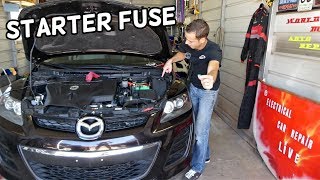
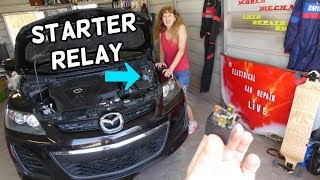
Pro Tip: Before replacing the starter, always check the basics first. Ensure your battery is fully charged (a healthy battery should read around 12.6 volts) and that the battery terminals are clean and tight. Also, check the starter relay and fuse, 🎬 Watch: How to find and replace the starter fuse as these are much cheaper and easier to replace.
Buying a Used Starter Motor: What to Look For
A recycled OEM starter is often a reliable and cost-effective alternative to a new aftermarket part. OEM parts are designed for perfect fitment and durability. Here’s how to inspect a used starter before you buy.
- Visual Inspection: Look for obvious signs of damage like cracks in the housing. Check the electrical terminals for corrosion or melting. A starter caked in oil or grime may indicate it came from an engine with significant leaks, which can shorten the starter's life.
- Check the Gear: Inspect the teeth on the small Bendix gear. They should be clean and well-defined, not chipped, broken, or excessively worn down. Manually pull the gear out and twist it; it should spin freely in one direction and lock in the other.
- Mileage Isn't Everything: While lower mileage is generally better, the number of start cycles is more impactful than total miles driven. A starter from a highway-driven car may have less wear than one from a delivery vehicle with the same mileage. Most starters begin to see increased failure rates after 75,000 miles, with many failing around the 125,000-mile mark.
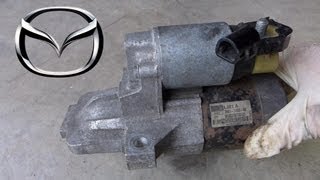
- Bench Test: The best way to confirm a used starter works is to perform a bench test. 🎬 See this step-by-step guide on testing a used starter This involves using jumper cables and a 12V battery to power the starter on the ground. Connect the negative cable to the starter's body and the positive cable to the main power terminal. Then, use a small wire to briefly connect the positive terminal to the small 'S' terminal (solenoid trigger). The Bendix gear should shoot forward and spin rapidly.
Cost Breakdown
The cost to replace the starter motor can vary significantly based on the vehicle and the type of part used. The Mazda CX-7 tends to have higher labor costs due to accessibility.
| Part / Service | Estimated Cost | Notes |
|---|---|---|
| New OEM (Remanufactured) | $225 - $315 | Mazda often sells remanufactured units as their OEM replacement. |
| New Aftermarket | $100 - $200 | Prices vary by brand and quality. |
| Used OEM | $40 - $90 | A cost-effective option, but requires careful inspection. |
| Remanufactured | $150 - $250 | A good balance of price and reliability, often with a warranty. |
| Shop Labor | $104 - $269 | Mazda 3 labor is on the lower end ($104-$152), while the CX-7 is higher ($183-$269). |
| Total (Mazda 3) | $395 - $555 | Average total cost using new parts. |
| Total (Mazda CX-7) | $426 - $650 | Average total cost using new parts for 2007-2009 models. |
Replacement Overview & Vehicle Differences
Replacing the starter on these Mazda models is a moderately difficult job that can be done by a DIY mechanic with the right tools. The general location is on the front of the engine, near the oil filter.
The basic steps include:
- Disconnect the battery: This is a critical safety step. Always disconnect the negative terminal first.
- Raise the vehicle: You will need to access the starter from underneath the car.
- Remove the splash shield: A plastic under-cover is typically held on with 10mm bolts.
- Disconnect wiring: Remove the main power cable (usually a 13mm nut) and the small solenoid signal wire connector.
- Unbolt the starter: The starter is typically held on by two 14mm bolts. 🎬 Watch: A walkthrough of the starter removal process
Warning: On the Mazda CX-7 and other models, a small bracket holding a hose or wire loom may be attached to one of the starter bolts. This bracket must be removed to access the bolt, which can be tricky due to limited space. A combination of wrenches and sockets may be needed.
While the procedure is similar across the Mazda 3, 5, 6, and CX-7, the accessibility and surrounding components can differ slightly. The turbocharged engine in the CX-7 and Mazdaspeed models can create a more cramped workspace compared to the naturally aspirated versions.
Frequently Asked Questions
Can I jump-start a car with a bad starter?
No. Jump-starting provides extra power to a weak battery. If the starter motor itself has failed, extra power won't make it work. If a jump-start doesn't help, the starter is a likely culprit.
Is it better to rebuild a starter or buy a remanufactured one?
For most people, buying a high-quality remanufactured starter is the better option. A simple rebuild might only replace the one part that failed (like the solenoid), leaving other worn components in place. A remanufactured unit is completely disassembled, cleaned, and reassembled with many new components like brushes and bearings, and is fully tested to meet original specifications.
Can a bad starter drain my battery?
Yes, a failing starter can drain a battery. If the starter has an internal short or if the solenoid sticks, it can draw current from the battery even when the car is off. Repeatedly trying to start a car with a faulty starter can also quickly drain a healthy battery.
Do I need any special tools for the replacement?
No highly specialized tools are required, but a good set of metric sockets (10mm, 12mm, 13mm, 14mm), wrenches, and extensions are necessary. Due to tight access, a pry bar might be helpful for moving brackets out of the way.
Helpful Videos

Technical Specifications
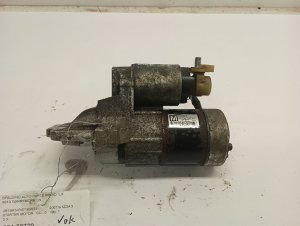
OEM Part Numbers: L32718400 L32718400R00 L327-18-400R-0A M000T31571 M0T87681
Voltage: 12V, Power: 1.4kW, Rotation: Clockwise (CW), Number of Teeth: 11, Starter Type: PMGR (Permanent Magnet Gear Reduction)
We Have This Part in Stock
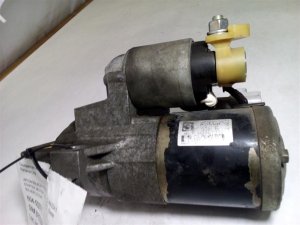

The information in this article is provided for general reference and educational purposes only. Vehicle specifications, procedures, and part compatibility can vary by production date, trim level, and region. Always consult your vehicle's factory service manual and verify part numbers before purchasing or performing repairs. Safety-critical components such as airbags, seat belts, and braking systems should be installed by a qualified professional.
- Mazda CX-7:
- Mazda 6:
- Mazda 3:
- Mazda 5:
- 🎬 Helpful Videos
- 🛍️ Shop This Part
- Symptoms of a Failing Starter Motor
- 1. Clicking Noise When Turning the Key
- 2. Engine Won't Crank or Cranks Slowly
- 3. Grinding or Whirring Noises
- 4. Smoke or Burning Smell
- Known Issues, TSBs, and Recalls
- Buying a Used Starter Motor: What to Look For
- Cost Breakdown
- Replacement Overview & Vehicle Differences
- Frequently Asked Questions
- 🎟️ Get 5% Off