

2011-2017 Chrysler 200 & 2011-2014 Dodge Avenger Steering Column: Noises, Options, and Replacement
This guide covers common steering column failures, explains how to choose the correct used part based on your vehicle's options, and details the replacement process.
- Compatibility is critical. You must match the new column's options (auto headlamps, fog lamps, heated wheel) to your vehicle's original equipment.
- A failed clock spring is the most common issue, causing the airbag light to come on and steering wheel buttons to stop working. This is a major safety issue.
- A recall (NHTSA 11V-315) was issued for some 2011 models for a missing steering column pivot rivet, which is a serious safety concern. Verify if this applies to your vehicle.
- Replacement is a complex DIY job due to the need to handle the airbag safely. Always disconnect the battery before starting.
Symptoms of a Failing Steering Column
A problem with the steering column can manifest in several ways, ranging from annoying noises to serious safety concerns. Here are the most common symptoms for the Chrysler 200 and Dodge Avenger.
Noises While Turning
Clicking, grinding, or clunking sounds when you turn the steering wheel often point to an issue within the column. These noises can be caused by worn-out internal bearings, failing universal joints connecting the column to the steering shaft, or problems with the clock spring assembly. While sometimes just an annoyance, these sounds can be an early warning of a more significant mechanical failure.
🎬 Watch: Diagnosing clicking and popping noises while turning.Loose or Shaky Steering Wheel
If your steering wheel feels loose, wobbles, or has excessive play (meaning you can turn it slightly without the wheels responding), it could indicate worn bearings or loose mounting bolts. This is a serious safety issue as it compromises your direct control over the vehicle. A steering column that doesn't lock its tilt adjustment properly also falls into this category and requires immediate attention.
Failure of Electronic Controls
One of the most common failures within the steering column assembly is the clock spring. This component is a coiled ribbon of wires that allows the steering wheel to turn while maintaining electrical contact for the driver's airbag, horn, cruise control, and radio buttons. When it fails, you may experience:
- The airbag warning light is illuminated on the dashboard.
- The horn doesn't work, or works intermittently.
- Cruise control or radio buttons on the steering wheel stop functioning.
- The traction control light may come on, as the clock spring is often integrated with the steering angle sensor.
Warning: A faulty clock spring means the driver's airbag may not deploy in a crash. If you have an airbag warning light on, this issue should be addressed immediately.
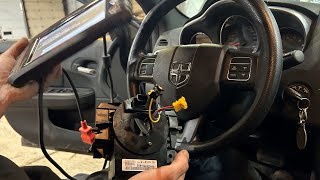
🎬 See this step-by-step guide to replacing a faulty clock spring.Ignition and Starting Problems
The ignition lock cylinder is housed in the steering column. Difficulty inserting, turning, or removing the key can point to a problem with the lock mechanism itself. In some cases, a failure here can prevent the car from starting or cause the steering wheel to remain locked when it shouldn't be.
Known Issues, Recalls, and Technical Service Bulletins (TSBs)
Owners of the 2011-2017 Chrysler 200 and 2011-2014 Dodge Avenger should be aware of a few specific issues related to the steering system.
- NHTSA Recall 11V-315 (Chrysler Campaign L23): This important recall was issued for some 2011 models of both the Chrysler 200 and Dodge Avenger, among other vehicles. The issue involved a potentially missing or incorrectly installed steering column pivot rivet. This could compromise the column's ability to support the driver in a frontal crash, reducing the effectiveness of the safety systems. Dealers were instructed to inspect and, if necessary, replace the rivets free of charge.
- NHTSA Recall 16V-668 (Chrysler Campaign S61): This recall affected a wide range of vehicles, including the 2011-2014 Chrysler 200 and 2010-2014 Dodge Avenger. A potential short circuit in the Occupant Restraint Controller (ORC) could disable the frontal airbags, side airbags, and seat belt pretensioners, increasing the risk of injury in a crash. While not a direct failure of the column itself, it involves critical safety systems connected through it.
- TSB for Clicking/Popping Noise: Chrysler issued a technical service bulletin (SB-19-001-14REVA) for 2012-2013 Avenger and 200 models regarding a clicking or popping noise from the steering system when turning.
- TSB for Off-Center Steering Wheel: TSB 02-007-12 REV. A was released for the 2013 Dodge Avenger to address steering wheels that were off-center by 3.1 to 12 degrees.
Identifying Your Vehicle's Specific Steering Column
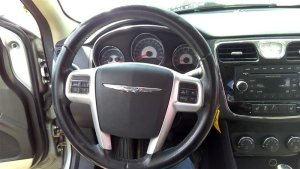
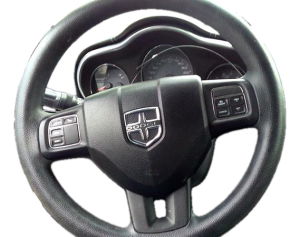
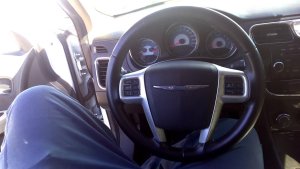
Not all steering columns for these vehicles are the same. Ordering the correct used part requires matching the specific options your car was built with. The primary differences are based on the electronic features controlled by the switches on the column and steering wheel.
Before buying, check your vehicle for these options:
- Automatic Headlamps: Does your headlight switch have an "AUTO" position?
- Fog Lamps: Is there a button to activate front fog lamps?
- Heated Steering Wheel: Is there a switch for a heated wheel? (This is a less common option).
- Cruise Control and Radio Controls: Most columns include these, but it's always good to verify the button layout matches your original.
Pro Tip: The easiest way to ensure compatibility is to match the buttons and switches on the potential replacement column exactly to your current one. When in doubt, providing the seller with your vehicle's VIN can help them verify the correct part configuration.
Buyer's Guide: What to Check When Purchasing a Used Steering Column
Buying a used OEM steering column is an excellent way to save money, but a careful inspection is key to getting a quality part. Here’s what to look for:
- Check for Physical Damage: Inspect the entire assembly for cracks, deep scrapes, or bent sections, which could indicate it came from a vehicle in a serious accident. A compromised collapsible column may not perform correctly in a future collision.
- Verify Wiring and Connectors: Ensure all wiring harnesses are intact and no connectors are broken, cracked, or have cut wires. Repairing damaged connectors can be difficult and time-consuming.
- Test the Switches and Levers: Physically operate the turn signal stalk, wiper controls, and tilt/telescope lever. They should move smoothly and feel solid, not loose or flimsy.
- Inspect the Clock Spring: While you can't test it electronically, look for any signs of damage to the clock spring housing. Ask the seller about the mileage of the donor vehicle; a lower-mileage part is always preferable for electronic components like this.
- Confirm All Components are Included: A complete column assembly should include the main column body, stalks, clock spring, and ignition cylinder with a key. Verify what is included before you buy.
- Ask About the Donor Vehicle: If possible, find out if the donor vehicle was in a front-end collision. It's best to source a column from a vehicle with rear or side damage to reduce the risk of hidden stress or damage to the column's collapsible safety features.
Cost of Replacement
The cost to replace a steering column can vary significantly based on the parts source and labor rates. The integrated nature of the clock spring is a major cost driver for this repair.
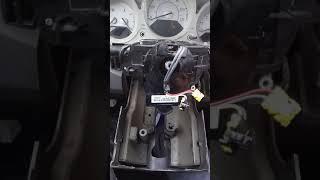
🎬 Watch: A complete walkthrough of the Dodge Avenger clock spring replacement.| Part Source | Estimated Part Cost |
|---|---|
| New OEM | $1400 - $2200 |
| New Aftermarket (Clock Spring Only) | $200 - $450 |
| Used OEM (Complete Assembly) | $150 - $400 |
| Shop Labor | $250 - $450 |
Note: Prices are estimates and can vary based on location, supplier, and the specific options on the column. Labor costs are based on an estimated 2-4 hours of work.
Steering Column Replacement Overview
Replacing the steering column is a moderately difficult job that can be done by an experienced DIY mechanic, but it requires extreme care due to the airbag system.
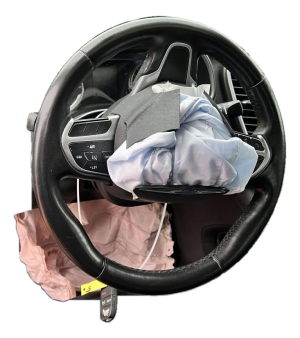
Warning: The Supplemental Restraint System (SRS), or airbag, is a safety device that can cause serious injury if handled improperly. Always disconnect the negative battery terminal and wait at least 15-20 minutes for the system to fully discharge before beginning any work on or around the steering column.
Basic Steps:
- Disconnect the Battery: This is the most critical first step for safety.
- Center the Steering: Ensure the front wheels are pointing straight ahead.
- Remove Trim and Airbag: Carefully remove the plastic shrouds around the column, the knee bolster panel below it, and then the driver's airbag module.
- Remove Steering Wheel: With the airbag out, remove the central retaining bolt and use a steering wheel puller to remove the wheel.
- Disconnect Electronics: Unplug all electrical connectors for the clock spring, switches, and ignition.
- Unbolt the Column: Disconnect the intermediate shaft pinch bolt at the base of the column (near the pedals) and remove the main mounting bolts holding the column to the dashboard support.
- Install the New Column: Carefully guide the new column into place, making sure not to damage the clock spring. Re-install bolts, reconnect wiring, and reassemble the steering wheel and trim in reverse order.
Frequently Asked Questions (FAQ)
Do I need to get the new steering column programmed?
No, a direct replacement steering column with matching options does not typically require programming on these vehicles. However, if the traction control light (ESC) comes on after replacement, the steering angle sensor (which is part of the clock spring assembly) may need to be recalibrated by a shop with the appropriate scan tool.
Can I just replace the clock spring instead of the whole column?
Yes, the clock spring can be replaced as a separate component. This is a good option if your only symptoms are electronic (airbag light, dead buttons, no horn). However, if you have mechanical issues like noises or looseness, or if the cost of a complete, low-mileage used column is close to the price of a new clock spring, replacing the entire assembly can be more efficient.
My steering wheel is off-center. Is this a bad steering column?
Not necessarily. An off-center steering wheel is most often caused by a wheel alignment issue. However, if it occurred after hitting a curb or after other steering work was performed, it could be related to the column or steering shaft. A TSB was issued for some Dodge Avengers for this specific issue.
Is it safe to drive with a noisy steering column?
It depends on the noise. While some noises are just annoyances from worn plastic or bearings, a loud clunk or grinding sound could signal a serious mechanical issue. Any looseness or play in the steering is unsafe. It is always best to have any unusual steering noises inspected by a professional to ensure the vehicle is safe to operate.
Helpful Videos
Technical Specifications
OEM Part Numbers: 5057241AF 5057241AG 5057241AH 5057241AI 5057241AJ 5057241AK 5057242AI 68015102AD 68020923AA 68041485AB 68145642AH 68145658AH 68193027AD 68193027AF 68194568AA
Varies by vehicle options such as automatic headlamps, fog lamps, and heated steering wheel.
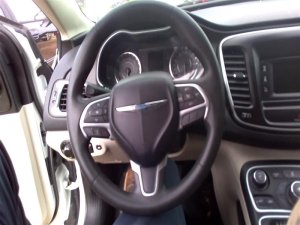
We Have This Part in Stock

The information in this article is provided for general reference and educational purposes only. Vehicle specifications, procedures, and part compatibility can vary by production date, trim level, and region. Always consult your vehicle's factory service manual and verify part numbers before purchasing or performing repairs. Safety-critical components such as airbags, seat belts, and braking systems should be installed by a qualified professional.
- Chrysler 200:
- Dodge Avenger:
- 🎬 Helpful Videos
- 🛍️ Shop This Part
- Symptoms of a Failing Steering Column
- Noises While Turning
- Loose or Shaky Steering Wheel
- Failure of Electronic Controls
- Ignition and Starting Problems
- Known Issues, Recalls, and Technical Service Bulletins (TSBs)
- Identifying Your Vehicle's Specific Steering Column
- Buyer's Guide: What to Check When Purchasing a Used Steering Column
- Cost of Replacement
- Steering Column Replacement Overview
- Frequently Asked Questions (FAQ)
- 🎟️ Get 5% Off