

2018-2019 Kia Rio Steering Column: Decoding Noises, Part Numbers, and Replacement
This guide covers common failure symptoms, replacement costs, and how to buy the correct used steering column for your 2018-2019 Kia Rio sedan.
- Compatibility is critical: The column must match your car's key type (conventional vs. push-button) and adjustment type (telescopic vs. non-telescopic).
- There is a production date split in late 2017 that determines the correct part number; verify the donor vehicle's build date.
- A clicking noise when turning is the most common symptom, often pointing to a failing bearing inside the EPS motor.
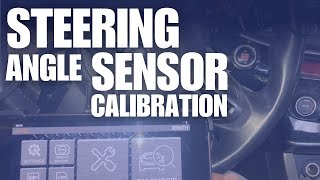
- After replacement, a Steering Angle Sensor (SAS) calibration with a scan tool is mandatory for the EPS and stability control systems to work correctly.
Symptoms of a Failing Steering Column
A problem with the steering column can manifest in several ways, ranging from annoying noises to serious safety concerns. Because this generation of Kia Rio uses a Column-Mounted Electric Power Steering (C-MDPS) system, many symptoms are related to the electric motor and its internal components.
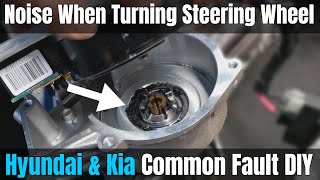
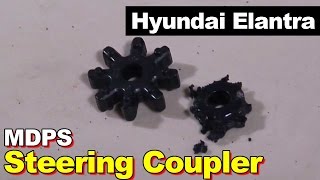
- Clicking or Clunking Noise When Turning: This is one of the most common symptoms. It can be caused by a few different issues. On many older Kia and Hyundai vehicles, a small rubber coupler inside the EPS motor would degrade and cause a distinct clicking sound. While 🎬 Watch: How to replace the common MDPS rubber coupler less common on this generation, it's still possible. More likely is an issue with a worm shaft bearing inside the steering assembly, which can cause a scraping or clicking noise.
- Grinding or Binding Sensation: If the steering wheel feels rough, catches, or binds as you turn it, it could indicate failing bearings or gears within the column. This can be caused by contamination or simple wear and tear.
- Loose Steering Wheel: A feeling of excessive play or looseness in the steering wheel can be caused by worn internal components or, more seriously, a loose U-joint bolt connecting the column to the steering rack.
- EPS Warning Light: If the dashboard's Electronic Power Steering (EPS) warning light illuminates, the system has detected a fault. This is often accompanied by a sudden loss of power steering, making the wheel very difficult to turn. This can be caused by a failure in the EPS motor, control module, or torque sensor, which are all part of the column assembly.
- Tilt/Telescope Fails to Lock: If your adjustable steering wheel no longer locks firmly in place, the locking mechanism inside the column has failed.
Known Issues, Recalls, and Technical Service Bulletins (TSBs)
While the 2018-2019 Kia Rio has been generally reliable, there are a few documented issues related to the steering system that owners and buyers should be aware of.
- TSB CHA084_R4: This technical service bulletin addresses procedures for the partial repair of the C-MDPS motor, ECU (Electronic Control Unit), and the steering column housing itself. This indicates that Kia has specific procedures for dealers to address known faults without replacing the entire assembly.
- TSB CHA111 (Related Models): This TSB was issued for several 2018-2021 Kia models, including the Forte, for an abnormal scraping noise when steering. 🎬 See a demonstration of steering noise and column replacement The cause is identified as foreign substances in the MDPS worm shaft small bearing. While the Rio is not explicitly listed, the shared technology makes this a relevant potential issue.
- Recall SC235 (Later Models): Kia recalled certain 2021-2022 Rio and Forte vehicles because a bolt on the lower steering column U-joint may not have been properly tightened, potentially leading to a loss of steering. While this recall does not cover the 2018-2019 models, it highlights a critical connection point to inspect on any used column.
- Theft-Related Damage: Due to a widely publicized theft vulnerability in Kias with conventional key ignitions, many vehicles have been subject to break-ins and theft attempts. These attempts often involve breaking the steering column shroud and damaging the ignition lock cylinder. A used column from a vehicle that experienced a theft attempt may have hidden damage.
Compatibility Warning: This is the most critical part of buying a used steering column for a 2018-2019 Kia Rio. The initial data is correct: this guide is for Sedan models with a conventional key ignition and a telescopic (in-and-out adjustable) steering wheel.
- It will NOT fit hatchback models.
- It will NOT fit models with push-button start.
- It will NOT fit models with a non-telescopic (tilt-only) steering wheel.
- There is a production date split. Part number 56310-J0400 fits models built up to October 4, 2017, while 56310-J0700 fits models built from October 5, 2017, onward. Always verify the production date of the donor vehicle.
Buying a Used 2018-2019 Kia Rio Steering Column
Purchasing a used OEM steering column can save you hundreds of dollars compared to a new part. However, due to the complexity and safety-critical nature of this part, careful inspection is essential.
- Verify the Part Number: The surest way to guarantee compatibility is to match the part number. The primary numbers are 56310-J0400 (up to 10/04/2017) and 56310-J0700 (from 10/05/2017). Part number 56310-H9100 was an early number superseded by 56310-J0400.
- Confirm Donor Vehicle Specs: Get the Vehicle Identification Number (VIN) of the donor car. Use a VIN decoder to confirm it is a 2018-2019 Rio Sedan with a key ignition and telescopic steering. Do not trust a seller's memory.
- Inspect for Theft Damage: Look closely at the ignition switch area and the plastic shrouds. Any cracks, pry marks, or broken plastic are major red flags indicating a past theft attempt, which could mean hidden damage to the column's internal locking mechanisms.
- Check the U-Joint: Inspect the universal joint at the bottom of the column where it connects to the intermediate shaft. There should be no play, binding, or signs of excessive rust.
- Ask About Mileage: While these columns are robust, lower mileage is always better. Aim for a part from a vehicle with under 80,000 miles if possible.
- Get the Complete Assembly: Ensure the column comes with the EPS motor attached. The motor and column are typically serviced as a single unit.
Cost to Replace a Kia Rio Steering Column
Replacing the steering column is a moderately expensive repair, primarily due to the cost of the part itself.
| Item | Estimated Cost |
|---|---|
| New OEM Steering Column | $1,150 - $1,700 |
| Used OEM Steering Column | $250 - $450 |
| Shop Labor | $300 - $500 |
| Total (New Part) | $1,450 - $2,200 |
| Total (Used Part) | $550 - $950 |
Pro Tip: The significant savings from using a recycled OEM part make it a very attractive option. The labor cost is the same regardless of which part you use, so the savings are substantial.
Replacement Overview
This is an advanced DIY job that requires care, especially when handling the airbag system. If you are not comfortable with any of the steps, this job is best left to a professional technician.
- Difficulty: 4/5
- Estimated Time: 2.5 - 4 hours
- Key Steps:
- Disconnect the negative battery terminal and wait at least 10 minutes for the airbag system to discharge.
- Remove the driver's knee airbag.
- Remove the main airbag module from the steering wheel, then remove the steering wheel itself.
- Remove the clockspring and multifunction switches. Be careful not to let the clockspring spin freely.
- Disconnect all electrical connectors to the column and EPS motor.
- Unbolt the column from the dash support frame.
- Unbolt the lower U-joint from the intermediate shaft in the driver's footwell.
- Carefully remove the entire column assembly from the vehicle.
- Installation is the reverse of removal.
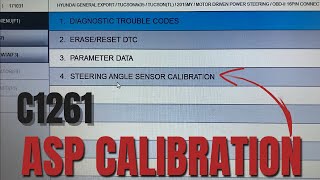
Calibration Required: After installing the new steering column, the Steering Angle Sensor (SAS) must be calibrated using a compatible diagnostic scan tool. 🎬 Watch: How to calibrate the steering angle and torque sensor Failure to do this will result in an EPS warning light and may cause the traction control and stability control systems to malfunction.
Frequently Asked Questions (FAQ)
What is the clicking noise when I turn my steering wheel?
This is the most common complaint. It is likely caused by a worn bearing in the electric power steering motor assembly. While it was a worn rubber coupler on many older Kias, this generation is more likely to have a bearing issue. It is generally not considered a severe safety issue in its early stages but will get progressively worse.
Do I need to program the new steering column?
No, the column itself does not require programming. However, you absolutely MUST perform a Steering Angle Sensor (SAS) calibration after the installation is complete. This tells the car's computer where the 'straight ahead' position is and is crucial for the proper function of the Electronic Power Steering and stability control systems.
Is the clockspring part of the steering column?
The clockspring (part number family 93400-xxxxx) is a separate part that mounts onto the steering column, but it is not typically included with a new or used column assembly. You will need to carefully transfer your original clockspring to the new column during the replacement process.
Can I just replace the electric motor instead of the whole column?
Generally, no. The electric power steering motor, its control module, and the mechanical column are designed and sold as a single integrated assembly (part number family 56310-xxxxx). While a technician might be able to perform a partial repair following a TSB, for a DIY or standard shop replacement, the entire column assembly is replaced.
Helpful Videos
Technical Specifications
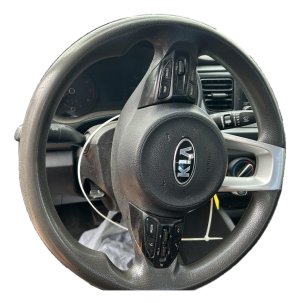
OEM Part Numbers: 56310H9100 56310J0400 56310J0700
Fits sedan models with conventional key ignition and telescopic steering wheel. Part number depends on production date (split is October 2017).
We Have This Part in Stock

The information in this article is provided for general reference and educational purposes only. Vehicle specifications, procedures, and part compatibility can vary by production date, trim level, and region. Always consult your vehicle's factory service manual and verify part numbers before purchasing or performing repairs. Safety-critical components such as airbags, seat belts, and braking systems should be installed by a qualified professional.
- Kia Rio: