

2006 Nissan Quest Steering Column: Diagnosing Noises, Failures, and Clock Spring Issues
This guide covers the most common steering column problems in the 2006 Nissan Quest, from clicking noises and airbag lights to complete steering wheel control failure.
- The most common failures are the clock spring (causing airbag lights and button failure) and the intermediate shaft (causing clunking noises).
- An illuminated airbag light is a critical safety failure indicating the driver's airbag is disabled and will not deploy.
- When buying a used column, prioritize one from a low-mileage vehicle and carefully inspect the intermediate shaft U-joints for smoothness.
- You can avoid key reprogramming by swapping your original ignition lock cylinder into the replacement column.
Known Issues for the 2006 Nissan Quest Steering Column
The 2006 Nissan Quest steering column assembly and its related parts are generally reliable, but two components are known to be common failure points: the clock spring and the intermediate steering shaft.
Clock Spring (Spiral Cable) Failure
The clock spring is a coiled ribbon of wires that allows the steering wheel to turn while maintaining an electrical connection for the driver's airbag, horn, and steering wheel-mounted controls (like cruise control and radio buttons). Over time, the constant turning can cause these delicate wires to fatigue and break. This is the most common reason for an airbag warning light to appear on the dashboard.
Intermediate Steering Shaft Noise
The intermediate steering shaft connects the in-cabin steering column to the steering rack down below. It has one or more universal joints (U-joints) that allow it to operate at an angle. These U-joints can wear out, causing a distinct knocking, clunking, or popping noise when turning the steering wheel, especially at low speeds. Some Nissan TSBs, like NTB-09-127, address similar noises on other models, pointing to the intermediate shaft as a common source of steering noise.
Symptoms of a Failing Steering Column
Diagnosing a steering column issue requires paying attention to specific sounds and electrical failures. Here are the most common symptoms:
- Airbag (SRS) Warning Light is On: This is the most critical symptom of a bad clock spring. The vehicle's computer detects a lost connection to the driver's airbag and illuminates the light, indicating the airbag will not deploy in a crash.
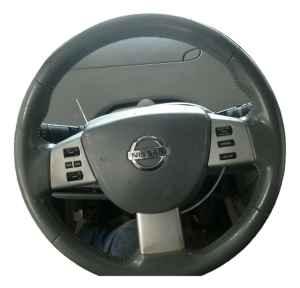
- Horn, Cruise Control, or Radio Buttons Don't Work: If some or all of the buttons on your steering wheel have stopped working, it's another classic sign of a broken clock spring.
- Clicking, Popping, or Knocking Noise When Turning: A repetitive noise coming from the lower dashboard or firewall area while turning the wheel often points to a worn-out U-joint on the intermediate steering shaft.
- Grinding or Rubbing Sound: A continuous scraping or grinding noise from directly behind the steering wheel can indicate a physically broken clock spring housing rubbing as the wheel turns.
- Excessive Play or Looseness: A feeling of looseness in the steering wheel can be caused by worn bearings within the column itself or, more commonly, worn U-joints on the intermediate shaft.
- Key Won't Turn in Ignition: While this can have several causes, a binding ignition lock cylinder, which is housed within the steering column, is a common culprit.
Warning: An illuminated airbag warning light is a serious safety issue. It means the driver's airbag is disabled. The vehicle should be repaired as soon as possible.
Buying a Used 2006 Nissan Quest Steering Column
Purchasing a used steering column can be a cost-effective solution, but careful inspection is key. The main structure of the column is robust, so you are primarily concerned with the condition of the integrated electronic and mechanical components.
What to Inspect Before You Buy
- Check the Clock Spring: This is the most likely point of failure on a used column. Since it's an electronic part, a visual inspection is difficult. Ask the seller about the mileage of the donor vehicle; lower mileage is always better. Ensure the connectors are clean and undamaged. If possible, verify that the clock spring is centered and locked for shipping to prevent damage.
- Inspect the Intermediate Shaft U-Joints: If the column comes with the intermediate shaft, grab each end of the shaft and articulate the U-joints by hand. They should move smoothly without any binding, roughness, or catching. Any notchiness indicates wear.
- Test the Combination Switch: Move the turn signal and wiper stalks through all their functions. They should click into place firmly and feel solid, not loose or cracked.
- Examine the Wiring Harness: Look for any cut wires, damaged connectors, or signs of previous electrical repairs. A clean, factory harness is essential.
- Check for Physical Damage: Inspect the entire column for bends, cracks, or heavy corrosion, which could indicate it came from a vehicle involved in a collision. Avoid any column with visible crash damage.
Pro Tip: It is often easier to swap your original ignition lock cylinder into the replacement steering column. Using the cylinder from the donor vehicle will require key reprogramming, which adds complexity and cost.
Replacement Overview & Difficulty
Replacing the steering column assembly is a moderately difficult job that requires care, especially when handling the airbag system.
- Difficulty Rating: 3 out of 5
- Estimated Time: 2-3 hours
- DIY Feasible: Yes, for experienced mechanics.
Key Steps:
- Disconnect the battery. This is a critical safety step. Wait at least 10-15 minutes to allow the airbag system's backup power to discharge.
- Remove the driver's airbag module and the steering wheel. A steering wheel puller may be required.
- Remove the plastic shrouds around the column.
- Disconnect all electrical connectors for the clock spring, combination switch, and ignition.
- Unbolt the intermediate shaft from the base of the column inside the cabin.
- Unbolt the steering column mounting brackets from the dashboard support and carefully lower the assembly out of the vehicle.
- Installation is the reverse of removal. Ensure the steering wheel and wheels are perfectly straight to avoid damaging the new clock spring.
Cost Comparison
Prices can vary based on location and supplier, but this provides a general estimate for the main components.
| Part | Estimated Cost |
|---|---|
| New OEM Steering Column Assembly | $800 - $1200+ (if available) |
| New OEM Clock Spring | $200 - $300 |
| New OEM Intermediate Shaft | $400 - $600+ |
| Used OEM Steering Column (Complete) | $150 - $400 |
| New Aftermarket Clock Spring | $40 - $100 |
| New Aftermarket Intermediate Shaft | $50 - $150 |
| Shop Labor (Column Replacement) | $250 - $450 |
OEM Part Numbers
The steering column is an assembly of several parts, each with its own number. The initial data provided includes parts that are part of or related to the steering column assembly. Always verify fitment with the seller using your vehicle's VIN.
- Upper Steering Column Assembly: 48810-5Z000
- Lower Intermediate Shaft/Joint Assembly: 48080-CK000
- Clock Spring / Spiral Cable: 25567-CD002 (This part is also referred to as 'Body-Combination Switch' in some catalogs and may be superseded by 25567-CD025).
- Combination Switch (Wiper/Lights): Part numbers like 25260-CB60A and 25540-CB60B are typically for the combination switch assembly that attaches to the column.
Note: The part number 48080CK000 refers to the lower steering joint assembly, not the main steering rack. The steering rack and pinion is a separate, more expensive component.
Frequently Asked Questions (FAQ)
My airbag light is on and my horn doesn't work. Do I need to replace the whole steering column?
No, not usually. These are classic symptoms of a failed clock spring. You can typically purchase and replace just the clock spring assembly, which is located behind the steering wheel.
What is the clunking or popping noise I hear when I turn the wheel?
A clunking or popping sound that corresponds with steering wheel movement is most often caused by a worn universal joint (U-joint) on the intermediate steering shaft. While other suspension components like ball joints or tie rods can make noise, a bad intermediate shaft noise is often felt through the steering wheel as well.
Do I need to program the vehicle after installing a used steering column?
You will only need programming if you use the ignition lock cylinder and key from the donor vehicle. To avoid this, you can carefully transfer your original ignition lock cylinder into the replacement steering column. The clock spring itself does not typically require programming on this model, but the steering angle sensor (which may be part of the clock spring assembly) might need to be reset if the vehicle is equipped with Vehicle Dynamic Control (VDC).
Is it safe to drive with a bad clock spring?
It is not recommended. A bad clock spring means the driver's airbag will not deploy in an accident, and you will not have a functioning horn. Both are critical safety features.
Technical Specifications
OEM Part Numbers: 48810-5Z000 48080-CK000 25567-CD002 25567-CD025 25260-CB60A 25540-CB60B
The steering column assembly integrates the upper steering shaft, tilt mechanism, ignition lock housing, combination switch mount, and the clock spring.
We Have This Part in Stock

The information in this article is provided for general reference and educational purposes only. Vehicle specifications, procedures, and part compatibility can vary by production date, trim level, and region. Always consult your vehicle's factory service manual and verify part numbers before purchasing or performing repairs. Safety-critical components such as airbags, seat belts, and braking systems should be installed by a qualified professional.
- Nissan Quest:
- 🛍️ Shop This Part
- Known Issues for the 2006 Nissan Quest Steering Column
- Clock Spring (Spiral Cable) Failure
- Intermediate Steering Shaft Noise
- Symptoms of a Failing Steering Column
- Buying a Used 2006 Nissan Quest Steering Column
- What to Inspect Before You Buy
- Replacement Overview & Difficulty
- Cost Comparison
- OEM Part Numbers
- Frequently Asked Questions (FAQ)
- 🎟️ Get 5% Off