

2011-2020 Toyota Sienna Steering Column: Diagnosing Clunks, Binding, and Replacement Guide
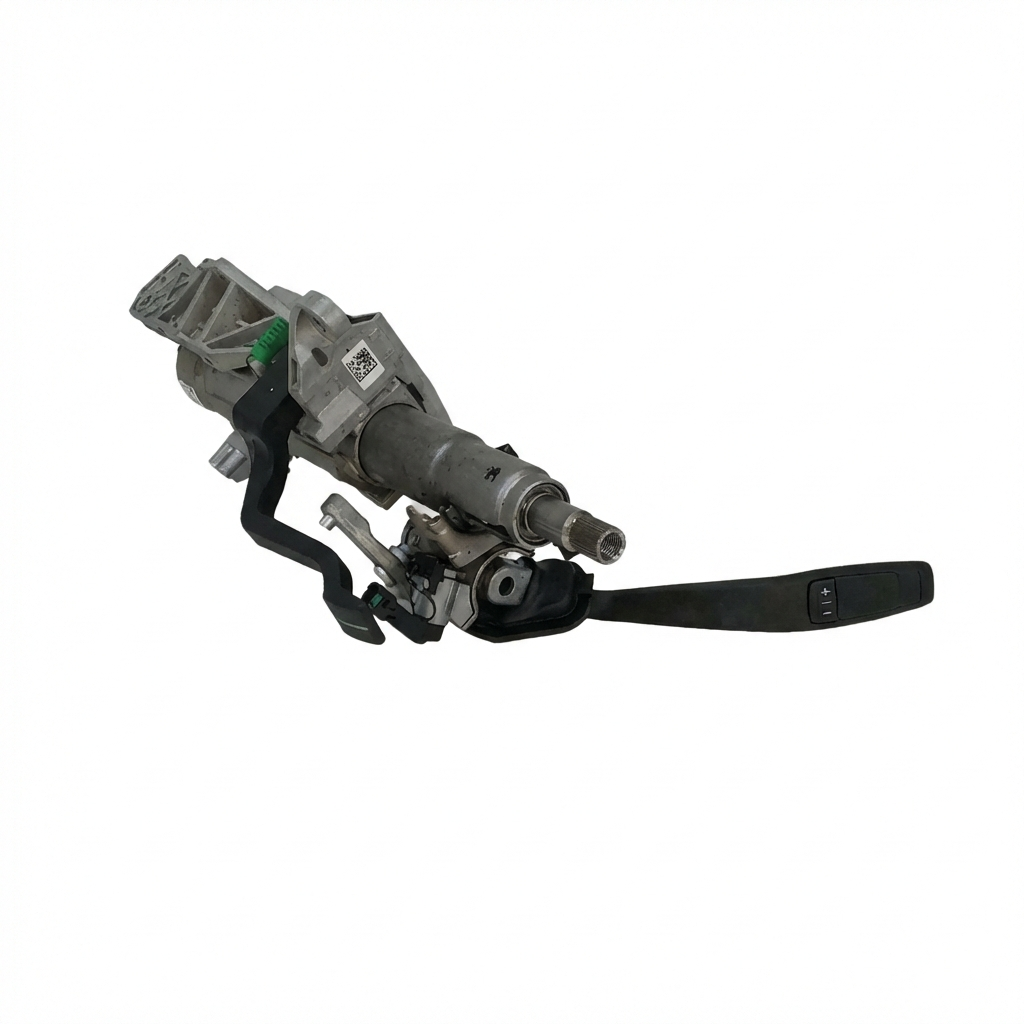
This guide explains the common clunking noises from the intermediate shaft and clarifies the critical differences between key-start and push-button start columns.
- The most common failure is the intermediate steering shaft, causing a 'clunk' noise when turning; this part can often be replaced separately from the main column.
- Compatibility is critical: columns for key-start and push-button start (Smart Key) models are not interchangeable.
- For 2012 models, verify the vehicle's production date, as a design change occurred mid-year (around November 2012).
- A steering-related recall for 2017-2020 Siennas only applies to vans modified by BraunAbility for wheelchair access, not standard factory vehicles.
Known Issues & Common Symptoms for 2011-2020 Toyota Sienna
The most widely reported steering issue on the 2011-2020 Sienna is not with the main column itself, but with the intermediate steering shaft that connects the column to the steering rack. This part is notorious for causing distinct noises and steering feel problems.
1. Clunking, Popping, or Knocking Noise When Turning
This is the number one complaint from owners. A distinct clunk, pop, or knock is heard and often felt through the steering wheel or floorboards, particularly at low speeds or when turning from a stop. This noise is almost always caused by a worn or failing universal joint (U-joint) in the intermediate steering shaft. Over time, the bearings in the U-joint wear out, creating excessive play that results in a clunking sound as the steering wheel is turned.
2. Stiff or Binding Steering
In some cases, the U-joint in the intermediate shaft can corrode and begin to seize rather than just become loose. This results in steering that feels stiff, binds at certain points in a turn, or feels notchy. A significant safety concern 🎬 Watch: How to diagnose stiff and hard steering is when the steering wheel does not return to the center on its own after a turn, which can be caused by a binding shaft.
3. Grinding or Squeaking Noises
A grinding or high-pitched squeaking sound when turning can point to failing bearings inside the main steering column assembly. While less common than the intermediate shaft clunk, it indicates a problem with the internal components of the column itself. Toyota has issued service bulletins for other models advising that lubricating the shaft is not a permanent fix and the part should be replaced.
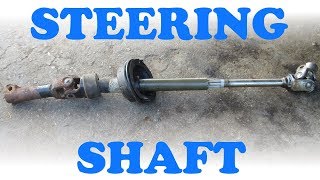
🎬 Watch: How to regrease your intermediate steering shaft4. Loss of Power Steering (EPS Models)
On Sienna models equipped with Electric Power Steering (EPS) — all AWD models and 2017-2020 FWD V6 models — a sudden loss of steering assist is a possible failure. This makes the steering wheel extremely heavy and difficult to turn. It is typically accompanied by the EPS warning light on the dashboard and can be caused by a failure in the steering column's integrated torque sensor or the EPS motor itself.
5. Loose Tilt Mechanism
If the tilt/telescope adjustment lever fails to lock the steering wheel securely in place, the problem lies within the column's mechanical locking mechanism. This allows the wheel to move up and down or in and out while driving, which is a significant safety hazard.
Pro Tip: To help diagnose a noisy intermediate shaft, have a helper rock the steering wheel back and forth while the vehicle is parked. Kneel outside the open driver's door and reach under the dashboard to physically grab the intermediate shaft. If you can feel the clunk or play in the shaft's U-joint as the wheel is turned, you have confirmed the source of the noise.
Buying a Used 2011-2020 Sienna Steering Column: A Buyer's Guide
Purchasing a used steering column can save a significant amount of money, but careful verification is essential due to the many variations. Used OEM is often a better choice than a new aftermarket part, as it retains the original factory build quality and precise fitment for components like the airbag and switches.
CRITICAL: Verify Your Ignition System
The single most important factor is the ignition type. The columns are NOT interchangeable.
- Conventional Key Start: These columns have a mechanical ignition lock cylinder housing where you insert a physical key.
- Push-Button Start (Smart Key): These columns do not have a key slot. They are designed to work with the vehicle's push-button ignition system and have different wiring and mounting points for the steering lock module.
Warning: You cannot install a key-start column in a push-button start vehicle, or vice-versa. Always confirm the ignition type of the donor vehicle matches yours.
Check for Power Tilt & Telescope
Higher trim levels like the Limited often feature power tilt and telescopic adjustment, controlled by a small joystick on the side of the column. Lower trims have a manual lever. Ensure the used column has the same adjustment type as your original.
The Mid-2012 Production Split
For 2012 models, there was a change in the steering column design. Parts listings show a split for vehicles manufactured up to or from November/December 2012. When buying for a 2012 Sienna, you must verify the production date of your vehicle (found on the sticker in the driver's door jamb) and match it to the donor vehicle.
Physical Inspection Points
- Inspect the Intermediate Shaft: Most used columns are sold with the intermediate shaft attached. Grab the U-joints and move them by hand. They should articulate smoothly with some resistance, but no notchiness, binding, or looseness. If the joint is stiff or has play, the shaft is bad and will need to be replaced.
- Check the Connectors: Inspect all electrical connectors for cracks, broken locking tabs, or bent pins. Damaged connectors can cause a host of electrical problems.
- Look for Collision Damage: Check the column tube and mounting brackets for any signs of bending, cracks, or stress marks. A column from a vehicle in a heavy frontal collision may be compromised.
- Verify Smooth Rotation: Turn the input shaft by hand. It should rotate smoothly without any grinding or roughness, which would indicate bad internal bearings.
Replacement Cost Comparison
| Part | Estimated Cost |
|---|---|
| New OEM Column | $1,300 - $2,100+ |
| New OEM Intermediate Shaft Only | $280 - $420 |
| New Aftermarket Column | $300 - $600+ |
| Used OEM Column | $100 - $350 |
| Shop Labor (Column Replacement) | $250 - $500 |
| Shop Labor (Intermediate Shaft Only) | $150 - $300 |
Recalls and Technical Service Bulletins (TSBs)
There is one major safety recall associated with steering on this Sienna generation, but it is important to understand that it applies only to a specific subset of vehicles.
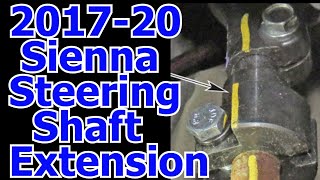
- NHTSA Campaign 19V532000: This recall affects certain 2017-2020 Toyota Sienna vans that were modified by BraunAbility for wheelchair accessibility. The steering shaft *extension* installed by BraunAbility could fracture, leading to a loss of steering. This recall does NOT apply to standard, factory-original Toyota Siennas. 🎬 See this BraunAbility steering shaft extension replacement guide
- Intermediate Shaft Issues: While no specific TSB for the 2011-2020 Sienna's intermediate shaft was found, Toyota has acknowledged this exact issue on prior Sienna generations (TSB-ST001-07) and other models, establishing a known pattern of this component failing due to wear and corrosion. The widespread owner complaints serve as strong evidence of this being a common failure part.
Installation Overview & Difficulty
Replacing the entire steering column is a complex job best suited for experienced DIYers or a professional technician. Replacing only the intermediate shaft is more straightforward.
- Difficulty Rating: 4 out of 5 (Full Column); 3 out of 5 (Intermediate Shaft Only)
- Key Steps (Full Column):
- Disconnect the battery. This is a critical safety step to disable the airbag system. Wait at least 90 seconds before proceeding.
- Remove the lower dash panels and steering column covers.
- Disconnect all electrical connectors from the column.
- Remove the bolt connecting the intermediate shaft to the column inside the cabin.
- Remove the main bolts holding the steering column assembly to the dash support.
- Carefully lower and remove the assembly from the vehicle.
- Transfer necessary components (airbag, steering wheel, clock spring, switches) to the new column if they were not included.
- Installation is the reverse of removal. Ensure the steering wheel and front wheels are pointing straight ahead before connecting the shaft.
Warning: Failure to properly handle the airbag and clock spring can result in serious injury or expensive damage. The clock spring can be easily broken if the steering wheel is allowed to spin while the column is disconnected.
Frequently Asked Questions (FAQ)
Can I just replace the noisy intermediate shaft instead of the whole column?
Yes. In most cases where the symptom is a clunking noise, replacing only the intermediate shaft will solve the problem. This is less expensive and less labor-intensive than replacing the entire column assembly. The shaft is typically held on by one bolt at the top (inside the cabin) and one at the bottom (in the engine bay).
Does a replacement steering column need to be programmed?
Generally, the steering column itself does not require programming. However, if you are working on a model with Electric Power Steering (EPS), a Zero Point Calibration for the steering angle sensor may be required after the repair to ensure the Vehicle Stability Control (VSC) system functions correctly. This procedure can be done with a high-end scan tool.
Will a column from a Limited trim fit my LE?
It depends. The primary factors are the ignition system (key vs. push-button) and power features. If both your LE and the donor Limited have the same ignition type (e.g., both are key-start) and the same type of tilt/telescope (e.g., both are manual), it will likely fit. However, a column from a Limited with power tilt will not work correctly in an LE that was not equipped with it.
Is a clunking steering column dangerous to drive with?
While a clunking noise is an indication of wear, it does not typically mean immediate failure is imminent. However, if the symptom is binding, stiffness, or the wheel not returning to center, the risk is much higher as it can lead to unpredictable steering control. Any issue with the steering system should be inspected and repaired as soon as possible.
Helpful Videos


Technical Specifications
OEM Part Numbers: 45220-08020 45220-08030 4522008020 4522008030 45250-08030 45250-08031 45250-08032 45250-08033 45250-08040 45250-08041 45250-08042 45250-08043 45250-08050 45250-08051 45250-08052 45250-08061
Varies significantly based on trim and options. Key differentiators include: Ignition Type (Conventional Key vs. Push-Button Start), Tilt/Telescope (Manual vs. Power), and production date for 2012 models.
We Have This Part in Stock

The information in this article is provided for general reference and educational purposes only. Vehicle specifications, procedures, and part compatibility can vary by production date, trim level, and region. Always consult your vehicle's factory service manual and verify part numbers before purchasing or performing repairs. Safety-critical components such as airbags, seat belts, and braking systems should be installed by a qualified professional.
- Toyota Sienna:
- 🎬 Helpful Videos
- 🛍️ Shop This Part
- Known Issues & Common Symptoms for 2011-2020 Toyota Sienna
- 1. Clunking, Popping, or Knocking Noise When Turning
- 2. Stiff or Binding Steering
- 3. Grinding or Squeaking Noises
- 4. Loss of Power Steering (EPS Models)
- 5. Loose Tilt Mechanism
- Buying a Used 2011-2020 Sienna Steering Column: A Buyer's Guide
- CRITICAL: Verify Your Ignition System
- Check for Power Tilt & Telescope
- The Mid-2012 Production Split
- Physical Inspection Points
- Replacement Cost Comparison
- Recalls and Technical Service Bulletins (TSBs)
- Installation Overview & Difficulty
- Frequently Asked Questions (FAQ)
- 🎟️ Get 5% Off