

2021-2025 Tesla Model S & X Ride Height Sensor: Symptoms and Replacement
This guide covers the diagnosis and replacement of the air suspension ride height sensors, often the cause of suspension error warnings and incorrect ride height on 'Refresh' Model S and Model X vehicles.
- This part is a ride height sensor for the air suspension, NOT a steering damper.
- The most common failure symptoms are a suspension warning light on the dash and a corner of the vehicle sagging.
- Physical replacement is simple, but a software-based ride height calibration is mandatory after installation.
- When buying used, verify the OEM part number exactly, as front/rear and left/right sensors are different.
Identifying the Part: Ride Height Sensor vs. Steering Damper

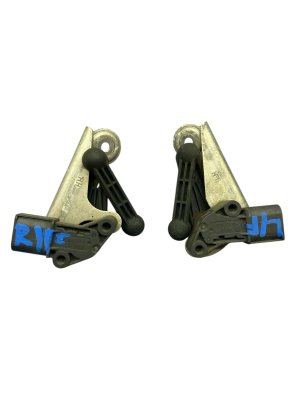
Important Note: The OEM part numbers associated with this component (1420944-00-C, 1420945-00-C) are for the Air Suspension Ride Height Sensor. They are sometimes incorrectly referred to as steering dampers. A steering damper is a hydraulic shock for the steering system, which is not what this part is. This guide focuses exclusively on the electronic ride height sensors for the 2021-2025 Model S and Model X with air suspension.
Symptoms of a Failing Ride Height Sensor

A bad ride height sensor can cause a range of issues, from simple warning messages to noticeable changes in the vehicle's stance and ride quality. The car's computer relies on these sensors to know the position of each corner, and incorrect data can confuse the entire system.
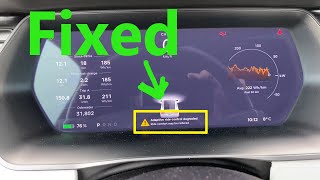
- Suspension Warning Messages: The most common symptom is a warning on the touchscreen. You may see messages like "Air Suspension Needs Service," "Adaptive Ride Control Unavailable," or a yellow or red icon of a car with an up/down arrow.
- Vehicle Leaning or Sagging: If a sensor fails, the system may not be able to level the car correctly. You might notice one corner is visibly lower or higher than the others, especially after the vehicle has been parked for a while.
- Suspension Stuck or Unresponsive: The vehicle may fail to raise or lower when you try to adjust the height manually from the touchscreen. In some cases, the system may disable itself entirely to prevent damage, resulting in a stiff and bouncy ride. 🎬 Watch: Troubleshooting a Model X air suspension adjustment issue
- Incorrect Height for Driving Conditions: The car might not automatically lower at highway speeds or may feel like it's riding too high or too low for the selected setting.
Known Issues, Recalls, and Service Bulletins
As of early 2026, there are no specific recalls or widespread technical service bulletins (TSBs) from Tesla or the NHTSA for the ride height sensors on 2021-2025 Model S and Model X vehicles.
While the NHTSA has investigated other suspension components (like fore links) on older model years (2015-2017), those issues are unrelated to the ride height sensors on the newer 2021+ platform. Always check the NHTSA website for the most current recall information for your specific VIN.
Pro Tip: Before replacing a sensor, have a technician check the diagnostic logs. A specific fault code like `TAS_a039` (Suspension sensor implausible) can point directly to a failing sensor and rule out other issues like an air leak or a failing compressor.
Buying a Used Ride Height Sensor: What to Look For


Since quality aftermarket options for this specific generation are not yet widely available, a used OEM sensor is often the most practical and cost-effective solution. Here’s what to check before you buy.
- Verify the Part Number: This is the most critical step. Tesla uses different part numbers for the front, rear, left, and right sensors. Match the number on your original part exactly. The 2021+ Model S and X use part numbers like 1420944-00-C (Rear Left) and 1420945-00-C (Front Right). Do not try to substitute a part from an older generation.
- Inspect the Connector: Look closely at the electrical connector pins. They should be straight, clean, and free of any green or white corrosion. Bent or corroded pins will cause an unreliable connection.
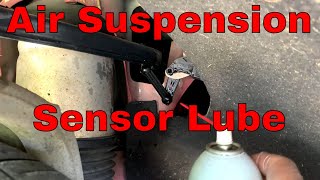
- Check the Arm and Pivot: The plastic sensor arm should be free of cracks or stress marks. It should pivot smoothly without feeling loose, gritty, or seized. 🎬 Maintenance Tip: How to lubricate the sensor assembly pivot points The small ball joint at the end of the arm should be intact.
- Examine the Body: Check the main body of the sensor for any cracks, deep gouges, or signs of heat damage. Ensure the mounting points are intact.
Cost to Replace a Tesla Ride Height Sensor
The cost to replace a single ride height sensor is relatively low compared to other air suspension repairs like replacing a strut or compressor.
| Part / Service | Estimated Cost |
|---|---|
| New OEM Sensor | $100 - $170 |
| New Aftermarket Sensor | Not widely available |
| Used OEM Sensor | $75 - $125 |
| Shop Labor (including calibration) | $150 - $300 |
| Total Estimated Cost (Shop) | $225 - $470 |
Replacement Overview & Difficulty
Physically replacing the sensor is a straightforward job for a DIY mechanic, but the final step requires a software calibration that can be a hurdle.
- Difficulty: 3/5 (The mechanical part is a 2/5; the software calibration adds complexity.)
- Estimated Time: 1 - 1.5 hours
Key Steps:
- Engage Jack Mode: Before lifting the vehicle, you MUST engage "Jack Mode" via the touchscreen (Controls > Service > Jack Mode). This disables the suspension's self-leveling feature and prevents damage.
- Lift and Remove Wheel: Safely lift the vehicle and remove the wheel at the corner with the faulty sensor.
- Access the Sensor: You will need to pull back the plastic wheel arch liner to get clear access to the sensor.
- Disconnect and Remove: Unplug the electrical connector. Then, remove the nut holding the sensor's arm to the suspension link and the bolt(s) holding the sensor's body to the frame.
- Install New Sensor: Installation is the reverse of removal. Use a new nut if specified.
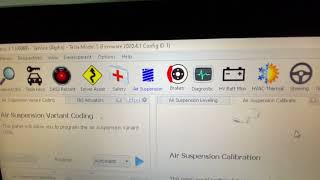
- Calibrate Ride Height: This is a mandatory final step. 🎬 See a walkthrough of the air suspension calibration process The vehicle's computer must be told the new sensor's baseline reading. This is done through Tesla's service software. Some advanced third-party diagnostic tools may also be able to perform this function. Without calibration, the system will not work correctly.
Warning: Failure to perform the ride height calibration after replacing a sensor will result in continued suspension errors and incorrect ride height.
Frequently Asked Questions (FAQ)
Can I drive with a bad ride height sensor?
Yes, but with limitations. If the system is disabled, the ride will be very harsh and uncomfortable, and handling will be compromised. The vehicle will not adjust its height for aerodynamics or ground clearance. It is recommended to get it repaired promptly to avoid potential stress on other suspension components and ensure predictable handling.
Do I need to replace sensors in pairs?
No, it is not necessary. Unlike some suspension components like shocks, ride height sensors can be replaced individually. You only need to replace the one that has failed.
What is ride height calibration and why is it required?
Calibration is a software procedure that sets a new zero point or baseline for the new sensor. Every sensor has slight manufacturing variances, and this process tells the suspension control module what signal corresponds to a "level" position for that specific corner. Without it, the car's computer is working with bad data, leading to errors and improper leveling.
Will a bad sensor cause my tire to wear unevenly?
Indirectly, yes. If the sensor causes the vehicle to consistently ride at an incorrect height or with improper alignment angles, it can lead to premature and uneven tire wear over time. This is another reason to address the issue quickly.
Helpful Videos
Technical Specifications
OEM Part Numbers: 1420944-00-C 1420945-00-C
Electronic sensor with a plastic pivot arm that measures suspension travel. Connects to the air suspension control module. Requires post-installation software calibration.
We Have This Part in Stock

The information in this article is provided for general reference and educational purposes only. Vehicle specifications, procedures, and part compatibility can vary by production date, trim level, and region. Always consult your vehicle's factory service manual and verify part numbers before purchasing or performing repairs. Safety-critical components such as airbags, seat belts, and braking systems should be installed by a qualified professional.
- Tesla Model S:
- Tesla Model X:
- 🎬 Helpful Videos
- 🛍️ Shop This Part
- Identifying the Part: Ride Height Sensor vs. Steering Damper
- Symptoms of a Failing Ride Height Sensor
- Known Issues, Recalls, and Service Bulletins
- Buying a Used Ride Height Sensor: What to Look For
- Cost to Replace a Tesla Ride Height Sensor
- Replacement Overview & Difficulty
- Key Steps:
- Frequently Asked Questions (FAQ)
- 🎟️ Get 5% Off