

1997-2002 Crown Vic, Town Car & Grand Marquis Steering Gear: SPA-KL vs. SPA-KK Explained
This guide decodes the critical ID tags on your steering gearbox to ensure you get the right part for your Police, HPP, or base model Panther platform vehicle.
- Compatibility is critical: You MUST match the ID tag ('SPA-KL' for performance/police, 'SPA-KK' for standard) on your old gear to the new one.
- Rule out other issues first: Stiff or notchy steering is very often caused by a rusty intermediate steering shaft U-joint, not the gearbox itself.
- A used OEM part is a strong contender: A low-mileage used steering gear can be more reliable than a cheap aftermarket remanufactured unit.
- Replacement requires special tools: You will need a pitman arm puller and line wrenches, and an alignment is recommended after the job is complete.
The Definitive Guide to Panther Platform Steering Gears: SPA-KL vs. SPA-KK
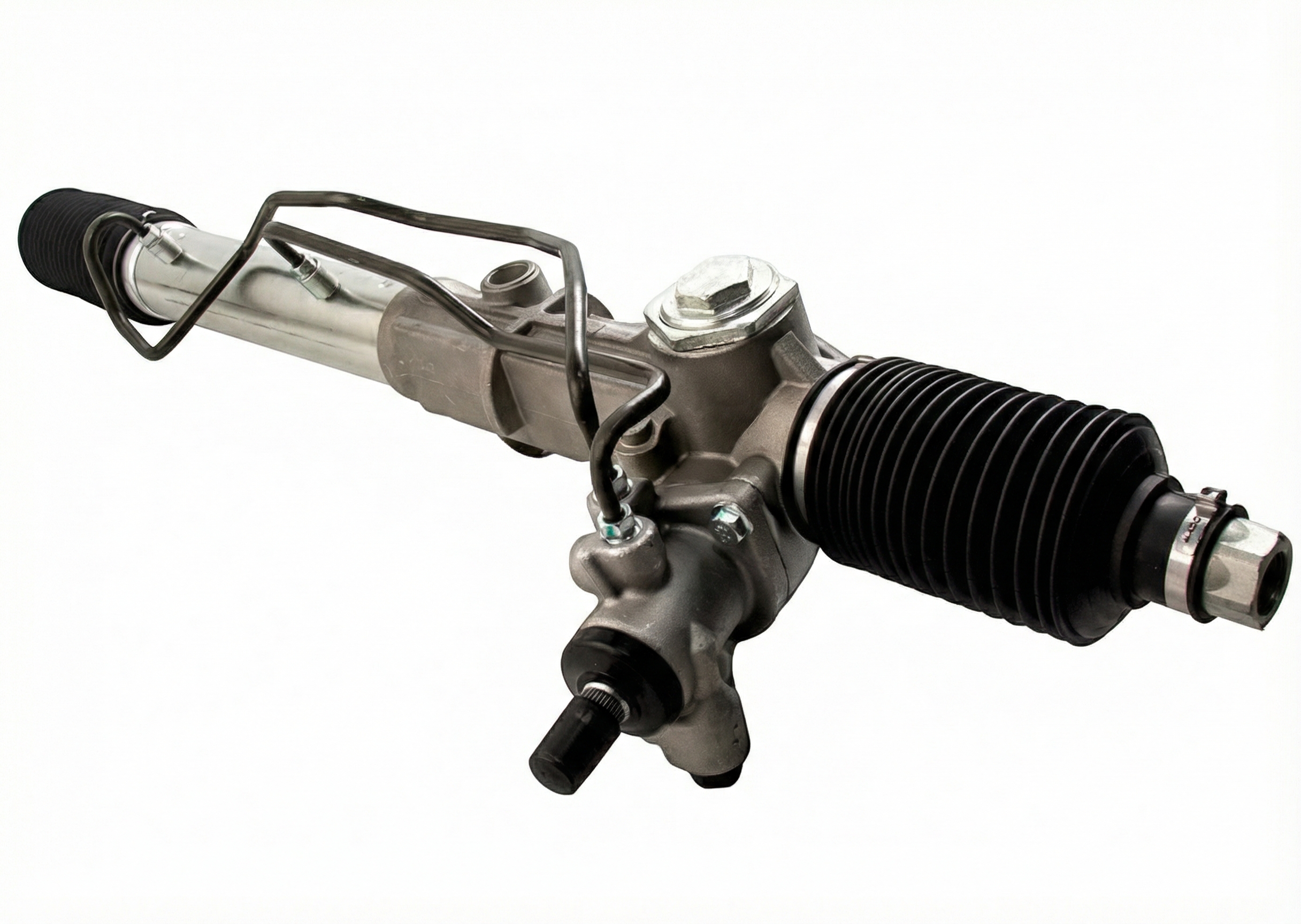
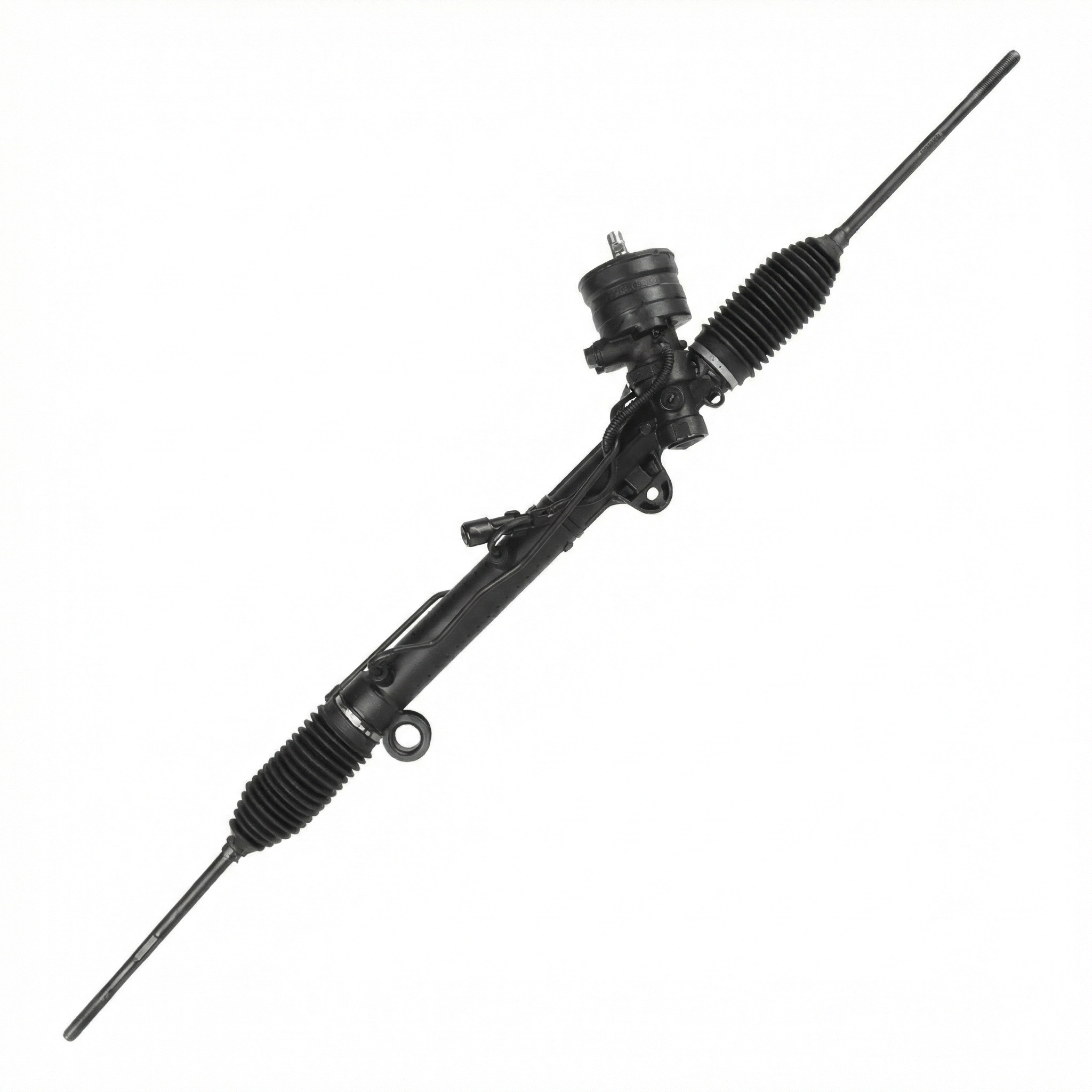
The single most important factor when replacing the steering gear on a 1997-2002 Ford Crown Victoria, Lincoln Town Car, or Mercury Grand Marquis is matching the ID tag. These vehicles used two primary steering gears with different internal valving, affecting steering feel and performance. Using the wrong one can result in overly sensitive or sluggish steering. The ID code is stamped on a small metal tag attached to one of the top cover bolts of the steering gear.
Warning: Do not rely on visual appearance alone. You must verify the ID tag on your original part to ensure compatibility. The two main tags are SPA-KL and SPA-KK.
| ID Tag | Steering Type | Vehicle Fitment |
|---|---|---|
| SPA-KL | Firm Feel / Performance / Heavy-Duty |
|
| SPA-KK | Soft Feel / Standard Civilian |
|
| Other | Specialty | A specific gear, often identified by part number XW7Z-3504-ABRM, was used for Ford Crown Victoria models equipped with the Compressed Natural Gas (CNG) system. Some sources indicate this may also apply to some Police models. Always verify your specific application. Limousine models of the Lincoln Town Car also use a unique steering gear and are not compatible with the standard SPA-KL or SPA-KK units. |
Is It Really Your Steering Gear? Other Common Issues
Before condemning your steering gearbox, it's critical to inspect other components in the steering system. Many issues on these Panther platform cars mimic a bad gearbox but are cheaper and easier to fix.
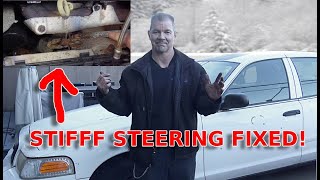
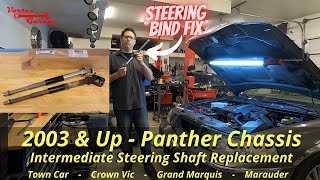
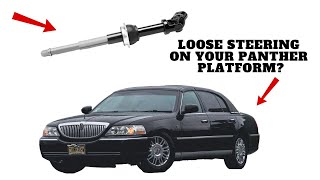
- Intermediate Steering Shaft: The U-joint on the shaft connecting the steering column to the gearbox is famously prone to rusting and binding. This causes stiff, notchy steering or a feeling that the wheel won't return to center on its own. This is often misdiagnosed as a bad gearbox. 🎬 Watch: How to diagnose and replace a binding steering shaft.
- Ball Joints and Tie Rods: Worn ball joints, inner tie rods, and outer tie rods can cause excessive play, wandering, and clunking noises.
- Pitman Arm & Idler Arm: These two components support the center steering link. Wear in the pitman arm (on the gearbox) or the idler arm (on the passenger frame rail) will cause significant steering looseness and wandering.
Symptoms of a Failing Steering Gear
When the steering gearbox itself is failing, you may experience one or more of the following symptoms:
- Excessive Steering Play: A large "dead spot" in the steering wheel where you can turn it back and forth without the wheels responding. This indicates worn internal gears.
- Grinding or Popping Noises: A grinding, popping, or crunching sound when turning the wheel, especially at low speeds or when stationary. This can feel like it's coming from directly below the driver's feet.
- Fluid Leaks: Power steering fluid (which is typically red automatic transmission fluid) leaking directly from the gearbox housing, especially from the input shaft (where the steering column connects) or the output shaft (where the pitman arm connects).
- Wandering or Unstable Steering: The vehicle may feel like it's swaying or difficult to keep in a straight line, requiring constant correction.
- Binding or Hard Spots: While often caused by the intermediate shaft, severe internal wear or damage in the gearbox can also cause the steering to catch or become very difficult to turn in certain spots.
Buying a Used Steering Gear Poppet Rack
A low-mileage used OEM steering gear is an excellent option for these vehicles, often providing better performance and longevity than a cheaply rebuilt aftermarket unit. Here’s what to look for:
- Verify the ID Tag: This is the most critical step. Make sure the metal tag reads 'SPA-KL' or 'SPA-KK' to match the one you are replacing. Do not buy a used gear without this tag.
- Inspect the Splines: Check the splines on both the input shaft and the output (pitman) shaft. They should be clean and sharp, with no signs of being twisted, stripped, or heavily corroded. Damaged splines mean the part is junk.
- Check for Leaks: Look for any signs of fluid leakage, particularly around the seals for the input and output shafts. While a little grime is normal, wetness or drips indicate failing seals.
- Turn the Input Shaft: With the gear on a bench, try to turn the input shaft by hand. It should move smoothly from lock to lock without any grinding or binding. There will be some resistance due to the fluid inside, but it should be consistent.
- Mileage and Condition: Ask for the mileage of the donor vehicle if possible. A gear from a vehicle with under 150,000 miles is generally a good candidate. Avoid parts that are excessively rusty, as this can indicate a hard life and potential internal corrosion.
Replacement Overview
Replacing the steering gear is a moderately difficult job that is feasible for an experienced DIY mechanic. It requires heavy-duty tools and a focus on safety.
- Vehicle Prep: Raise the front of the vehicle securely on jack stands and remove the driver's side front wheel.
- Secure Steering Wheel: Before disconnecting anything, secure the steering wheel in the straight-ahead position using the seatbelt or a dedicated clamp. If the wheel spins freely while disconnected, you will break the clockspring, which is an expensive repair.
- Disconnect Linkages: Remove the nut connecting the pitman arm to the center steering link. A large hammer or a pickle fork may be needed to separate the joint. Then, remove the pinch bolt on the intermediate shaft where it connects to the gearbox's input shaft.
- Disconnect Fluid Lines: Using line wrenches to avoid stripping the fittings, disconnect the high-pressure and return power steering lines from the gearbox. Be prepared for fluid to drain out.
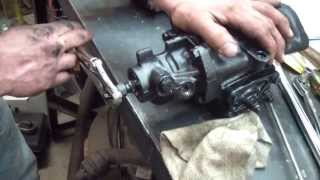
- Unbolt and Remove Gearbox: Remove the three large bolts holding the steering gear to the vehicle's frame. The gearbox is heavy; be ready to support its weight 🎬 See this step-by-step walkthrough of the steering gearbox replacement. as the last bolt is removed.
- Swap Pitman Arm: You will need a heavy-duty pitman arm puller to remove the arm from your old gearbox and install it on the new one. Note the orientation of the arm on the splines before removal.
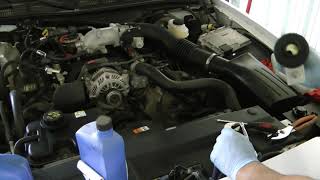
- Installation & Bleeding: Installation is the reverse of removal. After everything is connected and torqued to spec, fill the power steering reservoir with MERCON V fluid. With the engine OFF, turn the steering wheel from lock to lock several times to bleed air from the system. Top off the fluid, then start the engine and repeat the lock-to-lock turning until the steering is smooth and quiet. 🎬 Watch: How to properly flush and bleed your steering system.
Pro Tip: An alignment is highly recommended after replacing the steering gear to ensure proper handling and prevent tire wear.
Cost Comparison
| Item | Estimated Cost |
|---|---|
| New OEM (Remanufactured by Ford) | $340 - $460 |
| New Aftermarket (Remanufactured) | $170 - $270 (plus core charge) |
| Used OEM | $75 - $150 |
| Shop Labor | $200 - $420 |
| Total Professional Replacement | $600 - $780 |
Key Torque Specifications
| Component | Torque Spec | Source |
|---|---|---|
| Pitman Arm to Steering Gear Nut | 173-233 lb-ft | |
| Steering Gear to Frame Bolts | 50-67 lb-ft | |
| Intermediate Shaft Pinch Bolt | 30 lb-ft | |
| Pitman Arm to Center Link Nut | 56-75 lb-ft |
Known Issues, TSBs, and Recalls
- NHTSA Recall 13V385000: This major recall was for 2005-2011 models, but the issue is highly relevant to the 1997-2002 generation. It addressed severe corrosion of the lower intermediate steering shaft, which could cause it to seize or separate, leading to a loss of steering. Owners of 1997-2002 cars, especially in rust-belt states, should inspect this shaft for binding.
- NHTSA Recall 15E082000: A recall was issued for some 1997 Lincoln Town Car models where the steering shaft could separate, resulting in a complete loss of steering control.
- General Wear: Due to the nature of these vehicles (police, taxi, and livery use), the entire front suspension and steering system should be considered a wear item. It is rare for only the steering gear to fail without other components like ball joints, tie rods, and the idler arm also being worn.
Frequently Asked Questions (FAQ)
Can I install a 'firm feel' (SPA-KL) steering gear in my standard civilian car?
Yes, this is a popular upgrade. Installing a Police Interceptor or HPP (SPA-KL) steering gear into a base model Crown Victoria, Grand Marquis, or Town Car will result in a firmer, more responsive steering feel with less assist. It is a direct bolt-on swap.
What type of power steering fluid should I use?
These vehicles require MERCON V automatic transmission fluid (ATF) for the power steering system. Do not use generic "power steering fluid." Using the correct fluid is essential for the health of the pump and seals.
Is rebuilding my old steering gear a good idea?
For the average DIY mechanic, rebuilding a recirculating ball steering gear is not recommended. It is a complex process requiring special tools and knowledge to set the internal tolerances correctly. It is more practical and reliable to replace the unit with a quality remanufactured or low-mileage used OEM part.
Do I need to replace the pitman arm at the same time?
Not necessarily. The pitman arm should be inspected for any play in its own ball joint where it connects to the center link. If it is tight with no looseness, it can be reused. However, given the difficulty of the job, if the pitman arm is old or has high mileage, replacing it at the same time is often a wise choice.
Helpful Videos

Technical Specifications
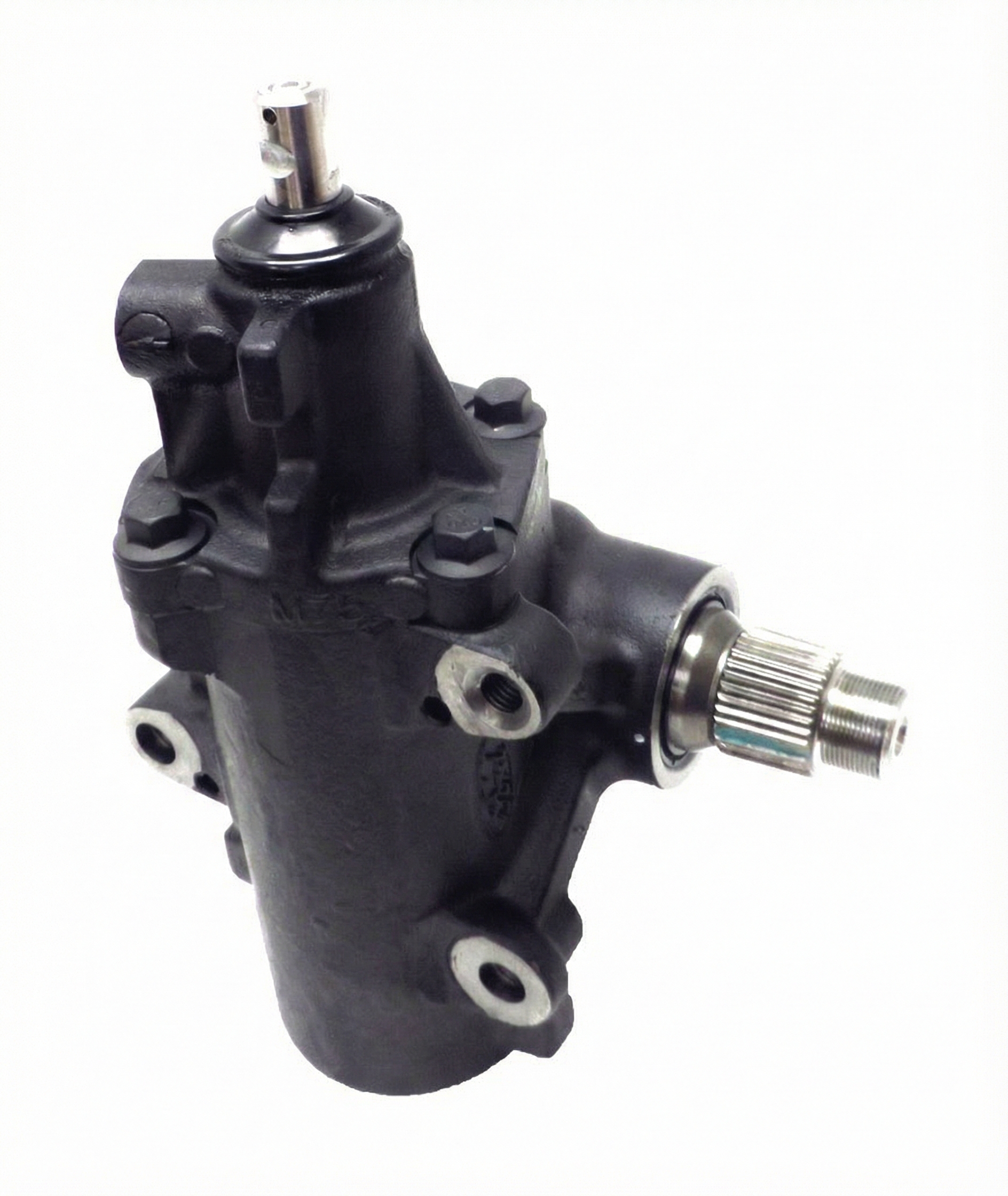
OEM Part Numbers: F7AC3504E F7AC3504EA F7AC3504EBRM F7AC3504ECRM F7AZ3504EA F7AZ3504ECRM F7AZ3504FA F7AZ3504FDRM XW7Z3504AA XW7Z3504AARM XW7Z3504ABRM
System uses MERCON V Automatic Transmission Fluid. Key torque specs: Pitman Arm to Gearbox Nut (173-233 lb-ft), Gearbox to Frame Bolts (50-67 lb-ft).
We Have This Part in Stock

The information in this article is provided for general reference and educational purposes only. Vehicle specifications, procedures, and part compatibility can vary by production date, trim level, and region. Always consult your vehicle's factory service manual and verify part numbers before purchasing or performing repairs. Safety-critical components such as airbags, seat belts, and braking systems should be installed by a qualified professional.
- Ford Crown Victoria:
- Lincoln Town Car:
- Mercury Grand Marquis:
- 🎬 Helpful Videos
- 🛍️ Shop This Part
- The Definitive Guide to Panther Platform Steering Gears: SPA-KL vs. SPA-KK
- Is It Really Your Steering Gear? Other Common Issues
- Symptoms of a Failing Steering Gear
- Buying a Used Steering Gear Poppet Rack
- Replacement Overview
- Cost Comparison
- Key Torque Specifications
- Known Issues, TSBs, and Recalls
- Frequently Asked Questions (FAQ)
- 🎟️ Get 5% Off