

2007-2017 Equinox, Terrain & More Steering Knuckle: Noises, Pulling, and Replacement Guide
This guide covers the common failure symptoms, replacement costs, and critical inspection points for the front steering knuckle on the Chevrolet Equinox, GMC Terrain, Pontiac Torrent, Saturn Vue, Suzuki XL-7, and Chevrolet Captiva Sport.
- A bent steering knuckle is a primary cause of a vehicle pulling to one side and uneven tire wear that cannot be fixed by an alignment.
- It is not safe to drive with a suspected bent or cracked steering knuckle, as it could lead to a loss of steering control.
- A wheel alignment is ALWAYS required after replacing a steering knuckle.
- Grinding or humming noises are typically caused by the wheel bearing housed inside the knuckle, not the knuckle itself, but often require knuckle removal to service.
Symptoms of a Failing Steering Knuckle
The steering knuckle itself is a very durable part, but it can be damaged by impacts like hitting a curb, a deep pothole, or being in a collision. More commonly, the wheel bearing housed inside the knuckle fails. It's important to distinguish between the two, as their symptoms can be similar.
Grinding, Humming, or Roaring Noises
A constant grinding, humming, or roaring noise that gets louder with vehicle speed is the classic sign of a bad wheel bearing. The noise may change pitch or intensity when you steer left or right, which shifts the vehicle's weight. Since the wheel bearing is pressed into the steering knuckle on these vehicles, the two parts are often discussed together. A seized wheel bearing can also damage the knuckle itself during removal, and replacing the bearing requires removing the knuckle from the vehicle.
Clunking or Popping Sounds
Clunking, popping, or squealing noises, especially when turning at low speeds or going over bumps, can point to a problem with the knuckle or its connecting points. This can be caused by a worn ball joint or tie rod end attached to the knuckle, or in rare cases, a crack in the knuckle itself.
Vehicle Pulling to One Side & Uneven Tire Wear
This is the most definitive sign of a bent steering knuckle. If the knuckle is even slightly bent from an impact, it will change the wheel's camber (vertical angle) or toe (horizontal angle). This will cause the vehicle to persistently pull to one side, even right after a wheel alignment. An alignment technician may even report that they cannot adjust the alignment to within the manufacturer's specifications. This constant misalignment will quickly wear out the inner or outer edge of the tire on that corner.
Steering Wheel Vibration or Looseness
A vibrating or loose-feeling steering wheel can be caused by a failing wheel bearing inside the knuckle. In more severe cases, if the knuckle is cracked or its connections to the ball joint or tie rod are loose, it can create a sensation of excessive play or looseness in the steering.
Known Issues, TSBs, and Recalls
While there are no major recalls specifically for steering knuckle failure across all these models, there are some related issues and one specific recall to be aware of.
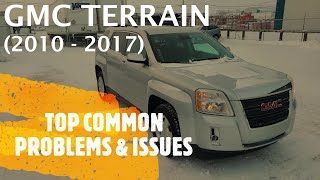
- Special Coverage 14232 (2010-2014 Equinox/Terrain): This program addressed a condition where the power steering system could develop increased friction, making the steering wheel feel like it was sticking, especially after long, straight drives. For 2010-2012 models, the fix was to replace the steering gear; for 2013-2014 models, it involved reprogramming the power steering control module. This is not a knuckle issue, but a known steering problem on these vehicles. 🎬 Watch: Common GMC Terrain problems and repair guide
- Stabilitrak / Traction Control Lights (Equinox/Terrain): A common issue on the 2010-2017 Equinox and Terrain is the illumination of the Stabilitrak and ABS lights. This is often caused by corroded wheel speed sensor wiring or a failure of the sensor itself, which is part of the wheel hub assembly that bolts to the knuckle.
Recall Notice: There are no widespread recalls for the steering knuckle on these vehicles. However, problems with this part are almost always caused by external factors like collisions, curb impacts, or severe corrosion.
Buying a Used Steering Knuckle: What to Inspect
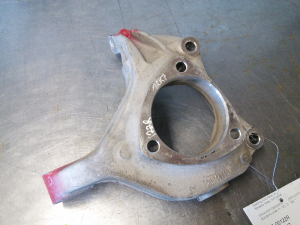
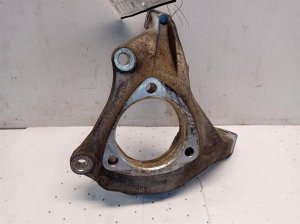
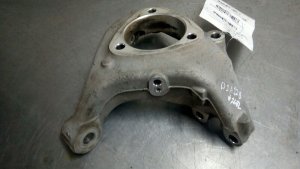
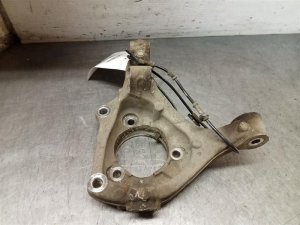
A used OEM steering knuckle from a non-accident vehicle is an excellent, cost-effective option. Since this part doesn't have moving components that wear out, its condition is based on physical integrity, not mileage. A used OEM part is often superior in material quality and dimensional accuracy to a cheap aftermarket alternative.
1. Check for Cracks
This is the most critical inspection. Carefully examine the entire part for hairline cracks. Pay close attention to the areas around the wheel bearing bore, the mounting points for the brake caliper, and the tapered holes for the ball joint and tie rod end.
2. Inspect for Bends or Warping
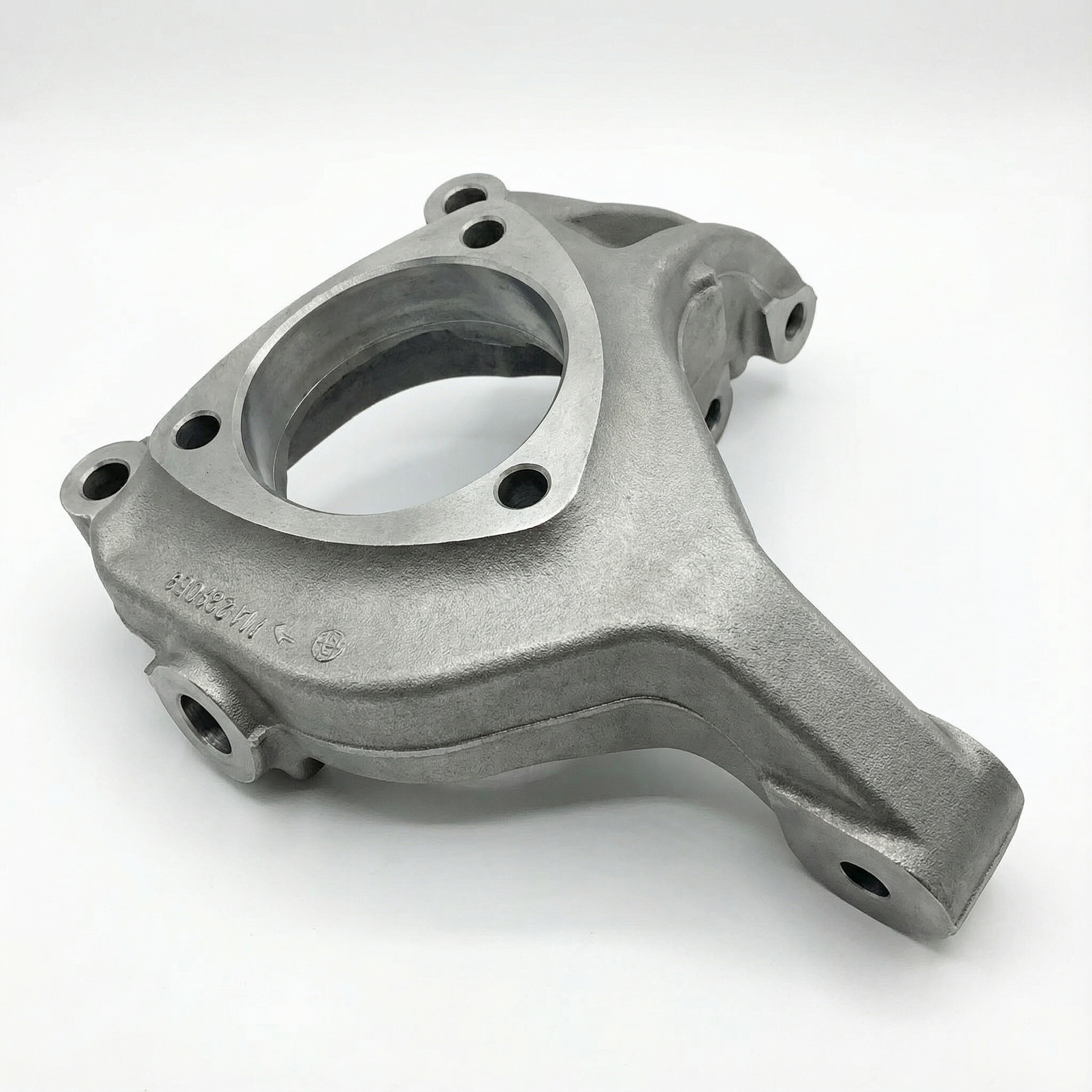
Look for any signs of impact, such as scrapes, deep gouges, or discoloration from heat. Place the knuckle on a flat surface to see if it sits level. Compare it to photos of a new part to spot any obvious bends in the strut mount or steering arm. A bent knuckle is junk.
3. Examine the Bearing Bore
The inner surface where the wheel bearing presses in should be smooth and free of deep gouges, heavy corrosion, or distortion. A damaged bore can prevent the new bearing from seating correctly, leading to premature failure.
4. Check Tapered and Threaded Holes
The holes for the ball joint and tie rod end are tapered to ensure a tight, secure fit. Make sure they are not worn into an oval shape. Verify that the threaded holes for the brake caliper bracket and ABS sensor are clean and not stripped. Damaged threads may make it impossible to safely attach the brake caliper.
Cost to Replace a Steering Knuckle (Per Side)
Replacement is a labor-intensive job that always requires a wheel alignment afterward.
| Part/Service | Estimated Cost | Notes |
|---|---|---|
| New OEM Knuckle | $180 - $330 | Part only, from a GM dealer. Does not include the wheel bearing. |
| New Aftermarket Knuckle | $75 - $150 | Part only. Quality can vary. Does not include the wheel bearing. |
| Used OEM Knuckle | $30 - $90 | A cost-effective option if properly inspected. May or may not include a used bearing (which should be replaced). |
| Shop Labor | $200 - $400 | Typically 2-3 hours of labor. Includes replacing the knuckle and bearing. |
| Wheel Alignment | $100 - $200 | Mandatory after replacing the steering knuckle to prevent tire wear. |
| Total Estimated Cost (with Used OEM Part) | $330 - $690 | Includes used knuckle, new wheel bearing (approx. $50), labor, and alignment. |
Replacement Overview and Related Parts
Replacing the steering knuckle is an advanced DIY job that requires heavy-duty tools, including a ball joint separator, a powerful impact wrench or breaker bar for the axle nut, and a torque wrench.
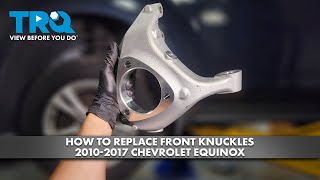
🎬 Watch: Step-by-step front steering knuckle replacement walkthroughPro Tip: A wheel alignment is mandatory after the job is complete. Do not skip this step, or you will experience poor handling and destroy your tires.
Related Parts to Replace
It is highly recommended to replace the following parts any time the knuckle is replaced:
- Wheel Hub and Bearing Assembly: This is a must. The bearing has to be removed from the old knuckle anyway, and installing a new one ensures a long service life and avoids repeating the labor.
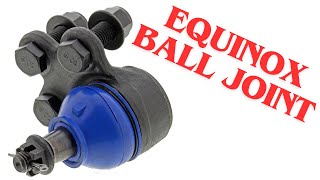
- Lower Ball Joint: The ball joint connects the knuckle to the lower control arm. Since it must be disconnected, it's the perfect time to inspect and replace it if it shows any signs of wear. 🎬 See how to replace the front lower ball joints
- Axle Nut: Most manufacturers specify that the large axle nut is a one-time-use part and should be replaced.
Torque Specifications
Torque specs are critical for safety. These values are for the 2010-2017 Equinox/Terrain but should be very similar for all vehicles listed. Always verify with a model-specific service manual if possible.
| Fastener | Torque Specification |
|---|---|
| Axle Nut | 151 ft-lbs (205 Nm) |
| Wheel Hub/Bearing to Knuckle Bolts (x3) | 74 ft-lbs (100 Nm) |
| Strut-to-Knuckle Bolts | 103 ft-lbs (140 Nm) |
| Brake Caliper Bracket to Knuckle | 140 ft-lbs (190 Nm) |
| Tie Rod End to Knuckle Nut | 18-35 ft-lbs (then tighten to align cotter pin) |
| Lower Ball Joint to Knuckle Pinch Bolt/Nut | 30-37 ft-lbs + 120 degrees (Torque-to-yield, often recommended to replace) |
Warning: Never use an impact wrench on the new axle nut for final tightening. Doing so can damage the new wheel bearing. Always use a torque wrench.
Frequently Asked Questions (FAQ)
What's the difference between a steering knuckle and a spindle?
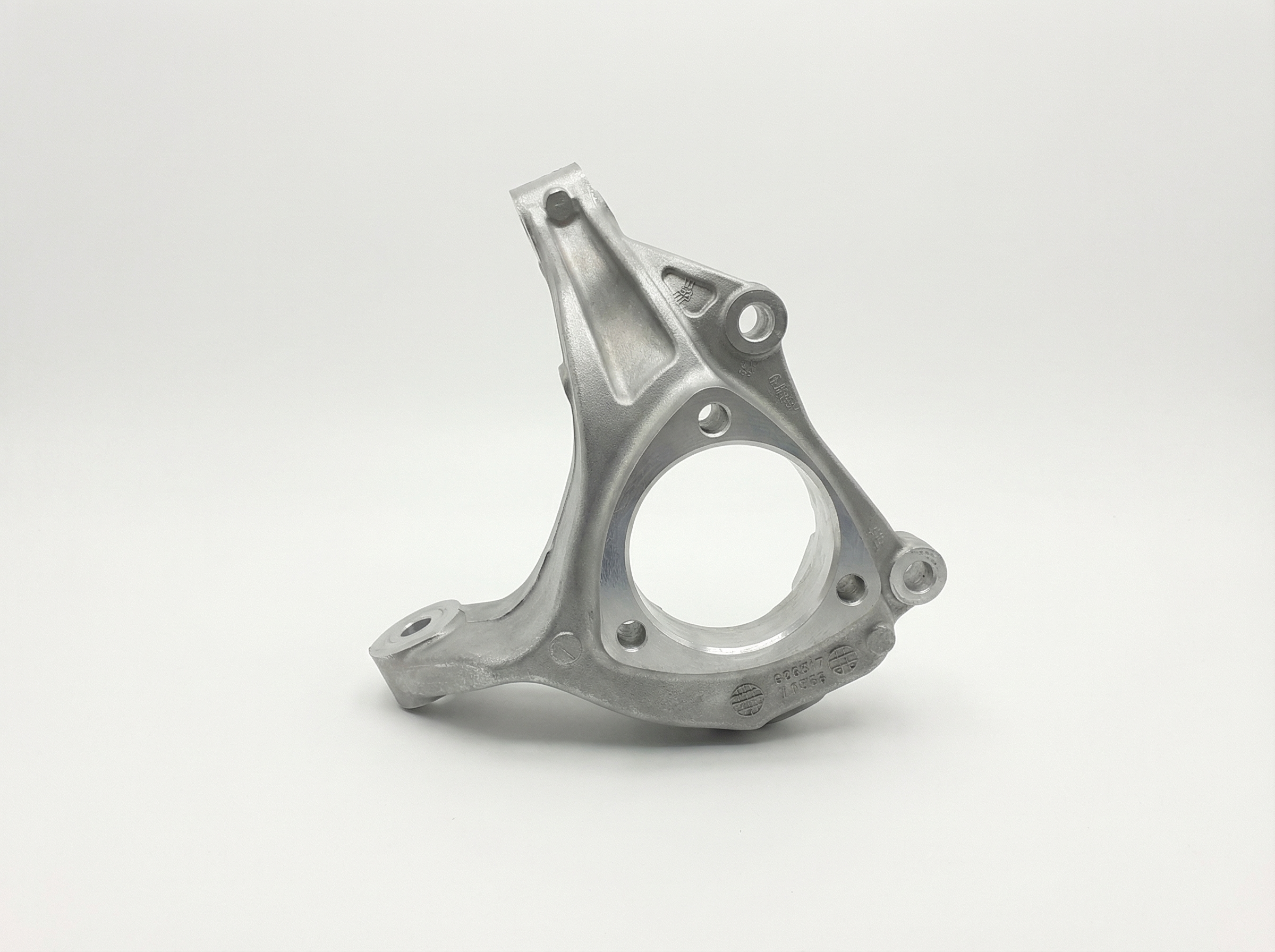
The terms are often used interchangeably, but they technically refer to different designs. A spindle features an integrated shaft that the wheel bearings ride on. A steering knuckle has a large hole (a bore) where a self-contained wheel hub and bearing assembly is bolted in. All the vehicles in this guide use a steering knuckle design.
Do I need a wheel alignment after replacing a steering knuckle?
Yes, absolutely. A wheel alignment is not optional. The knuckle is the primary component that sets the wheel's angles. Replacing it will alter the alignment, and failure to correct it will result in poor handling, crooked steering wheel, and rapid tire wear.
Is the left (driver side) and right (passenger side) knuckle the same part?
No, they are not interchangeable. The left and right steering knuckles are mirror images of each other to accommodate the steering arm and caliper mounting points for each specific side of the vehicle.
My mechanic says my knuckle is seized to the wheel bearing. Is that common?
Yes, especially in regions that use road salt. Rust and corrosion can effectively weld the steel wheel bearing into the iron or aluminum knuckle, making it extremely difficult to remove. In these cases, it is often faster and more cost-effective to replace the knuckle and bearing together as an assembly rather than spend hours trying to press the old bearing out.
Compatible OEM Part Numbers
This list contains verified OEM part numbers for the front steering knuckles that fit these vehicles. Note that part numbers can supersede over time. Always verify the correct part number for your specific vehicle's VIN and side (left or right).
- General Motors: 22786979 (Right), 22786978 (Left), 25978805, 15837011, 15837014, 23118057, 23373012, 25944109
Helpful Videos
Technical Specifications
OEM Part Numbers: 22786979 25978805 15837011 15837014 22786978 23118057 23373012 25944109
Material: Cast Iron or Aluminum. The part is specific to the driver (left) or passenger (right) side. It fits both Front-Wheel Drive (FWD) and All-Wheel Drive (AWD) models.
We Have This Part in Stock

The information in this article is provided for general reference and educational purposes only. Vehicle specifications, procedures, and part compatibility can vary by production date, trim level, and region. Always consult your vehicle's factory service manual and verify part numbers before purchasing or performing repairs. Safety-critical components such as airbags, seat belts, and braking systems should be installed by a qualified professional.
- Chevrolet Equinox:
- Chevrolet Captiva Sport:
- GMC Terrain:
- Pontiac Torrent:
- Saturn Vue:
- Suzuki XL-7:
- 🎬 Helpful Videos
- 🛍️ Shop This Part
- Symptoms of a Failing Steering Knuckle
- Grinding, Humming, or Roaring Noises
- Clunking or Popping Sounds
- Vehicle Pulling to One Side & Uneven Tire Wear
- Steering Wheel Vibration or Looseness
- Known Issues, TSBs, and Recalls
- Buying a Used Steering Knuckle: What to Inspect
- 1. Check for Cracks
- 2. Inspect for Bends or Warping
- 3. Examine the Bearing Bore
- 4. Check Tapered and Threaded Holes
- Cost to Replace a Steering Knuckle (Per Side)
- Replacement Overview and Related Parts
- Related Parts to Replace
- Torque Specifications
- Frequently Asked Questions (FAQ)
- Compatible OEM Part Numbers
- 🎟️ Get 5% Off