

2013-2017 Hyundai Veloster Steering Knuckle: Diagnosing Noises, Bends, and Bearing Failure
This guide clarifies common steering noises and vibrations, explaining how to tell a bad knuckle from a worn wheel bearing or a failed steering coupler.
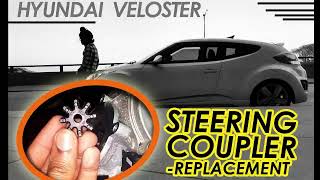
- A clicking noise from the steering column is likely the inexpensive steering coupler (TSB 17-ST-001), not the knuckle.
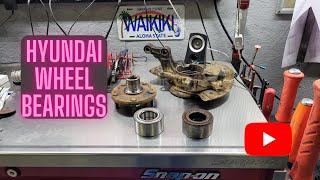
- A humming or roaring noise from the wheel is the bearing inside the knuckle, not the knuckle itself.
- A bent knuckle from an impact is the most common reason for replacement and will cause alignment and tire wear issues.
- When installing a used knuckle, you MUST press in a new wheel bearing and use a new axle nut for safety and reliability.
Symptoms of a Failing Steering Knuckle
A steering knuckle is a robust piece of metal that does not have moving parts and typically does not "wear out" on its own. Failure is almost always caused by an external event like hitting a curb or a major pothole, or by the failure of a part attached to it, like the wheel bearing.
Noises and Vibrations
- Humming, Roaring, or Grinding Noise: This is the most common symptom, but it's almost always caused by the wheel bearing that is housed inside the knuckle, not the knuckle itself. The noise is speed-dependent, getting louder and higher-pitched as you drive faster. It may also change in volume when you turn the steering wheel slightly left or right on the highway.
- Clunking or Popping: A clunking sound when going over bumps or turning can indicate a worn ball joint or tie rod end attached to the knuckle. If the knuckle itself is cracked, it could also produce a clunking or creaking noise under stress.
- Squealing When Turning: A high-pitched squeal during low-speed turns, like in a parking lot, can point to a bent knuckle or a severely worn ball joint putting stress on the steering system.
Steering and Alignment Issues
- Vehicle Pulling to One Side: If the knuckle is bent from an impact, it will alter the suspension geometry. This can cause the vehicle to persistently pull to one side, a problem that a standard wheel alignment may not be able to correct.
- Uneven Tire Wear: A bent knuckle is a common cause of rapid and unusual tire wear. You might see excessive wear on the inner or outer edge of just one tire. This happens because the bent knuckle forces the wheel to sit at an incorrect angle (camber or toe).
- Steering Wheel Off-Center: After an impact, if your steering wheel is no longer straight when you're driving straight, a bent steering knuckle is a primary suspect, along with a bent tie rod.
Important: A clicking or clunking noise coming from the steering column when turning the wheel (even when stationary) is a very common issue on these Veloster models. This is almost always caused by a failed flexible steering coupler inside the electronic power steering motor, NOT the steering knuckle. See the TSB section below for more details.
Known Issues, TSBs, and Recalls
While there are no specific recalls for the steering knuckle on the 2013-2017 Hyundai Veloster, there are important Technical Service Bulletins (TSBs) related to steering noises that can be confused with a knuckle problem.
- TSB 17-ST-001: This bulletin addresses a common problem where the flexible rubber coupler in the Motor Driven Power Steering (MDPS) assembly disintegrates. This causes a clicking or thudding noise and a noticeable "play" in the steering wheel, especially when turning. The issue is covered for 2012-2015 Velosters. 🎬 See this walkthrough for fixing a clicking steering wheel Many owners report this failure, and it is often misdiagnosed as a suspension issue. The repair involves replacing a small, inexpensive rubber part, but the labor can be significant as the steering column must be partially disassembled.
- TSB 18-ST-001: This TSB addresses a noise that can develop in the steering rack support yoke for all 2011-2017 Veloster models. This is less common but can be another source of steering-related noise.
Buying a Used Steering Knuckle
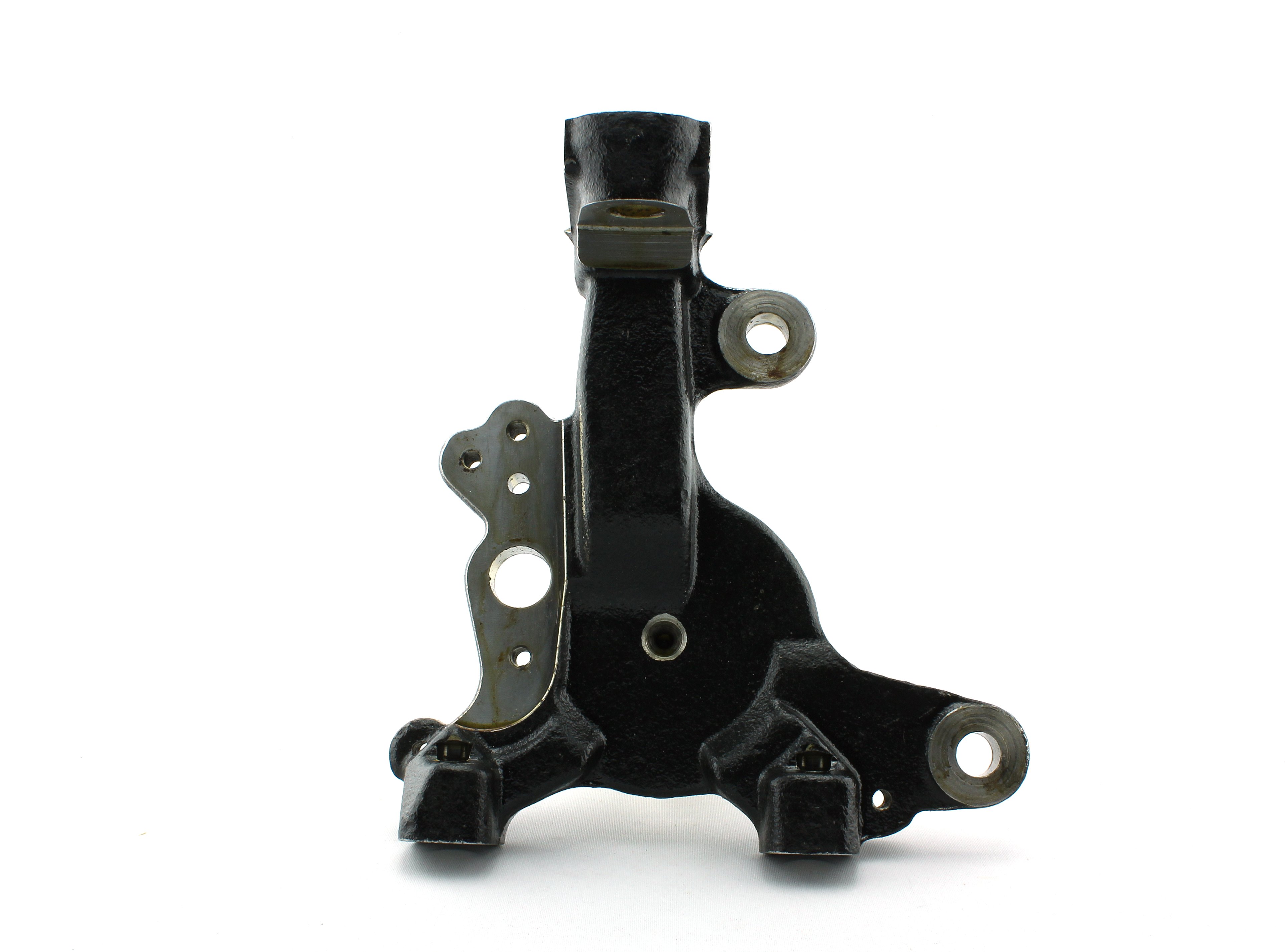
A used OEM steering knuckle is an excellent, cost-effective alternative to an expensive new part, as it's a component that doesn't wear out from mileage. However, careful inspection is critical to ensure you get a good part.
Physical Inspection Checklist
- Check for Cracks: Thoroughly inspect the entire knuckle for hairline cracks, especially around the wheel bearing bore and the mounting points for the strut, ball joint, and brake caliper.
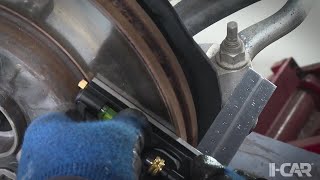
- Look for Bending or Impact Damage: It can be hard to see a slight bend, but look for scrapes, deep gouges, or deformation, particularly on the arm where the tie rod connects. Compare it to a picture of a new part if possible. A bent knuckle is junk. 🎬 Watch: How to check for a damaged steering knuckle
- Inspect Mounting Holes: Ensure the holes for the strut bolts and caliper bracket bolts are round and not elongated or damaged. Check the tapered hole for the ball joint and tie rod end for any signs of excessive wear or distortion.
- Condition of Included Parts: A used knuckle may come with the hub, bearing, or dust shield. Consider these bonuses, but do not trust the used wheel bearing.
Pro Tip: Always plan to install a new wheel bearing into a used steering knuckle. The process of removing the knuckle from the donor car and the uncertainty of the bearing's age make it unwise to reuse. Pressing in a new bearing ensures reliability and prevents having to do the job twice.
Compatibility
Based on Hyundai's official parts data, the same steering knuckle fits all 2013, 2014, 2015, 2016, and 2017 Hyundai Veloster models, including Base, Turbo, and R-Spec trims. While some aftermarket catalogs may incorrectly list different parts for different years or trims, the OEM parts are consistent across this entire model range. Always verify the part by its OEM number if possible.
- Left (Driver Side) OEM Part Number: 51715-2V000 (may be superseded by 51715-A5000)
- Right (Passenger Side) OEM Part Number: 51716-2V000 (may be superseded by 51716-A5000)
Cost of Replacing a 2013-2017 Veloster Steering Knuckle
The total cost can vary significantly based on the parts you choose and local labor rates. A wheel alignment is mandatory after replacement, which adds to the final cost.
| Part/Service | Estimated Cost | Notes |
|---|---|---|
| New OEM Knuckle | $350 - $510 | Price from a Hyundai dealership. |
| New Aftermarket Knuckle | $60 - $200 | Wide range of quality and price from brands like Dorman, SKP, and others. |
| Used OEM Knuckle | $75 - $160 | A good value, but requires careful inspection and a new wheel bearing. |
| Shop Labor (Knuckle Replacement) | $200 - $350 | Typically 2-3 hours of labor. Does not include pressing a new bearing. |
| Shop Labor (Press Bearing) | $50 - $100 | Additional labor if you bring a used knuckle and new bearing to a shop. |
| Wheel Alignment | $80 - $150 | Required after knuckle replacement to prevent tire wear. |
Related Parts to Replace
Replacing the steering knuckle provides the perfect opportunity to service other related wear items. Addressing these parts at the same time can save you significant labor costs down the road.
- Wheel Bearing: Mandatory replacement. A new bearing should always be pressed into a replacement knuckle.
- Axle Nut: This is a one-time-use, torque-to-yield fastener and must be replaced with a new one.
- Lower Ball Joint: Inspect for any play or torn boots. Since it must be separated from the knuckle anyway, this is the ideal time for replacement. 🎬 Watch: How to replace the wheel bearing and ball joint
- Outer Tie Rod End: Like the ball joint, this must be disconnected. Inspect it for wear and replace if necessary.
Installation Tips and Torque Specs
This job is considered difficult for a DIY mechanic primarily because it requires a hydraulic shop press to remove the old wheel bearing and install the new one. Without a press, you risk damaging the new bearing or the knuckle itself.
- Axle Nut: 145 - 202 lb-ft (196 - 274 N.m). This is a critical torque spec. The nut must be staked (crimped) into the axle shaft keyway after tightening.
- Strut-to-Knuckle Bolts: 72 - 87 lb-ft (This is a general spec, always verify for your specific model).
- Tie Rod End Castle Nut: 17 - 25 lb-ft (23 - 33 N.m). Always install a new cotter pin.
- Lower Ball Joint Castle Nut: 32 lb-ft (43 N.m) is a general spec. Always install a new cotter pin.
Do I need a wheel alignment after replacing a steering knuckle?
Yes, absolutely. Replacing the steering knuckle directly affects the camber, caster, and toe alignment angles. Skipping an alignment will result in poor handling, crooked steering wheel, and rapid tire wear.
Can I just replace the wheel bearing instead of the whole knuckle?
Yes. If your knuckle is not bent or cracked and your only symptom is a humming/roaring wheel bearing, you only need to replace the bearing. However, the knuckle must still be removed from the vehicle to press the old bearing out and the new one in.
Is the left steering knuckle the same as the right one?
No, they are not interchangeable. Steering knuckles are side-specific parts (driver side and passenger side).
My steering wheel clicks when I turn it. Is that the knuckle?
Probably not. A clicking or popping sound coming from the steering column area, especially when the car is stopped or moving slowly, is a classic symptom of a failed flexible steering coupler in the power steering motor on the 2013-2017 Veloster. A bad knuckle or bearing noise typically comes from the wheel area and is related to wheel speed.
Helpful Videos

Technical Specifications
OEM Part Numbers: 51715-2V000 51716-2V000 51715-A5000 51716-A5000
Axle Nut Torque: 145 - 202 lb-ft (196 - 274 N.m)
We Have This Part in Stock

The information in this article is provided for general reference and educational purposes only. Vehicle specifications, procedures, and part compatibility can vary by production date, trim level, and region. Always consult your vehicle's factory service manual and verify part numbers before purchasing or performing repairs. Safety-critical components such as airbags, seat belts, and braking systems should be installed by a qualified professional.
- Hyundai Veloster:
- 🎬 Helpful Videos
- 🛍️ Shop This Part
- Symptoms of a Failing Steering Knuckle
- Noises and Vibrations
- Steering and Alignment Issues
- Known Issues, TSBs, and Recalls
- Buying a Used Steering Knuckle
- Physical Inspection Checklist
- Compatibility
- Cost of Replacing a 2013-2017 Veloster Steering Knuckle
- Related Parts to Replace
- Installation Tips and Torque Specs
- 🎟️ Get 5% Off