

2020-2025 Mazda CX-30 & Mazda3 Steering Knuckle: Clunks, Fitment Traps & Part Number Guide
This guide deciphers the confusing part numbers and common noises for the front steering knuckle on the Mazda CX-30 and 2021+ Mazda3.
- There are three different front knuckles for these vehicles: one for the CX-30, one for the Mazda3 Turbo, and one for the Mazda3 non-Turbo. You must use the correct part number.
- Clunking noises from the front end are often caused by a faulty strut mount (per TSB SA-020/20), not the knuckle itself.
- A humming or grinding noise that changes with speed is almost always a bad wheel bearing, which is a separate, replaceable part housed in the knuckle.
- A wheel alignment is absolutely mandatory after replacing a steering knuckle to ensure safety and prevent tire damage.
Symptoms of a Failing Steering Knuckle
While the steering knuckle itself is a very durable part, it can be damaged by impacts like hitting a curb or a major pothole. More commonly, noises from the front corner of the car are caused by parts attached to the knuckle, like the wheel bearing or ball joint. It's important to distinguish the sounds.
- Clunking or Popping Noises: A clunk or pop when turning or going over bumps can indicate a worn ball joint, which connects the knuckle to the control arm. While forum users on Mazda3 and CX-30 forums have reported clunking, a common cause on these vehicles is actually the front strut mount, as detailed in Mazda TSB SA-020/20.
- Grinding, Humming, or Roaring Noise: A noise that starts as a hum and develops into a grinding or roaring sound that increases with vehicle speed is the classic sign of a failed wheel bearing. Since the bearing is pressed into or bolted onto the knuckle, the sound comes from the same area. Mazda has noted that this sound is sometimes misdiagnosed as a more expensive transmission or differential problem.
- Vehicle Pulling to One Side: If the vehicle consistently pulls to one side, even after a wheel alignment, it may have a bent steering knuckle. This throws off the suspension geometry in a way that a standard alignment can't correct.
- Uneven Tire Wear: A bent knuckle will cause the wheel to be held at an incorrect angle (camber or toe), leading to rapid and uneven wear on the inner or outer edge of the tire.
- Loose or Vibrating Steering Wheel: Excessive play or vibration in the steering wheel can be a symptom of a worn wheel bearing or a loose ball joint connected to the knuckle.
Known Issues, TSBs, and Recalls
As of early 2026, there are no specific recalls for steering knuckle failure on the 2020-2025 Mazda CX-30 or 2021-2025 Mazda3. However, there are related service bulletins for issues that cause similar symptoms:
- TSB SA-020/20 - Front Suspension Rattle: Some vehicles may exhibit a rattle or clunk from the front suspension when driving over bumps. This is often caused by an issue with the strut mounting rubber, not the knuckle itself. This should be investigated before replacing more expensive components.
- TSB SA-006-22 - Wheel Bearing Noise Misdiagnosis: Mazda issued a bulletin warning technicians that a growling or whining noise from a wheel bearing is sometimes incorrectly diagnosed as a transmission or differential issue. If you have a speed-dependent humming noise, the wheel bearing housed in the knuckle is a primary suspect.
- Premature Wheel Bearing Failure: Some owners have reported wheel bearing failure at relatively low mileage (under 30,000 miles) on the CX-30, which would produce a loud humming or grinding noise from the knuckle area.
Warning: An older recall (16V-203) exists for steering knuckle separation on some Mazda CX-9 models. This recall does NOT apply to the CX-30 or Mazda3 covered in this guide.
Variant & Part Number Guide: Critical Differences
The initial parts information for these vehicles can be confusing. There are different knuckles for the CX-30, the Mazda3 Turbo, and the non-turbo Mazda3. Using the wrong part will not work. This guide is for the front left (driver's side) knuckle.
| Vehicle | Engine | Drivetrain | Part Number (Front Left) | Supersedes |
|---|---|---|---|---|
| 2020-2025 Mazda CX-30 | 2.5L & 2.5L Turbo | FWD & AWD | DGH9-33-03Y | DGH9-33-031 |
| 2021-2025 Mazda3 | 2.5L Turbo | AWD Only | BDHW-33-031 | BDNF-33-031 |
| 2021-2025 Mazda3 | 2.5L Non-Turbo | FWD & AWD | BDTT-33-03Y | N/A |
Note: Part numbers for the front right (passenger's side) knuckle typically end in '02Y' or '021' instead of '03Y' or '031'. For example, the right-side match for DGH9-33-03Y is DGH9-33-02Y. Always verify with the seller using your VIN.
Compatibility Warning: The steering knuckle for the Mazda CX-30 (DGH9-33-03Y) fits both Front-Wheel Drive (FWD) and All-Wheel Drive (AWD) models. The primary difference is that on AWD models, a CV axle passes through the center of the hub and knuckle. The knuckles for the Mazda3 are specific to Turbo or Non-Turbo engines.
Buying a Used Steering Knuckle
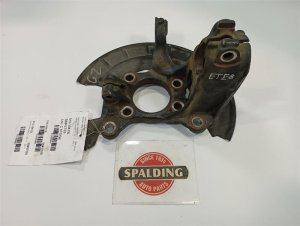
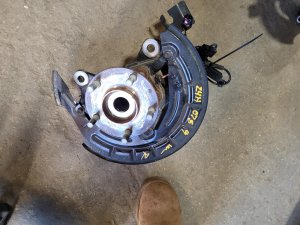
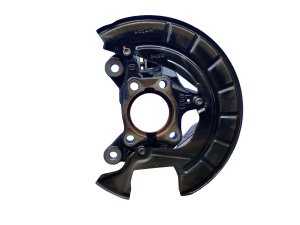
Since new aftermarket steering knuckles for these newer models are not yet widely available, your choices are typically a new OEM part or a recycled OEM part. A used knuckle can be a smart buy if you inspect it carefully.
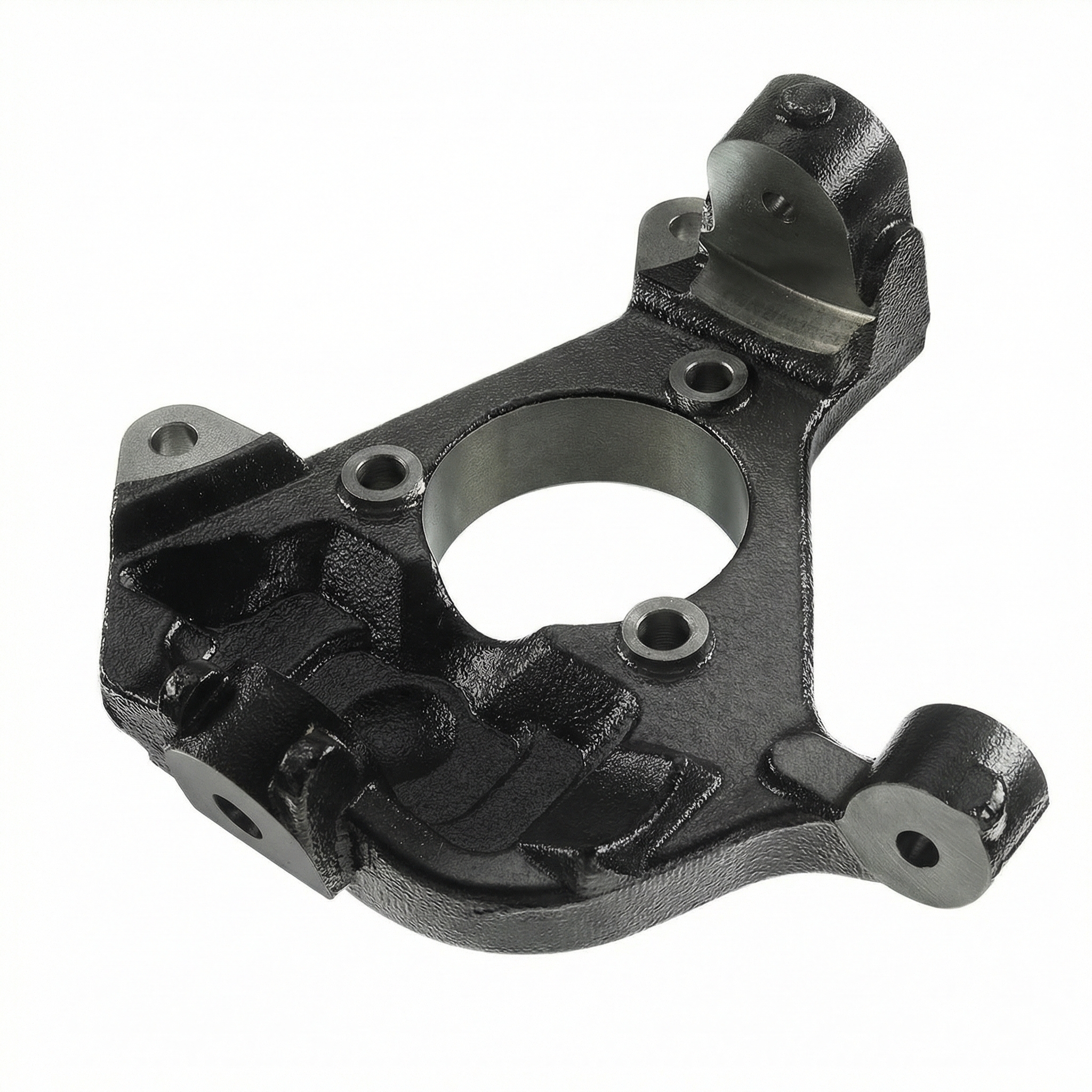
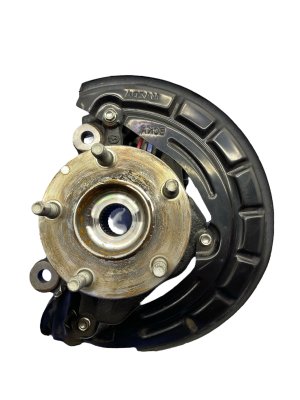
- Physical Inspection: This is the most important step. Carefully inspect the entire knuckle for any signs of cracks, especially around the mounting points for the strut, ball joint, and tie rod. Check for any bending or deformation by comparing it to pictures of a new part. Significant rust or corrosion, especially in the hole where the ball joint is mounted or where the wheel hub bolts on, is a major red flag.
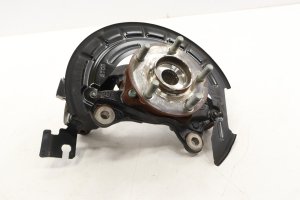
- Check Included Components: Many used knuckles are sold as an assembly with the wheel hub and bearing already installed. This can be a great value, but you must check the condition of the bearing. With the knuckle on the ground, try to spin the hub by hand. It should be smooth and silent. If you hear any grinding or feel any roughness or play, the bearing is bad and will need to be replaced.
- Mileage and Source: Always choose a part from the lowest-mileage donor vehicle possible. A knuckle from a low-mileage, front-end collision vehicle is often a better bet than one from a high-mileage car, as the attached bearing and ball joint will have less wear.
- Why Used OEM is a Good Choice: The steering knuckle is a geometrically precise part made from high-strength cast iron or aluminum. A genuine OEM part, even used, is manufactured to Mazda's exact specifications for strength and fitment. This ensures proper alignment and safety, which cannot always be guaranteed with potential future, lower-quality aftermarket options.
Cost of Replacement
Replacing a steering knuckle involves significant labor. The wheel, brake caliper, rotor, axle nut, tie rod end, lower ball joint, and strut must all be disconnected.
| Part / Service | Estimated Cost | Notes |
|---|---|---|
| New OEM Knuckle | $130 - $280 | Price varies by part number (CX-30 vs. Mazda3 Turbo). |
| New Aftermarket Knuckle | Not Widely Available | As of early 2026, options from major aftermarket brands are limited or non-existent. |
| Used OEM Knuckle | $100 - $150 | Often includes the wheel hub/bearing, which can be a good value if the bearing is in good condition. |
| Shop Labor | $230 - $340 | Labor to replace one knuckle. |
| Wheel Alignment | $100 - $200 | Mandatory after replacement. Do not skip this step. |
Replacement Procedure Overview & Torque Specs
This is an advanced DIY job requiring heavy-duty tools. If you are not comfortable working with critical suspension components, this job is best left to a professional. An alignment is required after the job is complete.
Pro Tip: The pinch bolt that secures the lower ball joint into the knuckle is notorious for seizing with rust. Be prepared to use a significant amount of penetrating oil and force. In severe cases, the bolt may need to be drilled out, which adds considerable time to the job. Applying anti-seize compound to the new bolt during installation is highly recommended.
Key torque specifications are critical for safety. These specs are for the Mazda CX-30 and should be very similar for the Mazda3, but always verify with a factory service manual if possible.
- Wheel Lug Nuts: 80–108 ft-lbs (108–147 N·m)
- Axle Nut (AWD models): 150 ft-lbs
- Strut-to-Knuckle Bolts: 60 ft-lbs
- Lower Ball Joint Pinch Bolt: 50 ft-lbs
- Outer Tie Rod End Nut: 35 ft-lbs
- Brake Caliper Bracket Bolts: 45 ft-lbs
Can I replace just the wheel bearing instead of the whole knuckle?
Yes. On these models, the wheel bearing is part of a bolt-on hub assembly. It can be unbolted from the knuckle and replaced as a separate unit. However, if the bolts are seized or if the knuckle was damaged during a previous repair attempt, replacing the knuckle and hub together may be necessary.
Do I need an alignment after replacing a steering knuckle?
Yes, absolutely. Replacing the steering knuckle disconnects every major part of the suspension geometry. A full four-wheel alignment is mandatory to ensure vehicle safety, proper handling, and to prevent premature tire wear.
Does this part fit both FWD and AWD models?
For the Mazda CX-30, the same knuckle part number is used for both FWD and AWD versions. For the Mazda3, it's more complicated. The Turbo models are AWD-only and use a specific knuckle. The non-turbo models use a different knuckle that fits both FWD and AWD non-turbo cars. Refer to the part number table in this guide.
Is the steering knuckle the same as a spindle?
The terms are often used interchangeably, but they are slightly different. A spindle has an integrated shaft that the wheel bearings ride on. A knuckle has a large hole in the center to accommodate a separate, bolt-in wheel hub and bearing assembly. These Mazda models use a steering knuckle.
Technical Specifications
OEM Part Numbers: DGH9-33-03Y DGH9-33-031 BDHW-33-031 BDNF-33-031 BDTT-33-03Y DGH9-33-02Y BDHW-33-021 BDTT-33-02Y
Material: Cast Iron or Cast Aluminum. Accommodates a 4-bolt wheel hub assembly.
We Have This Part in Stock

The information in this article is provided for general reference and educational purposes only. Vehicle specifications, procedures, and part compatibility can vary by production date, trim level, and region. Always consult your vehicle's factory service manual and verify part numbers before purchasing or performing repairs. Safety-critical components such as airbags, seat belts, and braking systems should be installed by a qualified professional.
- Mazda CX-30:
- MAZDA MAZDA3: