

2010-2013 Mazda 3 Steering Knuckle: Diagnosing Noises, Wobbles, and Failure
This guide covers common failure symptoms, inspection tips for used parts, and replacement costs for the steering knuckle on all 2010-2013 Mazda 3 models.
- Steering knuckles fail from impacts (curbs, potholes), not from wear. The main symptoms are pulling to one side, uneven tire wear, and noises that persist after an alignment.
- A recall (NHTSA 16V-203) exists for loose bolts connecting the strut to the knuckle, which can cause a loss of steering. Ensure this has been checked.
- When buying used, visually inspect for cracks, bends, and damage to mounting holes. Mileage is less important than a clean history.
- A wheel alignment is mandatory after replacement to prevent unsafe handling and rapid tire wear.
Symptoms of a Bad 2010-2013 Mazda 3 Steering Knuckle
Steering knuckles are designed to last the life of the vehicle, so they don't "wear out" like brake pads. Failure is almost always caused by damage from hitting a curb, a major pothole, or an accident. A bent or cracked knuckle can create serious safety issues. Here are the most common signs:
- Pulling to One Side: If your car consistently pulls to one side even after a wheel alignment, the knuckle on that side may be bent. This changes the suspension geometry in a way that a standard alignment can't correct.
- Uneven Tire Wear: A bent knuckle is a common cause of rapid or unusual tire wear on just one wheel. You might see the inner or outer edge of a single front tire worn smooth while the other tires look fine.
- Steering Wheel Off-Center: If you have to hold the steering wheel at an angle to drive straight, it could indicate a bent knuckle has altered the steering geometry.
- Clunking, Popping, or Grinding Noises: These sounds are most noticeable when turning at low speeds, like in a parking lot. While often caused by a bad ball joint or wheel bearing, a cracked knuckle or worn mounting points can also be the culprit.
- Vibrating or Shaky Steering Wheel: A damaged knuckle can cause vibrations that you feel through the steering wheel, which may get worse with speed.
Pro Tip: Symptoms of a bad steering knuckle often overlap with a bad wheel bearing, ball joint, or tie rod end. A key clue for a bent knuckle is when problems like pulling or uneven tire wear persist immediately after getting a wheel alignment.
Known Issues, Recalls, and TSBs
While there are no recalls specifically for steering knuckle failure on the 2010-2013 Mazda 3, there is one related safety recall to be aware of:
- NHTSA Recall 16V-203 (Mazda Campaign 9316D): Issued in May 2016, this recall addresses an issue where the lower nuts and bolts connecting the front strut to the steering knuckle could loosen and fall off. In a worst-case scenario, this could cause the knuckle to separate from the strut, leading to a significant loss of steering control. The fix involves dealers inspecting the bolts and tightening or replacing them as needed. While this recall affected multiple Mazda models, it's a critical check for any 2010-2013 Mazda 3.
No specific Technical Service Bulletins (TSBs) for the steering knuckle itself were found. However, owners on forums have reported issues with bent caliper bracket mounting ears on the knuckle, often occurring after struggling to remove a seized brake rotor. Bending these ears back is not recommended as it can weaken the metal and create a safety risk.
Buying a Used 2010-2013 Mazda 3 Steering Knuckle
Since a new OEM knuckle can be expensive, a used OEM part from a reputable recycler is often a smart choice. Knuckles don't have wear parts, so a straight, undamaged used knuckle is functionally identical to a new one. Here’s what to inspect:
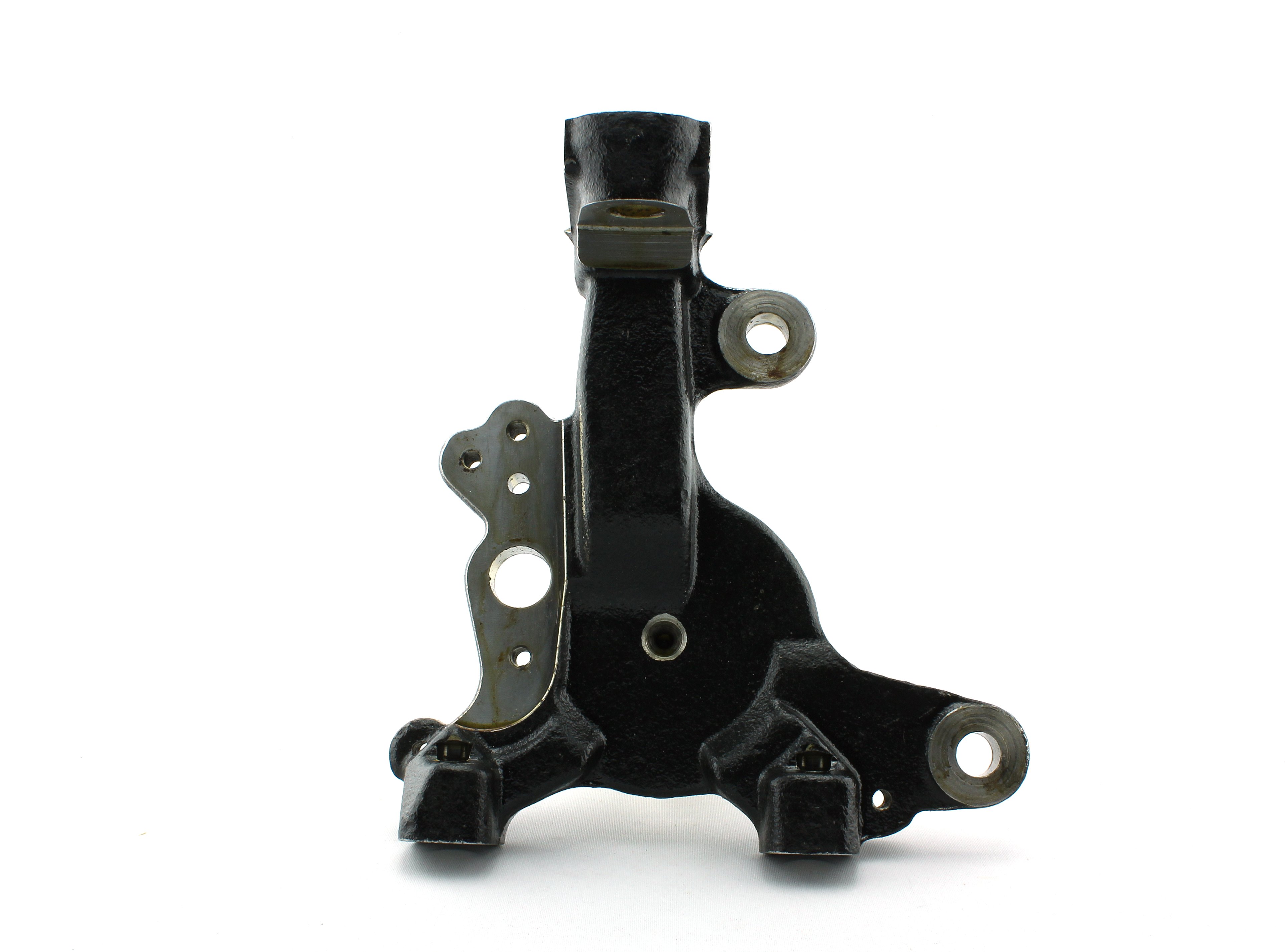
- Check for Bends or Cracks: This is the most important inspection. Lay the knuckle on a flat surface. Look for any visible cracks, especially around the mounting points for the strut, ball joint, and tie rod. Pay close attention to the caliper mounting ears, as these can get bent during brake work.
- Inspect Mounting Holes: Check the threaded holes for the brake caliper and the tapered holes for the ball joint and tie rod end. The tapered holes should be perfectly round and free of distortion or excessive wear. Damaged threads or warped tapers mean the knuckle is junk.
- Verify Part Numbers: The primary OEM part number for the right (passenger) side is BBM2-33-021C, which supersedes BBM2-33-021, BBM2-33-021A, and BBM2-33-021B. The left (driver) side equivalent is BBM2-33-031C. Ensure the part you're buying matches.
- Mileage is Not a Primary Concern: Unlike mechanical or electronic parts, a knuckle's condition is determined by its history, not its mileage. A part from a 100,000-mile car that was never in an accident is a better bet than a part from a 20,000-mile car that hit a curb. Focus on the physical inspection.
- Consider a "Loaded" Knuckle: Some sellers offer the knuckle with the wheel hub/bearing assembly already installed. This can save significant labor and the need for a hydraulic press, making the job much easier for a DIY mechanic.
Warning: Never install a steering knuckle that shows any signs of being heated or bent back into shape. A forum user reported successfully bending a caliper ear back, but mechanics strongly advise against this as it compromises the structural integrity of the part.
Cost to Replace a 2010-2013 Mazda 3 Steering Knuckle
The cost can vary significantly based on the parts you choose and labor rates in your area. A wheel alignment is mandatory after replacement.
| Part/Service | Estimated Cost |
|---|---|
| New OEM Knuckle | $240 - $350 |
| New Aftermarket Knuckle (Loaded w/ Bearing) | $340 - $370 |
| Used OEM Knuckle | $65 - $120 |
| Shop Labor | $190 - $275 |
| Wheel Alignment | $100 - $200 |
| Total Estimated Cost (Used OEM + Labor) | $355 - $595 |
Related Parts to Inspect During Replacement
Since replacing the knuckle requires disassembling the entire corner of the suspension, it's the perfect time to inspect related components. Replacing them at the same time can save you from paying for duplicate labor costs down the road.
- Wheel Hub and Bearing: If you are not buying a loaded knuckle, it is highly recommended to replace the wheel hub and bearing. Pressing an old bearing out and a new one in requires special tools.
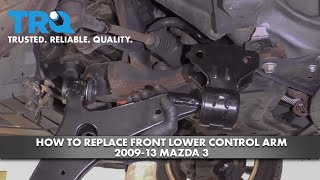
- Lower Ball Joint: Inspect the ball joint boot for tears and check for any play before reinstalling it 🎬 Watch: How to replace the front lower control arm and ball joint. in the new knuckle.
- Outer Tie Rod End: Check for play and torn boots.
- CV Axle: Inspect the axle boots for cracks or leaking grease. A clicking noise when turning is a classic sign of a failing CV joint.
- Strut Assembly: Check the strut for any signs of fluid leaks.
Key Torque Specifications & Installation Notes
Using a torque wrench is critical for safety and to prevent damage to the new parts. Overtightening the axle nut, for example, can destroy a new wheel bearing. Always use a new axle nut.
| Component | Torque Spec | Source |
|---|---|---|
| Front Strut-to-Knuckle Bolts | 63-80 ft-lbs (85-108 Nm) | |
| Lower Control Arm Pinch Bolt (Ball Joint) | ~40 ft-lbs | |
| Axle Nut | 174-231 ft-lbs (236-314 Nm) | |
| Wheel Lug Nuts | 65-87 ft-lbs (88-118 Nm) |
Pro Tip: Do not use an impact wrench to tighten the axle nut. Doing so can cause immediate damage to the wheel bearing. Have a helper press the brakes while you torque the axle nut with the vehicle on the ground.
Frequently Asked Questions (FAQ)
Can I replace just the wheel bearing instead of the whole knuckle?
Yes, but it requires a hydraulic shop press to remove the old bearing and press in the new one. For many DIY mechanics, buying a "loaded" knuckle with a pre-installed bearing is a much faster and easier repair that requires no special tools.
Do I need an alignment after replacing a steering knuckle?
Yes, absolutely. Replacing the steering knuckle will always change the wheel alignment angles (camber and toe). Skipping the alignment will cause poor handling and will quickly destroy your tires.
Does this part fit both the sedan and hatchback Mazda 3?
Yes, the front steering knuckles are the same for the Sedan, Hatchback, and even the high-performance Mazdaspeed3 models within the 2010-2013 year range. They are also compatible with all engine sizes (2.0L, 2.5L, and 2.3L Turbo).
What is the difference between a steering knuckle and a spindle?
The terms are often used interchangeably, but they are slightly different. A spindle is a shaft that the wheel hub and bearings ride on. A knuckle is a component that contains the spindle (on rear-wheel-drive cars) or has a hole for the CV axle to pass through (on front-wheel-drive cars like the Mazda 3). For this vehicle, "steering knuckle" is the more accurate term.
Helpful Videos
Technical Specifications
OEM Part Numbers: BBM2-33-021 BBM2-33-021A BBM2-33-021B BBM2-33-021C BBM2-33-031 BBM2-33-031A BBM2-33-031B BBM2-33-031C
Material: Cast Iron or Forged Steel. Fits all 2010-2013 Mazda 3 models (Sedan, Hatchback, Mazdaspeed3) and all engines (2.0L, 2.5L, 2.3L Turbo).
We Have This Part in Stock

The information in this article is provided for general reference and educational purposes only. Vehicle specifications, procedures, and part compatibility can vary by production date, trim level, and region. Always consult your vehicle's factory service manual and verify part numbers before purchasing or performing repairs. Safety-critical components such as airbags, seat belts, and braking systems should be installed by a qualified professional.
- Mazda MAZDA3:
- 🎬 Helpful Videos
- 🛍️ Shop This Part
- Symptoms of a Bad 2010-2013 Mazda 3 Steering Knuckle
- Known Issues, Recalls, and TSBs
- Buying a Used 2010-2013 Mazda 3 Steering Knuckle
- Cost to Replace a 2010-2013 Mazda 3 Steering Knuckle
- Related Parts to Inspect During Replacement
- Key Torque Specifications & Installation Notes
- Frequently Asked Questions (FAQ)
- 🎟️ Get 5% Off