

2014-2025 Mazda3 & CX-30 Steering Knuckle: Decoding FWD, AWD, and Turbo Differences
This guide clarifies the critical differences between steering knuckles for the Mazda3 and CX-30, helping you identify symptoms of failure and choose the correct used part for your specific model.
- Compatibility is critical and complex; knuckles differ for FWD vs. AWD and Turbo vs. Non-Turbo models. Always verify the part number or VIN.
- The primary cause of failure is impact from curbs or potholes; it is not a standard wear-and-tear part.
- The most common symptom of a bent knuckle is a persistent pull to one side and uneven tire wear that cannot be fixed by a wheel alignment.
- A full four-wheel alignment is absolutely mandatory after replacement to prevent unsafe handling and rapid tire damage.
Symptoms of a Bad Steering Knuckle
A steering knuckle doesn't have internal moving parts that wear out, so failure is almost always caused by an impact, such as hitting a deep pothole, sliding into a curb, or a collision. The symptoms are often mistaken for other suspension issues, making diagnosis tricky.
1. Persistent Alignment Problems & Uneven Tire Wear
This is the most common sign of a bent steering knuckle. If you've had multiple wheel alignments but the vehicle continues to pull to one side, or if one specific tire wears out rapidly on its inner or outer edge, a bent knuckle is a likely cause. A standard alignment can only adjust the "toe" angle; it cannot compensate for a bent knuckle that has permanently altered the camber or caster angles.
2. Steering Wheel is Off-Center or Vibrates
After an impact, you might notice your steering wheel is crooked even when driving straight. A bent knuckle can also cause the wheel to wobble slightly, creating a vibration that you can feel through the steering wheel, especially at higher speeds.
3. Clunking, Popping, or Grinding Noises
While the knuckle itself is a solid piece of metal and doesn't make noise, a damaged one puts excessive stress on connected parts. A clunking or popping sound when turning or going over bumps could indicate that the extra strain has worn out a ball joint. A grinding or humming noise that changes with speed often points to a failing wheel bearing, which is pressed directly into the knuckle and can be damaged along with it.
Variant Differences: Critical for Compatibility
It is absolutely essential to get the correct steering knuckle for your specific vehicle configuration. The Mazda3 and CX-30 use different knuckles depending on the model year, drivetrain (FWD vs. AWD), and engine (Turbo vs. Non-Turbo). Using the wrong part will result in improper suspension geometry, inability to align the vehicle, and unsafe driving conditions.
Warning: The initial data provided for this article contained conflicting information regarding turbo and non-turbo compatibility. Research confirms there are distinct parts for different drivetrains. Always verify the part number or provide your vehicle's VIN to the seller.
| Vehicle/Years | Engine/Drivetrain | Position | Known OEM Part Numbers |
|---|---|---|---|
| 2014-2018 MAZDA3 | 2.0L / 2.5L (Non-Turbo) | Front Left | B45A-33-031, BJS7-33-031 |
| 2019-2025 MAZDA3 & 2020-2025 CX-30 | Non-Turbo (FWD/AWD) | Front Left | BDTT-33-03Y, BCKA-33-031, BCKE-33-031, BDTS-33-03Y |
| 2019-2025 MAZDA3 & 2020-2025 CX-30 | Non-Turbo (FWD/AWD) | Front Right | BDTT-33-02Y, BDTS-33-02Y |
| 2021-2025 MAZDA3 & 2021-2025 CX-30 | 2.5L Turbo (AWD) | Front Right | BDHW-33-021, BDNF-33-021 |
Note: This table is based on available data and may not be exhaustive. Part numbers can be superseded over time. Always confirm fitment with the seller using your VIN.
Buying a Used Steering Knuckle
A used OEM steering knuckle is an excellent, cost-effective alternative to a new part, especially since this component is not a typical wear item. Because they are over-engineered for durability, a recycled knuckle from an undamaged vehicle offers the same performance and fit as a new one.
Inspection Checklist:
- Check for Cracks: Carefully inspect the entire part for any hairline cracks, especially around the mounting points for the strut, caliper, and ball joint, as well as the bore where the wheel bearing sits.
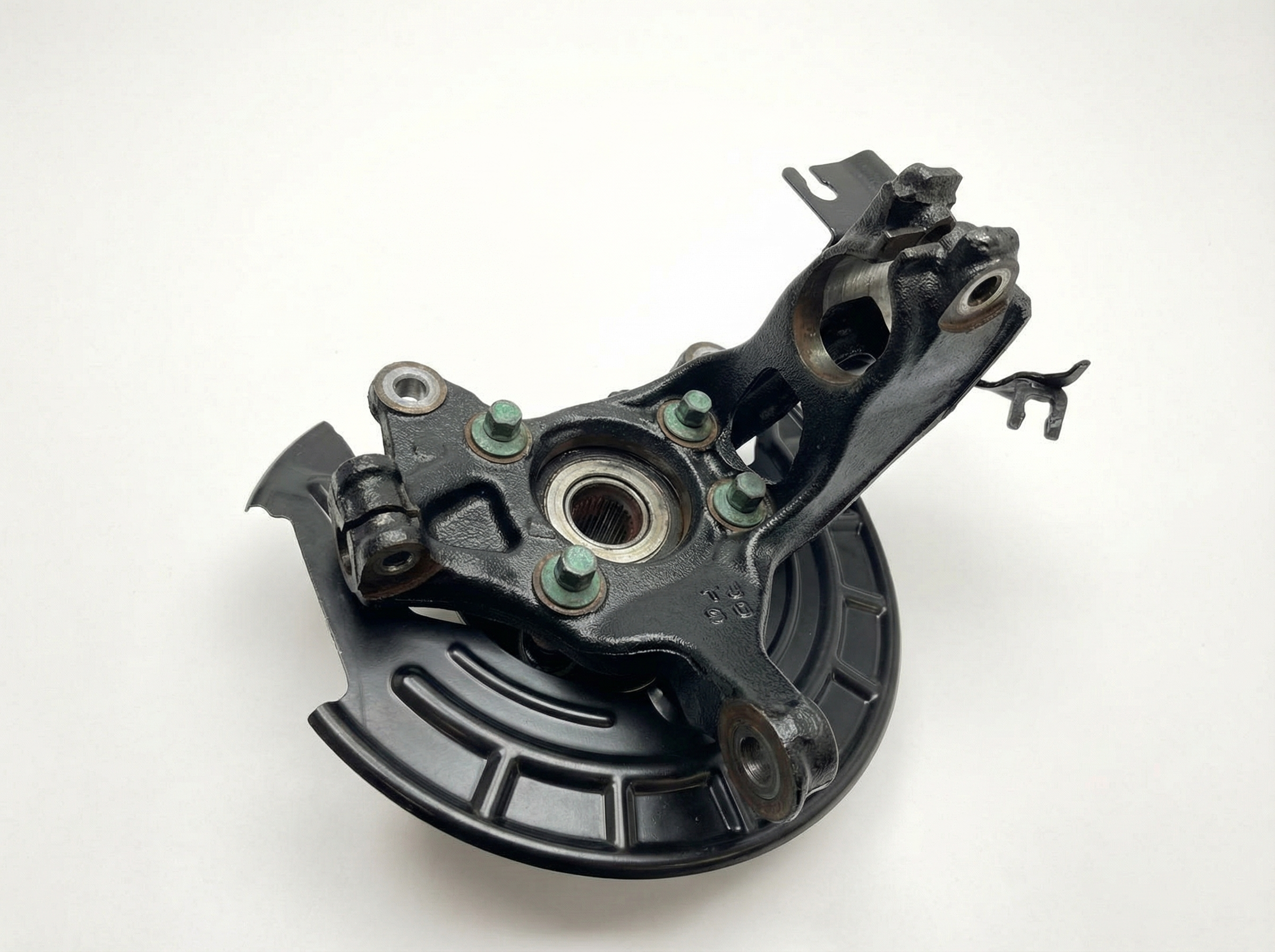
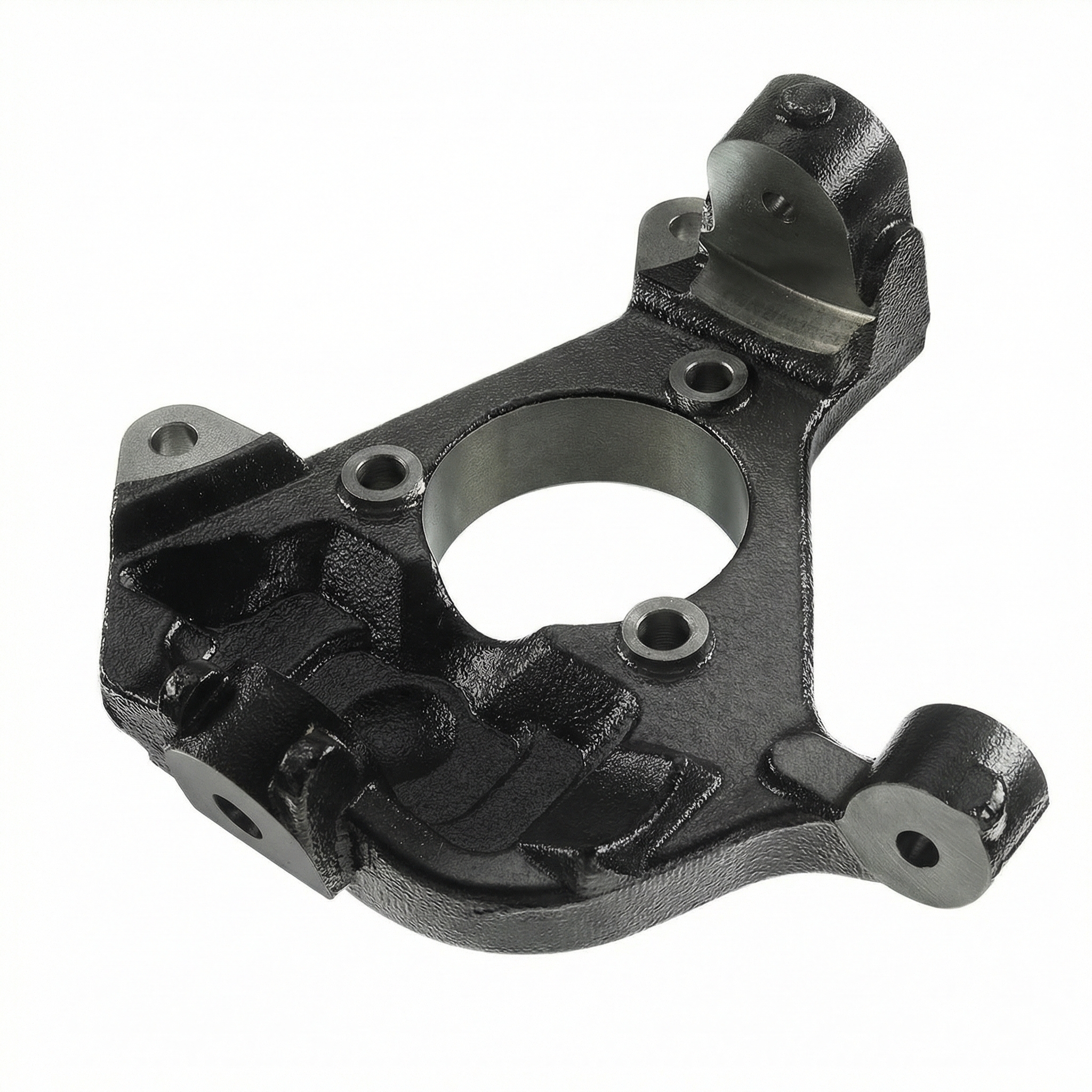
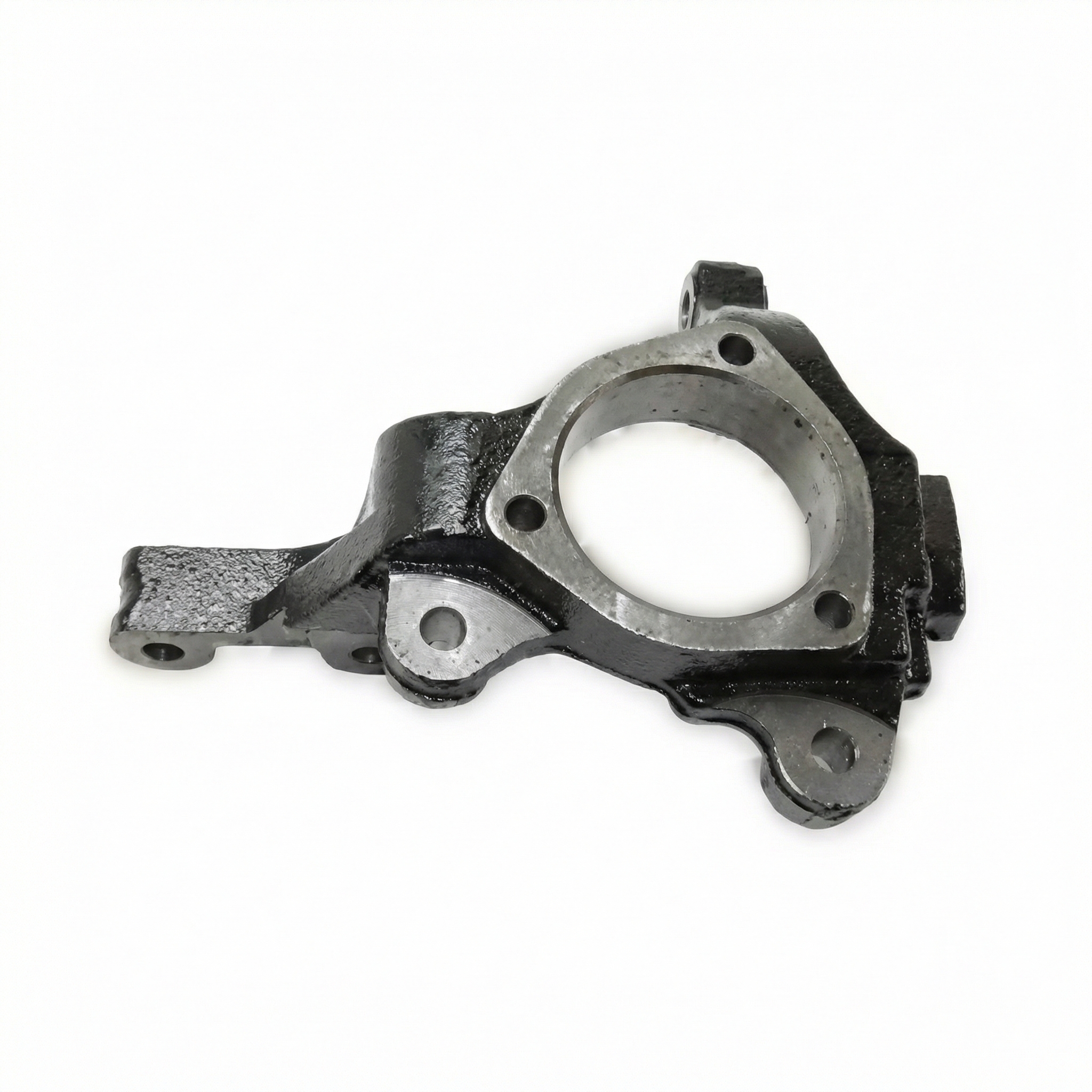
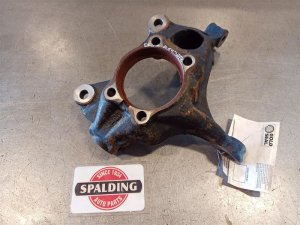
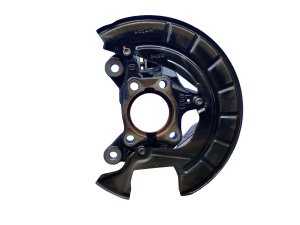
- Look for Bends or Warping: While a slight bend can be invisible to the naked eye, obvious signs of damage from an impact are a major red flag. Compare the part to photos online to ensure all mounting "ears" and surfaces are straight.
- Examine Mounting Surfaces: Ensure the surfaces where the brake caliper and strut bolt on are flat and free of damage. Any corrosion or damage here can cause issues.
- Wheel Bearing Condition: Many used knuckles come with the wheel hub and bearing still installed. Consider this a bonus, but it's highly recommended to press out the old bearing and install a new one. You don't know the history or mileage of the old bearing, and replacing it now saves significant labor later.
- Verify Part Numbers: As noted above, compatibility is key. Double-check that the part number matches your vehicle's requirements for FWD/AWD and engine type. When in doubt, provide your VIN.
Replacement Procedure Overview & Torque Specs
Replacing a steering knuckle is a labor-intensive job best suited for experienced DIY mechanics or a professional shop. It requires disassembly of the entire corner suspension.
Pro Tip: It is highly recommended to replace the wheel bearing, axle nut, and lower ball joint at the same time as the steering knuckle. These related parts are often stressed during a knuckle failure or must be removed for the replacement anyway.
Key Steps:
- Safely lift and support the vehicle and remove the wheel.
- Remove the brake caliper and rotor, and hang the caliper securely to avoid straining the brake hose.
- Remove the large axle nut from the center of the wheel hub.
- Disconnect the tie rod end and the ABS wheel speed sensor from the knuckle.
- Loosen and remove the pinch bolt that secures the lower ball joint to the knuckle. This bolt is often seized and can be difficult to remove.
- Unbolt the two large bolts connecting the strut assembly to the top of the steering knuckle.
- Separate the knuckle from the lower ball joint and slide it off the axle shaft.
Important Torque Specifications:
Using a torque wrench is mandatory for safety. While specs can vary slightly by year and model, these are common values. Always consult a service manual for your specific vehicle.
| Component | Torque Spec (ft-lbs) | Torque Spec (Nm) | Notes |
|---|---|---|---|
| Axle Nut | 174 - 202 ft-lbs | 236 - 274 Nm | Use a new nut. Some sources note a lower torque plus an angle. Verify your specific procedure. |
| Strut-to-Knuckle Bolts | 63 - 80 ft-lbs | 85 - 108 Nm | |
| Lower Control Arm Ball Joint Pinch Bolt | 33 - 40 ft-lbs | 45 - 55 Nm | Consult service manual. |
| Brake Caliper Bracket Bolts | 58 - 75 ft-lbs | 78 - 102 Nm | Consult service manual. |
| Tie Rod End Nut | 27 - 37 ft-lbs | 37 - 50 Nm | Consult service manual. |
Warning: A full four-wheel alignment is absolutely mandatory after replacing a steering knuckle. The knuckle directly controls the wheel's angles. Skipping the alignment will result in poor handling, unsafe driving, and rapid tire destruction.
Cost of Replacement
The cost to replace a steering knuckle can vary significantly based on your vehicle model, location, and whether you choose new or used parts.
| Part Type | Estimated Cost | Notes |
|---|---|---|
| New OEM | $225 - $520 | Price for the knuckle only. |
| New Aftermarket | $100 - $250 | Quality and fit can vary. Available from retailers like AutoZone and Advance Auto Parts. |
| Used OEM | $100 - $225 | Often includes the hub and bearing, offering good value. |
| Shop Labor | $190 - $340 | Labor can take 2-4 hours. Costs can increase if other parts like ball joints or bearings are replaced simultaneously. |
| Total Estimated Cost (Professional) | $390 - $800+ | Includes part, labor, and a mandatory alignment. |
Frequently Asked Questions
Do I have to get an alignment after replacing a steering knuckle?
Yes, without exception. A four-wheel alignment is required to ensure the vehicle's suspension geometry is correct. Failure to do so will lead to severe handling problems and destroy your tires.
Can I reuse my old wheel bearing?
It is strongly advised not to. The process of removing the hub and pressing the bearing out of the old knuckle can damage it. Since the knuckle is already off the car, replacing the bearing with a new one is cheap insurance against having to do the job all over again in the near future.
What's the difference between a steering knuckle and a spindle?
The terms are often used interchangeably. Technically, a spindle is the shaft that the wheel bearing rides on, which is an integral part of the steering knuckle assembly on these Mazda models.
Are the left and right steering knuckles the same?
No. They are mirror images of each other and are not interchangeable. Part numbers will be different for the driver (left) and passenger (right) sides.
Helpful Videos
Technical Specifications
OEM Part Numbers: B45A-33-031 BJS7-33-031 BDTT-33-03Y BCKA-33-031 BCKE-33-031 BDTS-33-03Y BDTT-33-02Y BDTS-33-02Y BDHW-33-021 BDNF-33-021
Material: Typically cast iron or cast aluminum. The component is specific to the driver (left) or passenger (right) side and varies based on drivetrain (FWD/AWD) and engine options.
We Have This Part in Stock

The information in this article is provided for general reference and educational purposes only. Vehicle specifications, procedures, and part compatibility can vary by production date, trim level, and region. Always consult your vehicle's factory service manual and verify part numbers before purchasing or performing repairs. Safety-critical components such as airbags, seat belts, and braking systems should be installed by a qualified professional.
- Mazda MAZDA3:
- MAZDA CX-30:
- 🎬 Helpful Videos
- 🛍️ Shop This Part
- Symptoms of a Bad Steering Knuckle
- 1. Persistent Alignment Problems & Uneven Tire Wear
- 2. Steering Wheel is Off-Center or Vibrates
- 3. Clunking, Popping, or Grinding Noises
- Variant Differences: Critical for Compatibility
- Buying a Used Steering Knuckle
- Inspection Checklist:
- Replacement Procedure Overview & Torque Specs
- Key Steps:
- Important Torque Specifications:
- Cost of Replacement
- Frequently Asked Questions
- 🎟️ Get 5% Off