

2016-2024 Camaro Rear Knuckle: Diagnosing Clunks and LS/LT vs. SS/ZL1 Fitment
This guide covers the common failure symptoms, critical compatibility differences, and inspection points for the rear suspension knuckle on 2016-2024 Chevrolet Camaros.
- The most critical factor is compatibility: LS/LT knuckles are different from LT1/SS/ZL1 knuckles due to different brake caliper mounts.
- Clunking or popping from the rear is a primary symptom, often caused by failed bushings within the knuckle, as acknowledged in GM TSB 18-NA-136.
- A bent knuckle (from a curb or pothole impact) will cause alignment issues, vehicle pulling, and rapid, uneven tire wear.
- Replacement is a complex job (4/5 difficulty) that requires a mandatory four-wheel alignment afterward.
Symptoms of a Bad Rear Suspension Knuckle
Failure of the rear suspension knuckle on a 2016-2024 Camaro can manifest in several ways, ranging from annoying noises to serious safety concerns. While the knuckle itself is a durable, solid part, its integrated bushings can wear out, and the knuckle itself can be damaged from impacts.
1. Clunking, Popping, or Creaking Noises
This is the most common symptom reported by owners. You may hear a distinct clunk, pop, or creaking sound from the rear of the car, especially at lower speeds when going over bumps, turning, or during transitions between accelerating and braking. These sounds often point to worn-out bushings within the knuckle where the control arms attach. As the rubber deteriorates, it allows for metal-on-metal contact, creating noise. While these sounds are often attributed to the knuckle, it's also wise to inspect sway bar links and differential mounts, which can cause similar noises.
2. Vehicle Pulling or Poor Alignment
If the knuckle is bent, even slightly, from hitting a curb or a major pothole, it can throw off the rear wheel alignment. You might notice your car pulls to one side, or that the steering wheel is no longer centered while driving straight. A technician may find that the vehicle cannot be properly aligned because the camber or toe angles are out of specification and non-adjustable. This will also lead to rapid and uneven tire wear.
3. Uneven or Rapid Tire Wear
A direct result of poor alignment from a bent knuckle is accelerated tire wear. Typically, you will see excessive wear on either the inner or outer edge of one of the rear tires. If you notice one tire wearing significantly faster than the others, a damaged knuckle is a possible cause that should be investigated immediately.
4. Loose or Unstable Rear End
In cases of severely worn bushings or a significant bend in the knuckle, the rear of the car may feel loose, unstable, or disconnected, especially during cornering. This indicates excessive movement in the suspension assembly, which is a serious safety concern. A complete failure of the knuckle could lead to a loss of control of the vehicle.
Compatibility Warning: The single most important factor when purchasing this part is ensuring it matches your Camaro's specific trim level. The knuckles for base LS/LT models are different from those for LT1, SS, and ZL1 models. The mounting points for the brake calipers are not the same. Installing the wrong knuckle will result in your brake system not fitting.
Known Issues, TSBs, and Recalls
While there are no major recalls specifically for the knuckle on this generation of Camaro, General Motors has issued a Technical Service Bulletin (TSB) related to rear suspension noises that involves this part.
TSB 18-NA-136: Popping/Clunking Noise from Rear Suspension
Some owners may experience a popping or clunking noise when turning or braking. According to GM, one of the potential causes is the "rear knuckle making solid contact, resulting in early failures with the bushings." The prescribed fix involves first attempting to solve the issue by installing washers on the rear shock absorbers. If the noise persists, the TSB instructs technicians to replace the entire rear knuckle. This bulletin confirms that worn knuckle bushings are a known source of rear-end noise on these vehicles.
Buying a Used 2016-2024 Camaro Rear Knuckle
A used OEM knuckle is an excellent alternative to an expensive new part, often providing the same fit and durability at a much lower cost. However, careful inspection is key to getting a good part.
What to Check Before You Buy:
- Verify Trim Level Compatibility: Double-check the part number or the donor vehicle's trim. Part number 84755514 (Right) and 84755513 (Left) are for LS and LT models. Part numbers 84755518 (Right) and 84755517 (Left) are for SS, LT1, and ZL1 models. Do not mix them up.
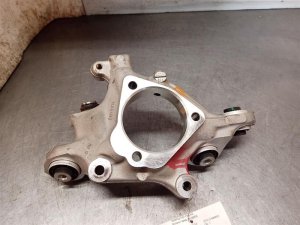
- Inspect for Cracks: Carefully examine the entire knuckle, paying close attention to the area where the wheel bearing presses in (the bore) and the mounting points for the control arms. Look for any hairline cracks or signs of stress.
- Check the Wheel Bearing Bore: The large, machined hole where the wheel hub/bearing assembly sits must be perfectly round and smooth. Look for any deep scratches, scoring, or distortion that could indicate a bearing failed violently or was installed improperly.
- Look for Signs of Impact: Check for scraped or gouged metal, which could indicate the donor car hit a curb. An impact strong enough to leave heavy marks could have bent the knuckle, even if it's not visible to the naked eye.
- Examine the Bushings: Look at the condition of the rubber bushings that are pressed into the knuckle. While some surface cracking on older, high-mileage parts is normal, they should not be torn, separated from the metal sleeve, or completely missing. A new knuckle from GM includes new bushings.
- Threaded Holes: Ensure all threaded holes, especially for the brake caliper and backing plate, are clean and not stripped or damaged.
Pro Tip: For this part, a used OEM knuckle is almost always a better choice than a new, cheap aftermarket alternative. The OEM part is made from a specific grade of cast aluminum designed and tested by GM for strength and safety. The precise machining of the bearing bore and suspension mounting points on an OEM part ensures proper fitment and alignment.
Replacement Difficulty and Cost
Replacing the rear suspension knuckle is a significant job that requires substantial disassembly of the rear suspension.
- Difficulty: 4 out of 5
- Procedure: The process involves removing the wheel, brake caliper and rotor, disconnecting the axle nut and pushing the axle shaft out of the hub, and then unbolting the multiple control arms that attach to the knuckle.
- Special Tools: A heavy-duty torque wrench, a ball joint separator, and potentially a slide hammer or hub puller may be required.
- Final Torque: Crucially, the bolts for the control arms must be given their final torque with the vehicle's full weight on the suspension (at ride height) to prevent premature bushing failure. This can be difficult without a drive-on lift.
- Post-Installation: A four-wheel alignment is mandatory after replacing a knuckle to ensure safety and prevent tire damage.
Cost Breakdown
Prices can vary based on location and supplier, but this provides a general estimate:
| Part Type | Estimated Cost |
|---|---|
| New OEM (GM/ACDelco) | $140 - $230 |
| New Aftermarket (Dorman) | $130 - $200 |
| Used OEM | $75 - $150 |
| Shop Labor | $250 - $450 per side |
Frequently Asked Questions (FAQ)
Can I replace just the bushings instead of the whole knuckle?
GM does not sell the individual bushings for the rear knuckle separately. To get new OEM bushings, you must purchase the entire knuckle assembly. While some aftermarket companies offer performance-oriented spherical or monoball bearing kits, these are typically for racing applications and can increase noise and vibration.
What's the difference between the left and right side knuckle?
The left (driver side) and right (passenger side) knuckles are mirror images of each other and are not interchangeable. They have unique part numbers. For example, for the LS/LT models, the left is 84755513 and the right is 84755514.
Do I need to replace my wheel bearing at the same time?
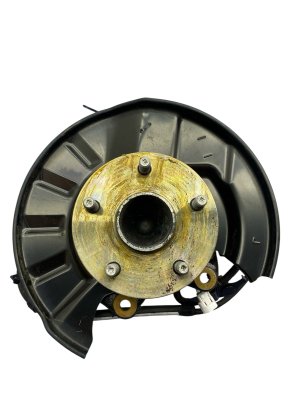
It is highly recommended. The wheel bearing/hub assembly must be removed to replace the knuckle. Given the labor involved, installing a new hub assembly at the same time is cost-effective and ensures you won't have to do the job again if the old bearing fails soon after.
Will a bad knuckle cause a Check Engine Light or other warning lights?
A bad knuckle itself will not trigger a Check Engine Light. However, if the knuckle damage also affects the wheel speed sensor or its wiring, it can cause warning lights for the ABS (Anti-lock Braking System) and Traction Control systems.
Technical Specifications
OEM Part Numbers: 84755514 (Right, LS/LT) 84755513 (Left, LS/LT) 23206824 (Replaced by 84755514) 23206823 (Replaced by 84755513) 84755518 (Right, SS/LT1/ZL1) 84755517 (Left, SS/LT1/ZL1) 84258572 (Replaced by 84755518) 84258571 (Replaced by 84755517)
Material: Cast Aluminum. Includes pre-installed control arm bushings.
We Have This Part in Stock

The information in this article is provided for general reference and educational purposes only. Vehicle specifications, procedures, and part compatibility can vary by production date, trim level, and region. Always consult your vehicle's factory service manual and verify part numbers before purchasing or performing repairs. Safety-critical components such as airbags, seat belts, and braking systems should be installed by a qualified professional.
- Chevrolet Camaro:
- 🛍️ Shop This Part
- Symptoms of a Bad Rear Suspension Knuckle
- 1. Clunking, Popping, or Creaking Noises
- 2. Vehicle Pulling or Poor Alignment
- 3. Uneven or Rapid Tire Wear
- 4. Loose or Unstable Rear End
- Known Issues, TSBs, and Recalls
- TSB 18-NA-136: Popping/Clunking Noise from Rear Suspension
- Buying a Used 2016-2024 Camaro Rear Knuckle
- What to Check Before You Buy:
- Replacement Difficulty and Cost
- Cost Breakdown
- Frequently Asked Questions (FAQ)
- 🎟️ Get 5% Off