

2011-2020 Hyundai Elantra Sun Visor: Why It Sags and How to Choose the Right Replacement
This guide covers the common drooping and electrical issues with the 2011-2020 Elantra sun visor and details the critical differences between models with and without sunroofs.
- The most common failure is the internal pivot causing the visor to sag, which can be a safety hazard by obstructing vision.
- Compatibility is critical. You must match driver/passenger side, sunroof/no sunroof, illuminated/non-illuminated mirror, and extendable/fixed features.
- Hyundai issued a service campaign (TN1) for some 2012-2013 models for this issue, but not a full recall for all years.
- Replacement is a very simple DIY job that requires only a screwdriver and about 15 minutes.
Known Issues and Service Campaigns

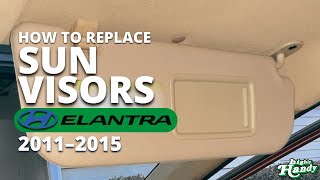
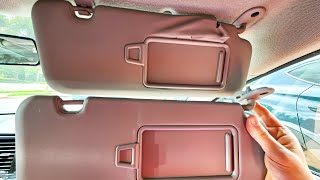
The most prevalent issue with 2011-2020 Hyundai Elantra sun visors is a failure of the internal pivot mechanism. This causes the visor to sag or droop, refusing to stay in the stowed position against the headliner. 🎬 Watch how to swap out a broken, sagging Elantra visor. This is more than an annoyance; a dangling sun visor can obstruct the driver's view and become a significant safety hazard. The failure is often due to plastic components inside the hinge becoming brittle and breaking over time, especially in climates with significant temperature changes.
In response to widespread issues, Hyundai issued a Technical Service Bulletin (TSB) and a service campaign (TN1) for some 2012-2013 models, describing the procedure to replace faulty sun visors. While not a formal safety recall for all years, this campaign acknowledged the defect in certain production runs. Owners of affected vehicles were instructed to have dealers replace the visors.
Symptoms of a Failing Sun Visor

- Sagging or Drooping: The most common symptom is the visor's inability to stay flush against the headliner, constantly falling into the driver's line of sight.
- Vanity Light Failure: The light around the vanity mirror may flicker or fail to turn on when the cover is opened. This points to a problem with the switch or the electrical connection within the visor.
- Broken Mirror or Cover: The vanity mirror or its protective cover can crack or break from use or impact.
- Internal Rattle: A rattling noise from within the visor can indicate that internal plastic pieces have broken loose.
- Stiffness or Seizure: In some cases, the pivot mechanism can seize, making it very difficult to move the visor at all.
Buying a Used 2011-2020 Elantra Sun Visor: A Step-by-Step Guide

Choosing the correct used sun visor is critical, as there are several variations. An incorrect visor may not fit, or its features may not work with your vehicle's wiring. Follow these steps to ensure compatibility.
Step 1: Identify Your Elantra's Generation
This guide covers two generations of the Elantra, which have different interior designs and parts:
- 5th Generation (MD/UD): 2011, 2012, 2013, 2014, 2015, 2016
- 6th Generation (AD): 2017, 2018, 2019, 2020
While some parts may look similar, always confirm the part is listed for your specific year range.
Step 2: Determine Required Features (The Four Key Questions)
You must match your original visor's features exactly. Ask these four questions:
- Driver or Passenger Side? This is straightforward, but essential. They are not interchangeable.
- Does your car have a sunroof? Visors for cars with and without sunroofs have different shapes and mounting points to accommodate the altered headliner. This is a common compatibility mistake.
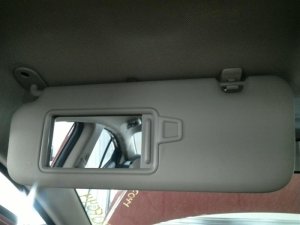
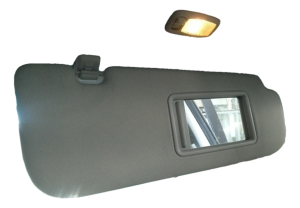
- Is the vanity mirror illuminated? If your original visor had a light, the replacement must also have one to connect to the existing wiring.
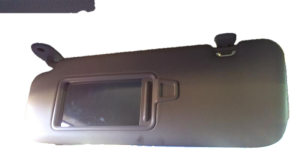
- Does it have a slide-out extension? Some higher trim levels feature a visor that can be pulled out along the rod for more coverage. This feature must be matched.
Step 3: Match Your Interior Color
The most common interior colors for the Elantra are gray and beige. To confirm your car's specific interior color, check the vehicle identification sticker located on the driver's side door jamb. This sticker contains vehicle information, including a trim code that specifies the interior color.
Step 4: Physical Inspection Checklist for a Used Visor
When inspecting a used sun visor, check the following:
- Hinge Stiffness: The pivot point should be firm and hold the visor in place without any drooping.
- No Cracks: Inspect the plastic around the mounting point for any stress cracks.
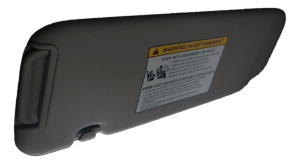
- Fabric Condition: Ensure the fabric is not torn, stained, or separating from the body of the visor.
- Mirror and Light: Check that the mirror cover opens and closes properly and that the mirror itself is not cracked. If possible, test the vanity light.
Pro Tip: Given the high failure rate of the original part, buying a used OEM visor is often a better value than a new one, but be sure to verify its condition. Aftermarket visors are available, but colors and textures may not be an exact match to the original interior.
Sun Visor Replacement Guide (DIY)
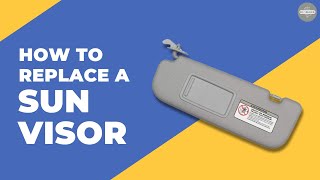
Replacing the sun visor on a 2011-2020 Elantra is a simple DIY task that typically takes less than 15 minutes.
- Tools Needed: Phillips head screwdriver or a Torx screwdriver. An Allen key can sometimes be used if a Torx driver is unavailable.
- Remove the Old Visor: Pry off the small plastic cover over the screw(s) at the visor's base near the headliner. Loosen and remove the screw(s).
- Disconnect Wiring: If the visor is illuminated, carefully pull it down to expose the electrical connector. Depress the tab on the connector and pull it apart.
- Unhook the Visor: The visor has a hook on the side opposite the screws that fits into the headliner. Once the screws are out and wiring is disconnected, unhook it and remove it from the vehicle.
- Install the New Visor: Connect the electrical plug, insert the hook into its slot, align the screw holes, and tighten the screw(s). Do not overtighten. Snap the plastic cover back into place. 🎬 See this quick video for a simple DIY replacement walkthrough.
Cost Comparison
| Part Type | Estimated Price Range |
|---|---|
| New OEM | $150 - $290 |
| New Aftermarket | $20 - $60 |
| Used OEM | $35 - $110 |
| Shop Labor | $40 - $80 |
Frequently Asked Questions (FAQ)
Why did my original Hyundai Elantra sun visor fail?
The primary cause of failure is the internal plastic pivot mechanism, which can wear out or become brittle from age and temperature changes, losing its ability to hold the visor in place.
Can I install a visor with features my old one didn't have, like a light or extension?
It is not recommended. A visor with an illuminated mirror requires a wiring harness that a base model car will not have. Similarly, visors with different features may have slightly different mounting points, especially between sunroof and non-sunroof models.
Is it difficult to replace the sun visor myself?
No, this is considered a very easy repair. It typically involves removing one or two screws and disconnecting a single electrical plug. Most owners with basic hand tools can complete the job in under 15 minutes.
Is there a recall for the sagging sun visor?
While there isn't a universal, formal safety recall for all 2011-2020 models, Hyundai did issue a service campaign (TN1) and a TSB for certain 2012-2013 Elantras to address this specific issue. You can check with a Hyundai dealer or on the NHTSA website with your VIN to see if your specific vehicle is covered under any campaign.
Helpful Videos
Technical Specifications
OEM Part Numbers: 85202-3X090-TX 85202-3X090-VYF 85210-3X000TX 85210-F21 85210-F2130-XUG 85210-F2150-TTX 85210-F3170-XUG 85210-F3370-XUG 85220-3X000TX 85220-3X090-TX 85220-3X270-TX 85220-F2100-TTX 85210-3X260TX 85220-3X290TX 85210-3X060TX 85220-3X090TX 85210-3X040TX 85220-3X070TX
Varies by vehicle options (sunroof, vanity light, extension).
We Have This Part in Stock
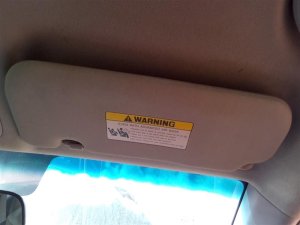

The information in this article is provided for general reference and educational purposes only. Vehicle specifications, procedures, and part compatibility can vary by production date, trim level, and region. Always consult your vehicle's factory service manual and verify part numbers before purchasing or performing repairs. Safety-critical components such as airbags, seat belts, and braking systems should be installed by a qualified professional.
- Hyundai Elantra:
- 🎬 Helpful Videos
- 🛍️ Shop This Part
- Known Issues and Service Campaigns
- Symptoms of a Failing Sun Visor
- Buying a Used 2011-2020 Elantra Sun Visor: A Step-by-Step Guide
- Step 1: Identify Your Elantra's Generation
- Step 2: Determine Required Features (The Four Key Questions)
- Step 3: Match Your Interior Color
- Step 4: Physical Inspection Checklist for a Used Visor
- Sun Visor Replacement Guide (DIY)
- Cost Comparison
- Frequently Asked Questions (FAQ)
- 🎟️ Get 5% Off