

Diagnosing Suspension Clunks and Wandering on Your 2017-2025 Alfa Romeo Giulia, Stelvio & Maserati Grecale
A detailed guide to identifying, diagnosing, and replacing a faulty suspension control arm on the Alfa Romeo Giulia, Alfa Romeo Stelvio, and Maserati Grecale.
- The most common symptoms of failure are clunking noises over bumps and a wandering or unstable steering feel.
- Compatibility is complex; part numbers vary based on front/rear, RWD/AWD, and suspension type. Always verify your exact OEM part number before buying.
- A professional wheel alignment is absolutely required immediately after replacing any control arm to ensure safety and prevent tire damage.
- For these vehicles, buying a quality used OEM control arm is often a better value than a new, cheap aftermarket part due to superior materials and precise geometry.
Symptoms of a Failing Control Arm
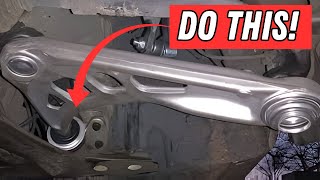
A worn or damaged control arm, or more commonly, its bushings or ball joint, will produce distinct symptoms. Because these vehicles share the same underlying 'Giorgio' platform 🎬 Watch: Common symptoms of a bad control arm to ignore., the signs of failure are very similar across the 2017-2024 Alfa Romeo Giulia, 2018-2025 Alfa Romeo Stelvio, and 2023-2024 Maserati Grecale.
- Clunking or Knocking Noises: This is the most common symptom. You may hear a distinct clunk, knock, or popping sound coming from a corner of the car, especially when driving over bumps, potholes, or uneven pavement. The sound is caused by excessive play in a worn ball joint or bushing, allowing metal components to hit each other.
- Steering Wander: The vehicle may feel unstable and require constant steering corrections to keep it driving in a straight line. This is often described as the car 'wandering' or 'pulling' to one side. This indicates that the worn control arm is no longer holding the wheel in its proper alignment.
- Vibrations: A continuous vibration that can be felt in the steering wheel or the floor of the car, which may change with speed. This is caused by the wheel assembly moving erratically due to a loose connection at the control arm.
- Uneven Tire Wear: Inspect your tires. Excessive wear on the inner or outer edge of the tread is a classic sign of an alignment issue caused by a bad control arm. A failing lower control arm, for example, often leads to wear on the inner edge of the tire.
- Instability During Braking: The vehicle may feel unstable or sway when you apply the brakes. A worn control arm allows the wheel's alignment to shift under braking forces.
Known Issues, TSBs, and Recalls
While the Giorgio platform is known for its sharp handling, suspension components are a known wear item. Searches of the NHTSA database and technical service bulletins did not reveal any official recalls or TSBs specifically for control arm failure on the Alfa Romeo Giulia or Stelvio. Most recalls for these models pertain to other systems like brakes, fuel pumps, or airbags.
However, owners on forums frequently report suspension noises, particularly knocking or clunking sounds, that are traced back to worn control arms 🎬 See this guide on diagnosing Alfa suspension noises and solutions. or other suspension links. For the Maserati Grecale, technical bulletins have been issued for the optional air suspension system, but not the standard steel spring suspension or its control arms.
Compatibility Warning: There are many different control arms for these vehicles. A single part number does NOT fit all models. Compatibility depends on:
- Position: Front or Rear
- Side: Left or Right
- Placement: Upper or Lower
- Drivetrain: Rear-Wheel Drive (RWD) or All-Wheel Drive (AWD)
- Suspension Type: Standard (steel) or Active/Air Suspension
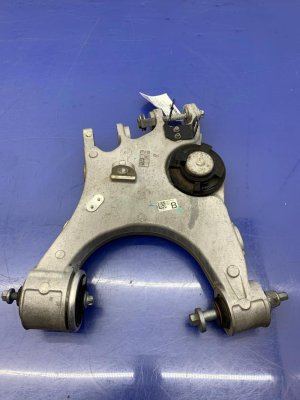
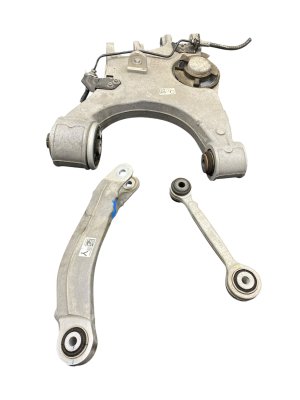
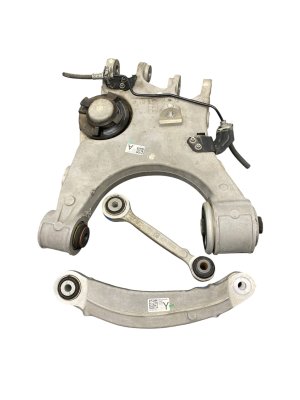
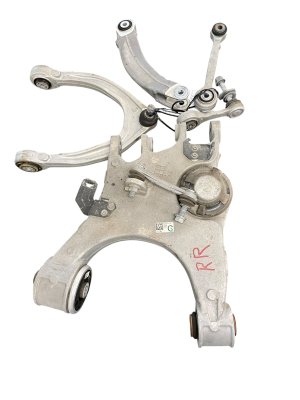
For example, part number 50547026 is a front lower control arm that fits RWD Giulia models (including the Quadrifoglio), but not AWD models. Part number 50549120 is a rear lower control arm. Always verify the exact OEM part number from your specific vehicle before ordering a replacement.
Buying a Used Suspension Control Arm
A used OEM control arm can be an excellent value, offering the same quality and fit as a new dealer part for a fraction of the price. Cheap aftermarket arms can use inferior materials or have slightly incorrect geometry, negatively affecting the precise handling of these vehicles. When inspecting a used part, here’s what to look for:
- Inspect the Bushings: The rubber bushings are the most common failure point. Look for any cracks, tearing, or signs of the rubber perishing or separating from the metal sleeve. There should be no visible gaps or excessive movement.
- Check the Ball Joint: The ball joint should move smoothly but firmly. The rubber boot covering the joint must be intact with no rips or tears. A torn boot allows grease to escape and dirt to enter, causing rapid wear.
- Examine the Arm Itself: Look down the length of the arm to ensure it is perfectly straight. Check for any deep scrapes, cracks, or signs of bending that would indicate it came from a vehicle involved in a collision. Minor surface scrapes are usually cosmetic, but any structural damage is a major red flag.
- Mileage Considerations: Control arms are a wear item. While there's no exact lifespan, failures often begin to appear between 90,000 and 100,000 miles, depending on road conditions. A part from a lower-mileage vehicle is always preferable.
Cost Comparison
Replacing a control arm involves the cost of the part and labor, plus a mandatory wheel alignment afterward.
| Item | Estimated Cost | Notes |
|---|---|---|
| New OEM Part | $400 - $2600+ | Price varies dramatically by specific arm (e.g., front lower vs. rear upper) and trim (Quadrifoglio parts can be much more expensive). |
| New Aftermarket Part | $150 - $350 | Quality can vary. Stick to reputable brands. |
| Used OEM Part | $75 - $200 | Offers the best balance of quality and value. Price depends on condition and availability. |
| Shop Labor | $200 - $500 | Typically 1.5-2.5 hours of labor per side. |
| Wheel Alignment | $100 - $200 | Required after replacement to ensure safety and prevent tire wear. |
Replacement Overview
Replacing a control arm is a job that can be done by an experienced DIY mechanic, but it requires the right tools and safety precautions. If you are not comfortable working on suspension, this job is best left to a professional.
- Difficulty: 4/5 (Advanced)
- Estimated Time: 2-3 hours per side
- Tools Required: Floor jack, jack stands, socket set, breaker bar, torque wrench, ball joint separator (pickle fork).
General Steps:
- Safely lift and support the vehicle on jack stands.
- Remove the wheel.
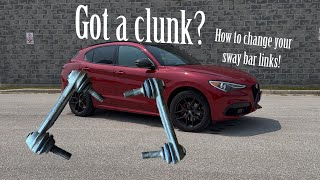
- Disconnect any related components, such as the sway bar end link. 🎬 Watch: How to replace a Stelvio sway bar end link.
- Use a ball joint separator to disconnect the ball joint from the steering knuckle.
- Unbolt the control arm bushings from the vehicle's subframe.
- Install the new arm. Pro Tip: Do not fully tighten the bushing bolts until the vehicle's full weight is back on the suspension. Tightening them with the wheel hanging can preload the bushings and cause them to fail prematurely.
- Torque all bolts to the manufacturer's specifications.
- Reinstall the wheel and lower the vehicle.
- Get a professional wheel alignment immediately. Skipping this step will result in poor handling and rapid tire wear.
Frequently Asked Questions
Do I need a wheel alignment after replacing a control arm?
Yes, absolutely. A wheel alignment is mandatory after replacing a control arm. The new part will slightly change the suspension geometry, and an alignment is required to ensure the vehicle tracks straight, handles correctly, and doesn't destroy its tires.
Can I just replace the bushings or ball joint instead of the whole arm?
On these vehicles, the ball joint is typically integrated into the control arm and cannot be replaced separately. While it is sometimes possible to press out old bushings and install new ones, it requires special tools and the labor cost can often approach or exceed the cost of a complete used control arm assembly. For most people, replacing the entire arm is the more practical and cost-effective solution.
Should I replace control arms in pairs?
It is highly recommended. Suspension components on both sides of the vehicle experience the same wear and tear. If the control arm on one side has failed, the other side is likely not far behind. Replacing them in pairs ensures balanced handling and saves you money on labor and a second wheel alignment down the road.
How do I know if I need an upper or lower control arm?
Diagnosing which specific arm has failed requires a physical inspection. With the vehicle safely supported, a mechanic will check for play in each ball joint and bushing. The location of a clunking noise can also help pinpoint the source. For example, wear on the inner tread of a tire often points to an issue with the lower control arm.
Helpful Videos
Technical Specifications
OEM Part Numbers: 00505491200 50547026 50549120 505491230 68530461AA 21039373 68530508AA 68301327AA 68311327AA
Control arms for these models are typically made of cast aluminum or stamped steel. The specific design (upper/lower, front/rear) and part number must be matched to the vehicle's VIN.
We Have This Part in Stock

The information in this article is provided for general reference and educational purposes only. Vehicle specifications, procedures, and part compatibility can vary by production date, trim level, and region. Always consult your vehicle's factory service manual and verify part numbers before purchasing or performing repairs. Safety-critical components such as airbags, seat belts, and braking systems should be installed by a qualified professional.
- Alfa Romeo Giulia:
- Alfa Romeo Stelvio:
- Maserati Grecale:
- Maserati Stelvio: