

2013-2022 Buick Encore Control Arm: Diagnosing Clunks, Pops, and Steering Wander
This guide covers the common failure symptoms of the front lower control arm on the first-generation Buick Encore, how to inspect a used part, and what's involved in the replacement.
- The most common symptom of failure is a clunking or popping noise from the front suspension when going over bumps.
- A mandatory four-wheel alignment is required immediately after replacing the control arm to prevent severe tire wear.
- This part fits the 2013-2022 Buick Encore, but it is critical to distinguish it from the Buick Encore GX model, which uses different parts.
- When installing, bushing bolts must be tightened to their final torque value only when the suspension is compressed to its normal ride height.
Symptoms of a Failing 2013-2022 Buick Encore Control Arm
When a control arm begins to fail, it's almost always due to the wear and tear of its bushings or ball joint, not the metal arm itself unless it's been damaged in a collision. These symptoms often start subtly but will worsen over time.
Noises: Clunking, Popping, or Squeaking
The most common sign of a bad control arm is a distinct clunking or knocking noise coming from the front suspension. This sound is most noticeable when driving over bumps, potholes, or uneven road surfaces. The noise is caused by worn-out bushings allowing metal-to-metal contact between the control arm and the vehicle's frame. You might also hear popping or snapping sounds when turning the steering wheel, or a squeaking noise when going over bumps or coming to a stop.
Steering and Handling Issues
Worn control arm components can significantly impact steering and stability. You may notice:
- Steering Wander or Pulling: The vehicle may pull to one side, requiring constant steering correction to keep it driving straight. This happens because the worn bushings or ball joint can no longer hold the wheel in the correct alignment.
- Vague or Loose Steering: The steering may feel less responsive or "sloppy." This looseness is due to excessive play in the worn joints.
- Steering Wheel Vibration: Vibrations can be felt through the steering wheel, especially as speed increases. This is often caused by wheel shimmy resulting from the worn components.
Unusual Tire Wear
A failing control arm will throw off the wheel alignment, leading to uneven and premature tire wear. Inspect your front tires for wear on the extreme inner or outer edges, which is a classic sign that the suspension geometry is incorrect due to a worn component.
Compatibility Warning: This control arm fits the 2013-2022 Buick Encore. It does NOT fit the Buick Encore GX model, which was introduced in 2020 and is a different vehicle with different parts.
Known Issues, Recalls, and Technical Service Bulletins (TSBs)
As of early 2026, there are no specific recalls issued by the National Highway Traffic Safety Administration (NHTSA) for the front lower control arms on the 2013-2022 Buick Encore. The existing suspension-related recalls for this vehicle generation pertain to other components like the steering column or rear suspension on different GM models. While numerous TSBs exist for the Buick Encore, none point to a widespread manufacturing defect with the front control arms themselves. Failure is typically considered a result of normal wear and tear, with bushings and ball joints wearing out over time, often after 80,000 to 100,000 miles.
Buying a Used 2013-2022 Encore Control Arm: What to Look For
A used OEM control arm can be an excellent value, offering the original factory quality for significantly less than a new part. However, a careful inspection is crucial.
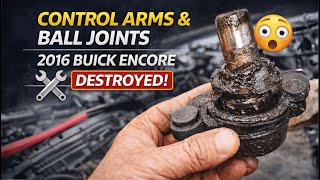
- Inspect the Bushings: The rubber bushings are the most common failure point. Look for any signs of cracking, tearing, splitting, or missing pieces of rubber. The rubber should be firm, not soft, mushy, or saturated with oil. 🎬 See what a completely destroyed suspension and worn bushings look like.
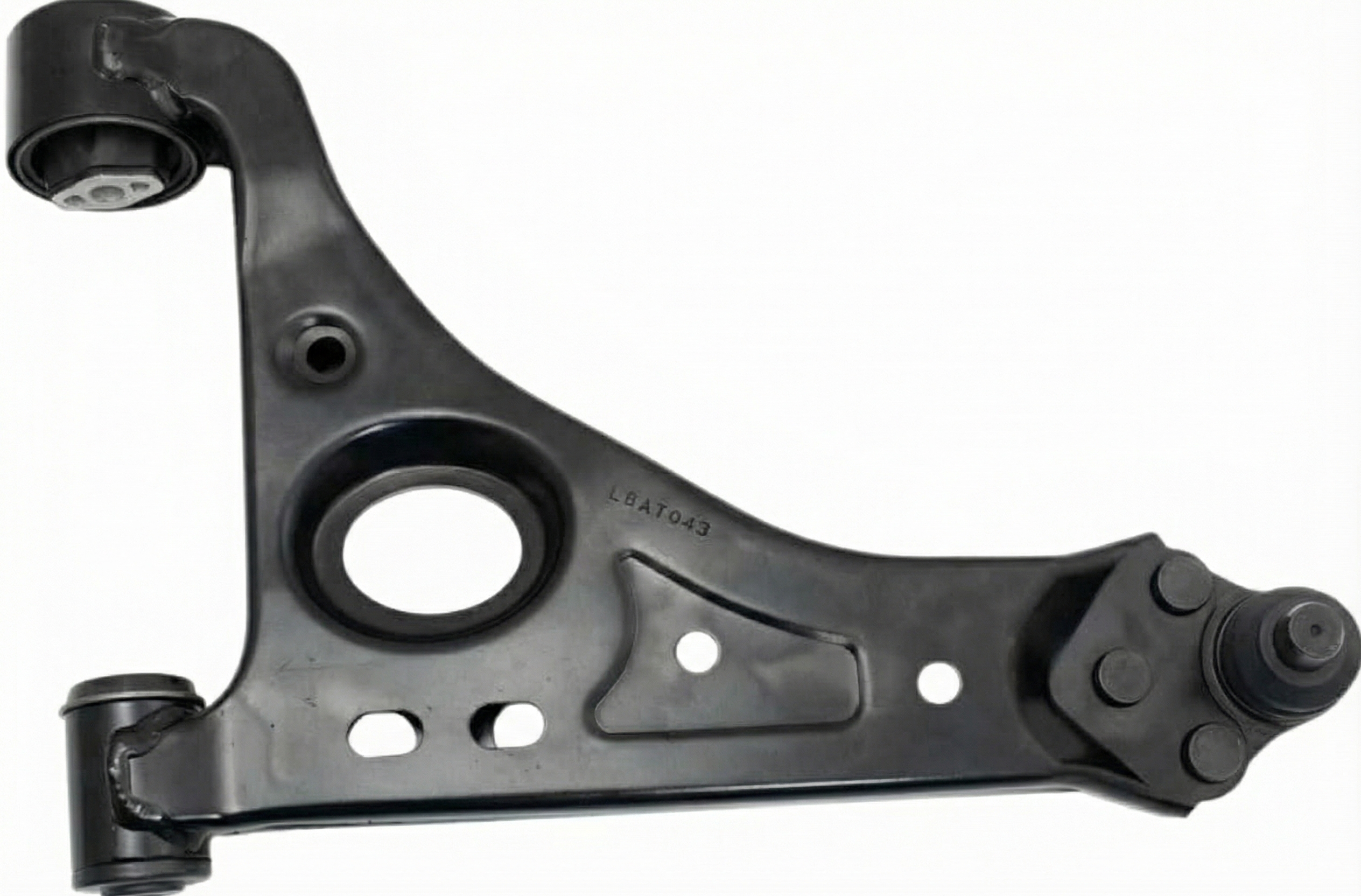
- Check the Ball Joint: The ball joint is integrated into the arm. The rubber boot covering the joint should be intact with no rips or tears. Squeeze the boot to feel for grease inside; if it feels dry, the joint is likely worn. Try to move the ball joint stud by hand; there should be no looseness or excessive play.
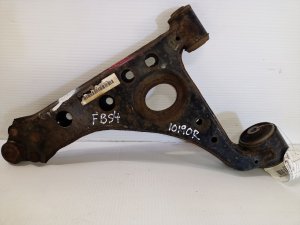
- Examine the Arm for Damage: Look down the length of the control arm to ensure it is straight and not bent, which could indicate it came from a vehicle involved in a collision. Check for heavy corrosion or rust that could compromise the structural integrity of the arm.
- Consider Mileage: While control arms can last the life of the vehicle, the bushings and ball joints typically wear out. A part from a lower-mileage vehicle (under 80,000 miles) is always preferable, as it will have more service life remaining.
Pro Tip: On the Buick Encore, the original ball joint is often attached to the control arm with permanent rivets. If you see bolts instead of rivets, it means the ball joint has been replaced before, and the arm is likely an aftermarket part. For guaranteed fit and quality, a used OEM arm with its original riveted ball joint is often a better choice than a cheap aftermarket assembly.
Cost to Replace a Buick Encore Control Arm
The cost can vary based on your location and whether you perform the labor yourself. An alignment is required after replacement, which adds to the total cost.
| Part/Service | Estimated Cost |
|---|---|
| New OEM (GM Genuine) | $90 - $165 per arm |
| New Aftermarket | $80 - $125 per arm |
| Used OEM | $50 - $90 per arm |
| Shop Labor | $146 - $215 per arm |
| Wheel Alignment | $100 - $150 |
| Total Professional Job (Used Part) | $296 - $455 per side |
| Total Professional Job (New OEM Part) | $336 - $530 per side |
Installation Tips and Torque Specs
Replacing the control arm is a feasible DIY project for someone with mechanical experience and the right tools. The process involves lifting the vehicle, removing the wheel, and separating the ball joint from the steering knuckle.
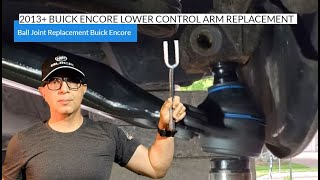
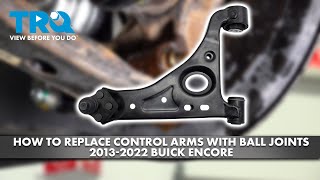
🎬 Watch this DIY tutorial for a step-by-step control arm replacement.Crucial Step: The bolts for the control arm bushings must be final-torqued with the vehicle's full weight on the suspension (at "ride height"). To do this, loosely install the bolts, place a jack under the control arm to lift the suspension to its normal position, and then tighten the bolts to their final torque spec. Tightening the bolts while the suspension is hanging down will preload and quickly destroy the new rubber bushings.
Torque Specifications: Torque specs can be complex, often requiring a specific value plus an additional angle of rotation (torque-to-yield). Always use a torque wrench.
- Ball Joint Pinch Bolt: 26 ft-lbs, then tighten an additional 35-45 degrees. Some sources suggest a sequence of 31 ft-lbs, backing off 120 degrees, then re-torquing to 26 ft-lbs plus the additional angle.
- Front Bushing Bolt: 60 ft-lbs, then tighten an additional 105 degrees.
- Rear Bushing Bolt: 60 ft-lbs, then tighten an additional 60 degrees.
- Wheel Lug Nuts: 100 ft-lbs.
Warning: These torque specs are for reference only. Always consult a vehicle-specific repair manual for the most accurate and up-to-date information before beginning work.
Related Parts to Consider Replacing
When replacing a control arm, it's a good time to inspect other nearby suspension components. The most common part replaced at the same time is the sway bar link. These links are inexpensive and easy to access while the control arm is out. A bad sway bar link can also cause clunking noises. After the job is complete, a four-wheel alignment is not optional—it is mandatory to prevent rapid tire wear and ensure proper handling.
Frequently Asked Questions (FAQ)
Do I need an alignment after replacing a control arm?
Yes, absolutely. Replacing a control arm directly affects the suspension geometry. A four-wheel alignment is required to ensure your vehicle drives straight and to prevent rapid, uneven tire wear.
Can I just replace the bushings or ball joint instead of the whole arm?
While it's technically possible, it is often not practical. The original ball joint is secured with heavy-duty rivets that are very difficult to remove without special tools. Pressing old bushings out and new ones in also requires a hydraulic press. For most DIY and professional mechanics, replacing the entire control arm assembly is faster, easier, and more cost-effective.
Should I replace control arms in pairs?
If one control arm has failed due to worn bushings or a bad ball joint from high mileage, the other side is likely in similar condition. It is highly recommended to replace them in pairs to ensure even handling and suspension performance. If one was damaged from hitting a curb or pothole, replacing only the damaged side is acceptable.
What is the difference between OEM part numbers 95328050 and 95328052?
These part numbers often correspond to different suspension options (e.g., standard vs. ride & handling package) or updates to the part over the vehicle's production run. For example, 95328052 is sometimes specified for vehicles with the "FE2" ride & handling suspension. It is critical to match the part to your vehicle's specific build by using the VIN.
Helpful Videos
Technical Specifications
OEM Part Numbers: 94540671 95328050 95328052 95919018 95185583
Material: Steel. Includes integrated, non-serviceable ball joint and two rubber bushings.
We Have This Part in Stock

The information in this article is provided for general reference and educational purposes only. Vehicle specifications, procedures, and part compatibility can vary by production date, trim level, and region. Always consult your vehicle's factory service manual and verify part numbers before purchasing or performing repairs. Safety-critical components such as airbags, seat belts, and braking systems should be installed by a qualified professional.
- Buick Encore:
- 🎬 Helpful Videos
- 🛍️ Shop This Part
- Symptoms of a Failing 2013-2022 Buick Encore Control Arm
- Noises: Clunking, Popping, or Squeaking
- Steering and Handling Issues
- Unusual Tire Wear
- Known Issues, Recalls, and Technical Service Bulletins (TSBs)
- Buying a Used 2013-2022 Encore Control Arm: What to Look For
- Cost to Replace a Buick Encore Control Arm
- Installation Tips and Torque Specs
- Related Parts to Consider Replacing
- Frequently Asked Questions (FAQ)
- 🎟️ Get 5% Off