

1997-2004 Corvette C5 Control Arm Guide: Fixing Clunks, Bushings, and Wander
Your definitive guide to diagnosing bad control arms and bushings on the C5 Corvette, and what to look for when buying a used replacement.
- The primary failure point is not the aluminum arm, but the rubber bushings, which deteriorate with age causing clunks and poor handling.
- Rebuilding a straight, used OEM control arm with new polyurethane or rubber bushings is often superior to buying a complete new aftermarket assembly.
- A four-wheel alignment is mandatory after replacing any control arm to ensure safety and prevent tire damage.
- When installing, the final torque on the mounting bolts must be applied with the car's full weight on the suspension to avoid premature bushing failure.
Symptoms of a Failing Control Arm
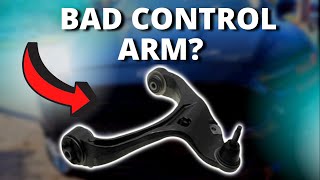
The most common failure point on a C5 Corvette control arm is not the arm itself, but the rubber bushings where it mounts to the frame. After two decades, the original rubber deteriorates, leading to a host of noises and handling problems. Here’s what to look and listen for:
- Clunking or Popping Noises: This is the most frequent complaint. You may hear a distinct clunk, pop, or knock when driving over bumps, potholes, or even just pulling into a driveway. The sound can also occur during acceleration or braking as the arm shifts due to worn bushings.
- Steering Wander and Instability: If the car feels like it's wandering on the highway or pulls to one side, requiring constant steering correction, it's a strong sign of bad control arm bushings. The worn bushings allow the wheel alignment to change dynamically, making the car feel unstable.
- Uneven Tire Wear: Worn bushings can cause significant changes to camber and caster, leading to accelerated and uneven tire wear, often on the inside or outside edges. This is a classic symptom of an alignment problem rooted in suspension wear.
- Vibrations: A vibration or shimmy felt in the steering wheel, especially at higher speeds, can be caused by the excessive movement of a wheel with a worn control arm bushing.
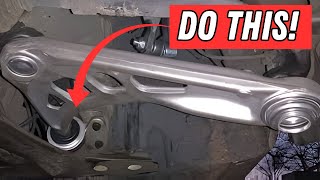
- Visible Bushing Failure: In severe cases, you can visually inspect the control arm where it mounts to the subframe and see that the rubber bushing has been pushed out or has deteriorated completely. The arm may even be making metal-to-metal contact with the frame.
Known Issues, TSBs, and Recalls
There have been no official safety recalls issued by the NHTSA for the control arms on the 1997-2004 Chevrolet Corvette. The primary issue, bushing deterioration, is considered a normal wear-and-tear item. While there was a recall for rear suspension tie rods on some 1997 models (NHTSA Campaign ID: 97V051000), this did not involve the control arms themselves. The most well-documented problem among owners is the premature failure of the stock rubber bushings, especially on cars that are driven aggressively or used for autocross or track days. The braking and cornering forces can cause the bushings to "extrude" or push out of the control arm, leading to metal-on-metal contact with the subframe.
Pro Tip: The consensus among Corvette enthusiasts is that the original GM aluminum control arms are high quality and durable. The weak point is the bushings. Rebuilding a good used OEM arm with new, higher-quality polyurethane or new rubber bushings is often considered a superior and more cost-effective solution than buying a complete, new aftermarket control arm assembly.
Buying a Used Suspension Control Arm
Since new OEM control arms are expensive and often discontinued, buying a good, used OEM arm is a very popular option. Here’s what to inspect to ensure you’re getting a solid part:
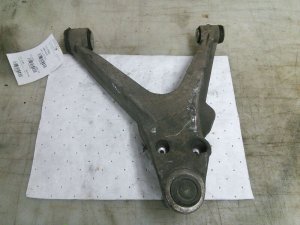
- Inspect the Arm Itself: Carefully check the aluminum arm for any cracks, bends, or signs of deformation. Pay close attention to the areas around the bushing bores and ball joint mounts. A bent arm will make alignment impossible and is unsafe.
- Check for Gouges and Scrapes: It is common to find scrapes on the bottom of lower control arms, especially from lowered vehicles hitting speed bumps. Minor cosmetic scrapes are generally not a concern, but deep gouges could indicate a severe impact that may have compromised the arm's structural integrity. Avoid arms with deep cuts or visible stress marks.
- Assume Bushings are Bad: Any used control arm from this era will have old, worn-out rubber bushings. You should always plan to replace them. The value is in the undamaged aluminum arm, not the 20-year-old rubber.
- Ball Joint Condition (Upper Arms): The front and rear upper control arms have integrated, non-serviceable ball joints. When buying a used upper arm, the condition of this ball joint is critical. Check for any play or looseness in the joint and inspect the rubber boot for tears. If the ball joint is bad, the entire upper arm must be replaced. The lower control arms do not have an integrated ball joint; it is pressed into the steering knuckle instead.
- Verify Part Numbers: The C5 Corvette uses eight different control arms. They are specific to Front, Rear, Upper, Lower, Left (driver side), and Right (passenger side). Ensure you are buying the exact arm you need by verifying part numbers if possible.
Rebuild vs. Replace
For the C5 Corvette, "rebuilding" a control arm means pressing out the old, worn bushings and installing a new set. This is a very common and highly recommended procedure.
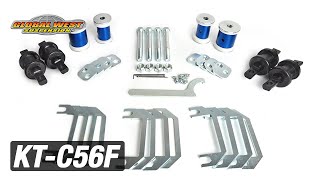
- Rebuilding (Recommended): Purchase a good used OEM aluminum arm and a new set of bushings. Bushing kits are available in standard rubber or firmer polyurethane 🎬 See this guide on choosing and replacing Corvette bushings. from brands like Energy Suspension or Prothane. Polyurethane offers improved handling response but can sometimes squeak if not lubricated properly. This path gives you a high-quality OEM arm with fresh, reliable bushings.
- Replacing with New Aftermarket: Several companies offer complete new aftermarket control arms, often with bushings and a ball joint pre-installed. While convenient, the quality of the castings, bushings, and ball joints can be inconsistent compared to the original GM parts. For a high-performance car like a Corvette, many owners prefer the proven fit and material quality of a rebuilt OEM arm.
Removing old bushings and pressing in new ones requires a hydraulic press or specialized tools. Many automotive machine shops can perform this service for a reasonable fee if you bring them the arm and the new bushings.
Cost Comparison
| Part | Estimated Cost |
|---|---|
| New OEM Control Arm | $400 - $800+ (each, if available) |
| New Aftermarket Control Arm Assembly | $70 - $200 (each) |
| Used OEM Control Arm | $50 - $150 (each) |
| Control Arm Bushing Kit (Polyurethane) | $60 - $130 (per axle) |
| Shop Labor (Control Arm Replacement) | $150 - $300 (per arm) |
| Shop Labor (Pressing Bushings) | $50 - $100 (per arm) |
| Wheel Alignment | $100 - $200 (Required after replacement) |
Installation Tips and Torque Specs
Replacing a control arm is a job for an experienced DIYer or a professional. It requires safely lifting the vehicle and using tools like ball joint separators.
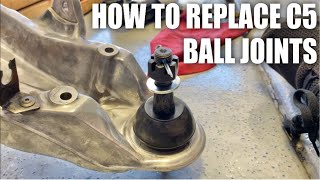
🎬 Watch: Step-by-step walkthrough for replacing C5 ball joints.Warning: The final torque for the control arm mounting bolts MUST be applied when the vehicle's full weight is on the suspension (i.e., at normal ride height). Tightening the bolts while the wheels are hanging in the air will preload the bushings, causing them to bind and fail very quickly. This is the single most critical step of the installation.
Key Torque Specifications:
- Front Upper Control Arm to Frame Nuts: 48 lb-ft
- Front Lower Control Arm Cam Nuts: 125 lb-ft
- Rear Upper Control Arm to Frame Bolts: 81 lb-ft
- Rear Lower Control Arm Cam Nuts: 107 lb-ft (front), 70 lb-ft (rear)
- Upper Ball Joint Nut: Initial torque to 15 lb-ft, then tighten further. Specs vary, but a final torque of around 37-41 lb-ft is common.
- Lower Ball Joint Nut: Initial torque to 15 lb-ft, then tighten an additional 180-210 degrees.
Note: Always consult a service manual for your specific model year as torque-to-yield procedures may vary.
Related Parts to Consider
When replacing control arms, it's a good time to inspect other nearby suspension components:
- Shock Absorbers: If they are old or leaking, now is the perfect time to replace them.
- Sway Bar End Links: These are inexpensive and often wear out, causing rattling noises.
- Tie Rod Ends: Check for any play, as worn tie rods will also affect alignment.
- Wheel Bearings / Hubs: Check for roughness or play while the suspension is apart.
A four-wheel alignment is mandatory after replacing any control arms to ensure safety, proper handling, and to prevent rapid tire wear.
Frequently Asked Questions (FAQ)
Can I just replace the bushings instead of the whole control arm?
Yes, and this is the highly recommended approach. As long as your aluminum control arm is not bent or cracked, pressing out the old bushings and installing a new set (either rubber or polyurethane) is the most cost-effective and reliable repair.
Do I need an alignment after replacing a control arm?
Absolutely. It is impossible to install a new control arm and maintain the correct alignment settings. A full four-wheel alignment is required to ensure the vehicle is safe to drive and to prevent destroying your tires.
What's the difference between upper and lower control arms?
On the C5 Corvette, the upper and lower arms have different shapes and mounting points. A key difference is that the upper arms have a ball joint built into them, while the lower arms do not (the lower ball joint is part of the wheel knuckle).
Is a used control arm with scrapes on the bottom safe?
Minor, shallow scrapes from speed bumps or driveways are usually just cosmetic and do not affect the arm's strength. However, you should reject any arm with deep gouges, cracks, or any signs of being bent, as this indicates a significant impact that could have compromised its integrity.
Helpful Videos
Technical Specifications
OEM Part Numbers: 10233629 10326693 10271532 10356438
Material: Cast Aluminum. Eight unique arms for Front/Rear, Upper/Lower, Left/Right positions. Upper arms feature an integrated ball joint. Lower arms mount to a ball joint located in the steering knuckle.
We Have This Part in Stock

The information in this article is provided for general reference and educational purposes only. Vehicle specifications, procedures, and part compatibility can vary by production date, trim level, and region. Always consult your vehicle's factory service manual and verify part numbers before purchasing or performing repairs. Safety-critical components such as airbags, seat belts, and braking systems should be installed by a qualified professional.
- Chevrolet Corvette:
- 🎬 Helpful Videos
- 🛍️ Shop This Part
- Symptoms of a Failing Control Arm
- Known Issues, TSBs, and Recalls
- Buying a Used Suspension Control Arm
- Rebuild vs. Replace
- Cost Comparison
- Installation Tips and Torque Specs
- Key Torque Specifications:
- Related Parts to Consider
- Frequently Asked Questions (FAQ)
- 🎟️ Get 5% Off