

2009-2020 Dodge Journey Control Arm: Diagnosing Clunks, Noises, and Fitment Myths
Your definitive guide to diagnosing bad front control arms on the Dodge Journey, understanding failure symptoms, and navigating the replacement process.
- The most common symptom of failure is a clunking noise from the front end when going over bumps.
- Despite some database errors, OEM front lower control arms are the SAME for both FWD and AWD models.
- A wheel alignment is MANDATORY immediately after replacing a control arm to ensure safety and prevent tire damage.
- Failure is common around the 100,000-mile mark, and replacing the entire arm assembly is standard practice.
Diagnosing a Failing Dodge Journey Control Arm: Common Symptoms
When a control arm on a Dodge Journey begins to fail, it is almost always due to the rubber bushings cracking and deteriorating or the built-in ball joint wearing out. These failures produce distinct symptoms that should be addressed promptly.
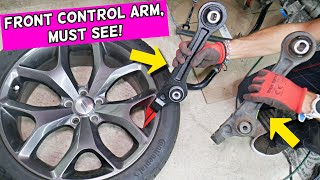
🎬 Watch: A guide to identifying common bad control arm symptoms.Clunking, Knocking, or Popping Noises
The most common symptom is a clunking or knocking sound coming from the front suspension. This noise is most obvious when driving slowly over bumps, speed bumps, or uneven pavement. The sound occurs because worn bushings allow for excess movement, causing metal-on-metal contact between the control arm and the subframe. You may also hear a thud or pop when accelerating from a stop or braking firmly.
Steering Wander or Pulling
Worn control arm bushings or a loose ball joint can cause the vehicle's wheel alignment to shift unpredictably. This results in a vague or loose steering feel, requiring constant small corrections to keep the vehicle driving straight, especially on the highway. The vehicle may also pull to one side.
Uneven Tire Wear
A bad control arm will prevent the wheel from holding its proper alignment angles (camber and toe). This leads to accelerated and uneven tire wear, most often on the inside or outside edge of the tire tread. If you see this wear pattern, a failing control arm is a likely cause.
Vibrations in the Steering Wheel
As the components wear, they can allow the wheel to wobble slightly, which translates into a vibration felt in the steering wheel. This vibration is often more noticeable at higher speeds.
Known Issues, Recalls, and TSBs
As of early 2026, there are no specific recalls or widespread Technical Service Bulletins (TSBs) from Dodge or the NHTSA for premature failure of the front control arms on the 2009-2020 Journey. Failures of the bushings and ball joints are generally considered normal wear-and-tear items that occur over the life of the vehicle. While numerous TSBs and recalls exist for the Journey, they pertain to other systems like airbags, wiring, and brake components.
Compatibility Warning: Front vs. Rear and Side-to-Side
Front and rear control arms are completely different parts and are not interchangeable. The front control arms are also side-specific; a driver's side (left) arm cannot be used on the passenger side (right), and vice-versa.
Buying a Used 2009-2020 Dodge Journey Control Arm
A quality used OEM control arm can be a smart, budget-friendly choice compared to a new dealer part or a low-quality aftermarket alternative. Here’s what to know before you buy.
FWD vs. AWD Fitment: The Myth Debunked
Initial recycler information often suggests that Front-Wheel Drive (FWD) and All-Wheel Drive (AWD) models use different front lower control arms. However, research into official Mopar parts catalogs shows this is incorrect. For the entire 2009-2020 model run, the same OEM front lower control arm part numbers are used for both FWD and AWD versions of the Dodge Journey. For example, the left-side control arm, part number 4766423AF, fits all trim levels and drivetrain configurations. This part number also supersedes many previous versions (4766423AA, AB, AC, AD, AE, and 68149313AA, AB), so seeing any of these numbers on a used part indicates it is a compatible OEM component.
What to Inspect on a Used Part
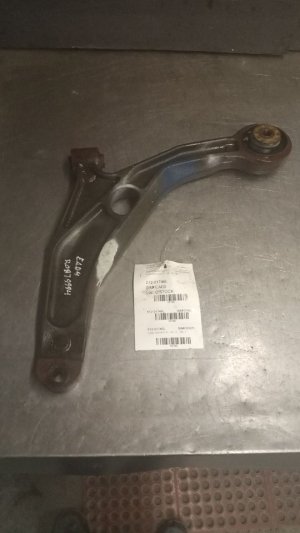
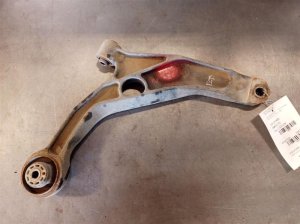
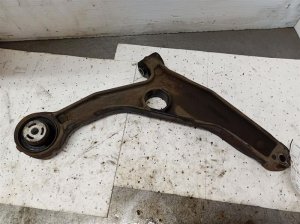
- Bushings: Closely inspect the two large rubber bushings. Look for any cracks, tearing, or separation of the rubber from the metal sleeve. The large rear bushing is the most common failure point; use a pry bar to check for excessive movement.
- Ball Joint: Check the rubber boot on the ball joint. It should be fully intact with no rips or tears. A torn boot allows grease to escape and dirt to enter, causing rapid wear. Try to move the ball joint stud by hand; it should be stiff and have no noticeable play or looseness.
- Structural Integrity: Check the arm itself for any signs of heavy corrosion, bending, or impact damage. A bent control arm cannot be aligned properly and is unsafe.
Mileage and Condition
Control arm failure on the Dodge Journey is often related to mileage. Most failures are reported as vehicles approach and exceed 100,000 miles. When buying used, prioritize a part from a lower-mileage vehicle (ideally under 80,000 miles). However, condition is just as important. A part from a high-mileage vehicle in a dry, rust-free climate may be in better shape than a lower-mileage part from a region where road salt is heavily used.
Dodge Journey Control Arm Replacement Cost
The cost to replace a front lower control arm can vary significantly based on the parts you choose and who performs the labor. An alignment is always required after the job, which typically adds $100-$150 to the total cost.
| Part/Service | Estimated Cost (Per Side) | Notes |
|---|---|---|
| New OEM (Mopar) | $90 - $140 | Highest quality and perfect fit, but highest cost. |
| New Aftermarket | $70 - $200 | Wide range of quality and price. Brands like Moog and Dorman are popular. |
| Used OEM | $50 - $100 | Cost-effective option providing OEM quality. Price depends on condition and mileage. |
| Shop Labor | $150 - $220 | Labor time is typically 1.5-2.5 hours per side. The driver's side may cost more due to an obstruction. |
Key Torque Specs and Installation Tips
Replacing the control arm is a feasible DIY job for those with mechanical experience and the right tools. However, it has some challenges.
Warning: The forward bolt on the driver's side control arm may be blocked by the transmission case. To remove it, you will likely need to support the engine and transmission with a jack and temporarily remove or loosen a motor mount to create enough clearance. The passenger side does not have this obstruction and is much more straightforward.
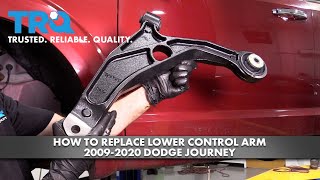
🎬 See this step-by-step walkthrough for replacing the lower control arm.Here are the critical torque specifications. Always use a torque wrench for installation.
- Front Bushing Bolt-to-Subframe: 129 ft-lbs (175 N·m) (Some service manuals state up to 148 ft-lbs)
- Rear Bushing Bolt-to-Subframe: 107 ft-lbs (145 N·m)
- Ball Joint Nut-to-Knuckle: 70 ft-lbs (95 N·m)
Pro Tip: Do not fully tighten the main bushing bolts until the vehicle's full weight is resting on the suspension. You can achieve this by placing the jack under the control arm to lift it to its normal ride height before torquing the bolts. Tightening the bolts while the suspension is hanging down will preload the bushings and cause them to fail very quickly.
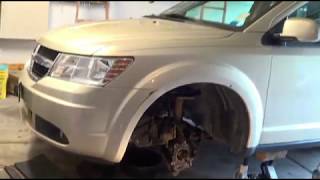
🎬 Watch: This video shows the replacement process on a 3.5L model.Related Parts to Consider Replacing
When you have the front suspension apart to replace a control arm, it's the perfect time to inspect and, if needed, replace other nearby wear items.
- Sway Bar Links: These are often disconnected during the repair and are a very common source of front-end clunking noises. They are inexpensive and easy to replace at the same time.
- Outer Tie Rod Ends: Inspect the ball joint on the outer tie rod for any play or torn boots. Replacing a worn one at the same time can save you from needing a second alignment down the road.
- Struts and Strut Mounts: While a bigger job, if your Journey has high mileage, inspect the struts for leaks and the strut mounts for noise or binding when turning the wheel.
Frequently Asked Questions (FAQ)
Do I need an alignment after replacing a control arm?
Yes, absolutely. Replacing a control arm will always change the vehicle's wheel alignment. You must have a professional four-wheel alignment performed immediately after the repair to ensure vehicle safety, proper handling, and to prevent rapid tire wear.
Can I just replace the bushings instead of the whole control arm?
While it is technically possible to press out the old bushings and press in new ones, it is often not practical. It requires a hydraulic press and special tools. Given the low cost of a complete aftermarket or used OEM control arm assembly—which includes new bushings and a new ball joint—most mechanics and DIYers choose to replace the entire unit.
Are the left and right front control arms the same?
No. The front lower control arms are side-specific. The left (driver's side) and right (passenger's side) arms are mirror images of each other and are not interchangeable.
Do FWD and AWD Dodge Journeys use different front control arms?
No. Despite some confusion in parts databases, official Mopar data confirms that the same front lower control arm part numbers are used on both FWD and AWD models for the entire 2009-2020 generation.
Helpful Videos

Technical Specifications
OEM Part Numbers: 4766423AA 4766423AB 4766423AC 4766423AD 4766423AE 4766423AF 4766424AF 5085408AC 5085408AH 68149313AA 68149313AB
Torque Specs: Front Bolt: 129 ft-lbs, Rear Bolt: 107 ft-lbs, Ball Joint Nut: 70 ft-lbs.
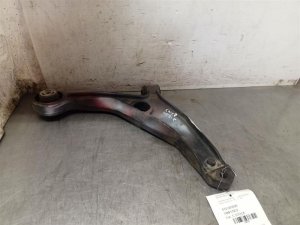
We Have This Part in Stock

The information in this article is provided for general reference and educational purposes only. Vehicle specifications, procedures, and part compatibility can vary by production date, trim level, and region. Always consult your vehicle's factory service manual and verify part numbers before purchasing or performing repairs. Safety-critical components such as airbags, seat belts, and braking systems should be installed by a qualified professional.
- Dodge Journey:
- 🎬 Helpful Videos
- 🛍️ Shop This Part
- Diagnosing a Failing Dodge Journey Control Arm: Common Symptoms
- Clunking, Knocking, or Popping Noises
- Steering Wander or Pulling
- Uneven Tire Wear
- Vibrations in the Steering Wheel
- Known Issues, Recalls, and TSBs
- Buying a Used 2009-2020 Dodge Journey Control Arm
- FWD vs. AWD Fitment: The Myth Debunked
- What to Inspect on a Used Part
- Mileage and Condition
- Dodge Journey Control Arm Replacement Cost
- Key Torque Specs and Installation Tips
- Related Parts to Consider Replacing
- Frequently Asked Questions (FAQ)
- 🎟️ Get 5% Off