

2005-2014 Mustang Front Control Arm Guide: Clunks, Ball Joints, and the Mid-2010 Redesign
This guide covers the common failure symptoms, replacement costs, and critical compatibility warnings for the 2005-2014 Ford Mustang front lower control arms, including the important mid-2010 design change.
- A critical design change occurred for the 2010 model year; verify your car's build date (before or after August 3, 2009) to get the correct arm with the right size ball joint (18mm vs 19mm).
- The most common failure symptom is a clunking noise from the front end when going over bumps.
- It is far more practical to replace the entire control arm assembly than to attempt pressing out just the ball joint or bushings.
- A four-wheel alignment is mandatory after replacement to prevent poor handling and rapid tire wear.
Symptoms of a Failing 2005-2014 Mustang Control Arm
When a front lower control arm begins to fail, the symptoms are often audible and can be felt through the steering wheel. The failure is almost always due to a worn-out ball joint or deteriorated rubber bushings. Here are the most common signs:
- Clunking or Knocking Noises: This is the most frequent complaint. You may hear a distinct clunk, pop, or knock from the front end when driving over bumps, potholes, or making sharp turns. This sound is typically caused by excessive play in a worn ball joint or by the metal sleeve of a bad bushing hitting the frame.
- Steering Wander: The vehicle may feel unstable and pull to the left or right, requiring constant steering correction to drive straight. This happens because a worn bushing or ball joint allows the wheel alignment to shift dynamically during driving.
- Vibrations: Excessive vibrations can be felt in the steering wheel, especially at higher speeds. As the bushings lose their ability to dampen road forces, these vibrations are transferred into the cabin. A worn ball joint can also cause a wheel shimmy.
- Uneven Tire Wear: A bad control arm will alter the vehicle's alignment, causing tires to wear unevenly. Look for excessive wear on the inside or outside edge of your front tires, which is a classic sign of an alignment issue stemming from worn suspension parts.
Pro Tip: While control arms are a common cause, nearly identical clunking noises on the S197 Mustang can also come from worn sway bar end links or strut mounts. It's wise to inspect these components as well before confirming the control arm is the sole culprit.
🎬 Watch: How to diagnose that mysterious front end clunk.Known Issues, Recalls, and Technical Service Bulletins (TSBs)
As of this writing, there are no specific safety recalls issued by the National Highway Traffic Safety Administration (NHTSA) for the front lower control arms on 2005-2014 Ford Mustangs. The numerous recalls for this generation primarily concern the Takata airbag inflators.
Similarly, there are no widespread Technical Service Bulletins (TSBs) from Ford that point to a design flaw with the control arms themselves. Most suspension noise-related TSBs for this era focus on other components like stabilizer bar links or rear suspension fasteners.
Critical Compatibility Warnings (2005-2014)
Not all S197 Mustang control arms are interchangeable. Paying close attention to your vehicle's build date and trim level is essential to getting the correct part.
The Mid-2010 Redesign: A Major Change
Warning: For the 2010 model year, Ford changed the design of the front lower control arm and spindle.
- 2005 - Early 2010 Models: These vehicles use a control arm with a ball joint stud that has an 18mm diameter.
- Late 2010 - 2014 Models: These vehicles use a beefier, redesigned control arm with a stronger ball joint stud that has a 19mm diameter.
The changeover date is critical. According to service information and owner forums, the split occurred on or around August 3, 2009. Vehicles built on or before that date use the early 18mm style, while vehicles built after use the later 19mm style. You can find your vehicle's production date on the sticker inside the driver's door jamb. The 18mm and 19mm arms are not interchangeable because the corresponding hole in the steering knuckle is a different size.
Shelby GT500 and Special Models
The control arms listed in this guide are for the V6 and GT models. While some parts may physically bolt up, special models often used unique components.
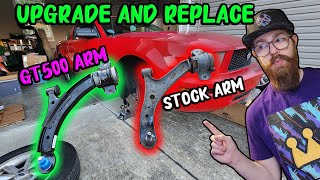
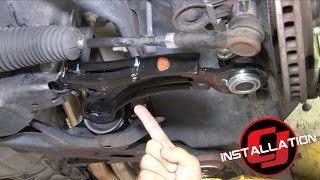
- 2007-2009 Shelby GT500: These models used an 18mm ball joint but featured upgraded, stiffer bushings. These arms are a common bolt-on upgrade for 2005-early 2010 GT and V6 models. 🎬 See how to install the Ford Performance control arm upgrade.
- 2010-2014 Shelby GT500: These models used a unique control arm to accommodate their specific suspension geometry and are generally not compatible with V6/GT models.
Buying a Used 2005-2014 Mustang Control Arm
A used OEM control arm can be an excellent value, often providing better quality and fit than a cheap aftermarket alternative. However, since the failure points are the ball joint and bushings, careful inspection is key.
- Inspect the Ball Joint: The rubber boot around the ball joint should be fully intact with no rips, tears, or leaking grease. Squeeze the boot to feel for any voids where grease may have escaped. Grab the ball joint stud and try to move it by hand; there should be no discernible looseness or play.
- Inspect the Bushings: Check the two large rubber bushings for signs of dry rot, cracking, or tearing. The rubber should be pliable, not hard and brittle. Look for evidence that the inner metal sleeve has separated from the surrounding rubber, which indicates a complete failure.
- Check for Damage: Inspect the steel arm itself for any signs of bending, heavy corrosion, or impact damage from hitting a curb or major pothole. A bent arm will make the car impossible to align correctly.
- Verify the Part Number and Year: Given the critical mid-2010 split, double-check the part number or the source vehicle's year and production date. A part from a 2011 Mustang will not fit a 2008 Mustang. Remember that a part ending in '3078' is for the right (passenger) side, and '3079' is for the left (driver) side.
- Mileage vs. Condition: While lower mileage is always better, the condition of the bushings and ball joint is more important. A 100,000-mile arm from a well-maintained car driven on smooth highways may be in better shape than a 50,000-mile arm from a car that saw rough roads and harsh weather. Failure is typically seen in the 70,000-120,000 mile range, but this can vary widely.
Replacement Overview & Torque Specs
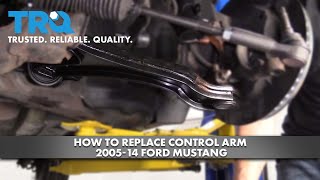
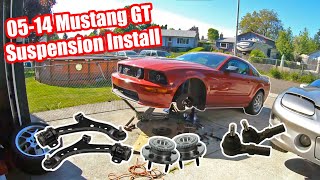
Replacing the front lower control arm is a feasible DIY job for someone with mechanical experience and the right tools. The general process involves supporting the vehicle securely, removing the wheel, disconnecting the sway bar end link, separating the ball joint from the steering knuckle, and unbolting the two large bolts that hold the control arm to the subframe.
It is almost universally recommended to replace the entire control arm assembly rather than attempting to press out and replace only the ball joint. The factory ball joints are swaged (stamped) into the arm and require a powerful hydraulic press to remove, making replacement of the full arm much faster and easier.
🎬 Watch this step-by-step guide to replacing your control arms.Pro Tip: After installing the new control arm, leave the two main bushing bolts snug but not fully tightened. Lower the vehicle so its full weight is on the suspension, then torque the bolts to spec. Tightening them with the suspension hanging in the air will preload the bushings, causing them to bind and fail prematurely.
| Fastener | Torque Specification |
|---|---|
| Forward Control Arm Bolt | 151 lb-ft |
| Rear Control Arm Bolts (to bracket) | 136 lb-ft |
| Ball Joint Pinch Bolt & Nut | 85 lb-ft |
| Outer Tie Rod End Nut | 59 lb-ft |
| Sway Bar End Link Nuts | 85 lb-ft |
An alignment is absolutely required after replacing a control arm. Failure to do so will result in poor handling and rapid tire wear.
Related Parts to Consider
- Sway Bar End Links: These are often replaced at the same time as the control arms, as they are a very common source of front-end clunks and must be disconnected during the job anyway.
- Outer Tie Rod Ends: Inspect these for play while you are working on the suspension. A worn tie rod end can also cause steering wander and tire wear.
Cost to Replace a 2005-2014 Mustang Control Arm
Prices can vary based on location, part brand, and the repair shop. Here is a general cost estimate per side:
| Item | Estimated Cost |
|---|---|
| New OEM Part | $200 - $350 |
| New Aftermarket Part | $50 - $150 |
| Used OEM Part | $45 - $100 |
| Shop Labor | $150 - $350 |
| Wheel Alignment | $100 - $150 |
Frequently Asked Questions (FAQ)
Can I just replace the ball joint or bushings?
While it is technically possible, it is not recommended. The original ball joint is pressed and swaged into the arm, requiring a shop press and special tools to remove. Given the labor involved and the low cost of a complete new aftermarket or used OEM arm, replacing the entire assembly is more efficient and ensures you have new bushings as well.
What is the difference between the control arm before and after August 2009?
The primary difference is the size of the ball joint stud and the corresponding hole in the steering knuckle. Arms for cars built on or before August 2, 2009, have an 18mm ball joint stud. Arms for cars built after that date have a stronger, 19mm ball joint stud and a beefier arm design. They are not interchangeable.
Do I need to get an alignment after replacing a control arm?
Yes, absolutely. Replacing the control arm directly affects the suspension geometry that determines camber, caster, and toe. An alignment is mandatory to ensure proper handling, safety, and to prevent premature tire wear.
Is a GT500 control arm an upgrade for my GT or V6?
For 2005 to early-2010 models, yes. The 2007-2009 GT500 control arm uses the same 18mm ball joint but has stiffer rubber bushings, which can improve steering feel and handling. It is a direct bolt-on upgrade for these earlier cars. For late-2010 and newer models, the GT500 arms are different and not a direct swap.
Helpful Videos

Technical Specifications
OEM Part Numbers: 4R3Z-3078-B 6R3Z-3078-A 7R3Z-3078-A 9R3Z-3078-B AR3Z-3078-B 4R3Z-3079-B AR3Z-3079-B BR3Z-3079-B
Ball Joint Stud Diameter: 18mm (2005-Early 2010) or 19mm (Late 2010-2014). Part numbers ending in '3078' are for the Right/Passenger side. Part numbers ending in '3079' are for the Left/Driver side.
We Have This Part in Stock
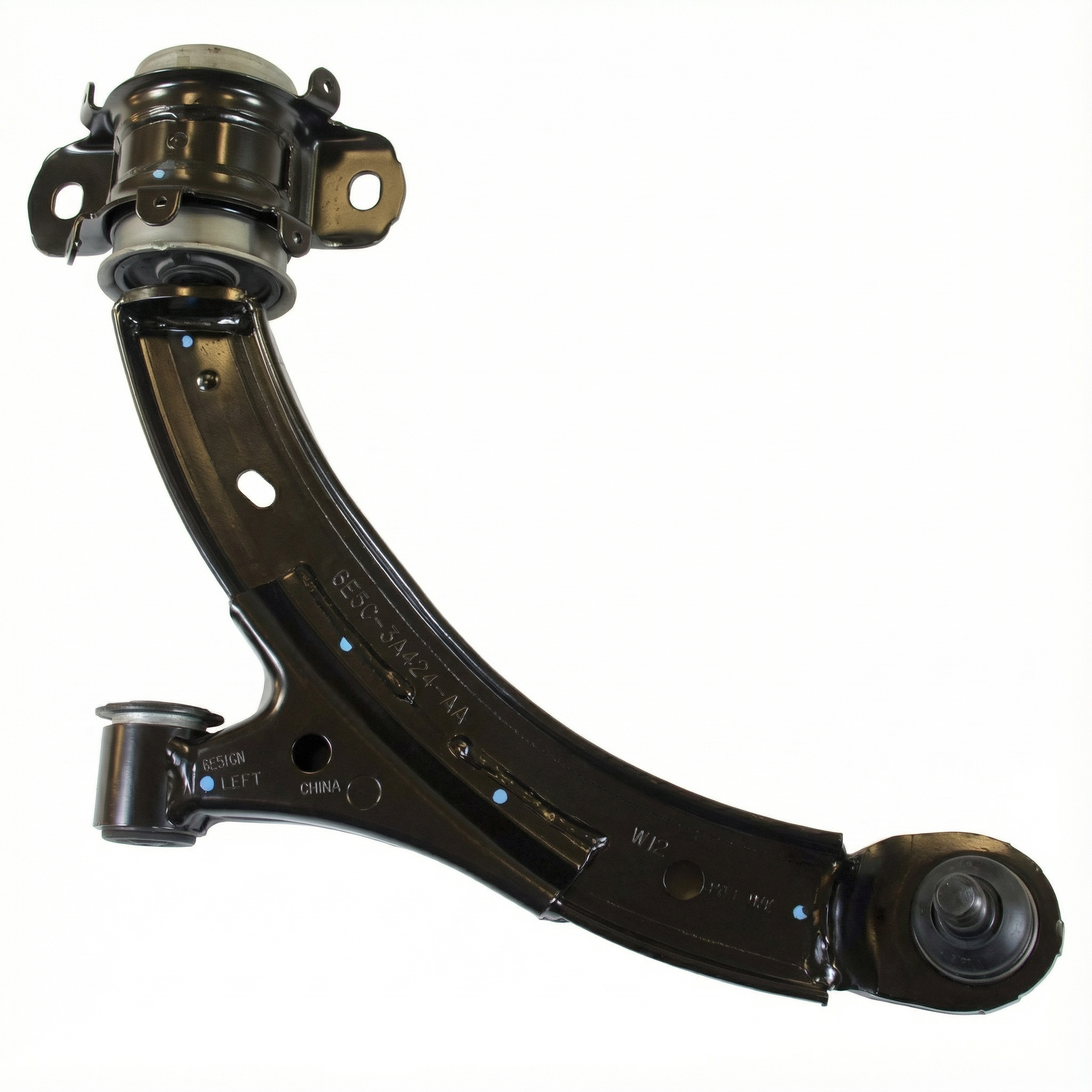
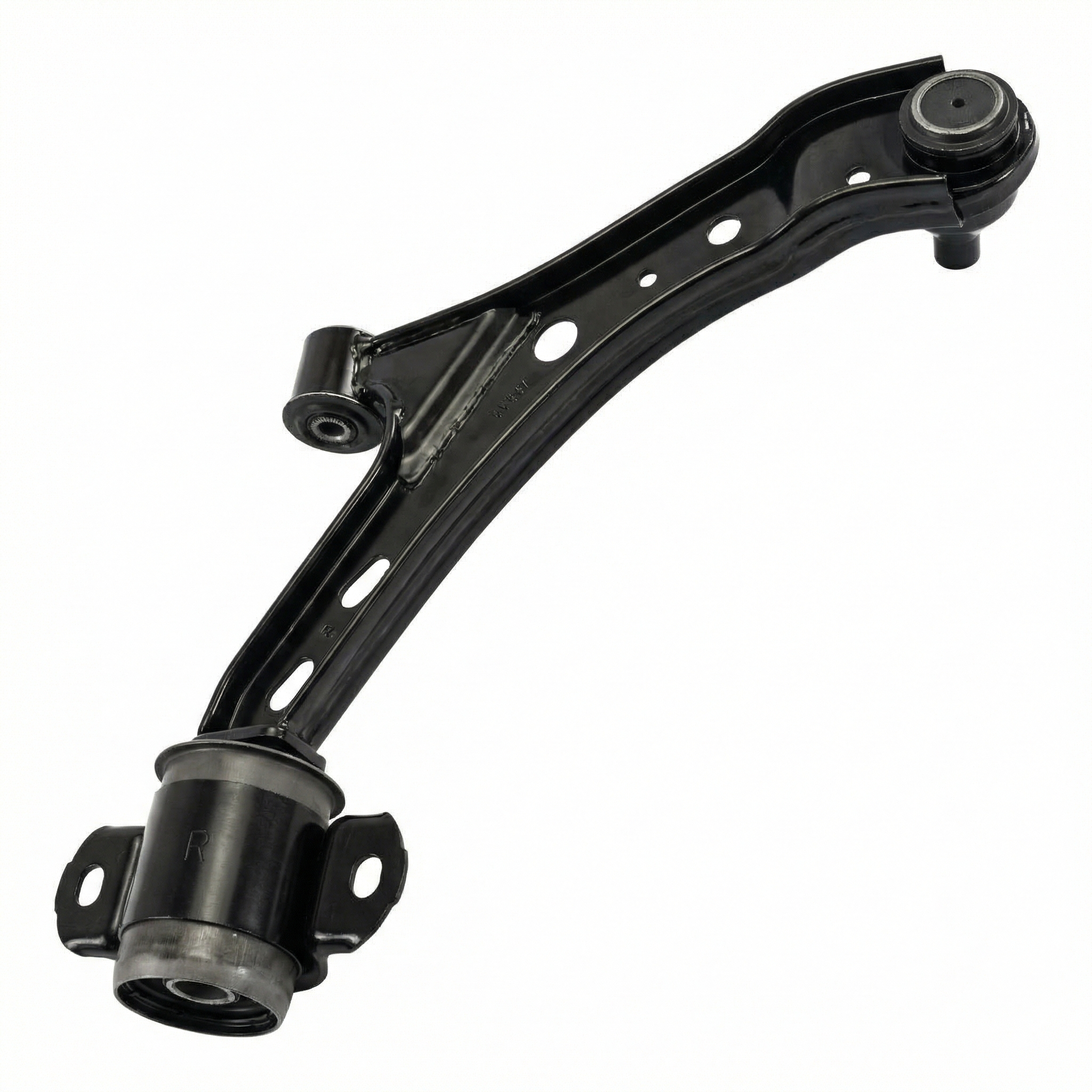

The information in this article is provided for general reference and educational purposes only. Vehicle specifications, procedures, and part compatibility can vary by production date, trim level, and region. Always consult your vehicle's factory service manual and verify part numbers before purchasing or performing repairs. Safety-critical components such as airbags, seat belts, and braking systems should be installed by a qualified professional.
- Ford Mustang:
- 🎬 Helpful Videos
- 🛍️ Shop This Part
- Symptoms of a Failing 2005-2014 Mustang Control Arm
- Known Issues, Recalls, and Technical Service Bulletins (TSBs)
- Critical Compatibility Warnings (2005-2014)
- The Mid-2010 Redesign: A Major Change
- Shelby GT500 and Special Models
- Buying a Used 2005-2014 Mustang Control Arm
- Replacement Overview & Torque Specs
- Related Parts to Consider
- Cost to Replace a 2005-2014 Mustang Control Arm
- Frequently Asked Questions (FAQ)
- 🎟️ Get 5% Off