

2007-2009 Mazda 3 Front Control Arm: Diagnosing Clunks, Pops, and Steering Wander
This guide details the common failure symptoms, replacement costs, and what to inspect when buying a used front control arm for your first-generation Mazda 3.
- The most common symptom of failure is a clunking noise from the front end when going over bumps.
- A wheel alignment is mandatory after replacing a control arm to prevent unsafe handling and rapid tire wear.
- It is highly recommended to replace control arms in pairs (left and right) to ensure balanced handling and save on future labor/alignment costs.
- When buying used, prioritize an arm with intact bushings (no cracks) and a ball joint with a non-torn boot and no looseness.
Symptoms of a Failing 2007-2009 Mazda 3 Control Arm
A worn-out control arm on a first-generation Mazda 3 rarely fails silently. The symptoms are usually obvious and get worse over time. The failure is almost always due to the deterioration of the rubber bushings or the integrated ball joint.
Noises from the Front Suspension
- Clunking or Knocking: This is the most common complaint. You will likely hear a distinct 'clunk' or 'knock' from the front of the car, especially when driving at low speeds 🎬 Watch: Diagnosing that annoying front-end clunking sound over bumps, speed bumps, or uneven pavement. This sound is caused by excess play in a worn ball joint or a collapsed bushing that allows metal-to-metal contact.
- Popping or Creaking: A popping, creaking, or groaning sound when turning the steering wheel, or when the suspension compresses (like entering a driveway), often points to a dry or worn-out ball joint.
Changes in Steering and Handling
- Wandering or Vague Steering: The car may feel like it's 'wandering' or pulling to one side, forcing you to make constant small steering corrections to drive straight. This happens because the worn components can no longer hold the wheel in its precise alignment.
- Steering Wheel Vibration: A vibration felt in the steering wheel that may change with speed can be caused by worn control arm bushings. The bad bushings are no longer able to effectively absorb road imperfections.
- Loose Feeling: The steering may feel less responsive or 'loose', and you might feel a slight shift in the front end when braking or accelerating.
Visual Signs and Tire Wear
- Uneven Tire Wear: A bad control arm will ruin your front tires. Because it directly affects the wheel's alignment angles (camber and caster), it often causes the inside or outside edge of the tire to wear out much faster than the rest of the tread.
- Visible Damage: A visual inspection can often confirm the problem. Look for large cracks, tears, or separated rubber in the control arm bushings. The ball joint has a protective rubber boot; if this boot is torn or missing, the joint has been contaminated with dirt and water and is considered bad.
Known Issues, Recalls, and Technical Service Bulletins (TSBs)
As of this writing, there are no specific recalls or TSBs from Mazda or the National Highway Traffic Safety Administration (NHTSA) for the front control arms on the 2007-2009 Mazda 3.
However, there is a significant safety recall for these model years that owners should be aware of:
- NHTSA Recall 6010H: This recall addresses a potential sudden loss of power steering assist. Rust particles can break loose from the power steering pipes and contaminate the power steering pump, causing it to shut down. While the car can still be steered, it requires significantly more effort. This is not a control arm issue, but since it affects steering feel, it's important to distinguish between the two problems.
Pro Tip: If you are experiencing both a clunking noise and heavy steering, it is possible you have two separate issues: worn control arms and a failing power steering system subject to the recall.
Buying a Used Suspension Control Arm
For a part like this, a high-quality, low-mileage used OEM control arm can be a better choice than a cheap, new aftermarket part. The original Mazda parts often use higher-grade rubber and superior ball joint construction. Here’s what to look for:
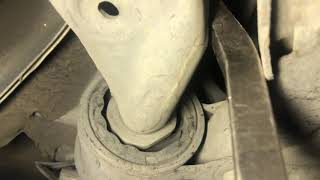
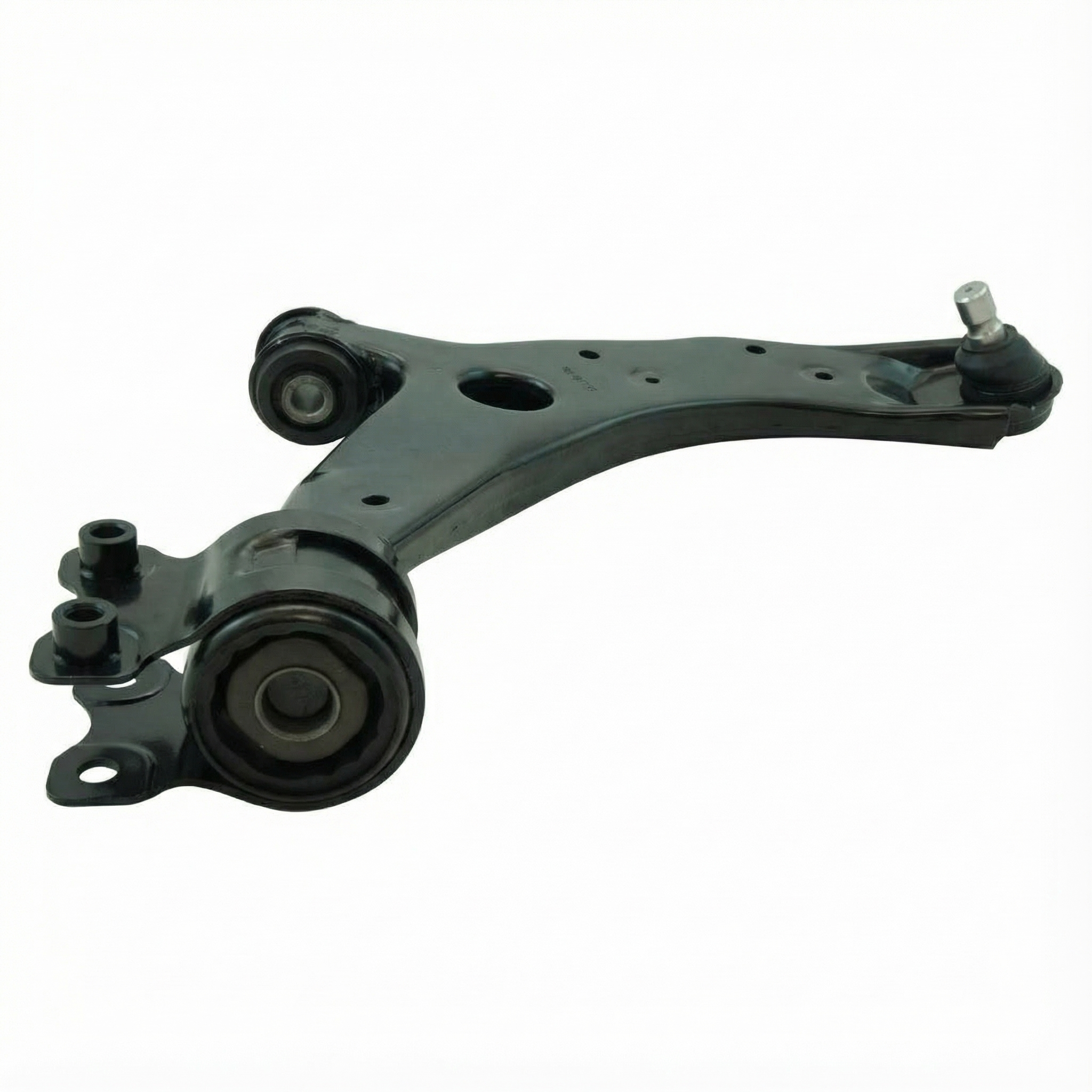
- Inspect the Bushings: The two large rubber bushings are the most common failure points. Check them closely for any cracks, tearing, or signs of dry rot. 🎬 See how to identify worn-out lower control arm bushings The rubber should be firm and intact. If the bushing is a fluid-filled hydraulic type, check for any signs of leakage (a dark, greasy stain).
- Inspect the Ball Joint: This is critical. The rubber boot covering the ball joint must be perfectly intact with no rips or holes. Grab the ball joint stud and try to move it around in its socket. It should be stiff and difficult to move by hand. If it feels loose, floppy, or makes any noise, the part is junk.
- Check for Straightness: Look down the length of the arm to ensure it is not bent or twisted. Any sign of a major impact means the arm should be discarded. Minor scrapes from road debris are normal, but deep gouges or cracks are red flags.
- Verify Compatibility: The control arms for the standard Mazda 3 are different from the Mazdaspeed3 models. Ensure you are buying the correct part for your vehicle. Always confirm the part is for the correct side (driver/left or passenger/right) as they are not interchangeable.
- Mileage and Source: Ask for the mileage of the donor vehicle if possible. A control arm from a vehicle with under 100,000 miles is a reasonable bet, as failures often begin to appear in the 80,000-120,000 mile range.
Replacement Overview and Related Parts
Replacing the control arm on a 2007-2009 Mazda 3 is a feasible DIY job for someone with mechanical experience and the right tools. However, it can be challenging due to rust.
- Difficulty: The job involves several large bolts that may be seized with rust. A long breaker bar or impact wrench is highly recommended. A ball joint separator (pickle fork) is often necessary to separate the ball joint from the steering knuckle.
- Passenger Side Challenge: On some models, accessing the front-most bolt on the passenger-side control arm can be blocked by the A/C compressor. This may require you to unbolt a motor mount and carefully jack up the engine by an inch or two for clearance.
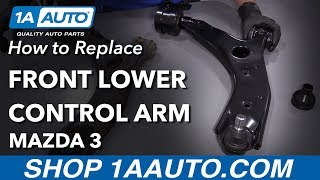
- Replace in Pairs: It is strongly recommended to replace both the left and right control arms at the same time. 🎬 Follow this step-by-step DIY guide to replace your control arms If one has failed from wear, the other is likely near the end of its life. Replacing them in pairs ensures balanced handling and prevents you from having to pay for a second alignment in the near future.
- Related Parts: This is the perfect time to replace your sway bar end links. They are inexpensive, a common source of clunking noises, and must be disconnected for this job anyway.
- Alignment is Mandatory: After replacing one or both control arms, you must get a professional wheel alignment. Skipping this step will cause dangerous handling and destroy your new tires.
Torque Specifications
Torque specs are critical for suspension components. Always tighten suspension bolts with the vehicle's weight on the wheels (at ride height) to prevent premature bushing failure. These are general specs; always verify with a service manual for your specific model.
| Bolt Location | Torque Value (ft-lbs) | Torque Value (Nm) |
|---|---|---|
| Control Arm Rear Bushing Bolts (x2) | ~100 ft-lbs | ~135 Nm |
| Control Arm Front Bushing Bolt (x1) | ~150 ft-lbs | ~203 Nm |
| Ball Joint Pinch Bolt | ~50 ft-lbs | ~68 Nm |
| Wheel Lug Nuts | 85-95 ft-lbs | 115-129 Nm |
Cost of Replacing a Mazda 3 Control Arm
The cost can vary significantly depending on who does the work and what parts are used. Here is a general breakdown for a single control arm replacement:
| Item | Estimated Cost |
|---|---|
| New OEM (Dealer) | $185 - $350 (part only) |
| New Aftermarket | $30 - $85 (part only) |
| Used OEM | $50 - $80 (part only) |
| Shop Labor | $170 - $250 (for one side) |
| Wheel Alignment | $80 - $120 |
| Total (DIY, New Aftermarket) | $110 - $205 |
| Total (Shop, New Aftermarket) | $280 - $455 |
| Total (Shop, New OEM) | $435 - $720 |
Frequently Asked Questions (FAQ)
Can I drive with a bad control arm?
It is not recommended. While the car may be drivable for short distances, a severely worn control arm can make steering unpredictable and unsafe. Continued driving will cause excessive tire wear and can damage other suspension components, leading to more expensive repairs. A complete failure of the ball joint could cause the wheel to detach from the suspension, leading to a total loss of control.
Do I really need an alignment after replacing a control arm?
Yes, absolutely. The control arm is a primary component that determines the wheel's alignment angles. Replacing it will change the alignment. Skipping the alignment will result in poor handling, crooked steering wheel, and extremely rapid tire wear.
Should I replace just the bad bushing or the whole control arm?
Replacing the entire control arm assembly is the standard and recommended repair. While it is technically possible to press out old bushings and press in new ones, this requires a large hydraulic press and specialized tools. The labor cost often makes it more expensive than simply replacing the whole arm, which comes with new bushings and a new ball joint already installed.
What's the difference between the left and right control arm?
The left (driver side) and right (passenger side) control arms are mirror images of each other and are not interchangeable. They are specifically designed for their respective sides of the vehicle. Ensure you order the correct part for the side you are repairing.
Helpful Videos

Technical Specifications
OEM Part Numbers: B37F-34-350B (Mazdaspeed Left) BPN7-34-350A B39D-28-300C (Rear) B37F-34-350A Note: Part numbers vary between standard and Mazdaspeed models. Always verify fitment with your vehicle's VIN.
The front lower control arm is typically made of stamped steel or cast iron and includes two pre-installed bushings and one pre-installed ball joint.
We Have This Part in Stock

The information in this article is provided for general reference and educational purposes only. Vehicle specifications, procedures, and part compatibility can vary by production date, trim level, and region. Always consult your vehicle's factory service manual and verify part numbers before purchasing or performing repairs. Safety-critical components such as airbags, seat belts, and braking systems should be installed by a qualified professional.
- Mazda 3:
- 🎬 Helpful Videos
- 🛍️ Shop This Part
- Symptoms of a Failing 2007-2009 Mazda 3 Control Arm
- Noises from the Front Suspension
- Changes in Steering and Handling
- Visual Signs and Tire Wear
- Known Issues, Recalls, and Technical Service Bulletins (TSBs)
- Buying a Used Suspension Control Arm
- Replacement Overview and Related Parts
- Torque Specifications
- Cost of Replacing a Mazda 3 Control Arm
- Frequently Asked Questions (FAQ)
- 🎟️ Get 5% Off