

Mazda3 & Mazda5 Front Control Arm Guide: Diagnosing Clunks and Steering Issues (2004-2018)
Diagnose the clunking noises and wandering steering in your 2004-2018 Mazda3 or 2006-2017 Mazda5 by understanding the common failure points of the front lower control arms.
- Control arms are NOT interchangeable between Mazda3/5 generations: 2004-2009 (Gen 1), 2010-2013 (Gen 2), and 2014-2018 (Gen 3) use different parts.
- The most common symptoms of failure are clunking noises over bumps and wandering or imprecise steering.
- A wheel alignment is MANDATORY after replacing a control arm to prevent severe tire wear and ensure safety.
- When buying a used part, the most critical inspection points are the condition of the rubber bushings (no cracks) and the ball joint boot (not torn).
Symptoms of a Failing Control Arm
A worn-out front lower control arm rarely fails silently. The symptoms are usually noticeable and get progressively worse. The most common indicators are the failure of the integrated bushings or the ball joint.
- Clunking or Knocking Noises: This is the most frequent complaint. You'll hear a distinct 'clunk' or knocking sound 🎬 Watch this video to help identify and fix that clunking noise. from the front of the car, especially when driving over bumps, potholes, or uneven pavement. This noise is caused by excessive play in a worn ball joint or a deteriorated bushing allowing metal-to-metal contact.
- Wandering or Vague Steering: The vehicle may feel like it's pulling to one side or that you constantly need to make small steering corrections to keep it driving straight. This happens because a worn control arm can no longer hold the wheel in its precise alignment.
- Steering Wheel Vibration: A continuous vibration felt in the steering wheel, which may change with speed, can be caused by worn control arm bushings that are no longer able to dampen road forces effectively.
- Uneven Tire Wear: Because a bad control arm affects the wheel's alignment (specifically the camber and caster angles), it can cause the inside or outside edge of your front tires to wear out much faster than the rest of the tread.
- Visible Damage: In some cases, you can see the problem. The rubber bushings may be cracked, torn, or leaking fluid, and the protective rubber boot around the ball joint may be ripped open, allowing dirt and water to contaminate the joint.
Vehicle and Part Compatibility (2004-2018 Mazda3 & 2006-2017 Mazda5)
It is critical to understand that the 2004-2018 model years span three distinct vehicle generations with different platforms and incompatible parts. Buying the wrong generation of control arm will result in a part that does not fit. The Mazda5 shares its platform with the corresponding Mazda3 generation.
Generation 1: 2004-2009 Mazda3 & 2006-2010 Mazda5
These vehicles share the Ford C1 platform. The control arms are interchangeable between the Mazda3 and Mazda5 within this generation. Replacement on the passenger side can be difficult, as the front-most bolt may be blocked by the A/C compressor, often requiring the engine to be carefully pried forward for clearance.
- Known OEM Part Numbers: BP4K34300C, BP4K34300E 🎬 See this step-by-step replacement guide for first generation Mazda 3 models.
Generation 2: 2010-2013 Mazda3 & 2012-2017 Mazda5
These models use an updated version of the C1 platform. Control arms are generally interchangeable between the Mazda3 and Mazda5 of this era. Note that there was no 2011 model year for the Mazda5 in North America.
- Known OEM Part Numbers: BBM2-34-350, BBM234350A, BBM2-34-300, C513-34-300, C51334300
Generation 3: 2014-2018 Mazda3
This generation moved to the new Skyactiv platform and does not share parts with previous generations. The Mazda5 was discontinued and did not use this platform.
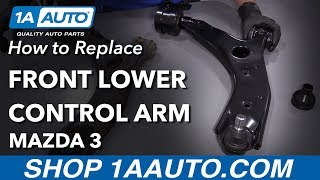
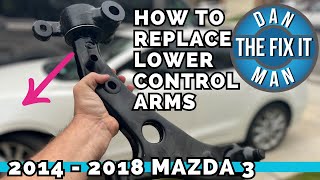
- Known OEM Part Numbers: BJS7-34-300, BJS734300, BJS734300A, BJS7-34-350A, B60S-34-300G, B60S-34-300H, B60S-34-350H 🎬 Watch a complete walkthrough for replacing third generation control arms and joints.
Compatibility Warning: These control arms are for non-turbo models only. The high-performance Mazdaspeed3 uses different, more robust suspension components. The arms generally fit all standard engine sizes (2.0L, 2.3L, 2.5L) within a given generation. The initial warning about electric parking brakes is not relevant to the front control arms.
Buying a Used Suspension Control Arm
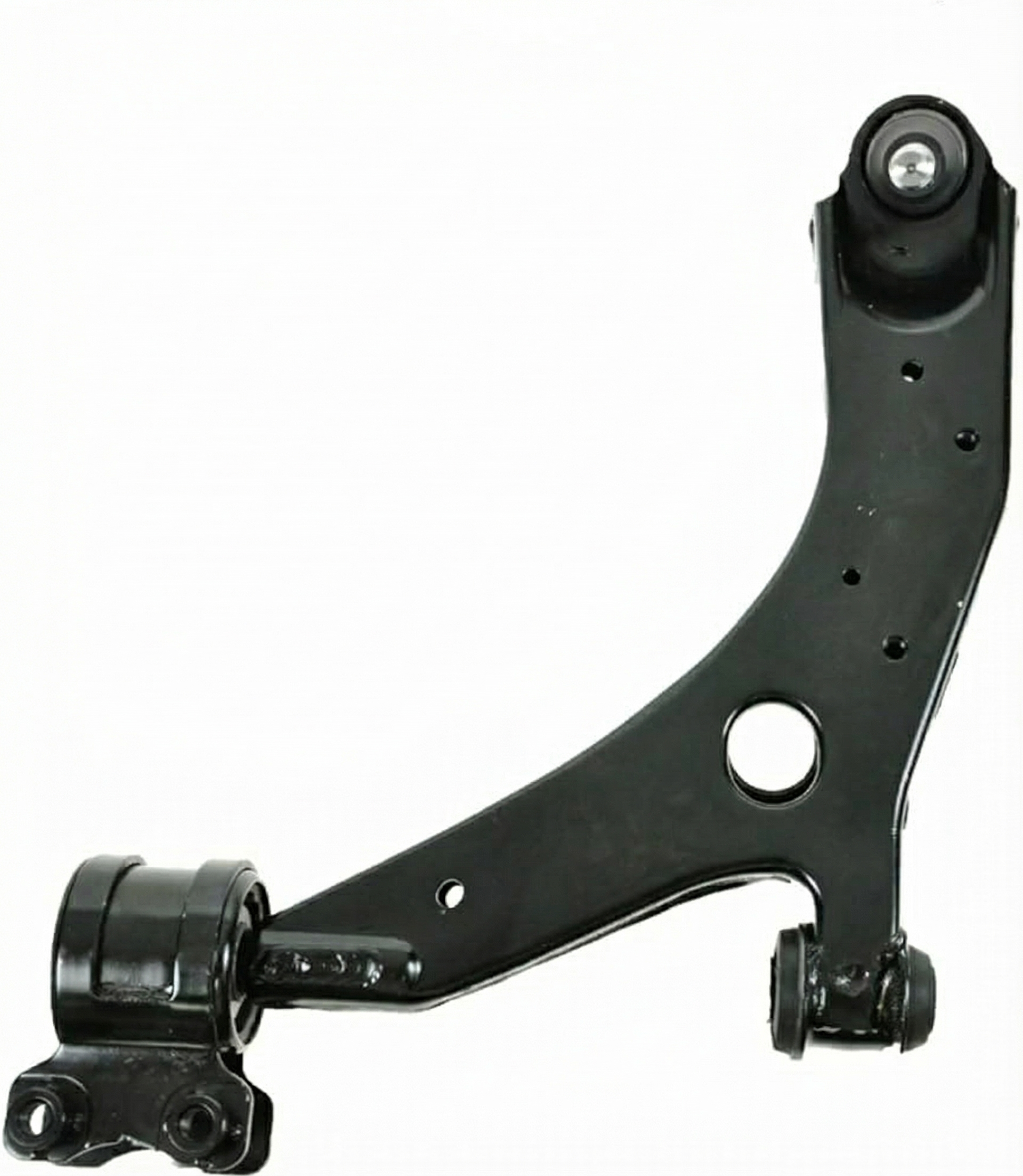
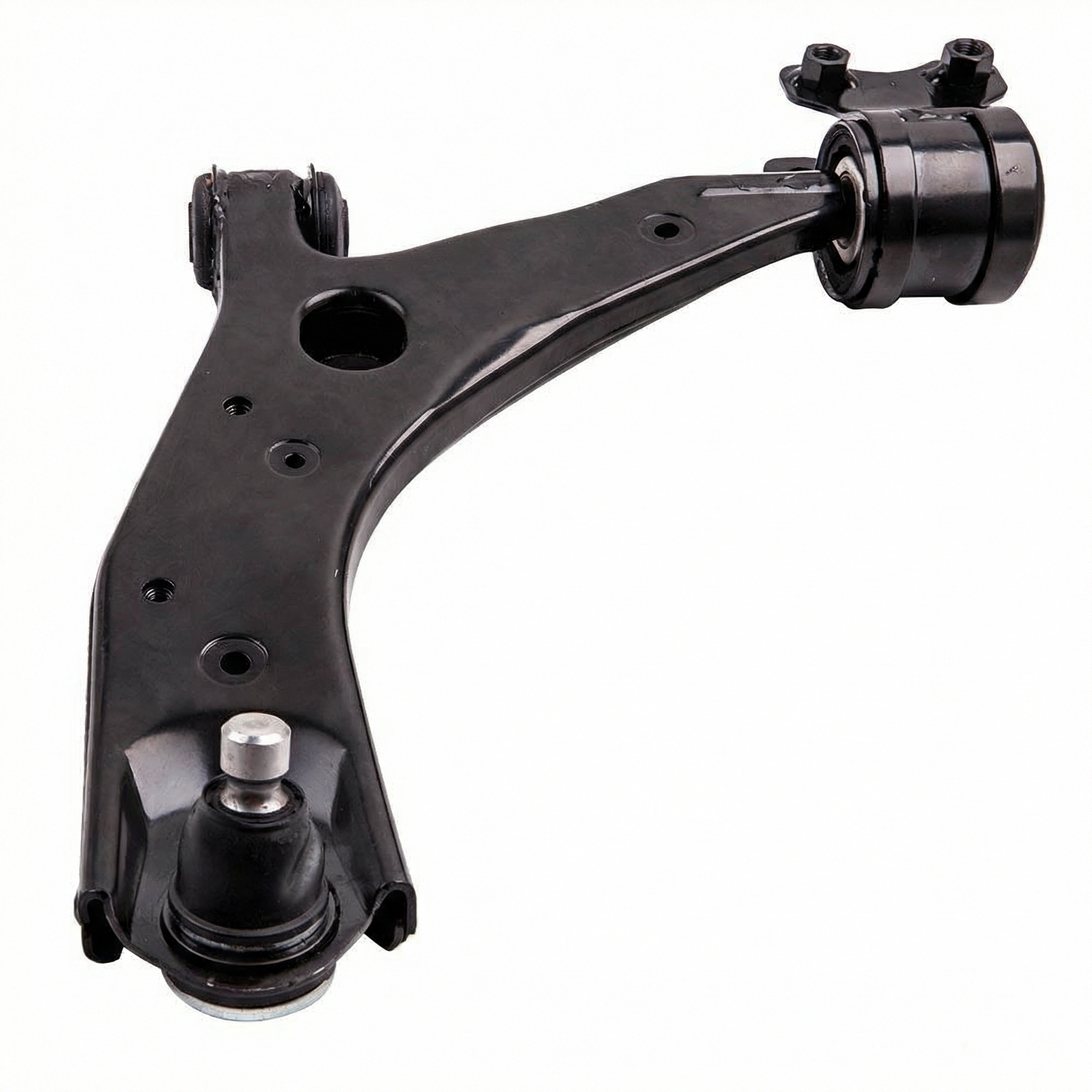
A high-quality, low-mileage used OEM control arm can be a better value than a new, cheaply made aftermarket part. OEM parts are manufactured to higher standards for material quality and geometric accuracy. When inspecting a used control arm, focus on the wear components:
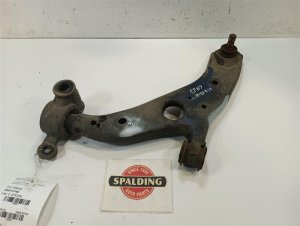
- Inspect the Bushings: The rubber bushings are the most common failure point. Look for any cracks, tearing, or signs of dry rot. The rubber should be firm and intact. If the bushing is soaked in oil or looks collapsed, it should be rejected.
- Check the Ball Joint: The ball joint should move smoothly but firmly. There should be no looseness or vertical play. Most importantly, inspect the rubber boot that seals the joint. If this boot is torn or missing, the joint is contaminated with dirt and water and will fail soon, even if it feels tight now.
- Look for Physical Damage: Inspect the arm itself for any signs of bending, heavy corrosion, or cracks, which could indicate it came from a vehicle involved in an accident. A straight, clean part is essential.
- Verify the Part Number and Generation: Double-check that the part is from the correct vehicle generation for your car. An arm from a 2012 Mazda3 will not fit a 2014 Mazda3.
Replacement Overview and Torque Specs
Replacing a front lower control arm is a feasible DIY job for someone with mechanical experience and the right tools, but it can be challenging due to rusted bolts and tight clearances. A wheel alignment is mandatory after the job is complete to prevent rapid tire wear and ensure proper handling.
Pro Tip: When tightening the main bushing bolts, the vehicle's suspension should be loaded—meaning the car's weight should be resting on the wheel (or a jack stand under the knuckle). Tightening the bolts with the suspension hanging down can preload the bushings, causing them to fail prematurely.
Common Torque Specifications
Torque specs can vary slightly by year and specific bolt. Always consult a service manual for your exact vehicle if possible. These are common values found for each generation.
| Generation | Bolt Location | Torque Spec (ft-lbs) |
|---|---|---|
| Gen 1 (2004-2009) | Front Bushing Bolt (Vertical) | 75 ft-lbs |
| Gen 1 (2004-2009) | Rear Bushing Bolts (Horizontal) | 110 ft-lbs |
| Gen 1 (2004-2009) | Ball Joint Pinch Bolt | 39 ft-lbs |
| Gen 2 (2010-2013) | Front Bushing Bolt | 81-96 ft-lbs |
| Gen 2 (2010-2013) | Rear Bushing Bolts | 96-110 ft-lbs |
| Gen 2 (2010-2013) | Ball Joint Pinch Bolt | 37 ft-lbs |
| Gen 3 (2014-2018) | Front Bushing Bolt | 158-191 ft-lbs |
| Gen 3 (2014-2018) | Rear Bushing Bolt (Outer) | 101-126 ft-lbs |
| Gen 3 (2014-2018) | Rear Bushing Bolt (Inner) | 74-89 ft-lbs |
| Gen 3 (2014-2018) | Ball Joint Pinch Bolt | 27-31 ft-lbs |
Related Parts
When replacing control arms, it's a good time to inspect other nearby suspension components that wear at a similar rate. Consider replacing the sway bar end links if they show any signs of play, as they must be disconnected during the repair anyway. A clunking noise can also be caused by worn sway bar bushings, which are inexpensive to replace.
Cost Comparison
Prices can vary significantly based on brand and location. These are typical price ranges.
| Part/Service | Estimated Cost (Per Side) |
|---|---|
| New OEM | $200 - $350 |
| New Aftermarket | $80 - $170 |
| Used OEM | $50 - $120 |
| Shop Labor | $170 - $250 |
| Wheel Alignment | $80 - $150 |
Frequently Asked Questions (FAQ)
Do I need an alignment after replacing a control arm?
Yes, absolutely. Replacing a control arm will alter the vehicle's wheel alignment settings. Failing to get an alignment will result in poor handling, crooked steering wheel, and rapid, uneven tire wear.
Can I just replace the bushings or ball joint instead of the whole arm?
While it is sometimes possible to press out old bushings and press in new ones, it requires specialized hydraulic press tools. For most DIY mechanics and many shops, it is faster, easier, and more cost-effective to replace the entire control arm assembly, which comes with new bushings and a new ball joint already installed.
Is the left control arm the same as the right one?
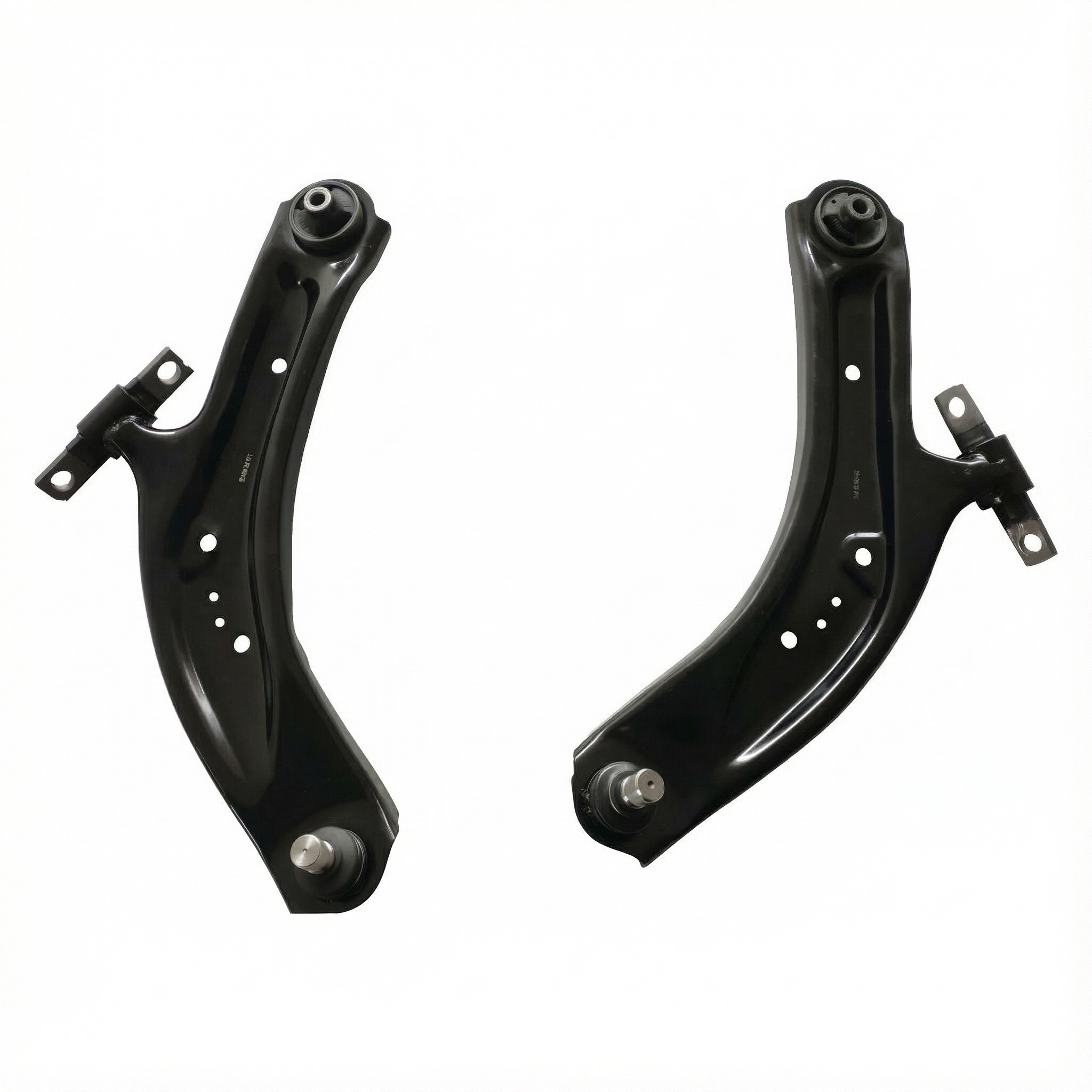
No, they are not interchangeable. Control arms are side-specific (driver's side and passenger's side). They are mirror images of each other. Ensure you are ordering the correct part for the side you are repairing.
Will a control arm from a Mazda5 fit my Mazda3?
Yes, but only if they are from the same generation. A control arm from a 2008 Mazda5 (Gen 1) will fit a 2004-2009 Mazda3 (Gen 1). Likewise, an arm from a 2012 Mazda5 (Gen 2) will fit a 2010-2013 Mazda3 (Gen 2). There is no cross-compatibility between generations.
Helpful Videos
Technical Specifications
OEM Part Numbers: BP4K34300C BP4K34300E BBM2-34-350 BBM234350A BBM2-34-300 C513-34-300 C51334300 BJS7-34-300 BJS734300 BJS734300A BJS7-34-350A B60S-34-300G B60S-34-300H B60S-34-350H
Material: Stamped Steel or Cast Iron, depending on generation and specific part. Includes pre-installed bushings and a ball joint.
We Have This Part in Stock

The information in this article is provided for general reference and educational purposes only. Vehicle specifications, procedures, and part compatibility can vary by production date, trim level, and region. Always consult your vehicle's factory service manual and verify part numbers before purchasing or performing repairs. Safety-critical components such as airbags, seat belts, and braking systems should be installed by a qualified professional.
- Mazda MAZDA3:
- Mazda MAZDA5:
- 🎬 Helpful Videos
- 🛍️ Shop This Part
- Symptoms of a Failing Control Arm
- Vehicle and Part Compatibility (2004-2018 Mazda3 & 2006-2017 Mazda5)
- Generation 1: 2004-2009 Mazda3 & 2006-2010 Mazda5
- Generation 2: 2010-2013 Mazda3 & 2012-2017 Mazda5
- Generation 3: 2014-2018 Mazda3
- Buying a Used Suspension Control Arm
- Replacement Overview and Torque Specs
- Common Torque Specifications
- Related Parts
- Cost Comparison
- Frequently Asked Questions (FAQ)
- 🎟️ Get 5% Off