

Diagnosing Front End Clunks on Your 2006-2019 Yaris, Prius C, or Scion xD: A Control Arm Guide
This guide covers the common causes of front-end clunking, steering wander, and uneven tire wear related to the front lower control arm on the 2008-2014 Scion xD, 2012-2019 Toyota Prius C, and 2006-2019 Toyota Yaris.
- A clunking noise over bumps is the most common symptom of a failing control arm on these vehicles.
- A known issue on the Scion xD and some Yaris models is a corroded rear control arm bolt that can break, causing a loud clunk and unsafe wheel movement.
- It is more practical and often cheaper to replace the entire control arm assembly than to press in new bushings.
- A wheel alignment is mandatory after replacing a control arm to prevent unsafe handling and rapid tire wear.
Symptoms of a Failing Control Arm
A bad control arm rarely fails silently. The symptoms are often noticeable and get progressively worse. The most common points of failure are the rubber bushings and the integrated ball joint.
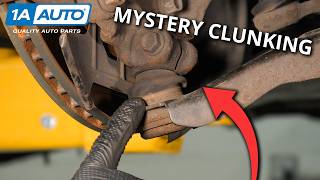
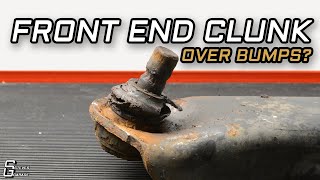
- Clunking or Knocking Noises: This is the most frequent complaint. You may hear a distinct "clunk" or "knock" from the front end when driving over bumps, speed bumps, or uneven pavement. This sound is caused by worn bushings or a loose ball joint allowing metal-to-metal contact as the suspension moves. Some owners also report a thud or clunk when accelerating or braking hard as the arm shifts in its worn mounts.
- Steering Wander or Pulling: The vehicle may feel unstable, pull to one side, or require constant steering corrections to drive in a straight line. This happens because a worn control arm can no longer hold the wheel in its correct alignment, causing the car to wander.
- Vibrations in the Steering Wheel: A shimmy or vibration felt in the steering wheel, especially at higher speeds (50+ mph), can be a sign of failing control arm bushings. The worn rubber can no longer dampen road vibrations, which are then transferred into the steering system.
- Uneven Tire Wear: If the inside edge of your front tires is wearing out much faster than the rest of the tread, a bad lower control arm is a likely culprit. The worn components allow the wheel alignment (specifically the camber) to shift as you drive, scrubbing the tire tread off unevenly.
- Squeaking or Creaking: While less common than clunking, dry or deteriorated bushings can produce a creaking sound as the suspension moves up and down, similar to a creaky door hinge.
Known Issues, TSBs, and Recalls
While there are no major safety recalls directly for the control arms on these models in North America, Toyota and Scion have issued Technical Service Bulletins (TSBs) related to front suspension noises, which are often caused by the control arms.
2008-2014 Scion xD
A significant known issue for the Scion xD is a clunking noise from the front suspension. Scion released TSB #SSB-0018-11 (NHTSA ID #10041164) specifically for a "clunk noise from the front suspension area while driving" on 2008-2011 models. Many owners have reported that the rear bolt for the front lower control arm can corrode and break, sometimes due to condensation dripping from the A/C system onto the subframe bolt. This failure causes a loud clunk and allows the wheel to shift within the wheel well, which is a serious safety concern.
2006-2019 Toyota Yaris
For the 2007-2012 Toyota Yaris, TSB #174878 was issued to address a "Clunk Noise From Front Suspension". Forum discussions also point to a TSB related to the front subframe and lower control arm (LCA) mounts causing noise over bumps. The primary failure point is typically the large rear bushing on the control arm, which cracks and deteriorates over time.
2012-2019 Toyota Prius C
While no specific TSBs for control arm noise on the Prius C were found, it is a common repair item. Owners frequently report clunking noises as the car ages, with mechanics identifying cracked and worn control arm bushings as the cause, often around the 100,000-mile mark.
Compatibility Warning: This control arm is shared across these three models, but there are important variations. For the Toyota Yaris, this part primarily fits hatchback models from 2006-2019. Later model Yaris sedans (approximately 2016-2020) were based on a Mazda platform and may use a different control arm. Additionally, there are different part numbers for Yaris models built in Japan versus those built in France. Always verify the correct part number for your specific vehicle's VIN before purchasing.
Buying a Used Suspension Control Arm
A used OEM control arm can be an excellent value, offering original factory quality at a much lower price than a new dealer part. However, since this is a wear item, careful inspection is crucial.
- Mileage is a Key Factor: Control arms typically last between 90,000 and 100,000 miles, but this can vary based on road conditions. A used part from a low-mileage vehicle is ideal. Avoid parts from high-mileage vehicles (over 120,000 miles) unless they are in exceptional condition, as the bushings and ball joint are likely near the end of their service life.
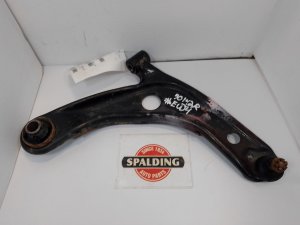
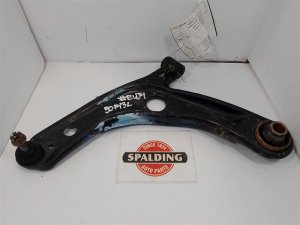
- Inspect the Bushings: The rubber bushings are the most common failure point. Look for any signs of dry rot, deep cracks, or tearing. The large, round rear bushing is especially prone to failure. If the rubber is separating from the inner or outer metal sleeve, the part should be rejected.
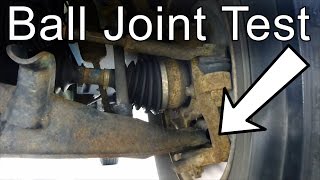
- Inspect the Ball Joint: Check the rubber boot on the ball joint for any rips, tears, or leaks. A damaged boot allows grease to escape and dirt to enter, which quickly destroys the joint. Try to move the ball joint stud by hand; it should be stiff and smooth, with no looseness or gritty feeling. 🎬 See how to check if a ball joint is bad.
- Check for Physical Damage: Inspect the steel arm itself for any signs of being bent, heavily scraped, or having significant rust. While surface rust is common, deep, flaky corrosion can weaken the arm, especially around the welds and ball joint area.
- Why Used OEM vs. New Aftermarket? For suspension components, the quality of the rubber bushings and the metallurgy of the ball joint are critical. A low-mileage used OEM part often has higher quality rubber and steel than a cheap, new aftermarket part. This can result in better ride quality, longer life, and a more precise fit.
Replacement Overview
Replacing the front lower control arm is a feasible DIY job for someone with mechanical experience and the right tools. However, it has some challenges.
Difficulty: 3/5
Estimated Time: 1.5 - 2.5 hours per side
It is almost always more cost-effective and easier to replace the entire control arm assembly rather than trying to press out old bushings and press in new ones.
Key Steps & Special Procedures:
- Lift and Support: Safely raise the front of the vehicle and support it on jack stands. Remove the front wheel.
- Disconnect Ball Joint: Remove the castle nut from the ball joint stud where it connects to the steering knuckle. Use a ball joint separator tool to pop the joint out of the knuckle. Avoid using a "pickle fork" separator if you plan to reuse the arm, as it will destroy the rubber boot.
- Unbolt from Subframe: The arm is held to the subframe by two bolts: a horizontal bolt at the front bushing and a vertical bolt at the rear bushing.
- Engine Clearance (Yaris/xD): On the Toyota Yaris and Scion xD, the front horizontal bolt may not have enough clearance to be removed because it hits the engine's oil pan. You will likely need to support the engine with a jack and wood block and slightly raise it to create enough space to slide the bolt out. 🎬 Watch this walkthrough for replacing the front control arm.
- Installation and Preloading: When installing the new arm, leave the two subframe bolts loose. Reconnect the ball joint. Put the wheel back on and lower the vehicle so its full weight is on the suspension. Only then should you tighten the subframe bolts to their final torque specification. Tightening the bolts while the suspension is hanging will twist and prematurely destroy the new rubber bushings.
- Alignment: A front-end wheel alignment is required after replacing a control arm to ensure proper handling and prevent tire wear.
Torque Specifications
Finding exact, universally agreed-upon torque specs can be difficult. The values can vary by model year and production location (Japan vs. France). Always consult a factory repair manual for your specific vehicle if possible.
Warning: The following are commonly cited torque values but should be used as a guideline only. Verify with a specific repair manual for your vehicle.
- Control Arm to Subframe Bolts (Front & Rear): These are high-torque bolts. Values often range from 100 to 172 ft-lbs. Some sources cite specs as high as 158 ft-lbs for the rear bolt and 172 ft-lbs for the front on similar Toyota platforms. Older Yaris models may have lower specs around 55-75 Nm (41-55 ft-lbs), but this seems low for later models.
- Ball Joint Castle Nut: Commonly cited values range from 66 to 98 ft-lbs. Tighten to the specified torque, then continue tightening only enough to align the slot for the cotter pin. Never loosen the nut to align the pin.
Cost Comparison
Prices can vary significantly based on brand and supplier. Labor costs typically range from $125 to $225 per side.
| Part | Price Range (Per Arm) |
|---|---|
| New OEM | $210 - $365 |
| New Aftermarket | $40 - $140 |
| Used OEM | $50 - $120 |
| Shop Labor (Per Side) | $140 - $225 |
Frequently Asked Questions (FAQ)
Do I need to replace both control arms at the same time?
It is highly recommended. Suspension components wear at similar rates. If one side has failed due to age and mileage, the other side is likely not far behind. Replacing them in pairs also ensures balanced handling and saves you money on a second alignment down the road.
Can I just replace the bushings instead of the whole arm?
While bushings are sold separately, replacing them requires a hydraulic press and specialized tools. The labor cost to press out the old bushings and install new ones often exceeds the cost of a complete new control arm assembly, which comes with new bushings and a new ball joint already installed. For most DIY mechanics and even many shops, replacing the entire arm is the more practical and reliable repair.
What is the difference between the 'Japan built' and 'France built' Yaris parts?
Toyota produced the Yaris in different factories for different markets. Some Yaris models sold in North America were built in France and use slightly different parts. The OEM part numbers are different (e.g., 48068-09150 for France-built vs. 48068-59145 for Japan-built). It is essential to check your vehicle's VIN to determine its origin and order the correct part.
Is a wheel alignment really necessary after replacement?
Yes, absolutely. The control arm is a primary component that determines the wheel's alignment angles. Even minor differences in a replacement part can throw off the alignment, leading to poor handling, pulling, and rapid tire wear. Skipping the alignment will negate the benefit of the repair and cost you more in tires in the long run.
Helpful Videos
Technical Specifications
OEM Part Numbers: 4806809150 4806859095 4806859135 4806859145 4806959135
Torque Specs (Guideline Only - Verify for your specific vehicle): - Control Arm to Subframe Bolts: 100-172 ft-lbs - Ball Joint Castle Nut: 66-98 ft-lbs
We Have This Part in Stock

The information in this article is provided for general reference and educational purposes only. Vehicle specifications, procedures, and part compatibility can vary by production date, trim level, and region. Always consult your vehicle's factory service manual and verify part numbers before purchasing or performing repairs. Safety-critical components such as airbags, seat belts, and braking systems should be installed by a qualified professional.
- Scion xD:
- Toyota Prius C:
- Toyota Yaris:
- 🎬 Helpful Videos
- 🛍️ Shop This Part
- Symptoms of a Failing Control Arm
- Known Issues, TSBs, and Recalls
- 2008-2014 Scion xD
- 2006-2019 Toyota Yaris
- 2012-2019 Toyota Prius C
- Buying a Used Suspension Control Arm
- Replacement Overview
- Key Steps & Special Procedures:
- Torque Specifications
- Cost Comparison
- Frequently Asked Questions (FAQ)
- 🎟️ Get 5% Off