

2021-2026 Model S & Model X Control Arm Guide: Diagnosing Clunks, Creaks, and Failures
A complete guide to identifying, diagnosing, and replacing the failure-prone suspension control arms on the 'Palladium' refresh Tesla Model S and Model X.
- These control arms are ONLY for 2021-2026 'Palladium' refresh Model S and Model X vehicles and are not backward compatible.
- The most common failure symptom is a clunking or creaking noise from the front suspension, especially over bumps, caused by water intrusion into the upper control arm ball joint.
- A four-wheel alignment is MANDATORY after replacing any control arm to ensure vehicle safety, proper handling, and to prevent rapid tire wear.
- When buying a used part, carefully inspect the rubber bushings for cracks and the ball joint for any looseness or play.
Known Issues: The Common Control Arm Clunk and Creak

The most widely reported issue with Tesla suspension is a persistent clunking, creaking, or knocking sound, particularly from the front end. This is often traced back to a failing control arm, specifically the ball joint or bushings. While this has been a known issue across various Tesla models for years, it continues to affect the 2021-2026 'Palladium' refresh Model S and Model X. The primary cause is often water ingress into the ball joint, which contaminates the grease, leading to corrosion and eventual failure. This results in the metal-on-metal contact that creates the signature clunking sound when going over bumps or turning at low speeds.
Compatibility Warning: The control arms for the 2021+ 'Palladium' refresh Model S and Model X are NOT interchangeable with parts from earlier 2012-2020 vehicles. The suspension was redesigned. Always verify your vehicle's production date before purchasing a replacement part.
Symptoms of a Failing Control Arm

Diagnosing a bad control arm usually starts with listening to your car. If you notice any of the following symptoms, it's time for an inspection.
Noises: Clunking, Knocking, and Creaking
This is the most common symptom. You'll hear a distinct clunk, knock, or pop from the suspension, most often when driving over bumps, potholes, or uneven pavement at low speeds. The sound is caused by excessive play in a worn ball joint or bushing, allowing metal components to slam into each other. A creaking or groaning sound, sometimes compared to an old ship, can also occur when turning the steering wheel or as the suspension compresses.
Steering and Handling Issues
- Steering Wheel Vibration: A shimmy or vibration felt in the steering wheel that may worsen with speed can be caused by a worn control arm ball joint.
- Wandering or Loose Steering: The vehicle may feel less responsive, requiring constant small corrections to drive straight. This indicates that a worn component is allowing the wheel alignment to shift dynamically.
- Pulling to One Side: A bad control arm can cause the vehicle's alignment to be off, making it pull to the left or right.
- Instability When Braking: You might feel the car sway or become unstable when applying the brakes as the worn control arm fails to manage the shift in load.
Uneven Tire Wear
A worn control arm cannot hold the wheel at the correct angle, leading to improper and accelerated tire wear. Often, you will see excessive wear on the inner or outer edge of the tire tread. This is a clear sign that the suspension alignment is compromised.
Official Recalls and Technical Service Bulletins (TSBs)

While many suspension issues are addressed as individual repairs, there have been some official communications from Tesla and NHTSA.
- SB-20-31-006: This service bulletin addresses a creaking sound from the front upper control arm ball joints on certain Model X, 3, and Y vehicles. It notes that water can enter the ball joint, causing surface corrosion and noise. The fix involves resealing the area to prevent water ingress and is classified as a Noise, Vibration, and Harshness (NVH) issue rather than a component failure.
- NHTSA Campaign Number 21V835000: This recall was for some 2019-2021 Model 3 and 2020-2021 Model Y vehicles concerning front suspension lateral link fasteners that could loosen. While not directly for the Model S/X refresh, it highlights the importance of correct torque on suspension components.
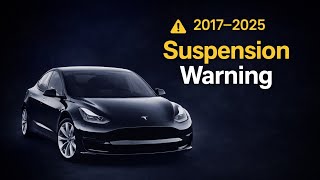
- Firmware Monitoring (SB-25-31-004): Newer Tesla firmware includes a feature that monitors wheel alignment over time. It can detect changes that may be related to worn bushings, ball joints, or damaged links, triggering a service alert on the touchscreen. 🎬 Watch: Understanding what your Tesla suspension warning alerts mean.
Buying a Used Suspension Control Arm for Your 2021-2026 Model S or Model X

A recycled OEM control arm from a low-mileage vehicle can be an excellent value, offering the same fit, quality, and materials as a brand-new part from the dealer. However, a thorough inspection is critical before installation.
Pro Tip: For a critical component like a control arm, a high-quality used OEM part is often a better choice than a new, cheap aftermarket part. Aftermarket parts may use inferior materials for the bushings and ball joints, leading to a much shorter service life.
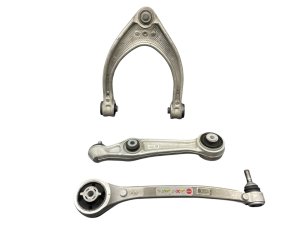
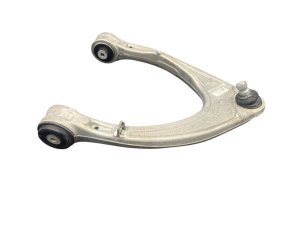
- Verify Part Numbers: Double-check that the part number matches your vehicle's requirements. The provided part numbers (e.g., 1420321-00-C for a front upper arm) are specific to the 2021+ refresh models.
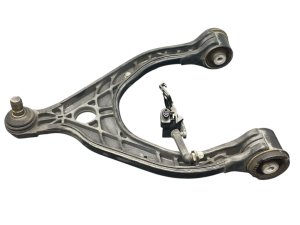
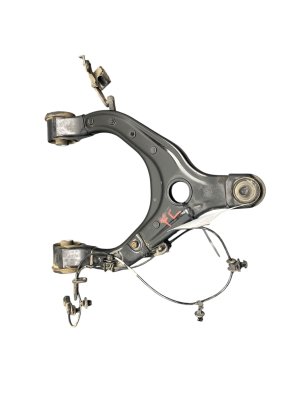
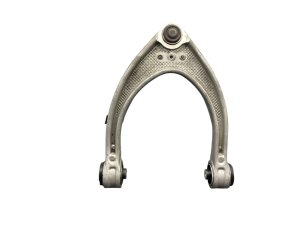
- Inspect the Bushings: The large rubber bushings where the arm mounts to the subframe should be solid and intact. Look for any signs of cracking, tearing, dry rot, or separation of the rubber from the metal sleeve. This is a primary failure point.
- Check the Ball Joint: The ball joint connects the arm to the wheel knuckle. The rubber boot should be free of tears or leaks. Try to move the ball joint stud by hand; it should be stiff and have no discernible looseness or 'play'. Any free movement means the joint is worn and the arm should be rejected.
- Examine the Arm Itself: Inspect the body of the control arm for any signs of impact damage, deep scrapes, or cracks. While these are robust parts, an arm from a vehicle in a major collision could have hidden damage.
- Consider Mileage: While there's no exact mileage for failure, these issues can appear surprisingly early. A part from a vehicle with under 50,000 miles is ideal. Avoid parts from high-mileage cars, as they are likely nearing the end of their service life.
Cost to Replace a Tesla Control Arm (2021-2026 Model S/X)
Replacement costs can vary significantly based on the part, your location, and whether you use a Tesla Service Center or an independent shop. Labor for a single control arm replacement typically takes 1.5-2.5 hours.
| Item | Estimated Cost | Notes |
|---|---|---|
| New OEM Part (from Tesla) | $200 - $550 per arm | Price varies by specific arm (upper, lower, etc.). Some estimates show part costs around $200-$300, while others have been quoted higher. |
| New Aftermarket Part | $150 - $400 per arm | Quality can vary widely. Reputable brands like Mevotech or Meyle are preferred. |
| Used OEM Part | $100 - $300 per arm | Offers OEM quality at a lower price. Price depends on condition and mileage. |
| Shop Labor | $250 - $500 per arm | Independent shops are often less expensive than Tesla Service Centers. Rates are typically $150-$250 per hour. |
| Wheel Alignment | $150 - $300 | Mandatory. A four-wheel alignment is required after any control arm replacement to ensure safety and prevent tire wear. |
| Total (Professional Job) | $600 - $1300+ per arm | Total cost using a new OEM part at a service center can range from around $1,000 to over $2,500 for more complex jobs involving multiple links. |
Related Repairs and Procedures
When replacing a control arm, it's wise to consider other related tasks.
- Replace in Pairs: If a control arm on one side has failed due to wear, the corresponding arm on the other side has endured the same mileage and conditions. It's often cost-effective to replace them in pairs to save on future labor and alignment costs.
- Wheel Alignment: This is not optional. Replacing a control arm will always alter the vehicle's alignment. Failure to perform a four-wheel alignment will result in poor handling, unsafe driving characteristics, and rapid tire destruction.
- Torqueing Procedure: Suspension fasteners must be tightened to their final torque specification while the vehicle is at its normal ride height, not while the suspension is hanging in the air. This is a critical step that prevents premature bushing failure.
Key Torque Specs (For Reference Only)
Always consult the official Tesla service manual for your specific vehicle. These values are for general reference for the Model S refresh.
- Front Upper Control Arm to Knuckle Nut: 60 Nm (44 lb-ft)
- Front Upper Control Arm to Subframe Bolts: 62 Nm (46 lb-ft)
- Front Lower Control Arm Ball Joint to Knuckle: 195 Nm
- Wheel Lug Nuts: 175 Nm (129 lb-ft)
Frequently Asked Questions (FAQ)
Can I just replace the bushing or ball joint?
Generally, no. Tesla and most aftermarket suppliers provide the control arm as a complete assembly with the bushings and ball joint pre-installed. Attempting to press out and replace individual components is not a standard repair procedure for these vehicles.
Will a bad control arm cause a warning light on the dash?
Not always. A mechanical failure like a worn bushing or ball joint won't typically trigger a specific warning light. However, newer models with advanced firmware may display a general 'Schedule Service for Suspension' alert if the system detects an alignment issue resulting from the worn part.
Is it safe to drive with a bad control arm?
It is not recommended. While the car may be drivable for a short time with early symptoms like noise, a failing control arm compromises your steering and stability. A complete failure of the arm or ball joint could lead to a loss of steering control, making it a serious safety risk. The vehicle should be repaired as soon as possible.
Why do Tesla control arms fail so often?
The issue is often attributed to the design of the ball joint seal on the front upper control arms, which can allow water to enter and wash out the grease, causing corrosion and wear. The significant weight of the vehicle and the high torque from the electric motors also place substantial stress on all suspension components.
Helpful Videos
Technical Specifications
OEM Part Numbers: 1027322-00-E 1027322-00-F 1027322-00-G 1043966-00-B 1420321-00-B 1420321-00-C 1420326-00-B 1420326-00-C 1420326-00-D 6008930-00-B
Front Upper Control Arm to Knuckle Torque: 60 Nm (44 lb-ft). Front Upper Control Arm to Subframe Torque: 62 Nm (46 lb-ft). Wheel Lug Nut Torque: 175 Nm (129 lb-ft). Final torque must be applied with the suspension at ride height.
We Have This Part in Stock

The information in this article is provided for general reference and educational purposes only. Vehicle specifications, procedures, and part compatibility can vary by production date, trim level, and region. Always consult your vehicle's factory service manual and verify part numbers before purchasing or performing repairs. Safety-critical components such as airbags, seat belts, and braking systems should be installed by a qualified professional.
- Tesla Model S:
- Tesla Model X:
- 🎬 Helpful Videos
- 🛍️ Shop This Part
- Known Issues: The Common Control Arm Clunk and Creak
- Symptoms of a Failing Control Arm
- Noises: Clunking, Knocking, and Creaking
- Steering and Handling Issues
- Uneven Tire Wear
- Official Recalls and Technical Service Bulletins (TSBs)
- Buying a Used Suspension Control Arm for Your 2021-2026 Model S or Model X
- Cost to Replace a Tesla Control Arm (2021-2026 Model S/X)
- Related Repairs and Procedures
- Key Torque Specs (For Reference Only)
- Frequently Asked Questions (FAQ)
- 🎟️ Get 5% Off