

2019-2025 Toyota RAV4, Venza & Lexus NX Rear Control Arm: Diagnosing Clunks, Wandering, and Wear
This guide covers the common failure symptoms, inspection points, and known issues for the rear suspension control arms on the Toyota RAV4, Venza, and Lexus NX models.
- The most common failure symptom is a clunking or rattling noise from the rear over bumps, caused by worn rubber bushings.
- A mandatory wheel alignment is required after replacement to prevent poor handling and rapid tire wear.
- 2022+ Lexus NX models may experience premature rear control arm bushing failure; listen for noises even at low mileage.
- When buying used, prioritize inspecting the rubber bushings for cracks and tears; this is more important than minor surface rust on the arm itself.
Symptoms of a Failing Rear Control Arm
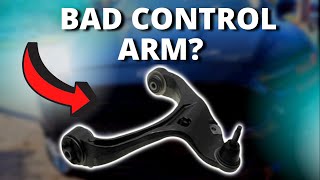
A problem with a rear control arm is almost always a problem with its rubber bushings or, less commonly, the arm itself being bent or broken from an impact. When the bushings wear out, they allow excessive movement, leading to several distinct symptoms.
🎬 Watch: A quick guide to identifying bad control arm symptoms.1. Clunking or Rattling Noises
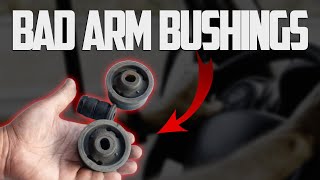
This is the most common sign of a bad control arm bushing. You may hear a clunking, knocking, or rattling sound from the rear of the vehicle, especially when driving over bumps, potholes, or uneven road surfaces. The noise is caused by the metal sleeve inside the worn bushing knocking against the control arm or the vehicle's subframe.
2. Vague or Wandering Rear End
If the rear of the vehicle feels loose, unstable, or seems to 'steer' on its own, it could be due to worn control arm bushings. This excessive play allows the rear wheel alignment to change dynamically while driving, making the vehicle feel unpredictable, especially during lane changes or cornering.
3. Uneven Rear Tire Wear
Control arms hold the wheel at the correct angle. When the bushings fail, this alignment is compromised, often causing accelerated wear on the inside or outside edge of the rear tires. If you see unusual tire wear patterns, failing suspension components are a likely cause.
Known Issues, Recalls & Technical Service Bulletins (TSBs)
While these vehicles are generally reliable, some specific issues related to suspension components have been noted.
Critical Safety Recall (Front Arms): While this article focuses on the rear control arms, owners of 2019-2020 Toyota RAV4 and RAV4 Hybrid models must be aware of a critical safety recall for the FRONT lower control arms (NHTSA Campaign ID: 20V286000; Toyota Recall 20TB08 / 20TA08). These arms could crack and separate from the wheel assembly, causing a complete loss of steering control. This affected approximately 9,502 vehicles built between September and October 2019. Use the NHTSA website to check if your VIN is affected.
Premature Bushing Wear on 2022+ Lexus NX
Owners of second-generation Lexus NX models (2022 and newer) have reported experiencing clunking or knocking sounds from the suspension at relatively low mileage. Forum discussions indicate that dealers have diagnosed these noises as failed control arm bushings, performing replacements under warranty. This suggests a potential for premature wear on the rear control arm bushings for the 2022-2025 Lexus NX250, NX350, NX350h, and NX450h+.
Potential Misdiagnosis: RAV4 AWD Driveline Noise
Some 2019-2020 Toyota RAV4 AWD models (specifically Adventure and Limited grades) may exhibit a groan, buzz, or "moo" sound from the driveline at low speeds (13-30 mph) after the vehicle has warmed up. This noise is related to the all-wheel-drive system's clutch engagement and is the subject of Toyota TSBs T-SB-0065-21 and T-SB-0067-20. This sound can sometimes be mistaken for a suspension issue. If you have an AWD model with these specific symptoms, it is worth investigating this TSB with a dealer.
🎬 See this video to hear the specific RAV4 AWD driveline noise.Buying a Used Suspension Control Arm: What to Check
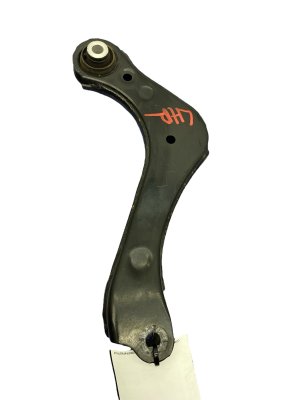
A used OEM control arm from a low-mileage vehicle can be an excellent value compared to a new dealer part or a cheap aftermarket alternative. OEM parts are designed for perfect fitment and durability. Here’s what to inspect before buying:
- Inspect the Bushings: This is the most critical check. Look closely at the rubber bushings on each end of the arm. The rubber should be black and pliable. Reject any arm where the rubber is cracked, torn, separated from the metal sleeve, or looks dried out and gray.
- Check for Structural Damage: Visually inspect the entire arm for any signs of bending, heavy scraping, or cracks. An arm that is bent from a collision will ruin your vehicle's alignment and must be avoided. Minor surface rust is usually okay, but reject any arm with deep, flaking rust that compromises its structural integrity.
- Pry Bar Test: If the arm is still on the donor vehicle, ask to perform a pry bar test. Wedge a long pry bar between the subframe and the control arm and try to move the arm. A good bushing will have very little play. If you can easily move the arm back and forth or side-to-side and see significant movement in the bushing, it is worn out.
- Verify Compatibility: Double-check the part number and confirm it fits your specific vehicle. Pay close attention to the VIN-based warning: North American-built models (VIN starting with '2') may use different parts than Japan-built models (VIN starting with 'J'). Ensure the part you are buying comes from a vehicle with the same manufacturing origin as yours.
Replacement Overview & Difficulty
- Difficulty Rating: 3 out of 5
- DIY Feasible: Yes, for experienced DIY mechanics.
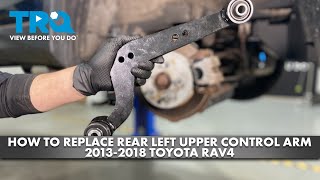
- Specialist Tools: Torque wrench, pry bar, potentially a ball joint separator 🎬 Watch this step-by-step walkthrough of a rear control arm replacement. (depending on the specific arm).
Replacing a rear control arm involves safely lifting and supporting the vehicle, removing the wheel, unbolting the arm from the subframe and the wheel knuckle, and installing the new one. Access can be tight, and bolts may be seized with rust, requiring significant force or heat to remove.
Pro Tip: Do NOT fully tighten the main bushing bolts until the vehicle's full weight is back on its wheels. Tighten the bolts with the suspension compressed to its normal ride height. If you tighten them with the suspension hanging in the air, the rubber bushing will be under constant twist when you lower the car, causing it to fail very quickly.
Warning: A wheel alignment is mandatory after replacing any control arm. Failure to do so will result in poor handling and rapid, uneven tire wear.
Cost to Replace a Rear Control Arm
Prices can vary based on your location and the specific arm being replaced. The rear multi-link suspension has several arms per side, and their costs differ.
| Part/Service | Estimated Cost (Per Arm) |
|---|---|
| New OEM (Dealer) | $150 - $300 |
| New Aftermarket | $50 - $150 |
| Used OEM | $40 - $120 |
| Shop Labor | $140 - $275 |
| Wheel Alignment (Required) | $100 - $200 |
Frequently Asked Questions (FAQ)
Can I just replace the control arm bushing instead of the whole arm?
While it is sometimes possible to press out an old bushing and press in a new one, it requires a hydraulic press and special tools. Most shops and DIYers find it faster, easier, and more cost-effective to replace the entire control arm assembly, which comes with new bushings already installed.
Do I need to replace control arms in pairs?
While not strictly required, it is highly recommended. Suspension components wear at similar rates. If a bushing has failed on one side, the one on the opposite side is likely not far behind. Replacing them in pairs ensures balanced handling and saves you from having to do the same job twice in the near future.
Is it safe to drive with a bad control arm?
If the only symptom is a minor noise or squeak, you can likely drive it cautiously to a repair shop. However, if the vehicle's handling is compromised (wandering) or the noise is a loud clunk, it should be addressed immediately. A complete failure of a control arm or its bushings can lead to a loss of vehicle control, making it unsafe to drive.
What is the difference between a trailing arm and a lateral arm?
These are both types of control arms found in a multi-link rear suspension. A trailing arm primarily controls the wheel's forward and backward movement. A lateral arm (or link) primarily controls the wheel's side-to-side movement. The vehicles covered in this guide use a combination of these arms to precisely control the rear suspension geometry.
Helpful Videos

Technical Specifications
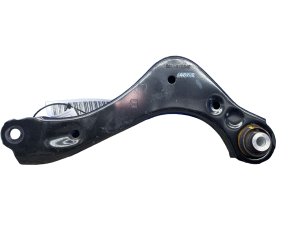
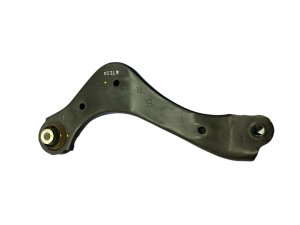
OEM Part Numbers: 48770-0R020 48790-0R020 48790-42030 48770-42050 48790-42020
This part fits North American-built vehicles (VIN starting with '2'). Japan-built models (VIN starting with 'J') may use a different part. Fits both Front-Wheel Drive (FWD) and All-Wheel Drive (AWD) models.
We Have This Part in Stock

The information in this article is provided for general reference and educational purposes only. Vehicle specifications, procedures, and part compatibility can vary by production date, trim level, and region. Always consult your vehicle's factory service manual and verify part numbers before purchasing or performing repairs. Safety-critical components such as airbags, seat belts, and braking systems should be installed by a qualified professional.
- Toyota RAV4:
- Toyota Venza:
- Lexus NX250:
- Lexus NX350:
- Lexus NX350h:
- Lexus NX450h+:
- Lexus NX:
- 🎬 Helpful Videos
- 🛍️ Shop This Part
- Symptoms of a Failing Rear Control Arm
- 1. Clunking or Rattling Noises
- 2. Vague or Wandering Rear End
- 3. Uneven Rear Tire Wear
- Known Issues, Recalls & Technical Service Bulletins (TSBs)
- Premature Bushing Wear on 2022+ Lexus NX
- Potential Misdiagnosis: RAV4 AWD Driveline Noise
- Buying a Used Suspension Control Arm: What to Check
- Replacement Overview & Difficulty
- Cost to Replace a Rear Control Arm
- Frequently Asked Questions (FAQ)
- 🎟️ Get 5% Off