

2011-2025 Toyota Sienna Control Arm: Diagnosing Clunks and High Repair Costs
Diagnose failing front lower control arms on your Sienna by identifying common clunking sounds and steering wander, and understand the major differences between generations and the reasons for potentially high labor costs.
- The 2011-2020 (Gen 3) and 2021-2025 (Gen 4) Siennas use completely different, non-interchangeable control arms.
- Labor costs can be extremely high at some shops due to difficult access to the rear control arm bolt, which may require moving the subframe or engine.
- When installing, bushing bolts MUST be torqued with the vehicle's weight on the suspension (at normal ride height) to prevent premature failure.
- Symptoms of failure include clunking over bumps, steering wander, and uneven tire wear.
Important: Two Generations, Two Different Parts
Compatibility Warning: The 2011-2025 Toyota Sienna spans two completely different generations, and their front lower control arms are NOT interchangeable. Using the wrong part will result in improper fitment and unsafe driving conditions. Always verify the correct part number for your specific model year.
Symptoms of a Failing Toyota Sienna Control Arm

A failing control arm, or more commonly, a worn-out bushing or ball joint on the arm, will produce distinct symptoms. The most common cause of failure on the Sienna is the deterioration of the large rubber bushings.
- Clunking or Knocking Noises: This is the most frequent symptom. You'll hear a clunking or rattling sound from the front suspension, especially when driving over bumps, potholes, or uneven pavement. The noise comes from excessive play in a worn ball joint or bushing, allowing metal components to make contact.
- Steering Wander or Instability: The vehicle may feel like it's wandering on the road, requiring constant small steering corrections to keep it straight. This indicates that a worn bushing is allowing the wheel's alignment to shift during driving.
- Vibration in Steering Wheel: A shimmy or vibration that you can feel in the steering wheel, which may change with speed, can be caused by a failing control arm. This is often due to the wheel assembly moving erratically because of a loose ball joint or bushing.
- Visible Wheel Movement: A severely worn control arm bushing can cause the entire wheel to shift forward or backward during acceleration and braking. This is a clear sign of a critical failure and is very unsafe.
- Uneven Tire Wear: A bad control arm will throw off the wheel alignment. This typically causes accelerated wear on the inner or outer edge of the front tires.
Generation-Specific Part Information

It is critical to order the correct part for your Sienna's generation. The parts for the third generation (2011-2020) and fourth generation (2021-2025) are different and cannot be swapped.
| Vehicle Generation | Model Years | Right (Passenger) Side OEM Part # | Left (Driver) Side OEM Part # |
|---|---|---|---|
| 3rd Generation (XL30) | 2011-2020 | 48068-08040 | 48069-08040 |
| 4th Generation (XL40) | 2021-2025 | 48068-08050 | 48069-08050 |
Known Issues, Recalls, and Technical Service Bulletins (TSBs)
As of early 2026, there are no specific safety recalls issued by the NHTSA for the front lower control arms on 2011-2025 Toyota Siennas. However, premature failure of the control arm bushings is a widely discussed issue among owners, often occurring between 80,000 and 100,000 miles. The most significant "known issue" is the high labor cost for replacement at some shops, due to the factory procedure requiring the engine or subframe to be moved to access the rear control arm bolts.
🎬 Watch this 2015 Sienna walkthrough to see the bolt access challenge.Buying a Used Suspension Control Arm for Your Sienna

A low-mileage, used OEM control arm can be an excellent value, especially given the high cost of new OEM parts. However, careful inspection is crucial as this is a wear-and-tear item.
- Why Used OEM is a Smart Choice: Genuine Toyota control arms are manufactured to precise geometric specifications with high-quality steel and durable rubber compounds for the bushings. Many aftermarket arms use lower-grade materials, leading to a shorter lifespan and potential issues with alignment and handling. A used OEM part from a low-mileage vehicle often provides superior longevity compared to a brand-new, cheap aftermarket alternative.
- Mileage is a Key Factor: Since bushings can wear out around the 80,000-100,000 mile mark, look for a used control arm from a vehicle with significantly less mileage. An arm from a vehicle with under 50,000 miles is an ideal candidate.
- Physical Inspection Checklist:
- Check the Ball Joint: Try to move the ball joint stud by hand. It should be stiff and difficult to move. If it's loose, floppy, or makes any noise, the part is worn out.
- Inspect the Bushings: Look closely at the rubber bushings. There should be no major cracks, tears, or signs of the rubber separating from the metal sleeve. Some bushings are fluid-filled; any sign of leakage means the bushing has failed.
- Check for Bends or Damage: Sight down the length of the arm to ensure it is perfectly straight. Any bends or significant scrapes indicate it may have come from a vehicle involved in a collision, and its structural integrity could be compromised.
- Look for Excessive Rust: Surface rust is normal, but avoid parts with deep, flaking rust that could weaken the metal, especially around the welds and bushing sleeves.
Cost to Replace a Toyota Sienna Control Arm
The cost can vary dramatically based on the shop's labor rate and their method for accessing the rear bolts. Some dealer quotes can be extremely high because the official repair manual suggests a very high number of labor hours. An independent shop familiar with these vehicles may have a more efficient method, resulting in a much lower cost.
| Part/Service | Estimated Cost (Per Side) |
|---|---|
| New OEM (Dealer) | $220 - $250 |
| New OEM (Online) | $150 - $185 |
| New Aftermarket | $70 - $150 |
| Used OEM | $75 - $125 |
| Shop Labor | $250 - $900+ |
| Wheel Alignment (Required) | $100 - $180 |
Installation Tips and Torque Specs

Replacing the control arm on a Sienna is a job for an experienced DIYer or a professional. 🎬 See a complete step-by-step replacement guide for 2011-2020 models. Special tools like a ball joint separator are required, and accessing the rearward bolt can be challenging.
Pro Tip: The single most important step is to only tighten and torque the control arm bushing bolts when the suspension is compressed to its normal ride height. You can achieve this by placing a jack under the control arm to lift the suspension before tightening. Tightening the bolts while the suspension is hanging down will pre-load the rubber bushings and cause them to tear and fail very quickly.
Torque Specifications (2011-2020 Models)
Note: Always verify specs for your specific year and model. These are common values for the 3rd generation.
- Control Arm to Subframe Bolts (Front & Center): 148 ft-lbs (200 Nm)
- Control Arm to Subframe Bolt (Rearward): 103 ft-lbs
- Ball Joint Castle Nut: 94 ft-lbs (127 Nm), then tighten just enough to align the cotter pin slot.
- Sway Bar Link to Strut Nut: 55 ft-lbs (74 Nm)
- Wheel Lug Nuts: 76 ft-lbs (103 Nm)
Related Parts That Commonly Fail
When replacing a control arm, it's wise to inspect related components. An alignment is mandatory after the job is complete.
- Sway Bar Links: These are often removed during the replacement and can be worn. Replacing them at the same time is cost-effective.
- Outer Tie Rod Ends: Check these for play. Replacing them before the alignment can save you from needing a second one soon after.
- Struts/Shocks: If your Sienna has high mileage, the struts may also be nearing the end of their life. Replacing them at the same time can save on overlapping labor.
Frequently Asked Questions (FAQ)
Can I just replace the bushings or ball joint instead of the whole control arm?
While it is technically possible to press out old bushings and press in new ones, it requires a hydraulic press and specialized tools. The labor cost to do this often equals or exceeds the cost of a complete new control arm assembly, which comes with new bushings and a new ball joint already installed. For most people, replacing the entire arm is the more practical and reliable repair.
Should I replace both the left and right control arms at the same time?
It is highly recommended. Suspension components wear at similar rates. If the control arm on one side has failed, the other side is likely not far behind. Replacing them in pairs ensures balanced handling and saves you from having to pay for a second repair and alignment in the near future.
Is a wheel alignment absolutely necessary after replacing a control arm?
Yes, 100% mandatory. Replacing the control arm will significantly alter the vehicle's current alignment settings (camber, caster, and toe). Driving without an immediate alignment will cause poor handling, unsafe steering, and will rapidly destroy your tires.
Why did my mechanic quote such a high price for labor?
On many Siennas, the rearward bolt for the front lower control arm is positioned in a way that it cannot be removed without either lowering the entire front subframe or lifting the engine/transmission. The official Toyota repair procedure calls for a high number of labor hours to do this, leading to very high quotes from shops that follow that procedure strictly. An experienced independent mechanic may have a workaround, so it pays to get a second opinion.
Helpful Videos
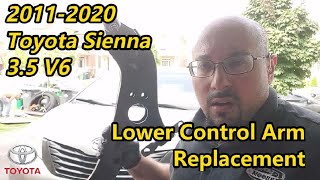
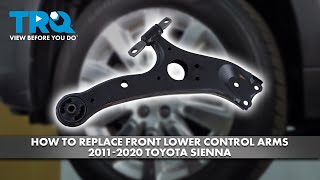
Technical Specifications
OEM Part Numbers: 48068-08040 (2011-2020 Right) 48069-08040 (2011-2020 Left) 48068-08050 (2021-2025 Right) 48069-08050 (2021-2025 Left)
Material: Stamped Steel. Includes pre-installed rubber bushings and a ball joint.
We Have This Part in Stock
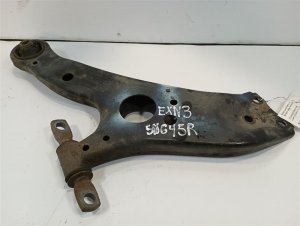
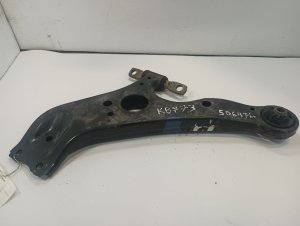
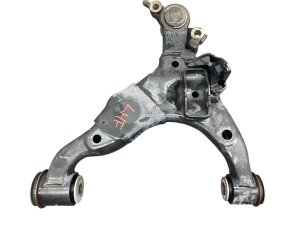
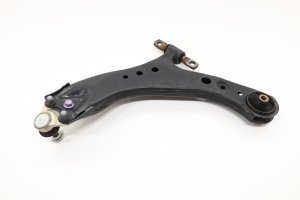

The information in this article is provided for general reference and educational purposes only. Vehicle specifications, procedures, and part compatibility can vary by production date, trim level, and region. Always consult your vehicle's factory service manual and verify part numbers before purchasing or performing repairs. Safety-critical components such as airbags, seat belts, and braking systems should be installed by a qualified professional.
- Toyota Sienna:
- 🎬 Helpful Videos
- 🛍️ Shop This Part
- Important: Two Generations, Two Different Parts
- Symptoms of a Failing Toyota Sienna Control Arm
- Generation-Specific Part Information
- Known Issues, Recalls, and Technical Service Bulletins (TSBs)
- Buying a Used Suspension Control Arm for Your Sienna
- Cost to Replace a Toyota Sienna Control Arm
- Installation Tips and Torque Specs
- Torque Specifications (2011-2020 Models)
- Related Parts That Commonly Fail
- Frequently Asked Questions (FAQ)
- 🎟️ Get 5% Off